
Queen Anne is a German potato successfully grown in our country on an industrial scale and in home gardens. This variety meets all the requirements: productive, resilient, and early maturing. The key is proper planting and careful care.
Description of the variety
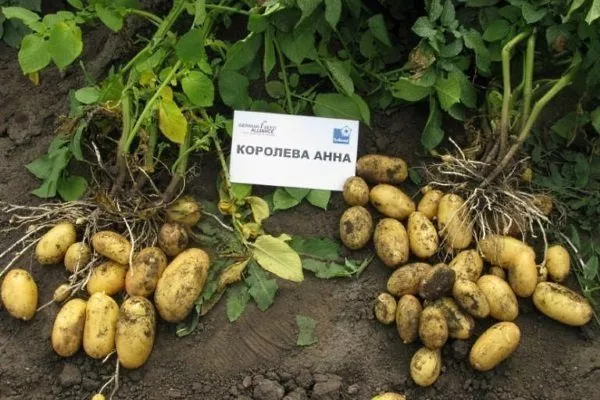
A creation of German breeders, this versatile variety has proven itself and was developed for cultivation in harsh climates. It boasts high consumer qualities. The cultivar's originator is the German company Solana. This potato is a favorite among both ordinary vegetable growers and others. Queen Anna is the variety grown at the Belarusian presidential residence. The variety successfully underwent testing in Russia's Middle Volga region and was included in the State Register in 2015.
The external distinctive features of the Queen Anne potato are as follows:
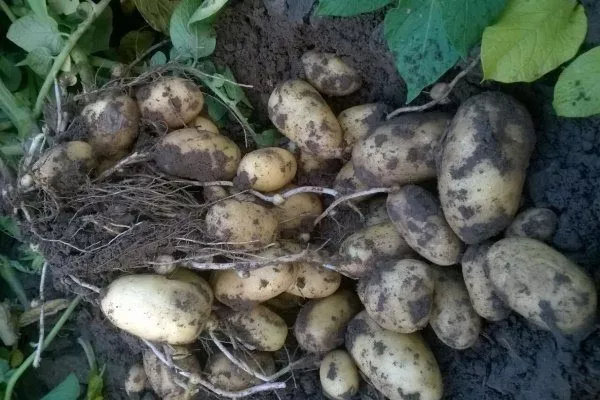
- The tubers are smooth, yellow, and have an elongated oval shape.
- The fruits are resistant to iron and black spots, as well as mechanical damage. They store well.
- The flesh is creamy or yellow and firm. It doesn't fall apart or darken when cooked.
- The skin is dense and smooth, with small, shallow holes. This characteristic is very popular among home cooks – peeling these potatoes is a pleasure.
- Potato shoots are spreading. The number of fruits per bush ranges from 6 to 16.
- Queen Anne bushes are low, stem-type, semi-erect or upright.
- The leaves are large, have a little fluff and a rich dark green color.
- The petals of the inflorescences are white and densely cover the shoots.
Specifications and Features
Queen Anna is a mid-early, universal variety (classified as Type B in terms of cooking time), one of the highest-yielding of this vegetable crop. A single bush produces numerous fruits, ensuring high yields. These yields exceed the standards of the Middle Volga region, where the first samples were taken. 45 days after germination, 100 centners per hectare were harvested.
The general characteristics of the variety are as follows:
| Characteristic | Size |
| Productivity is average/maximum | 395/500 c/ha |
| Ripening period | 80-85 days (mid-season) |
| Weight of one tuber | 85-100 g |
| Starch content | 13-15% |
| Marketability of the product | up to 94% |
| Harvest shelf life | 93% (up to 97%) |
Large, neat tubers can reach 10 cm or more in length. Queen Anne boasts a high marketability rate of at least 82%. Most tubers are suitable for sale. The tubers are easy to wash, transport, and store. They will keep until spring if stored properly. Vegetable growers praise Queen Anne for its shelf life.
The fruit has a good flavor, and its texture prevents it from becoming overcooked during cooking. The starch content varies depending on growing conditions:
- in dry, hot summers there is more starch – up to 15%;
- In cloudy, rainy summers, the concentration of the substance is lower – about 13%.
Fertilizers also influence starch levels, preventing them from declining. These levels can impact the quality of potato dishes. If the starch content is less than 14%, the potatoes make delicious salads, soups, and mashed potatoes. Potatoes with a higher starch concentration are ideal for frying. You can also make homemade potato chips from these potatoes.
The Queen Anne variety has exceptional resistance to a number of common diseases and pests:
| Diseases | Degree of stability | Rating (on a 10-point scale) |
| Potato cancer (D1) | immunity | 10 |
| Golden cyst nematode (Ro1, Ro4) | immunity | 10 |
| Common scab and silver scab | high | 10 |
| Rhizoctonia | very high | 9 |
| Black spot | very high | 9 |
| Rugose streak mosaic and leaf roll viruses (Y, Y-ntn) | very high | 9 |
| Blackleg | very high | 9-8 |
| Iron spot | high | 8 |
| Tuber blight | high | 8 |
| Phytophthora blight of tops | medium to high | 8-7 |
Pros and cons of growing
Gardeners grow Queen Anne on their plots for its undeniable benefits. The tubers germinate well and quickly, even during frosts, and set fruit uniformly. The fruits gain strength and are ready to eat after the first harvest; there are virtually no small specimens.
Potato growers who grow Anna for sale note its visual advantages: all the fruits are conveniently shaped, even, transport well, are resistant to minor damage, and have a long shelf life.
When developing this potato variety, German agronomists took into account many nuances and brought the best of everything into their creation. Therefore, the Queen Anne's strengths far outweigh its weaknesses, but there are still some drawbacks.
| Advantages of the variety | Disadvantages of the variety |
| taste qualities | average drought resistance |
| pest resistance | watering requirements |
| high yield | defeat by single diseases |
| good germination | |
| neat appearance of tubers |
How to grow and care for potatoes?
Planting and caring for German potatoes follows the traditional process, not much different from other varieties. The only thing this noble variety may require is additional moisture, and only in areas with very dry soil and low rainfall. In arid regions, potatoes require more frequent and abundant watering.
This variety thrives in virtually any soil throughout Russia. It can be grown on both large plantations and small private plots.
German breeders adapted the variety to unfavorable conditions and a difficult climate.
Place and time of landing
With proper planting practices, Queen Anne potatoes should be planted only in warm, slightly moist soil. This guarantees a good harvest. Like other early varieties, they can be sprouted starting in April, with the first tubers being planted in mid-May.
Temperatures that are too high or too low affect the germination of the fruit. And if the soil isn't dry enough, it will hinder oxygen access to the tubers. The following weather conditions are recommended for planting:
- soil at a depth of 10 cm - about 10 degrees;
- air temperature – not less than 11 degrees.
When choosing a location for your beds, it's important to consider factors such as light, protection from strong winds, and the absence of low-lying areas where moisture can accumulate. Ideally, the planting beds should be oriented north to south to ensure adequate warmth. Soil quality isn't important; Queen Anne can grow anywhere, but for a high yield, it prefers light, neutral, and loose soils.
- peat;
- black soil;
- sandy loam;
- loams.
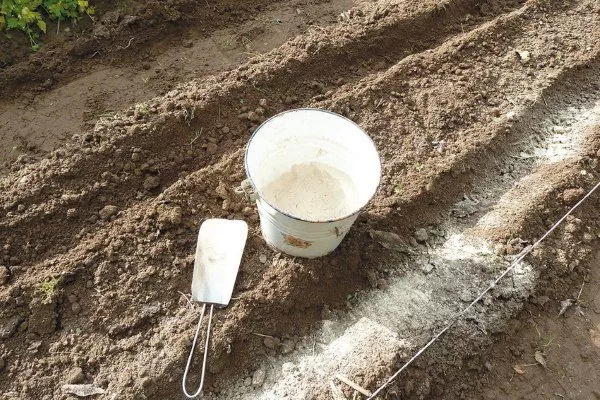
Potassium levels should be high. Soil can always be improved: add sawdust or sand to loamy soil, add rich soil to sandy soil, and lime to acidic soil. Planting potatoes in the same area for several years in a row is not recommended. Potatoes should be returned to the beds only after three years. Also, avoid planting this crop after nightshades.
We quench acidic soil with lime
The predecessors of potatoes in the selected area may be:
- roots;
- cruciferous;
- onion crops;
- pumpkin.
Soil preparation
Soil preparation for planting potatoes should begin in the fall. First, dig deep and remove weeds. If necessary, add organic fertilizer, such as ash. 0.5 kg of ash and 1 bucket of compost are required per square meter. Mineral fertilizers such as superphosphate, urea, and potassium nitrate can also be used.
In spring, the soil undergoes additional cultivation. The beds are leveled, and furrows or holes are dug in the soil. At this point, it's advisable to fertilize the soil with nitrogen-rich fertilizer. Pest and disease repellent is added to the prepared holes (holes or furrows). The soil is thoroughly moistened.
Because this variety produces numerous tubers, large distances between plantings are required—at least 20-40 cm within both rows and between rows. This is necessary to ensure adequate nutrition for each plant.
Preparation of planting material
A week before planting potatoes, carefully prepare the seed. All tubers should be sorted, discarding small roots, rotten ones, and those damaged by mice, for example. The remaining tubers should be left in a warm place for a few more days.
Queen Anne potatoes respond well to sunlight. Direct sunlight causes the fruits to turn slightly green. They accumulate solanine, a harmful substance that makes these potatoes unsuitable for consumption, but they germinate well.
- ✓ No mechanical damage
- ✓ Medium tuber size (85-100 g)
- ✓ Presence of healthy sprouts
- ✓ No signs of disease
Once the first sprouts appear, the tubers can be planted in the holes, after treating them with a growth stimulant (optional). The tubers should be:
- whole;
- medium size (too large ones are divided in half, although this is not desirable);
- healthy.
To initiate biochemical processes, the tubers must be warmed. This is done 45-60 days before the expected planting. This process is divided into two stages: dry and wet warming. The first is carried out at a high temperature of 28-30 degrees Celsius for 4-5 days, then the temperature is lowered to 15 degrees Celsius, and the tubers are placed in boxes with damp sawdust. This initiates the active growth of strong young shoots and the beginnings of the root system. After a month of this storage, the tubers are completely ready for planting.
Step-by-step planting guide
After processing the land for planting and tubers, the seeds are planted in the soil.
The scheme is standard:
- The plot is marked out. This begins with determining the distance between rows. Then, a string is pulled for guidance and the location for the first furrow is marked.
- When planting root crops, it is important to maintain the distance between them and leave sufficient space between rows (60-70 cm) for ease of hilling.
- Planting holes are made in the furrows—not too large, but not too small. Ideally, 15-20 cm. The size of the potatoes affects the depth of the hole: the smaller the potato, the closer it will sit to the surface.
- Each hole only accommodates one root vegetable. If there are more, there won't be enough space for the newly planted tubers, and the harvest will be small.
- The holes are dug up immediately so that the potatoes do not dry out.
- The Queen Anne variety benefits from fertilization. Immediately after planting the tubers, you can sprinkle the beds with a thin (2-3 cm) layer of peat.
Watering, hilling, fertilizing and weeding potatoes
The characteristics of the variety require the following agricultural practices: regular watering, hilling and loosening, weeding, picking off flowers on shoots to form tubers, treatment against parasites and diseases, and other manipulations.
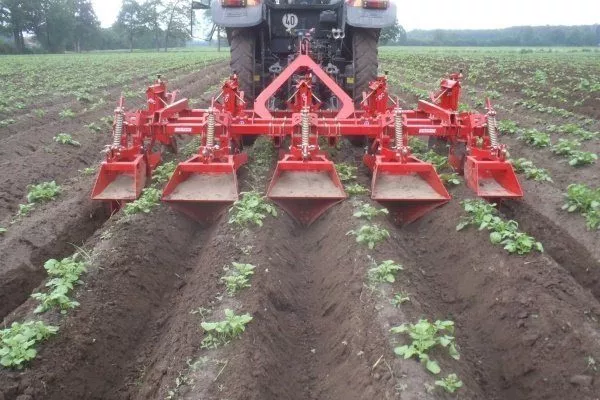
If you reduce the number of flowers on the bushes – pluck them off – more tubers will form.
The recommendations are standard, but experienced vegetable growers advise paying close attention to regular maintenance, especially watering. The variety has average heat and drought tolerance. Plantings in the southern regions of the country require special attention.
The rules are as follows:
- Watering the beds begins when the tubers begin to form, i.e., during the budding phase of the bushes. This is the most critical period—from the moment the first buds appear until the tops stop growing.
- The beds should be watered at least once a week.
- The ideal system is a spray system, this avoids the root washout.
- The soil moisture in the beds should be uniform.
- It's best to water potatoes in the evening. This is strictly avoided in hot weather.
- The optimal amount of water per bush is 3 liters.
- The day after watering, loosen the soil. This will help retain moisture.
Gardeners pay a lot of attention to loosening the soil, hilling up bushesThe soil needs to be enriched with oxygen, and this can be achieved through regular digging. This also ensures that the roots are hydrated and receive all the necessary micronutrients.
Queen Anne is easy to cultivate, but the beds should be carefully hilled, as the potato's roots are close to the surface. They can dry out in hot weather, so regular hilling is essential.
Organic and mineral fertilizers are suitable for Queen Anne's. Wood ash, manure, bird droppings, ammonium and potassium nitrate, complex fertilizers, and others are ideal. Alternate feeding with watering. Fertilizer should be applied three times throughout the season:
- The first is during the period of stem growth.
- Repeated - before flowering.
- The third is after flowering.
Methods of combating diseases and pests
Queen Anne is quite resistant to major diseases and dangerous pestsPotatoes are susceptible to diseases common to this crop: potato wart, nematodes, shoot and tuber blight, rugose streak mosaic, and leaf curl. Natural protection is good, but it can be improved. During the growing season, potato plants must be treated with fungicides to protect the plants from insects. Preventative spraying is carried out in dry weather.
Tomatoes and peppers share the same diseases as potatoes. Furthermore, they attract the same pests. Planting them next to each other is risky.
Potatoes are treated during the growing season. It's important to constantly monitor the plants for pests, including Colorado potato beetles, May beetle larvae, mole crickets, potato moths, and others. If a disease is detected early, emergency measures are taken, including collecting the pests and spraying. For preventative measures, it's recommended to disinfect the plants in advance with products such as:
- Anti-bug;
- "Knocked out";
- "Bancol";
- "B-58 New";
- "Decis".
Vegetable growers should keep in mind that all work with chemicals must be carried out on time: no later than 2 weeks before the first harvest.
To avoid creating favorable conditions for the emergence and reproduction of harmful insects, it is necessary to loosen the soil and pull out weeds in advance.
Harvesting and storage
Queen Anna is an early-ripening variety. Technical maturity occurs 70 days after the first shoots emerge. Don't leave ripe roots in the garden for too long. Once the potato plant has completely yellowed and dried, harvest is ready. By this time, the tubers will have reached the size and weight typical for this variety. Conditional maturity occurs when the fruits have gained strength, but the skin is still thin and separates from the tuber.
Before digging up potatoes, it's recommended to trim the tops. This will make the process easier, and not just that. If you do this well in advance—about a week before you plan to dig up the potatoes—the skin will become denser and rougher, ensuring longer storage of the harvested crop.
Queen Anne is an early-ripening variety, but stores well and can last for several months without losing its nutritional value if stored properly. A dry, dark place is ideal for storage.
Potatoes need:
- low positive temperatures;
- humidity not less than 70%.
| Condition | Recommendation |
|---|---|
| Temperature | 2-4°C |
| Humidity | 70-80% |
| Lighting | No direct sunlight |
| Ventilation | Moderate, no drafts |
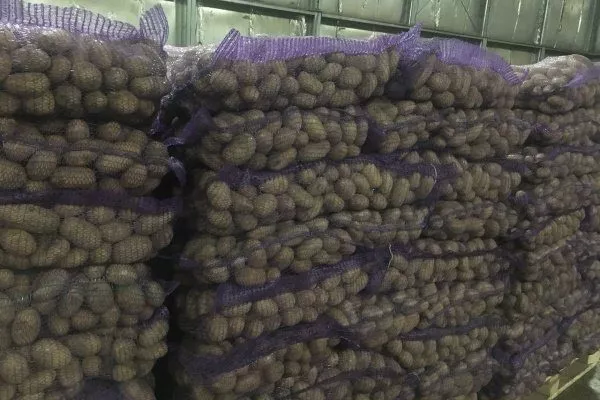
Read more about proper storage of potatoes Here.
Reviews from vegetable growers
The German Queen Anne potato has become a favorite among many vegetable growers and gardeners. Reviews are overwhelmingly positive:
The brainchild of German breeders, the early-ripening potato variety Queen Anna is successfully grown in our country, meeting the high demands of vegetable growers. It thrives and produces fruit in any location in any year, although some gardeners complain of a loss of flavor during lean periods, such as rainy and cold weather. The potato's quality is influenced by its nutrient balance. With proper care, this variety will reward gardeners with a bountiful harvest.