
Keeping quail during the warmer months isn't particularly difficult. However, during the winter, these birds require special conditions. A comfortable life in a barn during the cold months will not only keep the little birds healthy but also delight the owner with new offspring.
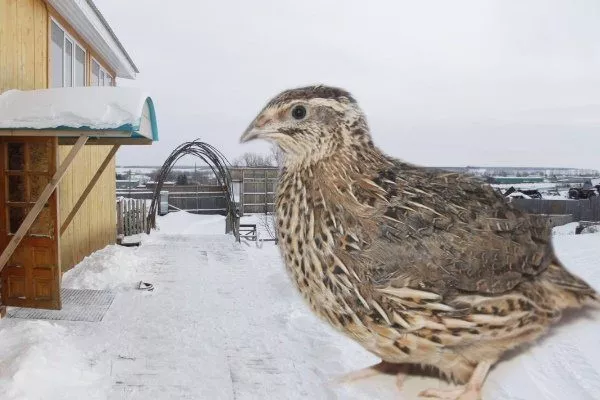
Requirements for a barn
Before wintering, it's best to keep no more than 50 adult birds in your coop. This number of birds ensures savings on heating costs, and the dense arrangement of the birds promotes natural warmth. It's also important to ensure that the young birds have plenty of down, which will allow them to warm themselves even on the coldest nights.
- ✓ The minimum thickness of the sawdust bedding should be at least 5 cm for effective thermal insulation.
- ✓ The concentration of the disinfectant solution for treating cells must be at least 2% to ensure the destruction of pathogens.
A special shed, easily constructed even by a novice poultry farmer, will help quail survive the winter. The first criterion to consider is the size of the structure. If the quail flock numbers hundreds, a building of at least 30 square meters is necessary, which can accommodate up to a thousand members of the flock.
Humidity
Quails require high humidity in their habitat—in a birdhouse, it should be maintained at a high level with a minimum amount of water. When it's freezing outside, the best way to maintain humidity is to use a tried-and-true method: hang a cloth soaked in water or place it near the quail's cages. Alternatively, place a container of water directly next to the birds or nearby.
The ideal humidity for quail is between 60 and 70 percent. This is because quails' natural habitat is damp and marshy areas.
Humidity in the poultry house should not be below 50 percent. If this isn't met, the birds will drink more, resulting in less feed. Furthermore, prolonged drought negatively impacts quail's reproductive performance, potentially leading to a complete loss of egg production.
Lighting
Natural light is the best. The barn should be equipped with large windows to provide the birds with sufficient light and, therefore, vitamin D. However, during the winter, when sunshine is infrequent and short-lived, assistance may be needed.
A great solution for setting up a wintering shed for birds is to combine heating and lighting. An infrared lamp is the best option. If heating is not an issue, 40-watt incandescent bulbs or similar LED bulbs with a power of up to 5 watts will suffice. The key to proper lighting is a minimum of 15 hours of daylight per day for quail. Ideally, the house should be illuminated for 17-18 hours.
Improve quail egg production It is possible, alternating light and dark periods every two hours.
Ventilation
Fresh air is essential for any living organism, and quail is no exception. Ensuring oxygen circulation in a poultry house is significantly more difficult in winter, but it is nevertheless necessary.
For young animals, the optimal air speed in the room is from 0.1 to half a meter per second, for adults - from 0.2 to 0.6 meters.
Temperature
Sudden temperature fluctuations and drafts have a very negative impact on the well-being of domestic quail. The first step toward achieving a comfortable temperature regime for the birds is a shed free of holes and gaps.
Furthermore, a bird cage should be made of solid wood to help retain heat during the cold Russian winters. Wood is known to be an excellent insulator, meaning additional external heating is less necessary. Wire cages lack this advantage and therefore are unable to retain heat for long, necessitating the use of permanent heaters during the winter season.
In a cold, drafty room, quail often begin to huddle together and climb on top of each other. This behavior spells certain death for the weaker birds caught beneath the flock.
The optimal temperature for keeping birds during the winter is 18 degrees Celsius. Fluctuations in either direction will not benefit quail. However, it's important to remember that the temperature in the coop and the temperature in the birds' habitat are different. Inside a closed wooden cage, the temperature, due to the birds' heating, is significantly higher than the overall temperature in the barn. Well-feathered three-month-old quail tolerate low temperatures significantly better than their older, featherless counterparts.
Cell requirements
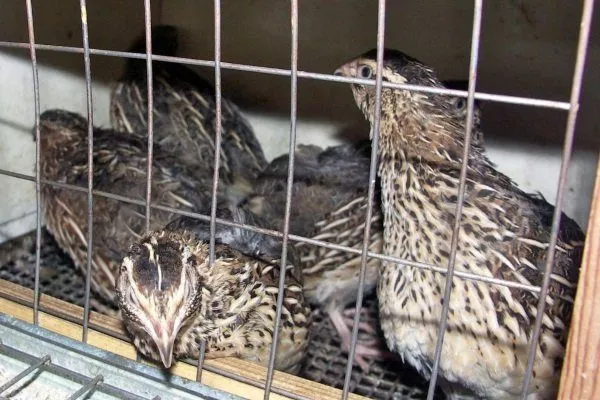
Wintering cages for quail can be made of any material: stainless steel, galvanized steel, plywood, or wood. The main thing is to meet the quail's physiological needs and provide them with maximum comfort for laying eggs. However, when choosing their future winter habitat, consider the following factors:
- In an open cage, the birds will inevitably react to everything going on around them. This causes the quail to become nervous and stop laying eggs.
- Too much light is also harmful to birds. Excessive light provokes pecking and can also cause increased anxiety, depression, and decreased egg production.
- If there is a gap somewhere in the barn, the open cage gives carte blanche to drafts.
- Closed cage types reduce the difference in temperature fluctuations between day and night, especially if the birds live in a poorly heated room.
- The emergence of chicks in the winter season requires the construction of a box in the barn made of durable wood with doors and bedding (sawdust is the best choice).
- Lining the ceiling with foam rubber not only improves thermal insulation, but also helps reduce bird injuries – some quail can jump to great heights and inevitably hit the hard surface of the ceiling without a foam layer.
- When choosing a wintering cage, it's best to choose one large cage with partitions that allow males and females to be separated as needed. One large cage, rather than several small ones, will allow the birds to keep each other warm.
Read on to learn how to make a quail cage yourself. here.
Barn cleaning and hygiene procedures
Regardless of the time of year, a responsible poultry farmer must remember not only about general recommendations regarding conditions of detention, but also that the birds need to live in a clean environment. To maintain hygiene in the poultry house, disinfection procedures are carried out regularly in the bird areas.
Before cleaning, the bird families are removed from the cage for a while, and the housing itself is thoroughly washed and cleaned:
- The bottom, bars, and ceiling of the cage should be washed with soap. To do this, thoroughly scrub a bar of soap (tar soap is best) with a damp sponge and clean the cage. You can also use a washcloth soaked in the soapy water.
- Rinse the soap off the cage using plenty of boiling water.
- Dry thoroughly. It's best to use a hair dryer for this purpose. Dry the cages responsibly. Otherwise, the coop may become damp, and dampness is a breeding ground for various microorganisms.
Disinfection barrier
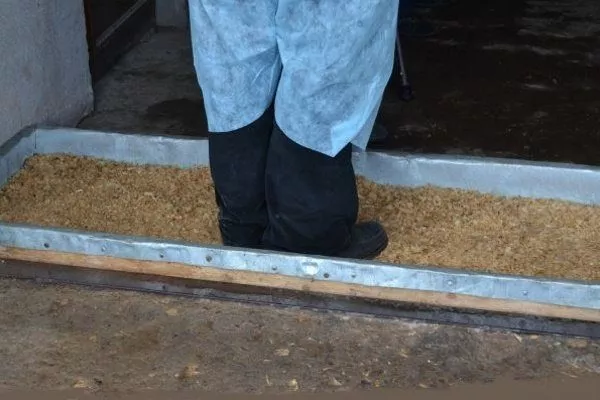
To avoid development quail diseases During the winter season, when birds are most susceptible to infection, it is recommended to install simple disinfection barriers indoors. Even a novice poultry farmer can do this themselves.
To build a disinfection barrier, you will need:
- a box or basin with sides low enough to prevent tripping (usually up to 5 cm);
- wood sawdust, foam rubber or other filler, the main condition is that it should absorb well;
- a piece of burlap the size of a box;
- any disinfectant.
To assemble this simple yet effective design, you will need to follow a few steps:
- Fill the container with filler so that it covers the bottom by a couple of centimeters.
- Soak it well with disinfectant, but so that it does not spill out when pressed.
- Cover with burlap.
When a bird owner enters the barn, they are required to stand with their feet on the barrier. This action disinfects their shoes and prevents pathogens from entering the poultry house.
Disinfection of the poultry house in winter
In addition to cleaning and disinfecting barriers, quail housing should be periodically treated with disinfectants during the winter. The following are used for this purpose:
- Sodium hydroxide. Spray the surfaces with the solution at a concentration of 3 liters per square meter of the barn. Birds should not be allowed in for three hours after treatment.
- Freshly slaked lime. Apply whitewash to the walls and ceiling at a concentration of 200 milliliters per square meter. Do not allow birds in until the mixture has completely dried.
- Fospar. The solution should be sprayed onto equipment at a concentration of 2 liters of solution per 1 square meter. Birds should not be allowed in for three hours after treatment.
- Formaldehyde. Treat equipment, all surfaces, and the air with the aerosol at a concentration of 20 milliliters per 1 cubic meter of water. Do not allow birds into the area for 24 hours after treatment.
- Ammonia. The entire poultry house is treated with the aerosol at a concentration of 10 milliliters per 1 cubic meter of water. Birds are not allowed in for 1 hour after treatment, and the room is well ventilated.
- Preliminary clean the cages from droppings and food remains.
- Prepare a sodium hydroxide solution at a concentration of 3%.
- Treat all surfaces of the cages and the room with a solution at a rate of 3 liters per 1 sq. m.
- Keep the room closed for 3 hours after treatment.
Feeding quails in winter
To ensure your birds stay healthy and continue laying eggs well during the winter, you need to pay attention not only to their living conditions but also to their diet. It should consist of the following components:
- Compound feed. First and foremost, quails' diets should be balanced and rich in vitamins. Therefore, it is recommended to feed them compound feed. Several types of commercially available compound feeds are available for quail, but homemade feeds can also be used.
- Mixtures. If poultry farmers are unable to prepare or purchase high-quality, complete feed, they can feed their birds homemade feed mixes. These mixes must maintain a balance between proteins, grains, vitamins, and minerals.
The basis of the diet for quails in winter should be:
- millet;
- sorghum;
- all types of crushed grain (except rye);
- wheat;
- rice and pearl barley.
Of the grain legumes, it is useful to give quails steamed and crushed:
- peas;
- lentils;
- lupine;
- beans;
- soy.
In winter, quails desperately need a daily supply of chopped greens, which can be replaced with grated carrots or various vitamin supplements. Of all the greens available, quails are best fed:
- carrot, turnip and beet tops;
- green onions;
- clover;
- nettle;
- cabbage and dandelion leaves;
- alfalfa.
In the absence of fresh grass in winter, the birds are fed dried herbs prepared in the summer. The greens are pre-chopped. They can be chopped with a knife or ground several times in a meat grinder. However, in rare cases, whole leaves are also given—quails can easily handle hanging carrot, turnip, and beet tops on their own.
In winter, it is also useful to feed quails with chopped cabbage leaves, which contain many vitamins and microelements useful for birds.
More has been written about feeding quails. here.
Useful tips and tricks
Keeping quails in winter has its own subtleties and nuances that should be kept in mind:
- Although these domestic birds have a fairly strong immunity to most avian diseases that spread rapidly in winter, if housing conditions are not met, feather loss, pecking, and cannibalism may occur. These problems are typically caused by poor-quality feed or a lack of it, colds, overcrowding, elevated temperatures, and dry conditions in the room.
- The presence of too bright lighting and other irritating factors at any time of the year, and especially in winter, put quails into a state of stress, as a result of which the hens lose egg production, and the males become aggressive and they start fighting.
- In winter, especially in rural areas, power outages are common. Therefore, poultry farmers should consider providing independent heating and lighting equipment (generators) to the quail houses.
- Don't start raising quail with a large flock of a thousand or more birds. It's better to gain experience raising several hundred birds. These birds, accustomed to living in the wild, will delight their owners with high productivity even in winter with careful care and plenty of food.
Keeping quail in a barn in winter (video recommendations)
This video provides some helpful tips on setting up a winter home for quail and the rules for keeping these birds during the winter:
Wintering quail is a serious and demanding process that can be a challenge even for an experienced poultry farmer. However, with suitable living conditions, nutrition, and regular hygiene, these little birds can easily survive the harsh Russian winters.