
Super Nick chickens are hybrid egg-laying hens. Many farmers today prefer this cross due to its low maintenance requirements. However, poultry farmers must follow certain care guidelines to ensure high egg production.
How did cross come about?
This hybrid was developed thanks to scientists at H&N International, a company based in Germany but with numerous subsidiaries worldwide. This company has successfully developed numerous popular hybrids with high productivity and profitability.
Super Nick chickens are crossbreds designed for commercial breeding. The painstaking work of scientists has resulted in excellent performance characteristics, and the hybrid has become popular not only among large poultry farm owners but also among ordinary farmers and summer residents who keep birds solely for personal consumption.
This crossbreed was brought to Russia relatively recently, in 2005. Since then, it has become very popular, with farmers praising the chickens for their appearance, excellent meat flavor, and good productivity.
Appearance and character
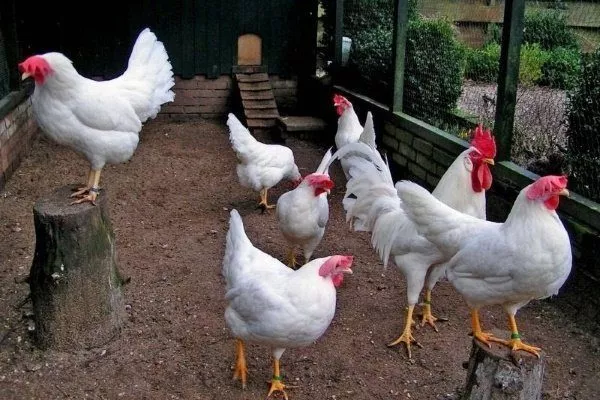
The cross is unremarkable in appearance, but if the bird lacks its characteristic traits, it is rejected. The following are considered characteristic features of the final Super Nick cross:
- proportional triangular body of small size;
- the plumage is smooth and white;
- the chest is rounded, the back is small;
- a medium-sized head, located on a short, thin neck;
- light red leaf-shaped comb, often tilted to one side;
- light red earrings and white earlobes;
- gray beak;
- The feet are greyish-yellow and have medium-sized metatarsals.
Super Nick chickens are quite spirited and active birds, moving very quickly and being fussy. Some farmers prefer to keep these animals in cages. The birds prefer to have plenty of space, but it's quite possible to acclimate chicks to cage life from the very beginning.
Like most crosses, these hens don't brood eggs and aren't considered good brood hens. However, breeding offspring from this final cross is pointless, as the chicks won't inherit the parents' productive traits. It's best to purchase chicks from breeders. If hatching chicks, an incubator is recommended.
Advantages and disadvantages of cross-country skiing
Super Nick chickens have several advantages that make them popular with many poultry farmers. They are very profitable for commercial breeding, productive, and easy to care for.
The negative aspects include a short period of maximum laying and some difficulties in raising and breeding birds.
Productive qualities
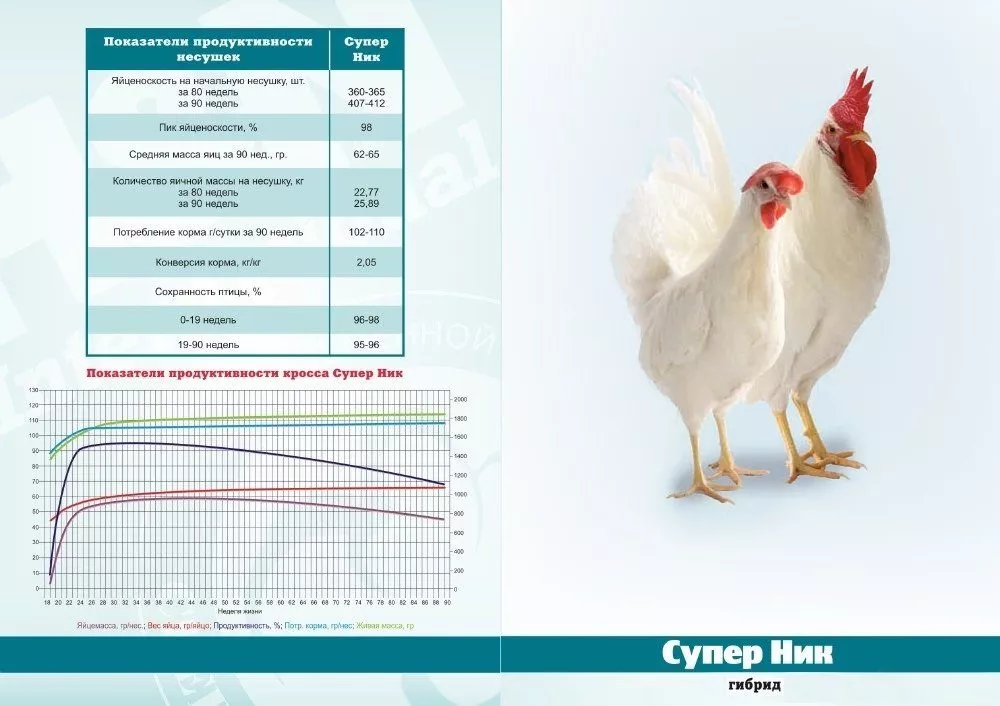
For commercial hybrids, one important requirement is to grow and develop quickly. When raising chickens commercially, the goal is to maximize profits with minimal investment. These animals meet this requirement, reaching sexual maturity as early as four months of age.
Typically, laying begins quickly, and in the first year of her life, a hen can produce around 360 eggs over a period of 1.5 years. However, these numbers can only be achieved if she is kept in the right conditions, cared for, and fed properly. Young hens lay medium-sized eggs—about 60 grams—with white shells. Mature hens can lay larger eggs, weighing up to 70 grams.
Farmers often encounter the problem of missing shells on the first few eggs. However, this problem only occurs if the following guidelines are not followed: feeding rules Before laying eggs. Before a hen begins laying eggs, she needs to be switched to a special diet—it will help her body prepare for the frantic activity.
Content Features
Super Nick chickens are easy-to-care-for birds that adapt to any changes. However, there are some recommendations to help them reach their full productive potential:
- These birds are considered cold-hardy, able to survive the winter in an uninsulated house without harm. However, practice has proven that productivity decreases significantly under such conditions. Maintaining an optimal temperature of 14-19 degrees Celsius (57-66 degrees Fahrenheit) will ensure consistent egg production throughout the winter.
- Birds can fly, and if they are free-ranging, the area must be protected with a high net to prevent them from flying away.
- Farmers must ensure the health of their birds, maintain cleanliness in the coop, and disinfect it regularly. When housed with other breeds of hens, the coop must be disinfected frequently for preventative purposes.
- Maintaining the correct temperature is important. The day before hatching, begin preparing the coop, heating it, and setting it up. The chicks' nesting area, where they will be transferred from the incubator, should be at least 35 degrees Celsius. These temperatures should be stable. Each subsequent week, the temperature is reduced by 3 degrees Celsius.
- Ensuring adequate air exchange is equally important – chicks require fresh air rich in oxygen and negative ions. Stagnant air will lead to bacterial growth, and a lack of oxygen weakens the immune system.
- On industrial poultry farms, birds undergo beak trimming, a procedure called debeaking, 7-10 days after birth. This procedure is not mandatory. It is important to observe all hygiene standards during beak trimming to protect the bird from infection. This procedure is not recommended at later ages.
- Intense lighting will ensure full development. For the first three days, the room should be illuminated 24 hours a day, then alternate between 4 hours of light and 2 hours of darkness.
Keeping in a poultry house
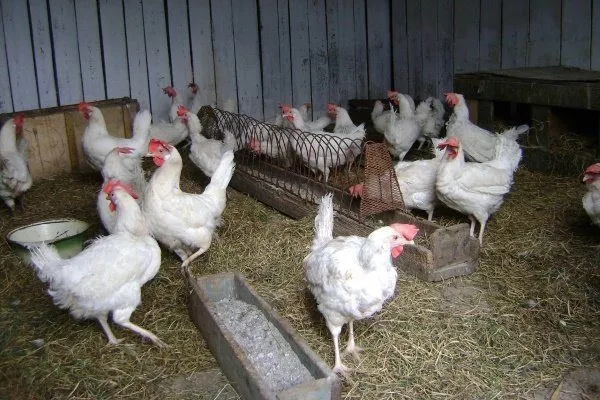
Super Nick chickens quickly acclimate to any conditions. They are easy to care for and are cold-hardy. When kept indoors, humidity should be maintained at 60-70%, and daylight should be at least 13 hours long. This helps maintain egg production. Lighting is also helpful during winter.
Experienced farmers recommend building poultry houses out of wood, as well as the flooring, but clay and cement are also suitable. Ventilation must be provided by installing vents and special pipes with plugs. Window openings should be approximately 10% of the floor area. Double, removable frames allow for ventilation in the summer and maintain good lighting.
They also adhere to the following advice:
- Organize a fenced walking area near the chicken coop.
- Provide bedding in the poultry house using hay, dry straw, and sawdust. Clean the bedding periodically and replace it in the fall.
- Place perches inside the room using wooden blocks. Place trays for chicken droppings underneath the perches for easy cleaning.
- In the autumn, disinfect and dry the entire premises.
- Place no more than 5 birds per 1 sq. m.
- The height of the poultry house should not be less than 180 cm. This is the optimal level for heating the chicken coop in winter and ventilation in summer.
- The room is equipped with the required number of feeders and drinkers.
Read also about: How to build a suitable chicken coop yourself.
Caring for birds in cages
If a farmer decides to keep birds in cages, the following standards must be observed:
- Each laying hen is provided with at least 400 sq. cm of cage floor.
- The room must be regularly ventilated and oxygen must be supplied to it.
- There is approximately 10 cm of feeding frontage per individual.
Super Nick chickens have long been used to produce large quantities of eggs in commercial settings. Today, their high and early egg production is also of interest to homesteaders. To achieve high productivity, the birds must receive the required amount of calcium-rich feed and excellent living conditions.
Diet
Proper nutrition will help ensure high productivity and the survival of young birds. A balanced menu is essential to ensure the birds receive all the necessary nutrients. Young birds and adult hens are fed differently.
Feeding chicks
Super Nick chickens are an autosexed cross. Farmers can determine the sex of the chicks early in their growth. Females are easy to identify: they fledge faster than males and are healthier. The chick survival rate is approximately 98%. However, the survival rate of the young depends directly on the chicks' nutrition and proper care.
- ✓ The temperature in the first days of life should be at least +35°C, with a gradual decrease of 3°C every week.
- ✓ Lighting should be on 24 hours a day for the first three days, then according to a 4 hours light/2 hours dark schedule.
Recommendations for care and nutrition:
- To ensure optimal development and the hatching of healthy offspring, it's important to provide chicks with 24-hour access to a drinking bowl with fresh, clean water. When using automatic waterers, they should be regularly checked for proper operation to prevent dehydration, which can have negative consequences.
- Baby birds are fed the same way as chicks of other breeds. In factory farms, chicks are given a combined, homogeneous mixture from the first days of life, gradually increasing the amount as they grow. At home, experienced specialists recommend feeding chicks a combined feed—this ensures they receive all the necessary nutrients in equal proportions. This isn't always possible when preparing a diet yourself.
What to feed adult birds?
The amount of food for adult chickens depends on the conditions in which they are kept. In this case keeping laying hens in cages When energy expenditure is minimal, the food volume is reduced. When kept outside, the portion size and calorie content need to be increased.
Seasonality doesn't affect the diet, as hens' egg production is not affected by the season and remains stable even in winter. Farmers can also adjust the diet as the first clutch approaches—around 3.5 months.
Feeding changes two weeks before laying. To improve egg production, the hens' diet includes more calcium—at least 2.5% of their total feed. During this period, protein intake, especially of animal origin, needs to be increased.
When feeding adults, it is recommended to adhere to the following rules:
- When breeding crossbreeds in commercial conditions, animals are fed dry feed. This type of feeding helps reduce labor intensity and costs.
- Animals are fed at least three times a day at the same time. Establishing a clear schedule will help establish a proper feeding routine.
- Consider that laying hens are prone to obesity. When kept in cages, their activity level decreases, increasing the risk of excess weight gain. If this problem is detected, you'll need to reduce their calorie intake and replace high-calorie feed with greens.
It is advisable to feed Super Nick chickens with the following products:
- wet mashes;
- grain crops (wheat, bran, oats, corn, millet, etc.);
- greenery and grass (nettles, clover, knotweed);
- food waste;
- fish or meat and bone meal;
- sunflower cake;
- raw or boiled fruits/vegetables (zucchini, carrots, beets, cabbage, potatoes).
To supplement calcium, birds are given fish and crushed eggshells. To promote proper egg formation and increase egg production, it is advisable to feed the animals fine-grained limestone and crushed shells.
When a bird reaches 10 months of age, its body absorbs calcium less efficiently than younger animals. As hens age, they lay larger eggs, making it essential to increase their calcium intake.
Farmers add coarse sand or fine gravel to the feeders separately—this helps the food digest faster, normalizes metabolic processes, and prevents cuticulitis.
Bird molting
Unlike many other varieties, Super Nick chickens do not molt seasonally. With consistent daylight hours, there will be no pause in egg production during the seasonal molt.
When is the herd replacement planned?
The timing of flock replacement is determined by the length of the egg-laying period. Farmers observe a slight decline in this cross at 1.3 years of age. By the age of two, egg production declines by 50%. It is advisable to replace adult layers with young ones at this age.
Diseases and their prevention
If chickens are vaccinated on time, they will be 80% less likely to get sick. It's important to vaccinate animals against these dangerous diseases, which can devastate the entire flock, triggering an epidemic.
During the early stages of development, chicks are vaccinated against infectious bronchitis, bursitis, and Newcastle disease. A booster shot is mandatory after one month to help strengthen the immune response. Additionally, the animals must be vaccinated against fowl pox and encephalomyelitis.
Super Nick chickens are attractive birds that have gained popularity among many farmers. With the right approach to raising chicks, you'll be able to produce healthy layers that will consistently produce large eggs. A balanced diet is also crucial for good development, so don't forget about it.