
The spring flight of bees, also known as the cleansing flight, is an important event for the insects that have spent the entire winter in the hive. This event allows honey beescleanse the intestines of fecal matter accumulated during winter, and the beekeeper can assess the condition of the bee colonies and their readiness for the new season.
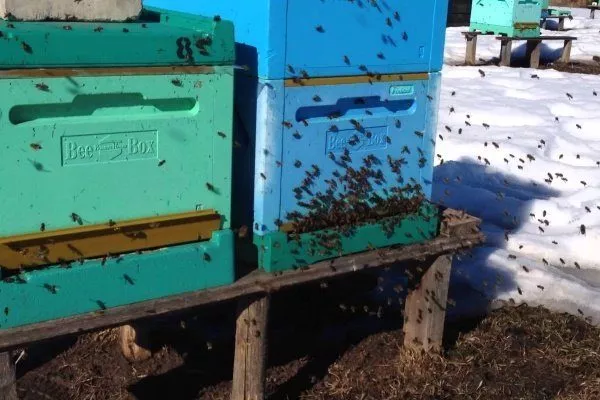
The significance of the first cleansing flight
The spring flight of honeybees is crucial. During the winter, bees consume the food they need to survive, but are unable to empty their intestines, causing a large accumulation of feces. Even under these conditions, the insects survive thanks to a slow metabolism. But with the onset of warm weather, when the temperature in the hive rises, bees begin to consume more food, which places even greater strain on their digestive system.
The cleansing flight of bees allows their intestines to be cleared of excess feces, which in turn promotes the rapid development of bee colonies.
Moreover, an early cleansing flight is the key to obtaining high-quality May honey.
Deadlines
The timing of the first spring flight of bees depends on geographic location: it can vary across countries and regions. Even within a single area, this can occur at different times. The first flight occurs the latest in northern regions.
Much also depends on weather conditions, as spring can come early or late.
For the first spring flight of honey-bearing insects, mild weather conditions must be established: if the bees fly out of the nest at low temperatures, they may die.
Typically, the dates range between mid-March and early April. The optimal temperature for the insects' first cleansing flight after winter is around 9-12 degrees Celsius.
In some cases, snow cover persists for extended periods, even though the sun is shining brightly like spring. This can serve as a false alarm for insects, leading to their subsequent death.
The new apiary season begins with the first flight of bees.
Preparing for the event
It's important to prepare properly for the first insect cleansing flight. First and foremost, beekeepers should monitor the weather forecast to ensure they choose the right day and don't miss it.
Preparatory activities include the following:
- Accelerating snow melting. The apiary should be snow-free during the flight. To achieve this, sprinkle ash or coal dust on the snow. You can also scatter pieces of cardboard, dry branches, and leaves around the hives.
- Protecting the apiary from wind and drafts.
- The placement of the flight holes is such that they are directed towards the south.
Before the planned departure, the hives are removed from the moss house the evening before. It is often necessary to remove them early if the temperature in the winter house is excessively high, causing the bees to become restless.
Hives need to be placed in their old locations: this will prevent wandering, which can lead to the spread of diseases.
Before the first flight of bees in the spring, you need to warn your neighbors about the planned event.
Correct execution of a cleansing flight
It's crucial to conduct the first spring bee flight correctly: it will help identify weak and sick bees. The flight is combined with necessary apiary maintenance, which is performed while the bees are flying.
After waiting for a fine, windless day with suitable temperatures, release the bees in the morning. Keep in mind that their first flight after wintering will be rather sluggish—this is quite natural. Subsequent flights will be more active.
The cleansing flight lasts about two hours. This short period is due to the variable weather conditions in early spring.
The beekeeper must be present during the first flight of his "charges": their behavior can be used to assess their condition.
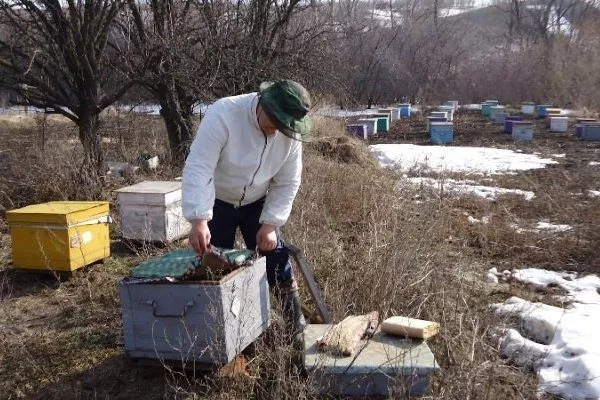
The beekeeper must walk around the hives on one side to avoid interfering with the bees' exit. The hive entrances must be completely open.
During the first spring flight, the beekeeper notes the following:
- The first bees to fly out, rushing to rid themselves of accumulated feces, are representatives of colonies that have not survived the winter well. Their intestines are overcrowded, and they are eager to empty them as quickly as possible.
- If bees fly sluggishly, crawl around the hive board, are unable to take off, and have swollen abdomens, this is a sign of nosema. Affected bees fly slowly, have difficulty evacuating their intestines, and soil the hive walls and landing area with feces.
- If a beekeeper observes that the bees are exhausted, fall from the hive board and do not fly around, then this indicates that they are starving.
- If the insects' wings are unnaturally fluffed up, they crawl near the hive and are unable to take off, this indicates a mite infestation.
- If the flight is sluggish and uneven, and the insects try to concentrate at the entrance, perform uncoordinated actions, then this indicates the absence uterus.
- Sometimes bees don't leave their hives at all. This can indicate either hunger or the exact opposite—a successful winter. Typically, a strong colony doesn't rush its first flight. In this case, the bees are simply waiting for more favorable conditions to make their first cleansing flight.
- Isolate the hive with sick bees from the rest of the families.
- Conduct a diagnosis of the disease with the help of a specialist.
- Apply appropriate treatment or preventive measures.
On the very first warm, sunny day, representatives of strong families begin actively cleaning their houses, removing the bodies of dead insects and various debris.
While the bees are flying, the beekeeper should inspect and listen to the hives. Empty frames, as well as those soiled with insect feces, should be removed.
When a nest of a dead colony is discovered, it's necessary to number the honeycomb frames, check the quantity and quality of food, and the presence of brood. These observations can help determine the timing of the colony's demise and the causes.
All observations made by the beekeeper should be recorded in a notebook in order to have a complete picture of the condition of the insects.
Inspection of bee colonies after the first flight in spring
After the honeybees' first flight, the beekeeper begins seasonal care. After wintering and the flight, the bees must be properly cared for.
First of all, it's necessary to ensure a sufficient number of clean, disinfected hives to correspond to the number of bee colonies. In practice, relocating bees in the spring isn't always necessary, but typically, half of them will need it.
In old hives, only the strongest ones can be left bee colonies, which survived the winter without any problems, in whose hives the walls are not affected by mold or fungus, and in which there are no signs of diarrhea.
The inspection begins with removing the old hive from its stand and installing a new one. Then the hive entrance is opened, smoke is blown into the hive, and the frames are moved.
In early spring, when the weather is unstable, it is necessary to provide insects with a full top dressing – this will have a positive effect on the rate of development of bee colonies. In early spring, when bees have not yet had time to collect nectar, it is not recommended to give them liquid feed, as it encourages them to leave the hive.
The most correct option for feeding honey bees in unstable weather conditions is feeding them with honey in combs.
Later, when the weather becomes more stable, you should add a liquid fertilizer consisting of sugar, yeast, and water. It's prepared as follows: gradually add sugar to boiling water and stir until completely dissolved. Then add yeast and let it simmer for 2-3 minutes.
In March-early April it is recommended to carry out insect treatment for ticks, which causes varroatosis. However, it's best to do this before, rather than after, the first cleansing flight.
This video explains how to properly organize the first spring flight of bees:
The spring flight of bees is an important event, during which the insects eliminate the feces accumulated over the winter. By observing the bees' behavior during the flight, the beekeeper can draw conclusions about how they have survived the winter, as well as their overall health.