
Beekeeping involves many important aspects. Among them is the need for seasonal feeding of bees. This is essential for the health, proper development, and honey production of the insects. Feeding must be carried out according to a specific technique.
Why feed bees in spring?
Spring is an active period for bees, when they need to build up strength for the upcoming honey harvest, which usually takes place in July.
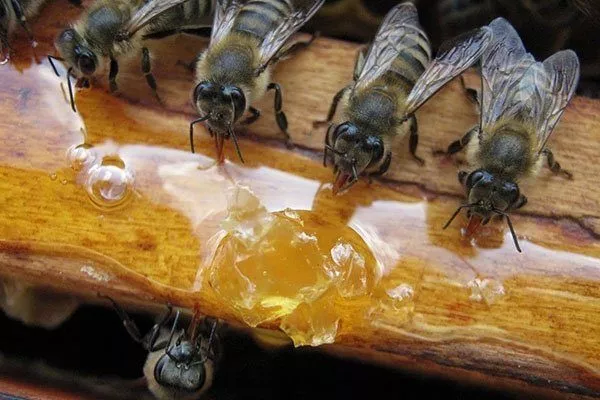
Spring feeding of insects is carried out for the following purposes:
- replenish food supplies;
- stimulate the queen to lay eggs;
- cure some diseases and prevent them with the help of special supplements;
- improve the quality of honey, its aroma and taste;
- increase the overall productivity of the apiary.
Early spring is characterized by unstable weather, a lack of nectar flow, low food supply in the nests, and weakened bees. If the insects begin to flock to the nectar, most will die. To prevent this, food supplies are replenished.
Features of feeding bees in spring
Spring feeding of bees has several purposes and each case has its own specifics. It should be started after the hive inspection.
Feeding before the first flight
Feeding isn't always necessary before a cleansing flight. It's necessary when there's brood in the nest. In this case, the bees expend a lot of energy feeding the larvae and maintaining a stable temperature in the nest. This leads to a sharp increase in food consumption.
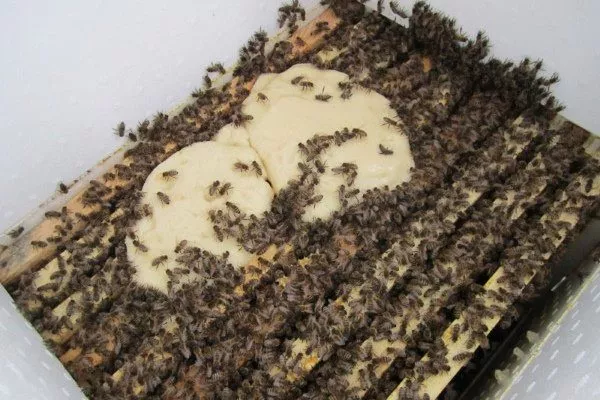
For early spring feeding, use settled honey or a sugar-honey dough formed into cakes weighing no more than 1 kg. These cakes should be wrapped in gauze or clean paper and placed under a cloth on frames next to the nest.
If there's no bee bread in the nests or there's insufficient pollen in nature, use Gaydak's mixture. It consists of defatted soy flour, skim milk powder, and brewer's or baker's yeast. These ingredients should be mixed in a ratio of 3:1:1. Adding bee bread to this mixture is effective in attracting bees.
To help clear the bees' intestines of accumulated feces over the winter, you can give them an acidic diet. To do this, prepare a syrup of sugar and water in a 1:1.5 ratio, adding 2 grams of citric acid for every kilogram of granulated sugar. If using vinegar, you'll need 25 grams of 9% vinegar or 40 grams of 6% vinegar per kilogram of sugar.
To encourage bees to fly, you can use liquid honey saturate. It's made with one part honey and one to two parts water.
If the weather isn't favorable for the first flight, you can feed the bees a thick honey slurry. To prepare it, use 9-10 parts honey to one part water.
Comparison of types of early spring fertilizers
| Type of feed | Consistency | Serving temperature | Family expenses | Refresh rate |
|---|---|---|---|---|
| Sugar and honey dough | Plastic | Indoor | 0.5-1 kg | Once every 5-7 days |
| Sour syrup (1:1.5) | Liquid | 30-35°C | 200-300 ml | Daily |
| Honey Syta (1:2) | Average | 25-30°C | 300-500 ml | Every other day |
| Gaidak's mixture | Dry | Indoor | 200 g | Once a week |
Feeding after the first flight
After the first flight, bees need a booster feed. The syrup for this can be prepared in a variety of ways:
- The simplest method is to use one part sugar to two parts water. Add the sugar to the boiling water and stir until it dissolves completely. Cool the resulting syrup to 30 degrees Celsius (86 degrees Fahrenheit). It will have a runny consistency.
- To make a thick syrup, use 2 parts sugar to 1 part water. For a medium consistency, use equal amounts of both ingredients.
- Invert is also prepared for feeding. Natural honey is used to make this syrup—40 grams of product per kilogram of sugar is sufficient. This type of feeding accelerates the inversion of sugar.
- You can boost your bees' strength with a bee bread supplement. To prepare it, you'll need 0.5 kg of water and bee bread per 1 kg of honey. Mix all these ingredients, strain them through a sieve, and let them sit for 3 days.
- To prepare honey syrup, honey must be diluted with water. The proportions of the ingredients depend on the desired consistency. Crystallized honey is first dissolved in a double boiler and then mixed with the required volume of water.
Don't boil bee syrup. If it burns, the insects could die from the added food. Use a clean, non-oxidizing container to dilute the syrup. The sugar should be free of impurities.
Syrup can be poured into the top feeders. The portions should be small—half a liter is sufficient. For weak colonies, the portion should be smaller.
Another feeding option is to use plastic bags. Fill them with syrup, iron the edges, and poke 3-5 holes to allow insects access.
If you use Gaidak's mixture, you should form flat cakes from it and place them in frames.
For spring feeding, use small feeders. Before adding a new portion of feed, thoroughly clean out any leftovers. Otherwise, they will ferment, and the bees will become sick.
Instead of feeders, you can use frames and place them on the edge. Be careful not to spill syrup on the ground, as this will encourage the colony to raid.
It's best to feed in the evening to prevent bees from flying out to forage. This approach also reduces the risk of theft in the apiary.
The most effective way to feed bees is with honey. This approach ensures the maximum brood production. Honey used for feeding bees should not be sour. Avoid boiling it, as it can caramelize and become unsuitable for the bees. If the honey has crystallized, unseal it in empty cells and add warm water. Once liquefied, the honey can be transferred to the nest.
Another feeding option is centrifugal honey. To make it, place the honey in an enamel container, adding one glass of water per kilogram. Heat this mixture to a boil and stir until the crystals dissolve. Pour the resulting mixture into the feeders.
The settled honey can be warmed or half a cup of boiling water added per kilogram. Afterwards, the mixture should be thoroughly mixed and left in a warm place overnight. In the morning, this warm honey is given to the bees.
Watch a video that explains the need to feed bees after their first flight, the specifics of syrup preparation, and methods for feeding insects:
Supplementary feeding to stimulate egg-laying by the queen
Stimulating the queen to lay eggs is essential for better brood production. The timing of egg-laying determines the rate of renewal and population growth in the hive.
The bees feed the hive queen by secreting royal jelly. To do this, they need good nutrition, which should be based on protein and carbohydrates. Bee bread, honey, or sugar syrup are used for this purpose.
Bee bread is a protein-rich food and is essential for the nest. A supply should be left over from the summer. Bee bread is called "bee bread" because it is essential for feeding the larvae.
If you don't have bee bread, you can substitute it with milk. This supplement also contains protein. It's best to use whole, skim milk. First, prepare the sugar syrup. For every kilogram of sugar, add 0.8 liters of boiling water. After dissolving the sugar, cool the syrup to 35 degrees Celsius and add a glass of milk.
If you don't have whole milk, you can make do with dry milk. For every 0.25 kg of formula, add 0.875 liters of warm water. First, add a small amount of liquid to the dry mixture and blend until it reaches the consistency of thick sour cream. Then add the remaining water.
The mixture containing milk should not be left in the feeder for long, otherwise it will turn sour. This supplement should be given to the bees in small quantities – 0.4 kg per hive per day is sufficient.
A pine infusion is good for stimulating queen bee laying. To prepare this stimulant, finely chop 1 kg of pine needles (the tips can also be used), add 5 liters of water, bring to a boil, and let steep in a warm place for 8 hours.
Afterwards, the mixture should be filtered and added to sugar syrup, one glass per liter. To prepare the syrup, you need six glasses of sugar per liter of water. This stimulation should be repeated every other day for a week and a half.
Honey serves as a source of carbohydrates, but if you don't have it, you can use sugar syrup. It should be thick at first, but as the weather warms, you can use a thinner syrup.
Don't start feeding with liquid syrup. Otherwise, the bees may fly out of the hive, and in cold weather, they will simply die.
Carbohydrates are needed to nourish not only the bees but also the larvae. The more of this food, the more royal jelly the bees will secrete, which feeds the queen and worker larvae. Without honey, the queen's reproduction will be limited to the bees.
Cobalt-containing preparations are used to stimulate egg production. Experience shows that such treatments result in increased brood production.
It's sufficient to add 8 grams of the substance per liter of syrup. Exceeding this dosage will reduce colony productivity. Feed every other day for three weeks.
Egg production can be stimulated with sugar syrup at a 40% concentration. This means you need 1.5 times the amount of sugar and water.
To activate the reproductive function of bees, it is good to use supplements containing powdered sugar.
Protein supplementation standards for sow feeding
| Additive | Proportion in the mixture | Daily allowance for a family | Shelf life of the finished mixture |
|---|---|---|---|
| Perga | 30-40% | 100-150 g | 48 hours |
| Dry milk | 10-15% | 50-70 g | 24 hours |
| Soy flour | 20-25% | 80-100 g | 72 hours |
| Brewer's yeast | 5-8% | 20-30 g | 12 hours |
Top dressing for the treatment and prevention of diseases
Various diseases can be treated and prevented with supplemental feeding. One common problem is nosema. It can be identified by feces on the landing board and the front wall near the entrance.
Nozemat is often used to treat nosematosis, added to liquid fertilizer. For preventative purposes, a fertilizer containing acetic acid is used. A simple application of 3 grams per 1 liter of water and 1 kg of sugar is sufficient.
Fumagillin is also used to treat nosematosis. 4 g of the mixture is sufficient for 5 liters of syrup. 0.3-0.5 kg of the mixture is sufficient for one family.
Another common disease is foulbrood. Oxytetracycline is used to treat or prevent it. 500,000 units of the drug are required per 0.15 kg of feed per bee colony.
A zootechnician or veterinarian determines the need for antibiotics for bees. They also determine the type of medication needed and the quantity to administer.
For preventative purposes, Apimax is often added to spring fertilizing. This product has bactericidal and antimicrobial properties.
If bees need medication, it's often added to candy. To make this mixture, mix 0.2 liters of sugar syrup, 0.5 kg of powdered sugar, and 0.3 kg of dry milk.
When treating bees and carrying out preventive measures, all hives must be cleaned and disinfected.
Therapeutic feeding regimens
| Preparation | Concentration | Course of treatment | Method of application |
|---|---|---|---|
| Nozemat | 2.5 g/l syrup | 5 days in 2 | Upper feeder |
| Fumagilin | 0.8 g/l syrup | 3 weeks | Candy |
| Oxytetracycline | 500 thousand units/kg | 7 days | Powdered sugar |
| Apimax | 5 ml/l syrup | 10 days | Spraying |
Why feed bees in the fall?
Autumn feeding of bees is part of the preparation for the upcoming winter. There are several reasons for this preparation stage:
- Ensure a supply of food for the winter if there is none at all. This often happens because the beekeeper has taken too much honey.
- Replenish food supplies if the fall honey flow is absent. In this case, bees will eat up their supplies before wintering.
- Replace low-quality feed. This applies to rapidly crystallizing or honeydew honey. In the former case, bees may starve because they are unable to accept the crystallized product. In the latter case, there is a risk poisoning.
- Stimulate autumn egg-laying. This allows the hive to be reinforced with strong young bees for the winter, which is the key to a successful overwintering.
- Conduct treatment and preventive measures against diseases. Bees are most susceptible to them in the fall.
Features of feeding bees in autumn
Autumn bee feeding has a number of specific considerations. These include timing, syrup preparation, and feeding techniques. All these rules must be followed, as they are essential for the upcoming winter.
Dates of the event
The timing of autumn feeding may vary depending on the climate zone. Weather conditions in a given year also play a role. A supply of feed should be built up after the honey has been collected and the autumn inventory has been completed.
The first autumn feeding is done in September. It's best not to delay, as the bees are weakened by their first forage, and sealing the combs and processing the food requires a lot of energy.
Supplementary feeding in September is necessary when the nectar flow is weak or absent altogether. In this case, bees can be given honey syrup or liquid syrup. The latter is prepared using a 1:1 ratio. Avoid overdoing it with liquid syrup, as it can trigger the bees to leave.
If winter arrives early in the region and bees enter hibernation as early as October, fall feeding should begin in mid-August and be completed by the end of September.
In most regions, fertilizing can be done until October 5-10. The exception is the southern regions, where the queen bee sows until mid-month. The optimal period for autumn fertilizing is considered to be from August 20 to September 10.
In November, supplementary feeding is only carried out if the opportunity has been missed earlier. Before the cold weather sets in, it's best not to disturb the bees to avoid stimulating their activity. If necessary, during this period, the feeder should be placed at the top of the hive – this makes it easier for the bees to collect the syrup.
Preparing syrup for autumn feeding
For optimal wintering, honey-based feed should be used. The undeniable advantage of this feed is that it is almost completely digestible by the insects, which don't have to expend much energy processing it.
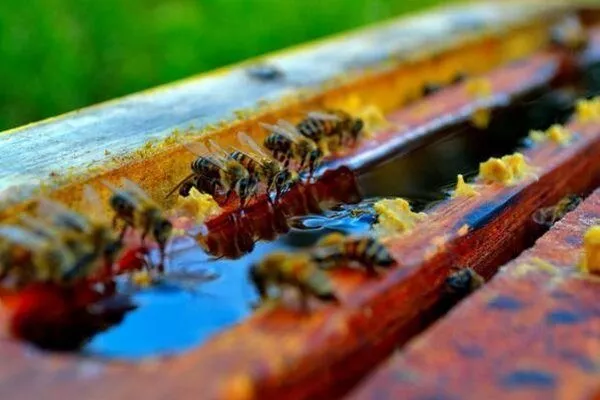
To prepare honey sity, boil water, cool it to 50 degrees Celsius, add honey, and mix thoroughly. For autumn feeding, use a 1:1 ratio.
You can use sugar syrup instead of honey syrup. Its concentration should be 64%, meaning 1.5 kg of sugar per liter of water. To prepare the right syrup, consider a few things:
- Use soft water. If it's hard, the processed food will crystallize quickly. If the water is hard, boil it and let it settle before preparing the syrup.
- First, boil the water, then add the sugar and stir until the mixture is completely dissolved. Do not boil the syrup, as it cannot be used to feed bees if it burns.
- Sugar syrup needs to be acidified, as natural flower honey is acidic. Vinegar essence can be used for acidification. 0.3 g of product is sufficient for 1 kg of sugar. This additive helps prevent nosematosis.
You can also use a 1:1 ratio to prepare syrup. This approach allows for faster sugar inversion, but makes feeding more difficult due to the increased processing time.
Bees need to be given warm syrup. If they're given cold syrup, they'll spend a lot of time and energy processing it.
The best food for bees is flower honey, but it may contain honeydew. In such cases, the insects should be switched to syrup. Otherwise, the bees will suffer from indigestion.
Parameters of high-quality syrup
| Indicator | Optimal value | Critical deviation |
|---|---|---|
| Sugar concentration | 60-64% | Below 50% or above 70% |
| Acidity (pH) | 4.0-4.5 | Above 5.5 |
| Serving temperature | 30-35°C | Below 20°C |
| Viscosity | 30-40 sec according to VZ-4 | More than 60 s |
Technology of feeding bees in autumn
It's important to provide the bees with sufficient food. It's better to have excess food than for the bees to starve and die.
The specifics of autumn feeding depend on the climatic conditions in the region and the weather, the method of wintering, the size and strength of the colony.
If the region is characterized by long and harsh winters, bees need more food. More food is also required if they overwinter outdoors. As a stimulant, 0.1-0.2 liters of syrup or sita is sufficient for one colony.
For successful overwintering, bees must occupy all frames. Each frame should contain up to 3 kg of food. The center of the frame must be sealed with food; the edges can be completely or partially empty.
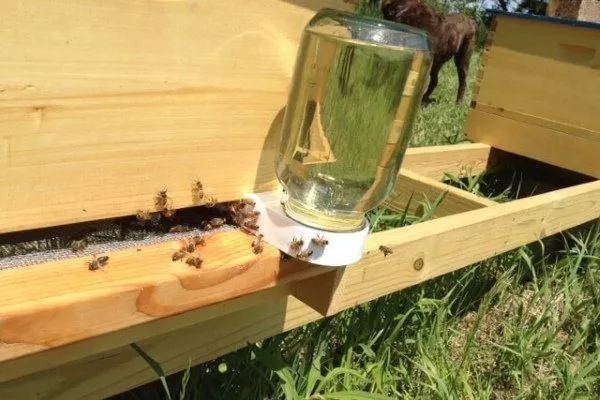
There are various ways to feed sugar syrup to bees. Besides frames, you can use wooden feeders or glass jars. Ceiling feeders are the best option.
If using jars for feeding, it's important to prepare them properly. Fill the jars with syrup and secure them with several layers of gauze or other material. The inverted jars should not leak; if so, add a few more layers of cloth. Place the inverted jars on the frames. It's best to place small blocks between them to encourage the bees to take up the syrup more quickly.
Autumn feeding should be done in the evening after the bees have finished flying. The amount of syrup is calculated individually for each colony; it must be completely removed by morning, otherwise theft will occur.
This video explains the need for feeding bees in the fall, preparing citric acid syrup, and setting up feeders for feeding insects in the fall:
Bees require seasonal supplementary feeding, which serves different purposes depending on the season. It's important to prepare the feed properly and follow feeding procedures. Otherwise, you risk not only failing to help the bees, but also harming them.