
A bee colony is a single community of insects that are closely interconnected, emitting signaling movements and sounds, exchanging pheromones and food. Each individual has specific functions, so bees cannot live and reproduce outside the colony.
| Criterion | Description |
|---|---|
| Disease resistance | Family resilience to common diseases |
| Productivity | The amount of honey a family can collect in a season |
| Aggressiveness | The level of aggression of bees, which affects the ease of working with them |
| Winter hardiness | The ability of a family to survive the winter months without significant losses |
What is a bee colony?
Thanks to the interdependence of each colony member, a huge amount of pollen and honey is collected, and optimal temperature and humidity are maintained in the hive compartments. The bees are able to reproduce and defend themselves against any enemies.
Each bee colony has its own specific characteristics:
- smell;
- propolisation of nests;
- winter resistance;
- ability to swarm and collect honey;
- performance;
- tendency to illness;
- level of aggressiveness.
The queen plays a vital role in the family, and after her replacement, conditions can change. This is because generations change, and therefore, heredity changes.
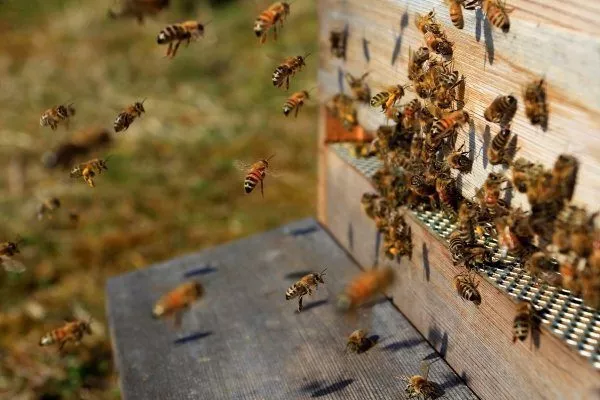
The family consists of the following members:
- the uterus is one;
- workers are females with an underdeveloped reproductive system;
- drones - males.
In general, a colony can contain 80,000 bees in the summer and 20,000 in the winter. Insects thrive primarily under favorable conditions, such as the right temperature and sufficient food. Bee growth slows in the fall and ceases in the winter.
Life of a bee colony
The bee colony is characterized by polymorphism, which translates as multiformity. This manifests itself in the presence of a male and two types of females. This has evolved over time.
The queen is incapable of work, except for laying eggs. However, she cannot feed or raise her young or care for the hive. All work is performed by worker bees, while drones do absolutely nothing. Worker bees collect pollen, feed the queen with their proboscises, and set up the hive. A peculiarity is that females cannot replace the queen due to the underdevelopment of their reproductive organs.
The lifespan of insects is influenced by the season, the strength of the entire colony, and the amount of sugar processed. Worker bees live for one to two months during the summer, and up to eight months during the dormant period. Their lifespan depends on their productivity (the more they work, the shorter their lifespan). A queen bee can live up to four years, but with proper care, they can live up to five years.
Based on the integrity of the biological system of the bee colony, there are characteristic features:
- Common origin. Drones and bees are born from a single egg-laying queen.
- Lack of ability to exist independently, meaning that no family member can live separately.
- Common functionality. Individuals care for protection, offspring, and regulate the microclimate in the hive.
- Subtlety and flexibility of distribution of functions – each species of individuals does its own thing.
- Strict adherence to general family rules.
Development
Ontogenesis (development) depends on growth and differentiation (the process of realizing the genetic phenotype of cells based on their capabilities and functionality). That is, on the processes that occur in the bee's body throughout its life cycle.
Development features:
- Females develop within the egg, when the nucleus of the egg fuses with the sperm. Male ontogenesis begins with the period of nuclear cleavage in the egg, which has not yet been fertilized. This occurs during pre-embryonic development, when the egg is formed in the uterine ovaries and the sperm are formed in the seminal vesicle of the male.
- After this, the embryonic period of ontogenesis begins, when the embryo develops inside the egg. If the egg is fertilized, development takes three days; if not, the time increases by 10 hours. On the first day, the egg is upright; on the second, it assumes a 45-degree angle; on the third, it sinks to the bottom. A larva develops inside, lacking visual or olfactory organs. It is unpigmented, and most of its body consists of the midgut. A couple of hours before hatching, the hive bees fill the cells with royal jelly, which keeps the eggs afloat. If there aren't enough nurse bees producing royal jelly to feed the worker bee larvae, the larvae hatch dry (there isn't enough royal jelly).
Future queens are fed mainly with royal jelly.
- Next comes the postembryonic period, when the worm-like larva emerges from the egg. It does not excrete feces to avoid contaminating the food supply. From this point until the adult insect emerges, approximately 25 days may pass. Before pupation, enzymes that synthesize melanin accumulate in the hemolymph, causing the cuticle to darken.
- The prepupal period begins, during which the larva molts five times: the first four times over the course of three to seven days. The fifth molt is the final one. Molting involves the gradual shedding of the shell as the insect grows in size. During this time, the larva does not need to feed because it is actively spinning its cocoon.
- The pupal stage of development is characterized by a sixth molt lasting 9 days. During this time, the insect is formed.
- During the pupal and prepupal stages, the queen remains in a sealed cell, unable to move or feed. The larva's fat body accumulates nutrients. It is these reserves that the female draws upon.
- Immediately after release, the larva lies on its abdomen, and after a day, it rolls onto its side. On the third day, it assumes a semicircular position, and on the fourth, a closed or open ring. On the fifth day, the tip with the head rises, and on the sixth, the larvae have grown to the size of a cell.
- How feeding occurs: During the first three days, worker bee larvae are fed royal jelly, followed by bee bread and honey. This inhibits the development of the female's reproductive organs. Their body weight increases 1,500-fold within six days.
- How bees care for their larvae: worker bees fly into the cell 1,000-2,000 times a day to create a special microclimate. The temperature should be 35 degrees Celsius, and the humidity should be a maximum of 80%. After 6-7 days, the cells are sealed with special caps that ensure proper air exchange. The caps are made of pollen and porous wax.
- 21 days after birth, the bees gnaw through the created cap, emerging outside.
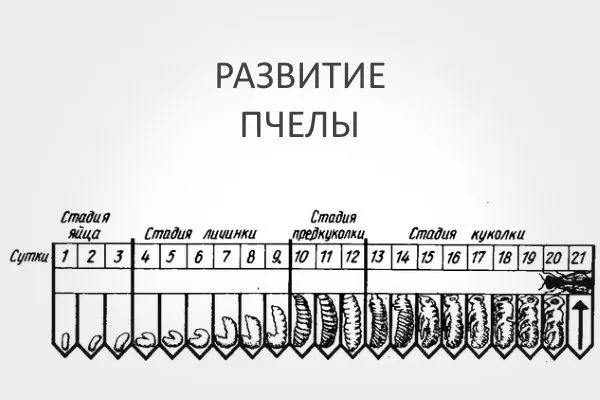
Distinctive features of color development:
- immediately after pupation the color of the compound eyes is white;
- on the third day it acquires a yellow tint;
- on the 4th - pinkish;
- on the 16th - purple, while the chest resembles ivory;
- 18th day – dark abdomen, joints and claws – yellow-brown;
- 19th – the chest becomes even darker, the eyes acquire a purple tint;
- Day 20 – the body looks dark gray.
Development after release:
- When emerging from a cell in cloudy weather, a bee must rest for three days. Adult bees feed her, but she can also feed on the remains of the cap. During this time, the young worker female tidies herself up and then begins cleaning the cells. Some insects polish them until they shine. propolis.
- For 7-10 days, the young remain near the queen, feeding her and the growing larvae. During this period, sufficient royal jelly is produced. Four- to six-day-old larvae are fed for up to six days of life. After that, the youngest are fed.
- After a week, the young bees develop wax glands, secreting wax in the form of plates. The bees become construction workers, compacting pollen, processing nectar, and constructing honeycombs.
- After 2 weeks or more, the wax glands stop synthesizing, so the insects switch to caring for the nest - cleaning the cells, collecting and removing garbage.
- After 20 days of life, bees acquire the status of guard bees. They guard the entrance and are able to distinguish other bees. They begin to fly for the first time, which allows them to memorize the precise location of the hive. The insect flies exclusively with its head toward the entrance, making semicircular movements.
- When worker bees reach 22-25 days of age, they begin to fly outside their nest to collect honey. The worker bee must inform the other bees of the nectar's location. She does this through visual biocommunication.
- After a month, bees begin collecting water for the entire colony. This period is characterized by a high mortality rate for bees, as they often collect water from natural sources. To prevent this, beekeepers should ensure the apiary has drinking bowls with high-quality water.
This cyclical nature of bee life allows for more efficient utilization of nutrients and the use of available colony members. Nutrients are most abundant during the period of emergence.
If the queen or brood dies, the beekeeper must determine the exact period during which it occurred. Therefore, it is crucial to know the characteristics of each stage of development.
Content
To increase the productivity of a bee colony, it's essential to properly maintain the apiary. There are certain rules that are essential during the honey flow period:
- honey processing and extraction;
- timely and high-quality feeding;
- lack of process swarming;
- organizing family work;
- arrangement of wintering.
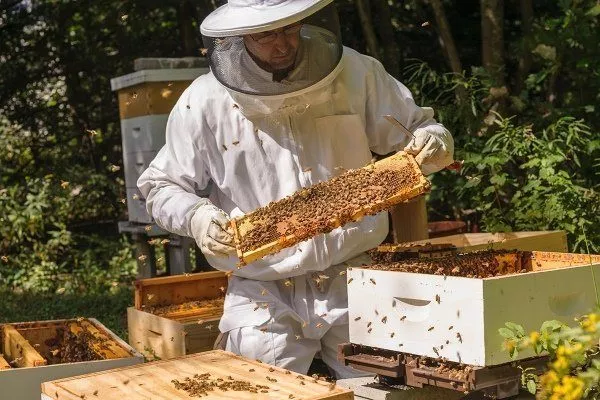
How to properly keep bees:
- Standard nest dimensions are 9 mm, but innovative designs increase this to 12 mm. This is beneficial when raising multiple hives. However, this leads to increased feed consumption during wintering. Undigested food remains accumulate in the insects' posterior intestines, so after removing the hive in the spring, the bees must perform a cleaning flight. Deviations from natural parameters (in a hollow or log hive) encourage early swarming, which is beneficial for the beekeeper – the colony reproduces and disperses earlier and more efficiently. Learn more about the various methods of bee reproduction – read here.
- Around three days after opening the hives in spring, worker bees bring pollen to the nests, and the queen lays eggs. During this period, the beekeeper should expand the nests and begin counting the 36 days. This means that a new generation will emerge in 20-21 days (24 days after the opening). After another 12 days (the 36th day), the young bees will begin constructing the honeycomb frames, so the hive should be provided with wax foundation. If all work is carried out correctly, maintaining the cell base angle (it should be 110 degrees), construction will proceed quickly, and the queen will begin laying eggs more intensively.
- The beekeeper must place food supplies in the form of honey and bee bread. The arrangement should correspond to natural conditions: frames of bee bread are placed under the brood.
- If insects are kept in multi-body hives, then the honeycomb frames are arranged in a pyramidal pattern (nests will be formed according to the principle - 7, 9, 11).
- The ceiling should be airtight to prevent heat loss. This will prevent bee waste from being used in the ventilation system.
- Experienced beekeepers prefer multi-box designs because they allow for the reduction and expansion of nests by boxes rather than individual frames. This reduces human labor costs and increases the number of bee colonies. However, in this case, stimulating feeding with honey slurry is necessary. This will replenish the food reserves in the brood box during the autumn.
- Multi-hull maintenance involves carrying out a number of tasks without inspecting the frames and dismantling the nest:
- nest reduction and bottom cleaning - one body is removed;
- expansion - adding a stern hull;
- installation of the "construction" body;
- transportation of the family for pollination and honey collection on various agricultural crops;
- installation of store stands for displaying honey products;
- honey selection;
- preparing for winter.
- Hive designs are selected based on climatic conditions (air temperature, wind intensity and frequency), location, and the need to increase productivity. If intensive honey flow is planned, the hive should be spacious. If frequent transport is anticipated, preference is given to hives that are easy to transport.
- The structure of nesting buildings should better correspond to natural conditions, which will make the family stronger.
- The food should be plentiful and of good quality.
Wintering of bees:
- Bees undergo winter dormancy after the onset of cold weather. The hive temperature should be between 0 and 7 degrees Celsius. This regime ensures optimal CO2 concentration (the biological optimum is 1-3.5%). If the temperature and CO2 concentration are higher, the bee colony becomes active, leading to overconsumption of food and premature gestation (excess feces place abnormal stress on the hindgut).
- Winter streets should be 9 mm in diameter. This will ensure normal carbon dioxide levels, which is essential for a smooth transition of the bees' bodies into dormancy.
- For the winter, no more than 5 kg of feed is placed in one family.
- During the winter, the beekeeper should constantly listen to the hives—the cluster should not create any rustling, humming, or buzzing sounds. Bees usually cluster in clusters, hanging from the hive bed. This is a natural habit of the insects, designed to create an optimal microclimate.
- ✓ Check that there is sufficient food available
- ✓ Make sure the hive is sealed
- ✓ Check the health of the bee colony
- ✓ Ensure optimal temperature and humidity
Uterus
The queen bee is the sole leader of a colony of thousands of bees, and is therefore known as the queen of the hive. She is the only female with a normally developed reproductive system. She is responsible for fertilization and brood reproduction. Her quality is determined by the number of eggs laid. A queen bee should lay 1,700-2,000 eggs per day. If a queen bee is unable to cope with her duties, she is replaced by another individual.
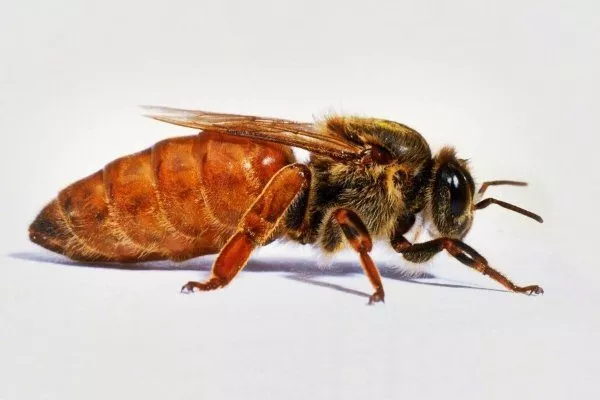
Every worker bee and drone distinguishes its queen by a specific scent, so if a new queen is introduced into the hive, the colony will perceive her as a threatening enemy, which will result in her destruction. For this reason, no two queens can be present in a single colony at the same time.
Distinctive features
A queen that has mated with a male at least once is considered fertile. Her characteristics, unlike other females and drones, include:
- weight ranges from 180 to 330 mg (infertile weighs 170-220 mg);
- body length – from 2 to 2.5 cm;
- eyes smaller than the rest;
- the shape of the abdomen is torpedo-shaped;
- the body is elongated;
- the queen is distinguished by her increased slowness;
- lives mainly in the hive (leaves the house only during mating and swarming);
- lifespan – 4-5 years;
- has a special smell that comes from the pheromones it produces;
- She is the only bee that does not die after releasing her sting.
After a couple of years, the queen's reproductive capacity declines, and she produces fewer eggs. Moreover, the eggs she produces are mostly drones. Therefore, beekeepers replace her with a new one during this period.
Functions
The queen's primary function is reproduction and egg laying. She unites the entire colony by secreting a special substance that is passed on to all members of the hive. The queen directly influences the overall productivity of the bees, their vital activity, and their numbers.
Methods of withdrawal
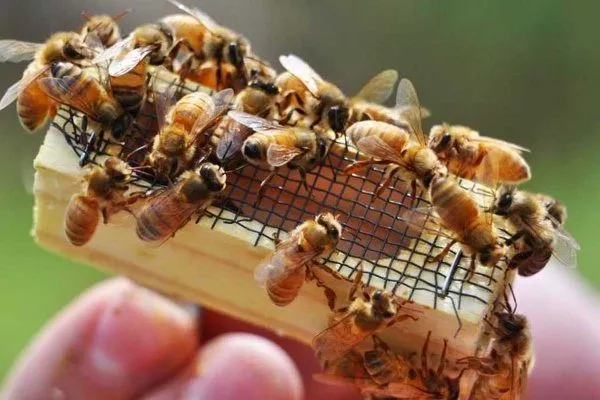
The uterus is being removed There are two methods: natural and artificial. In the first case, the insects themselves build a queen cell, where the queen lays her egg. To ensure the birth of a queen, the larva is fed royal jelly, which contains a special hormone.
Artificial breeding includes the following stages:
- The host bee, along with the open brood, is removed from the hive (only the larvae and recently laid eggs remain inside).
- The lower part of the honeycombs is cut off.
- The queen cells are cut out and placed in the hive.
- The uterus is returned to its place.
There's another queen rearing technique, but it's rarely used because it's considered complex. However, experienced beekeepers strive to use this method because it produces fertile and high-quality queens. The method involves placing the larvae in wax sacs and artificially feeding them royal jelly.
To ensure a good hive mistress is bred, follow these rules:
- use the strongest families;
- distribute queen cells evenly throughout the swarm to ensure adequate feeding;
- maintain a favorable air temperature (32-33 degrees);
- take into account humidity (60-80%);
- stick to the queen hatching calendar;
- Monitor the process of fertilization and the appearance of offspring.
Pairing
To mate, the queen performs a mating flight, after which fertilization occurs immediately. This occurs within 10 days of leaving the queen cell. The process occurs as follows:
- During the first 3-5 days (depending on the queen's age and strength), the queen rests. During this period, the beekeeper should destroy any remaining queen cells.
- Next, the queen takes off, remembers the location of the hive, and navigates the area.
- On the seventh day, the mating flight occurs. Drones, sensing the pheromones of a bee ready for mating, quickly follow her. However, only the strongest and fastest individuals can catch up. After mating, she returns.
- After 3 days (on the 10th day after leaving the queen cell) the queen performs the primary sowing.
It's strictly forbidden to frighten the female during these days, as she usually flies away. In unfamiliar territory, the queen is unable to navigate and will therefore never return (she will die).
If it so happens that you need to disturb the hive during the mating period, follow these recommendations:
- When inspecting, proceed with caution; do not use smoke or other substances that irritate bees.
- It is permissible to inspect the hive until 11 am.
- Honey should be collected after the insects' flight activity has decreased, that is, after 5 pm.
Uterine replacement
Bees always sense when their queen has died. Humans can also notice this, as the insects begin to fly rapidly in search of their mother and make a loud noise. About two hours later, they feel orphaned.
If a beekeeper artificially reintroduces a bee, this should be done 10-12 hours after the death of the old queen. As mentioned above, a bee colony can replace its queen on its own. Bees sense when the queen is aging (her scent changes) or is injured.
Self-replacement is carried out in quiet ways:
- The division is carried out while the queen is still present. The colony should be divided into two equal halves, and six frames with dry bees should be selected. The period begins after a one-day brooding period. In the part without a queen, the bees will lay a queen themselves from the larvae. After the new queen has grown stronger (approximately 4-7 days after birth) and the colony has become accustomed to her, the two halves are reunited. The stronger, younger queen destroys the older one.
- Damaging the queen. The beekeeper must take the queen and artificially damage her. The worker bees will eventually destroy her and then breed a new queen.
Artificial creation of queens:
- Introduction. Use a cap or cage. Remove the cage from the hive and place the queen on it, ensuring she doesn't fly away and leaves her scent. After a couple of hours, remove the old queen and add the young one. Next, place the cage in the top center of the nest. Wait two hours. The workers should feed it. If the result is positive, open the cage. The procedure is identical with caps. However, the bees will make their way through the comb to reach the new queen. There is a risk that the young queen will be rejected. In this case, the procedure will have to be repeated with another new queen.
- Shaking. The colony should be shaken sharply onto the entrance or into the hive, which will cause the insects to become confused and forget about their queen. At this point, a new "mother" should be introduced. However, this method isn't always effective, as the bees will simply become angry.
- Aromatization. An effective method. The glue, swarm, and young queen are sprayed with sugared water and a solution containing mint drops. This allows the bees to become accustomed to the scent and accept the new queen as they lick her.
- Reintroduction to the mother. In the evening, take an empty lei and spray it with mint drops. In the morning, form a colony of young bees, placing it near a strong swarm. That same evening, introduce a young queen, who performs a test flight. When the fertile period arrives, both colonies are reunited. The old mother is destroyed by the bees.
- Dust. This is used when the old queen has died. In the evening, a new queen is introduced, but first covered with a cap. In the morning, the cap is removed, and the insect is dusted with ordinary flour. This method has been suggested online, but has not yet been tested by beekeepers.
Drones
Drones are males that feed through exchange with worker bees. At the end of summer, worker bees stop feeding the drones' brood, preventing adult males from eating their food. Furthermore, they begin to expel them from the hives.
This signals the end of the main honey flow period. Therefore, such individuals usually don't survive until winter. But this is only possible if the swarm is queenless. For many beekeepers, drones are a nuisance, as they do nothing but mate, consuming nutritious food and infecting other colony members with varroa.
Distinctive features
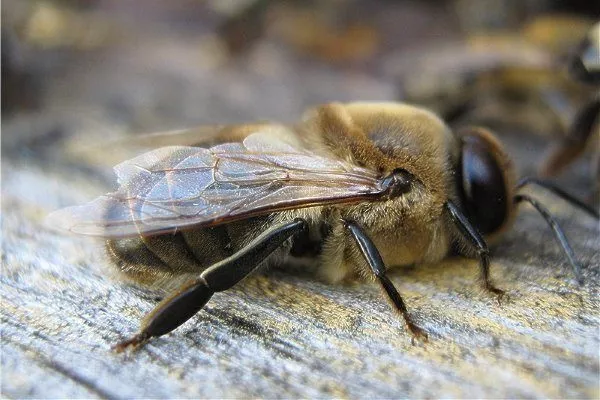
Males emerge before the honey flow, in late spring. Approximately 10 days after emergence, the drones are fully capable of mating. The number of these insects ranges from 200 to several thousand. Characteristic features:
- weight – 220-250 mg;
- body length – from 1.5 to 1.7 cm;
- the body is wide;
- rounded tail;
- during flight, high speed is developed;
- when at rest they are characterized by clumsiness;
- quickly orient themselves in space;
- when flying they produce loud bass sounds;
- no sting;
- fly away from the hive 15 km;
- death occurs after mating;
- development period – 24 days.
Functions
The sole function of drones is to mate with the hive's queen. Drones constantly compete for the right to mate with the queen. The strongest win, but die immediately. Males that have never mated die of starvation after being expelled from the colony.
The beekeeper can observe the mating process, noting the weaker individuals. This allows them to be artificially culled, ensuring that the queen will have only strong and fertile males.
Life cycle
Males have a relatively short lifespan—up to three months. The timing of their emergence in the spring depends on climatic and weather conditions, the queen's age, the flow of honey, and the strength of the swarm. When raising drones, their cells are placed around the perimeter of the combs, but if there are not enough, the bee deposits the larvae directly on the combs.
After emerging from the cells, worker bees artificially feed the males for ten days. This is necessary for their full development. A week after emergence, the male makes his first flight, familiarizing himself with the location and surrounding environment.
Controlling the number of drones
The number of males in a bee colony depends largely on the quality of the comb and the breed, but each colony naturally weeds out weak individuals. However, it can happen that excessive numbers of drones are bred, which negatively impacts the swarm and the amount of honey collected, so beekeepers must monitor their numbers. A normal number of males is 200-500.
A colony cannot exist without males, and not only because they are needed for mating. It turns out that they can be used to judge the quality of the queen and the swarm as a whole. For example, if drones remain in the hive after being expelled in the fall, this indicates that the queen has become sterile or has died. Furthermore, when the air temperature drops, males fly into the hive and huddle together, creating favorable conditions in the "room."
If the males manage to survive the winter in the hive, they will die in the spring, as they cannot tolerate low temperatures, which makes them weak.
Worker bees
Worker bees have an average lifespan between queen and drone – from 30 days to several months. If a bee is hatched in March, its lifespan is 35 days; if hatched in June, it's a maximum of 30 days; if hatched in autumn, it's 3-8 months. However, it's possible for workers to survive for a year (when there's no brood in the nest). This is due to their increased feeding on bee bread, which allows the bees to accumulate reserves. Furthermore, they don't need to expend energy on work during the winter.
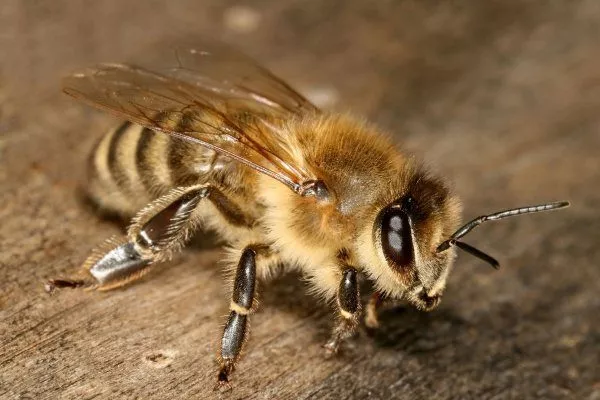
In the fall, after the honey flow, worker females gain 15-19% of their body weight. These individuals have an underdeveloped reproductive system, but despite this, in the absence of a queen, they can lay 20-30 eggs. However, all of them are unfertilized. Eggs are laid not on the bottom of the cells, but on the walls, which distinguishes workers from the queen.
Drone-laying bees come in two types: anatomical (they develop eggs in their ovaries) and physiological (they lay these eggs). The former can account for up to 90% of the entire colony, while the latter account for 25%.
Flying and hive bees
Worker bees are divided into two main groups:
- Hives – those individuals who remain in the hive after emerging from the cells. Initially, they gain strength, then begin feeding the larvae, then engage in cleaning and construction of the hive. When it's time to fly, they make preliminary flights, turning their heads toward their home. After familiarizing themselves with the territory, the hive bees become flight bees. They are replaced by newly hatched individuals.
- Flight – collect pollen and nectar, transport water and sticky resinous substances to the hive. They are the ones who work hard during the honey flow period.
Distinctive features
A single bee colony can contain up to 80,000 worker bees during honey collection, but during the off-season their number drops significantly to 30,000. Features:
- Weight – 90-115 mg.
- Body length: 1.2-1.4 cm.
- Particular attention should be paid to their body temperature during work, as it depends on the outside air temperature. If the outside temperature is 23-26 degrees Celsius, their body temperature will be 35-37 degrees Celsius; if the outside air temperature is 36-37 degrees Celsius, their body temperature will be 42 degrees Celsius. Therefore, after work, their body will be hotter than the air.
Functions
What does a worker bee do?
- collects nectar and pollen;
- produces honey;
- stores honey reserves in honeycombs;
- builds honeycombs;
- feeds the brood;
- takes care of the queen;
- brings water;
- cleans the hive, polishing it to a shine with propolis;
- controls the microclimate level in the house;
- guards the nest (worker birds produce a poisonous substance called apitoxin, which they use to sting their enemies to death).
How does a bee colony work? (video)
In this video, you can clearly see a bee colony and learn interesting facts about bees:
If you decide to start keeping bees, be sure to study informational materials about each member of the bee colony, consult with experienced beekeepers, and strictly adhere to all rules for keeping them.