
Pigs are considered omnivores. When raised at home, a variety of feeds—vegetables, grains, and scraps—enters the pig's trough. Pigs don't disdain anything, but will the pork be of good quality after such a diet? Feeding pigs anything and everything will weaken them, and their meat and fat will be less tasty and nutritious. Let's explore what and how to feed pigs to maximize their profitability.
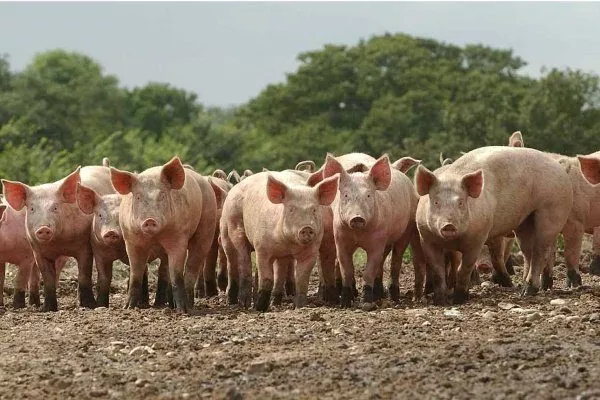
Types of food and their daily consumption rates
When choosing a pig breed for fattening, it's important to know in advance what you'll be feeding them, as the diet will vary depending on the breed. Table 1 shows the recommended feeds for different pig breeds.
Table 1
| Breed | Recommended type of food |
| Mirgorodskaya | Juicy, green |
| Ukrainian steppe | |
| Large white | |
| Landrace | Concentrated feed |
| Duroc | |
| Wales |
It is prohibited to feed sick animals for meat, especially if they are infected with tuberculosis, finnosis, infectious and inflammatory diseases.
Farmers use a variety of feeds and products to fatten pigs. The feed mix they provide must provide the animals with energy and a full range of nutrients.
When pigs consume fiber (like bran), they expend a lot of energy digesting it. Therefore, this type of feed should be fed in limited quantities. The majority of the feed should be concentrated feed. Failure to follow this principle will lead to negative results—the pig will not gain weight.
Feeds fed to pigs are divided into three main groups, each of which has a different impact on meat taste and quality. The impact of feed groups on meat and fat quality is shown in Table 2.
Table 2
| Group No. 1 – improves the quality of meat and lard | Cereals – peas, millet, barley |
| Vegetables, root crops, melons | |
| Herbs – fresh and hay (nettle, alfalfa, clover) | |
| Meat and dairy waste | |
| No. 2 – degrades the quality of meat and fat | Bran - wheat and rye |
| Buckwheat | |
| Corn | |
| No. 3 – given at the initial stage of fattening | Oats |
| Soybeans | |
| Oilcake |
Group No. 3 is excluded from the diet 2 months before slaughter.
Comparison of the effects of feed on meat
| Indicator | Group 1 | Group 2 | Group 3 |
|---|---|---|---|
| Effect on taste | Improves | It makes it worse | Neutral |
| Protein content | 18-22% | 12-15% | 14-18% |
| Recommended feeding period | The whole cycle | Do not give before slaughter | Just the beginning of fattening |
| Digestibility coefficient | 80-94% | 65-75% | 70-82% |
Concentrated feed
Concentrated feeds are ground feeds made from cereals, bran, legumes, and grain processing waste. This feed provides animals with energy, while the legumes provide protein.
The most popular crop for fattening is barley. It is 80% digestible and improves the flavor of pork. The composition of the concentrated feed:
- oats - they are given only at the initial stage of fattening;
- millet;
- corn - it is mixed with feed containing protein;
- steamed peas;
- cake and meal (soybean, sunflower, flax);
- Bran - you can't give a lot of it because it contains a lot of fiber.
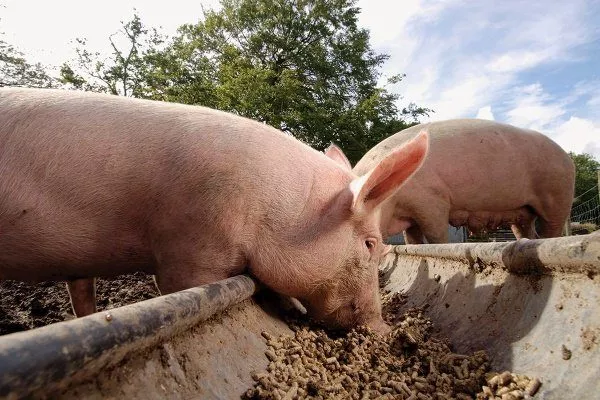
Concentrated feeds are given in crushed form.
Remember when feeding livestock:
- Finely ground grits are given only in combination with food scraps or succulent feed - this prevents disruption of the stomach and intestines.
- Grain feed is not boiled - heat treatment leads to the destruction of active substances.
- Legumes must be boiled; they are poorly digested raw.
The feeding rates for pigs with concentrated feed are presented in Table 3.
Table 3
| No. | Culture | Amount of feed, kg (for a pig weighing 50 kg or more) | Daily requirement, feed units | The number of feed units in 1 kg of feed | Weight gain, kg |
| 1 | Wheat | 2.1-2.4 | from 2 and above | from 1.2 | 0.5 |
| 2 | Barley | 2.3-2.5 | from 2 and above | 1.21 | 0.5 |
| 3 | Corn | up to 2 | from 2 and above | 1.34 | 0.5 |
| 4 | Peas | from 2 | from 2 and above | 1.17 | 0.5 |
| 5 | Rye | 2 | from 2 and above | 1.18 | 0.5 |
| 6 | Oats | 2.1 | from 2 and above | 1 | 0.5 |
| 7 | Millet | 2.3 | from 2 and above | 0.96 | 0.5 |
Succulent food
The most valuable succulent crop is potatoes. They are 94% digestible. Potatoes are fed mixed with protein-rich feed – peas. Potatoes are given boiled. Among the succulent feeds fed to pigs:
- Boiled beetroot.
- Carrots are needed by suckling piglets.
- Pumpkin – given to all age groups.
Feeding standards for succulent feed
| Feed | Piglets (kg/day) | Adults (kg/day) | Maximum share in the diet |
|---|---|---|---|
| Potato | 0.5-1 | 3-6 | 40% |
| Beet | 0.3-0.7 | 4-8 | 30% |
| Carrot | 0.2-0.5 | 1-3 | 15% |
| Pumpkin | 0.3-0.6 | 2-5 | 25% |
Food waste
To feed the livestock you can use:
- uneaten food;
- crackers;
- waste remaining after cutting up fish and animals;
- raw and boiled vegetables;
- cleaning fruits and root vegetables.
Several weeks before slaughter, fish scraps must be removed from the diet, otherwise the meat will become tasteless.
The waste is placed in a clean container and given to the pigs.
Acorns can be added to a pig's diet. One pig can be fed up to 2 kg per day. Piglets also enjoy mushrooms, which can be added dried or cooked to their mash.
Green fodder
Nettle is the most important herb in pigs' diets. It can be mown anywhere; it grows everywhere. Nettle is harvested for winter food by drying the young shoots. The recommended daily serving is 300 g.
After 6 hours, the chopped green mass loses half its benefits. Leaving the nettle brewed to cool can cause toxicity.
Another valuable green crop is rapeseed. It's rich in protein and fat. Rapeseed cake accelerates animal growth by 4%. Rapeseed contains significantly more phosphorus, magnesium, calcium, and copper than soybeans. If you want to increase the profitability of your feedlot, it's best to replace sunflower and soybeans with rapeseed.
It's beneficial to feed pigs "green stuff"—a mixture of crushed grass and leaves. Ingredients:
- peas;
- oats;
- quinoa;
- nettle;
- alfalfa;
- clover;
- beet tops.
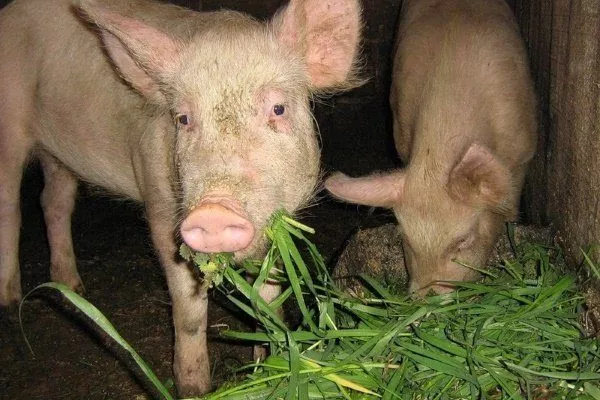
In winter, instead of green fodder, they feed combined silage. It is prepared for future use from the following ingredients:
- fresh grass;
- vegetable waste;
- roots;
- chaff;
- hay or grass flour;
- carrot.
Animal products
To the pigs, fattened for meat, you can give animal food:
- Milk. Only sucklings are fed undiluted milk. Adult animals are fed buttermilk, skim milk, and whey.
- Fish or meat. They are given for protein. Animal and fish scraps can be given. Any fish fed must be boiled.
Yeast feed
Yeast is rich in vitamins and proteins, which are almost completely absorbed by the body. Yeast feed increases weight gain significantly. Special yeasts are produced—feed grades. Table 4 shows the composition of yeasts.
Table 4
| Composition of yeast | % |
| Protein | 32-38 |
| Dietary fiber | 1.8 |
| Fat | 1.8 |
| Fiber | 1.2-2.9 |
| Protein | 38-51 |
| Ash | 10 |
Tips for beginners:
- It's recommended to add yeast to 30% or more of the feed. For example, if you feed a pig 2 kg of feed mix per day, then 600 g of the feed should be mixed with a yeast supplement.
- You can replace nutritional yeast with baker's or brewer's yeast.
What supplements are needed?
Flavoring food with additives—flavors and aromas—improves digestion and gastric acid secretion by stimulating taste receptors. Aromatic oils are used to stimulate taste buds:
- citrus fruits – lemon, tangerine;
- cinnamon;
- sage;
- cumin;
- dill.
The pig family loves a sweet treat. To give them a tasty treat, add the following to their food:
- 2.5% sugar;
- 5% ground dry beetroot.
Guinea pigs prefer a sour taste to an alkaline one. To create this, organic or inorganic acids—lactic or acetic—are added to the feed at a dosage of 0.4% of the serving weight. To add bitterness to the feed, 0.15% mustard or 0.4% calcium chloride are added.
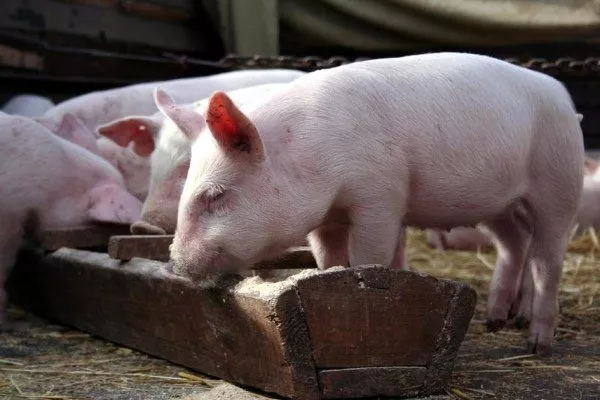
To improve digestibility and increase appetite, animals are given food with sweet, sour, or bitter additives. Citric acid is an important additive. It performs the following functions in the body:
- reducing the risk of infection;
- normalization of pH levels;
- high-quality digestion of food;
- normalization of microflora.
Adding citric acid can increase weight gain by 9-17%. The recommended dosage is 1% of the feed weight.
Pigs are given mineral supplements – the following is added to their feed:
- ash or coal;
- calcareous tufa;
- chalk;
- eggshell.
Small doses of antibiotics should be added to the feed; they reduce the incidence of disease and increase weight gain by 15%. The medications used include Biovit-20, Terravit-40, and others. These should be administered after consultation with a veterinarian.
Why do you need flax supplements?
Pure flax should not be fed to pigs. However, flax is given in small doses to treat diarrhea due to its astringent properties. Large doses degrade the quality of meat and fat, causing them to acquire a yellowish tint and a fishy odor.
However, flaxseed meal is very beneficial for pigs. It contains:
- protein – 28%;
- moisture – 11%;
- fat – 9%;
- extractive substances.
When the cake swells in water, mucus is released, protecting the stomach walls from irritation.
How to prepare food?
Any feed requires specific preparation before being fed to pigs. Due to feed processing:
- their nutritional value increases;
- their digestibility improves;
- they are disinfected.
There are several methods of preparing feed:
- Mechanical. The ingredients are crushed, ground, and mixed. This increases the nutritional value and palatability of the feed.
- Chemical. Ingredients are treated with alkali or acid – this method is used for substances that are difficult to digest.
- BiologicalThis involves partially altering the chemical composition. This is achieved through ensiling, fermentation, sprouting, etc.
Comparison of feed preparation methods
| Method | Efficiency | Time costs | Applicability |
|---|---|---|---|
| Mechanical | +15% digestibility | Low | All feeds |
| Chemical | +25-40% digestibility | Tall | Only roughage |
| Biological | +30-50% digestibility | Average | Grain, greens |
Preparing vegetables
Potatoes are the main root crop for feeding. Pigs digest raw potatoes poorly; boiling and mashing them is recommended. Potatoes are fed to pigs mixed with grain or green feed.
The water in which the potatoes were boiled is drained – it is harmful to pigs, as it contains poisonous solanine.
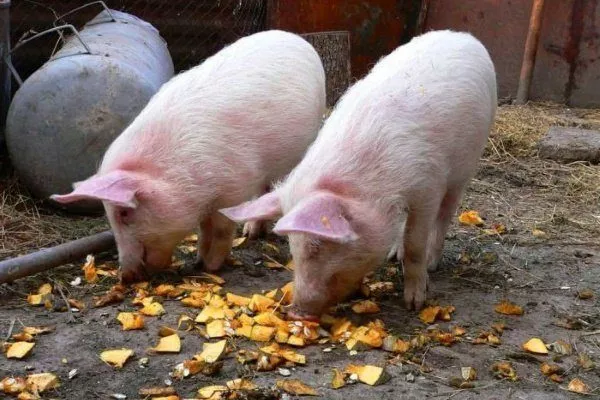
Other vegetables—beets, carrots, and pumpkin—are grated on a coarse grater before serving. They are served raw and grated before eating. Avoid preserving them, as they will spoil and become inedible.
Vegetables and root vegetables become more nutritious after processing, and animals digest them better. Beets and pumpkins can be boiled, and the cooking water can also be fed.
Hay and chaff
To improve digestion of coarse feed—hay and hay dust—in pigs' stomachs, they are steamed in boiling water for 2-3 hours. The hay is chopped before steaming.
Cereals
The hardest part is preparing the grain. Neither dry nor raw grain should be fed to piglets—they won't provide any benefit. At a minimum, the grain needs to be ground. The finer the grind, the more beneficial it will be.
What you need to know about grinding grains:
- Oats and corn are ground as needed; there is no need to store them in advance, as the fat contained in the grains oxidizes, making the ground grain rancid.
- Beans and lentils must be boiled thoroughly; otherwise, their digestibility is minimal.
Before feeding the ground grain to suckling piglets, it is first roasted until dark brown.
To increase the nutritional value, the grain is sprouted in boxes exposed to sunlight. The grain is watered for 10 days. The grain can be fed when the sprouts reach 10 cm in length. This feed is typically given to piglets and sows.
Green fodder
Green grass is not fed to pigs without first being processed. It is thoroughly chopped to ensure that the green mass is free of dry, coarse stems. Storing grass for future use is not recommended, as it will become wilted and may rot, rendering the feed useless.
Combine silo
To prepare combined silage, beets, cabbage, carrots, lupines, and green beans and corn are chopped. Important points for preparing combined silage:
- All vegetables and herbs have a period when they are best ensiled – when you can get the most benefit:
- corn is ensiled when it reaches milky-waxy maturity;
- lupine and peas - before flowering;
- Jerusalem artichoke, pumpkin, carrots - after full ripening.
- The crushed mixture is compacted to remove air. The combined silage is placed in a trench, polyethylene bags, or any other container. Combined silage is a biological preservative.
- Nettles, root crop tops and melon tops cannot be used for silage.
- Frozen or moldy silage is not suitable for feeding.
Table 5 presents several popular recipes for combi-silos:
Table 5
| Ingredients | Percentage ratio, % |
| Recipe No. 1 | |
| Potato | 40 |
| Clover | 30 |
| Carrot | 15 |
| Cabbage | 15 |
| Recipe No. 2 | |
| Sugar beet | 50 |
| Carrot | 20 |
| Hay dust | 10 |
| Green beans | 20 |
| Recipe No. 3 | |
| Corn (cobs) | 60 |
| Pumpkin | 30 |
| Green mass of legumes | 10 |
| Recipe No. 4 | |
| Sugar beet | 40 |
| Clover | 30 |
| Potato | 30 |
| Recipe No. 5 | |
| Carrot | 20 |
| Corn (cobs) | 80 |
Feeding modes
To achieve good weight gain, pigs need the right feeding regimen. Feeding standards for pigs fattened for meat are provided above, in Table 5.
Feeding of animals of different ages and purposes is presented in Table 6.
Table 6
| Animal category | Number of feedings per day |
| Pregnant sows | 1 |
| Barren and lactating sows | 2 |
| Growing piglets | 3 |
| Fattening pigs | 3 (regular food – 2, roughage – 1) |
There are 3 feeding schemes to choose from:
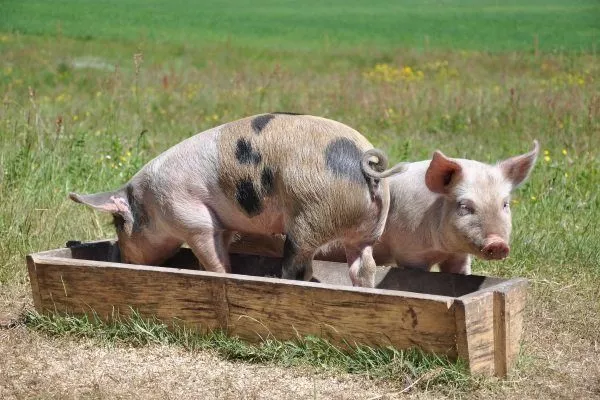
- Without norm. For young animals. Babies that have finished milk feeding are fed as much as they want. Food is always present in feeding troughThe food dishes are cleaned a couple of times a week.
- According to the norm. Feed is provided according to needs. Standards depend on scientific recommendations and our own experience. Feed is provided 3-4 times a day. Suitable for lactating sows and growing piglets.
- With restrictions. Allows you to get lean meat.
Feeding Control Plan
- Daily measurement of food residues in feeders
- Weighing 10% of the herd every 2 weeks
- Correction of diet if weight gain deviates by more than 15%
- Feed conversion analysis (no more than 4 units/kg of weight gain)
- Water quality control (temperature +10-15°C)
To ensure good weight gain, special feeding is provided. Feeding standards for meat-fed pigs are listed in Table 7.
Table 7
| Weight, kg | Weight gain, g | Feed units | Protein, g | Carotene, g | Salt, g |
| 14-20 | 300-350 | 1.3-1.5 | 165-190 | 130 | 12 |
| 20-30 | 300-400 | 1.4-1.7 | 175-215 | 125 | 14 |
| 30-40 | 300-400 | 1.5-1.8 | 180-225 | 125 | 15 |
| 40-50 | 400-450 | 2-2.3 | 220-265 | 115 | 20 |
| 50-60 | 400-500 | 2.1-2.4 | 240-275 | 115 | 22 |
| 60-70 | 500-600 | 2.6-3 | 260-330 | 110 | 25 |
| 70-80 | 600-700 | 3.2-3.7 | 320-390 | 110 | 32 |
| 80-90 | 600-700 | 3.3-3.8 | 330-410 | 110 | 32 |
| 90-100 | 700-800 | 3.9-4.4 | 355-415 | 95 | 35 |
| 100-110 | 700-800 | 4-4.5 | 360-420 | 95 | 35 |
Feeding phases
Fattening pigs involves single- or multi-phase feeding:
- Single-phase feeding. This method doesn't take into account the nuances of the herd. Piglets are gradually transitioned to a fattening diet. The animals' bodies receive more protein than they need, and there is also an excess of phosphorus and nitrogen. The downside is high feed costs.
- Multiphase power supply It takes into account the body's needs. This is a more complex, but beneficial, option. As animals grow, they eat more, but they no longer require as much protein as they initially did. The multi-phase method involves reducing the proportion of nutrients and the excretion of phosphorus and nitrogen by 20%. With the two-phase method, the feed is switched when the animal reaches 70 kg; with the three-phase method, it's at 30-60 kg, 60-90 kg, and 90 kg or more.
Types of feeding
There are two types of feeding: dry and liquid. Both have their pros and cons. The choice of method is the owner's decision. Let's consider both options.
Dry method
80% of farmers use dry feeding. Its advantages:
- the food turns out to be balanced;
- compliance with sanitary and hygienic standards;
- good absorption of nutrients – thanks to heat treatment.
Disadvantages of dry feeding:
- the risk of gastrointestinal diseases increases;
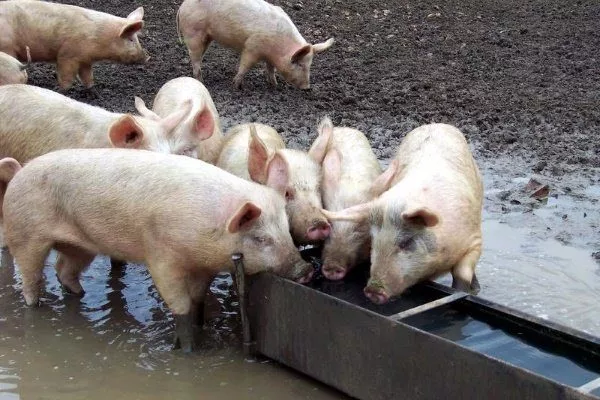
- animals, moving between feeders, scatter food - losses reach up to 9%;
- The premises become contaminated with dust particles from the feed, increasing the risk of lung diseases in both animals and farm workers.
When dry feeding, use:
- complete feed;
- grain mixtures with bran, cake, premixes.
Feeding frequency: 2-3 times per day. Animals should have unlimited access to water.
Liquid method
This approach is used in some European countries. Liquid feeding is popular among farmers in Denmark, Germany, France, and Finland. The advantages of this method include:
- Using waste reduces the cost of grain feed and makes pork cheaper. By-products from the food and microbiological industries are used, among other things.
- The feed meets the biological needs of animals.
- Gradual change in diet.
- Precision in dosage and the ability to adjust the diet.
- There is no need to install drinking bowls.
- Less manure.
- Feed costs are reduced by 10% and growth increases by 6%.
Flaws:
- The need for regular monitoring of the sanitary condition of feeders.
- Short shelf life of liquid food.
- Increased humidity in the room has a negative impact on the health of animals during the winter season.
- It's important to monitor the moisture content of the mash. If the moisture level is too high, the feed's passage through the gastrointestinal tract is accelerated by 8-10 hours. This reduces the quality of digestion and the absorption of nutrients.
Fattening methods
Pigs' bodies are designed in such a way that, depending on feeding schedules and diets, weight gain and the type of product produced can be influenced. There are three fattening options: meat, lard, and bacon.
For meat
Meat pigs weigh 60-130 kg. Their characteristics:
- developed hams;
- round body;
- The thickness of the back fat is 1.5-4 cm (6-7 rib zone).
For fattening for meat, young piglets weighing 15-16 kg are selected. To obtain high-quality meat, the piglets are fattened in stages:
- Preliminary – 3-3.5 months.
- Final – until the end of fattening.
The amounts of protein received by pigs fattened for meat are presented in Table 10.
Table 10
| Age, months | Amount of protein, g per 1 feed unit |
| 2-4 | 129 |
| 5 | 110 |
| by the end of fattening | 90-110 |
If pigs don't get enough protein, obesity will progress and growth will slow. Daily intake requirements for meat-fed pigs are listed in Table 11.
Table 11
| Name of substance, % | Weight 40-70 kg | Weight 71-120 kg |
| Calcium | 0.78 | 0.81 |
| Phosphorus | 0.7 | 0.67 |
| Table salt | 0.58 | 0.58 |
| Lysine | 0.7-0.73 | 0.6-0.65 |
| Methionine + cystine | 0.45-0.47 | 0.34-0.42 |
The source of amino acids and proteins is fish and meat and bone meal, in the following dosages:
- meat flour – 100-300 g;
- meat and bone – 100-250 g;
- fish – 100-200 g.
By giving pigs 200-700 g of feed yeast per day, you can increase weight gain by 15% and reduce feed consumption by 11%.
Pigs are fed 2-3 times a day. The feed digestibility rate is 80%. Potatoes are included in the feed, with a digestibility rate of 94%. In winter, fattened animals are always given:
- silaged corn;
- potato;
- sugar beet;
- combi-silo.
In summer, the amount of potatoes is reduced, replacing them with green peas, corn, and alfalfa.
For bacon
Fattening for bacon is divided into two stages.
Up to 5 months. By the end of the first period, the animal reaches 57 kg. The feed mixture should contain grains, grain processing waste, grass, legume cake, and, in winter, legume hay. The percentage of concentrates in the mixture should include:
- potatoes – 42-65%;
- root vegetables – 70%.
A kilogram of the mixture should contain 120 g of protein. 2.5 kg of skim milk are fed daily.
From 5-7 months. Meat meal, fish, oatmeal, soy, and grain husks are discontinued. To improve the quality of bacon, animals are fed peas, vetch, barley, and millet. The mixture should contain 100 g of protein. 30% of the grains are yeasted.
The composition of the concentrate for fattening pigs for bacon in different periods is presented in Table 12.
Table 12
| Name of the feed | % content |
| First period | |
| Barley | 45 |
| Legumes | 20 |
| Corn, oats | 15 |
| Oilcake | 5 |
| Second period | |
| Legumes | 20 |
| Fine wheat bran | 10 |
| Barley | 70 |
Pigs fattened for bacon are restricted in their mobility and are only occasionally allowed into their pens.
For lard
Pigs are fattened for lard at 2-2.5 years of age. Any breed is suitable. Males must be castrated. Carbohydrates should make up 50% of the total feed. A large amount of succulent feed is also included in the diet. Toward the end of fattening, the proportion of concentrates should be increased.
The diet includes:
- beet tops;
- roots;
- melons;
- waste – food and vegetable;
- nettles, etc.
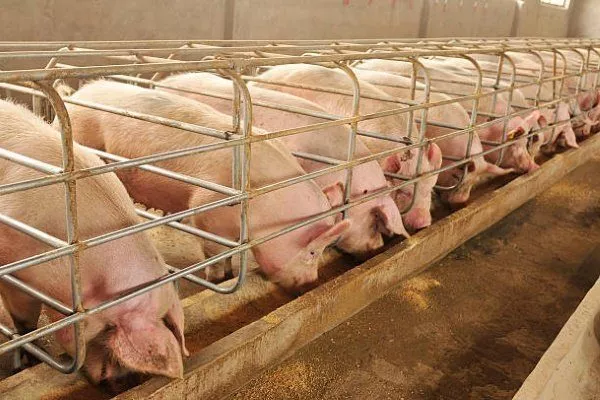
Fattening for lard is divided into three stages. Feeding standards for different periods are presented in Table 13.
Table 13
| The first stage | |||
| winter | summer | ||
| Food waste | 6 kg | Food waste | 2 kg |
| Concentrates | 4.5 kg | Concentrates | 5.3 kg |
| Beet | 6 kg | Beets and potatoes | 4 kg |
| Salt | 65 g | Salt | 50 g |
| Chalk | 20 g | Chalk | 20 g |
| Herbal flour | 1.5 kg | Green | 10 kg |
| The second stage | |||
| Food waste | 6 kg | Food waste | 1.2 kg |
| Concentrates | 4.9 kg | Concentrates | 6 kg |
| Beets, potatoes | 6 kg | Beet | 4.5 kg |
| Salt | 70 g | Salt | 60 g |
| Chalk | 20 g | Chalk | 40 g |
| Herbal flour | 1.5 kg | Green | 6 kg |
| The third stage | |||
| Food waste | 3 kg | Food waste | 1.5 kg |
| Concentrates | 5.2 kg | Concentrates | 5.5 kg |
| Beets, potatoes | 9 kg | Beet | 5.5 kg |
| Salt | 75 g | Salt | 55 g |
| Chalk | 40 g | Chalk | 30 g |
| Herbal flour | 1.5 kg | Greens, potatoes | 9 kg |
Pig weight achieved at the end of each stage:
- first – 150-200 kg;
- the second – 210-260 kg;
- third – from 260 kg.
Is it possible to fatten pigs with bread?
Nothing bad will happen to pigs fed bread. However, experts advise against feeding them bread alone; it must be mixed with succulent feed and bran.
Only fresh bread should be fed—feeding moldy products to pigs is strictly prohibited, as they contain poisons. Feeding bread is possible, but it won't fatten them up quickly.
Feeding ration
The average daily weight gain is considered to be 650 g. By six months of age, a pig reaches 100-120 kg. The feed consumption per kg of weight should not exceed 4 feed units.
Piglets become "adult pigs" when they reach 40-50 kg. Feeding is selected based on the animal's intended use. Let's look at the nutritional requirements for different pig categories.
Feeding of breeding boars
When fattening boars, it's important to monitor their condition—emaciated or obese individuals lose sexual activity and productivity. During the breeding season, the animals need to be fed more feed, as their metabolism accelerates.
If boars are restricted from mating, their feeding rations are reduced by 10-20%. Dry feed is measured per 100 kg of live weight. Growing boars receive 1.6 kg, while adults receive 1.4 kg. The diet consists primarily of grains, oilcake, meal, meat and fish scraps, and peas.
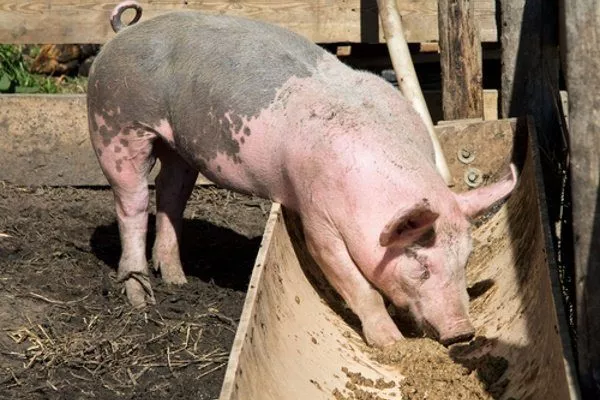
An approximate daily ration for an adult boar is given in Table 14.
Table 14
| Feed, kg | During the mating season | During the non-random period | ||
| in summer | in winter | in summer | in winter | |
| Mixture of concentrates | 2.9 | 2.3 | 1.5 | 1.1 |
| Peas and broad beans | 0.9 | 0.8 | 0.4 | 0.4 |
| Combine silo | — | 4 | — | 4 |
| Herbal flour | — | 0.5 | — | 0.5 |
| Back | 2.5 | 3 | 1 | 1 |
| Grass | 3 | — | 4 | — |
| Chalk, g | 20 | 40 | 15 | 30 |
| Salt, g | 45 | 50 | 35 | 40 |
| Number of feed units in the diet | 4.9 | 4.9 | 3.8 | 3.8 |
| Digestible protein, g | 690 | 690 | 420 | 420 |
Feeding of lactating sows
A sow that has farrowed is given warm water ad libitum immediately after the piglets are born. The first feeding is 10-12 hours later. She is fed a liquid slurry made from:
- oatmeal and wheat bran;
- chalk and table salt - 20-30 g each;
The second feeding is 5-6 hours later. The daily ration is gradually increased. The sow is transferred to the full feed ration only by the 6th to 8th day. For the first 10-20 days, the sow is fed liquid feed to increase lactation. At the end of the first suckling period, the sow is given mushy feed. Suckling sows are fed twice daily.
During the suckling period, it is recommended to give per day:
- hay flour of legumes – 2-3 kg;
- potatoes – 3.5 kg;
- root vegetables – 4-5 kg;
- silage – 2-3 kg;
- concentrates – 3-5 kg;
- skim milk – 2-4 l.
An approximate diet for lactating sows is given in Table 15. The data is for a sow weighing 180-200 kg, nursing ten piglets.
Table 15
| Indicators, kg | Winter period | Summer period | ||
| Potato concentrate | Concentrated root crop | Concentrated | ||
| Barley | 2.5 | 0.4 | 1.2 | 1.7 |
| Wheat | 0.6 | 3 | 2.4 | — |
| Corn | — | — | — | 2/3 |
| Peas | 0.2 | 0.4 | 0.4 | 0.2 |
| Herbal flour | 0.7 | 0.7 | 0.7 | — |
| Sunflower meal | 0.4 | 0.2 | 0.3 | 0.3 |
| Fish meal | 0.2 | 0.2 | 0.1 | 0.2 |
| Back | 1 | 1 | 1 | 1 |
| Steamed potatoes | 5 | — | — | — |
| Semi-sugar beet | — | 6 | — | — |
| Green mass of legumes | — | — | — | 6 |
| Combine silo | — | — | 3.7 | — |
| Indicators, g | ||||
| Precipitate | 57 | 59 | 71 | 44 |
| Salt | 30 | 30 | 30 | 30 |
| Premix | 60 | 60 | 60 | 60 |
| Feed units | 6.8 | 6.8 | 6.8 | 6.8 |
| Digestible protein | 764 | 764 | 764 | 761 |
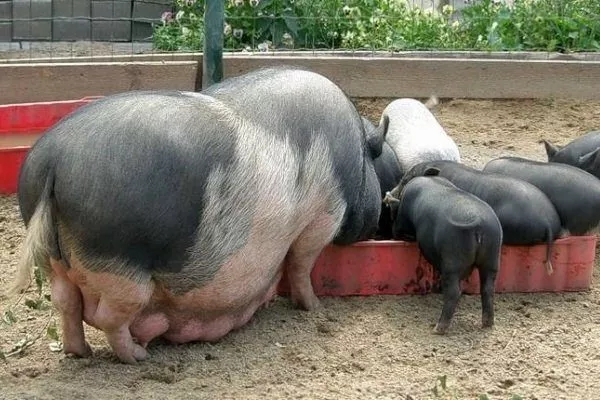
Feeding of barren and pregnant sows
Fertilization, fertility, and the health of newborns depend on the quality of feeding of barren sows. It's important to provide a high-quality diet, starting with preparation for mating. Egg maturation takes 20-22 days. Therefore, preparation of the sow should begin a month before mating.
The diet of barren queens should include:
- protein-rich foods – fish scraps, small fish (spat), various seafood, flaxseed meal;
- concentrated feed;
- clover hay;
- silage;
- potato;
- carrot.
In the second half of gestation, premium-quality feeds are introduced. Towards the end of the period, the amount of roughage and succulent feed is gradually reduced. Two weeks before the piglets are born, the sow is fed skim milk—0.5-1 liter. Three to five days before the milk is taken, the sow is stopped. The feed amount is reduced to 50% of the diet. Diets for barren and pregnant sows during the first and second half of gestation are provided in Tables 16 and 17, respectively.
Table 16
| Feed, kg | winter | summer | ||
| Queens up to 2 years old (150 kg) | Queens over 2 years old (200 kg) | Queens up to 2 years old (150 kg) | Queens over 2 years old (200 kg) | |
| grain mixture | 1.6 | 1.1 | 2 | 1.8 |
| Flaxseed cake | 0.2 | 0.3 | 0.1 | 0.2 |
| Sugar beet, potatoes | 2 | 2 | 6 | 5 |
| Combine silo | 4 | 4 | — | — |
| Herbal flour | 1 | 1 | — | — |
| Chalk, g | 10 | 10 | 20 | 10 |
| Salt, g | 40 | 35 | 40 | 40 |
| Feed units in the diet | 3.8 | 3.4 | 3.8 | 3.4 |
| Digestible protein, g | 430 | 375 | 400 | 365 |
Table 17
| Feed, kg | winter | summer | ||
| Queens up to 2 years old (150 kg) | Queens over 2 years old (200 kg) | Queens up to 2 years old (150 kg) | Queens over 2 years old (200 kg) | |
| grain mixture | 2.2 | 1.8 | 2.6 | 2.4 |
| Soybean cake | 0.4 | 0.3 | 0.3 | 0.3 |
| Sugar beet, potatoes | 2 | 2 | 5 | 3.5 |
| Combine silo | 4 | 4 | — | — |
| Herbal flour | 0.5 | 0.5 | 0.5 | 0.5 |
| Chalk, g | 45 | 20 | 45 | 40 |
| Salt, g | 45 | 40 | 45 | 40 |
| Feed units in the diet | 4.4 | 3.9 | 4.4 | 3.9 |
| Digestible protein, g | 490 | 425 | 490 | 440 |
More information about feeding pregnant sows is available here. Here.
Feeding piglets
The key to piglet health is mother's milk, which is the first food they receive from newborns. Milk helps piglets develop a strong immune system. For the first two weeks, this is their only food. Subsequently, the diet is supplemented and adjusted depending on their age.
Suckling piglets
The timing of introducing complementary foods will be discussed below.
5th day of lifeTo strengthen the teeth, piglets are given complementary food – roasted grains:
- barley;
- wheat;
- corn.
First, the grain is sprinkled directly onto the floor—it must be clean and dry, of course—then it's poured into a trough. To improve digestion, acidophilus milk is also added to the diet to enhance stomach fermentation.
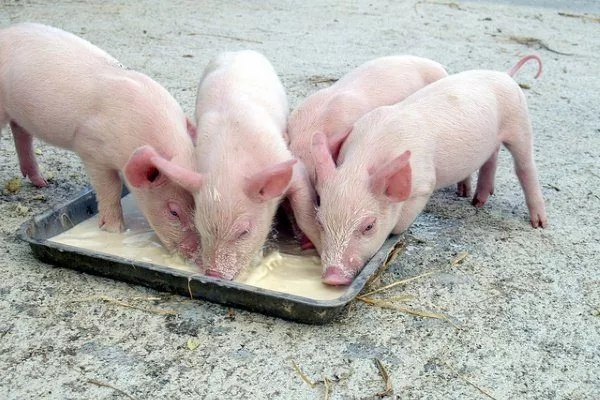
7-8th day of lifePremixes containing bone meal and chalk are added to the feed.
10th day of lifeSucculent feeds are added. The babies are given grated carrots, and later – grated pumpkin and beets, and combi-silage.
Day 20Give boiled chopped potatoes.
Day 45The piglets are weaned from their mother and transferred to dry or liquid feeding.
Day 50Transition to three meals a day. Piglets are moved to a separate room from the sows. The diet includes animal proteins such as bone and fish meal, skim milk, and yogurt. A typical piglet diet:
- concentrated feed – 80%;
- vegetables and root vegetables – 10%;
- fish or bone meal – 5%;
- legume flour – 5%.
During the weaning period, the sows are given a reduced amount of succulent feed, replacing it with dry feed to reduce milk production.
Table 8 shows the feeding scheme for suckling piglets.
Table 8
| Age, days | Feed, g | ||||||
| Milk/milk replacer | Back | Concentrates | Juicy | Herbal flour | Table salt | Chalk, bone meal | |
| 5-10 | 50 | — | 25 | — | — | 2 | 3 |
| 11-20 | 150 | — | 100 | 20 | 10 | 3 | 3 |
| 9:30 PM | 400 | 150 | 150 | 30 | 20 | 4 | 5 |
| 31-40 | 300 | 350 | 250 | 50 | 30 | 4 | 5 |
| 41-50 | 150 | 450 | 400 | 100 | 50 | 5 | 10 |
| 51-60 | — | 700 | 650 | 250 | 150 | 10 | 15 |
| Total days, kg | 10 | 16 | 15.5 | 4 | 2.3 | 0.3 | 0.4 |
Piglets in rearing
The piglet diet changes when they reach 20-25 kg. At this point, they are considered weaners. To grow rapidly, they require a lot of vitamins and minerals, so the concentrated feed is mixed with greens, vegetables, and root vegetables.
Grass is added to the diet in two forms: fresh or steamed. After a few hours, mashed potatoes and dry feed are added to the steamed grass. The resulting mixture should have the consistency of a slurry. Table 9 shows the diet for weaned pigs.
Table 9
| Name of feed, g | 2-3 months | 3-4 months | ||
| winter | summer | winter | summer | |
| Potato | 500 | 0 | 800 | 0 |
| Concentrates | 900 | 1000 | 1000 | 1200 |
| Fodder chalk | 20 | 0 | 20 | 0 |
| Carrots, combined silage | 250 | 1500 | 500 | 2000 |
| Back | 1000 | 1000 | 1000 | 1000 |
| Sugar beet | 1500 | 0 | 2000 | 0 |
| Salt | 10 | 10 | 15 | 15 |
| Legume grass | 0 | 1500 | 0 | 200 |
| Herbal flour | 100 | 0 | 200 | 0 |
A veterinary science candidate explains in this video how and what to feed piglets to quickly fatten them up to the size of large pigs with minimal feed consumption:
Prohibited foods
Pigs should not be fed:
- Products with traces of mold, parasites, and fungi.
- Herbs that can cause poisoning. One-month-old piglets should not be fed:
- horse dill;
- black nightshade;
- caustic buttercup;
- milkweed;
- hemlock;
- dog parsley.
- Cottonseed and castor oil cakes. They should not be fed without treatment—either with alkali or steaming.
- Sprouted potatoes. Remove all sprouts before feeding.
- The water in which the potatoes were boiled.
- Pickles. Pigs should avoid excessive salt intake. An overdose can be fatal.
- Boiled beets that have been soaked in hot water for a long time.
Scheme for introducing complementary feeding to piglets
| Age (days) | Type of feed | Method of preparation | Frequency of feeding |
|---|---|---|---|
| 5-7 | Roasted grain | Dry, whole | 4-5 times |
| 8-10 | Premixes | Mixture with milk | 3-4 times |
| 11-15 | Succulent feed | Grated, fresh | 2-3 times |
| 16-20 | Potato | Boiled, crushed | 2 times |
| 21+ | Compound feed | Steamed | 3 times |
Fattening a pig at home is a challenging endeavor. Without the advice of experienced pig farmers, you risk wasting more feed than necessary and producing low-quality products. Be prepared to strictly adhere to a feeding schedule and diet, and pig farming will bring you the profits you desire.