
Fattening pigs for meat aims to achieve maximum daily weight gain and young, succulent meat in a short period of time. It typically begins at 3-4 months of age. At different stages of fattening, different feed components are used and combined in varying proportions, with supplements that meet the animals' mineral and vitamin needs.
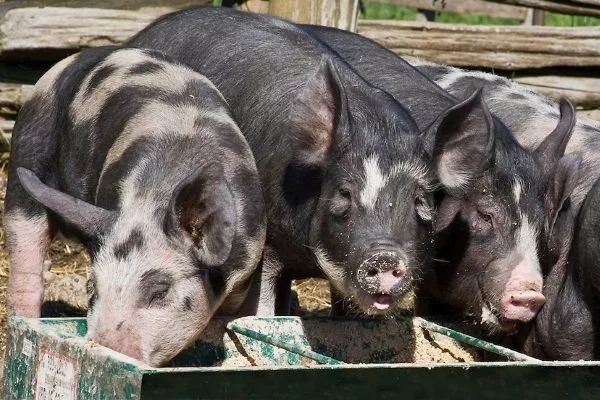
Beginning of fattening piglets for meat
Fattening pigs for meat is cost-effective: they require three times less feed per kilogram of gain than cattle. Fattening should begin when the piglet reaches 3-4 months of age, weighing approximately 25-30 kg.
The average fattening period for pigs to produce meat with minimal fat content is 4-4.5 months, but sometimes it lasts up to 8 months. During this time, the piglet gains 600-700 grams daily. Fattening is considered complete when, by a certain time (usually by 9 months of age), the pig reaches 110-120 kg (live weight).
Piglets of any breed and build are suitable for meat fattening, but the best results can be achieved by fattening representatives of meat-oriented breeds.
The best breeds for producing large quantities of meat are the White and Ukrainian Steppe, Lithuanian, and Kemerovo. Recently, Vietnamese pigs have been acquired for fattening.
| Breed | Average daily gain (g) | Disease resistance | Feed requirements |
|---|---|---|---|
| White | 700-800 | High | Average |
| Ukrainian steppe | 650-750 | High | Low |
| Lithuanian | 600-700 | Average | Tall |
| Kemerovo | 750-850 | High | Average |
| Vietnamese | 500-600 | Very high | Low |
To achieve this goal, the farmer must ensure increased appetite and feed intake in the fattened animals. For this purpose, yeast-based feeds are useful, the recipe for which is provided in the last section.
General recommendations for fattening pigs for meat
When starting to fatten pigs for meat, a farmer should familiarize himself with the following general rules:
- animals should consume only fresh food: if the diet consists mainly of yesterday's food leftovers, pigs will not gain weight quickly;
- It is better to start fattening pigs for meat in the spring or summer, since at this time they can eat what grows around them;
- During the process of fattening pigs, it is important to provide them with a full drinking regime; there should always be fresh and clean water in the troughs;
- The humidity level in the room where fattened pigs are kept should not be lower than 60-70%, and the temperature should not be lower than +15 degrees: under such conditions, the feed is better digested, and the animals themselves feel good;
- There is no need to feed animals to the point of satiety: if pigs constantly eat from an overflowing trough, then feed will be wasted, and nutrients will begin to work primarily on the deposition of fatty tissue;
- Plant products introduced into the diet of pigs must be chopped up, since the bodies of these animals have difficulty digesting food that enters the esophagus in large pieces;
- Pigs should not be given too much kitchen scraps; before offering them to the animals, the leftovers should be boiled for an hour, otherwise various pathogenic microorganisms may enter the body, and the pigs may become ill;
- It is essential to add food additives to the feed to compensate for the lack of minerals and amino acids in the animal’s body;
- Pig food needs to be salted: 40 g of salt can be added to one serving, which is an active stimulant of digestion in animals;
- Any hot foods must be cooled before giving to animals;
- Pigs should be fed 2-3 times a day, preferably at the same time;
- Food should not remain in the pigs' troughs for longer than an hour; any leftover food should be thrown away, and the trough should be thoroughly washed at least twice a week.
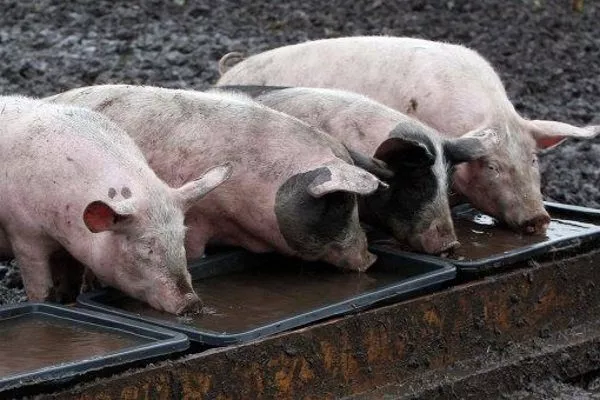
Avoid feeding animals too frequently. Feeding them too frequently will increase their fat tissue development.
Certain types of feed should not be fed to pigs. These include:
- boiled beets that have been standing in hot water for too long;
- green potato tubers, even if they have been boiled for a long time;
- spurge;
- horse dill;
- black nightshade.
It's also important to consider that certain foods affect the flavor and texture of pork. For example, fish by-products impart a fishy flavor to the meat, while adding dairy products, on the contrary, gives it a delicious aroma and a mild flavor.
If a pig's diet is dominated by potatoes, corn and wheat bran, its meat becomes loose and tasteless.
If mold or parasites appear in the feed, it must be destroyed and under no circumstances fed to pigs.
Fattening stages
The technology for fattening pigs is not complicated. If you follow its principles, you can end up with high-quality, lean meat. In this case, fat at slaughter will make up no more than 30% of the total carcass weight.
The feed ration for pigs fattened for meat must be palatable to attract the animals. The feed digestibility rate should reach 80%.
Intensive meat fattening consists of two consecutive stages: preparatory and final.
Preparatory stage The process begins with the selection of piglets that will be fattened specifically for lean meat, starting at 2.5 months of age. It continues until they are 5-5.5 months old. During this first stage, piglets gain 500-600 grams daily.
During the preparatory period, the diet consists primarily of succulent green crops. In summer, pigs are fed legumes, melons, and green grass. In winter, at this stage, they are fed pre-prepared vegetables, grass meal, and silage.
During the preparatory phase, the plant component will make up one-third of the total diet. The remaining two-thirds of the diet during this period will consist of bran, mixed barley and corn, and fishmeal.
The first fattening period is most cost-effective during the spring and summer, when fresh, succulent, and green feed predominates. This allows for maximum weight gain with minimal feed costs.
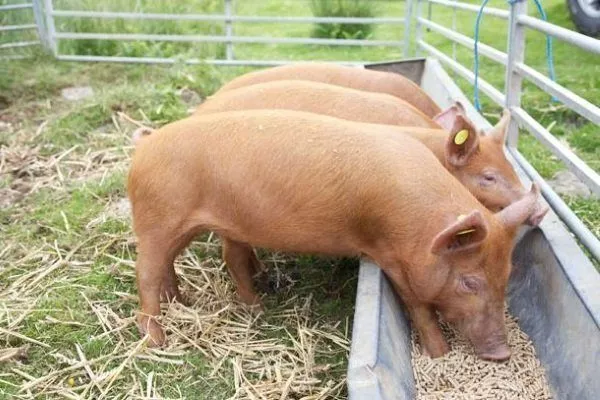
During the initial stage, protein is crucial, as too many carbohydrates will cause animals to become obese and lose their ability to build muscle mass. During the preparatory period, it is also recommended to supplement the animals with fodder yeast at a rate of 0.2 kg per day.
The final stage lasts 2 months. It is more intensive and involves a daily weight gain of up to 800 g.
In the second stage, half of the diet should consist of food scraps, beets, potatoes, and dairy products. The remaining half should consist of concentrated feeds rich in carbohydrates.
During this period, avoid feeds that degrade meat quality. These include fish and fish scraps, oats, oilcake, soybeans, and millet.
- ✓ High protein content in the preparatory stage
- ✓ Increasing the proportion of carbohydrates at the final stage
- ✓ Elimination of feeds that degrade meat quality
- ✓ Use of fresh and succulent feed in the summer
Basic feeds
Basic feeds enhance the palatability and processing properties of meat. These include:
- coarse products in cooked or ground form: wheat, broad beans, rye, peas;
- waste from the production of dairy products: whey and the milk itself – cow, goat;
- Juicy root vegetables: Sugar and semi-sugared beets, as well as carrots and potatoes, are essential in the diet of pigs fattened for meat. Raw root vegetables can be fed, but only in small quantities; the rest should be thoroughly boiled first.
In the cold season, the basic feeds are legume hay (6-11%), succulent feed and a mixture of concentrates (55-75%), and food waste (25-30%).
In winter, when fresh herbs are scarce, more root vegetables are fed. Potatoes are given only boiled, cooled, and mashed. Potatoes should be fed in quantities that minimize the possibility of leftovers.
Main types of diets
Depending on the region, pig farms and enterprises may use specific feeding technologies to produce lean meat. These include:
- ConcentratedIn this case, up to 80% of the diet is concentrated feed. This type of diet is widely used in Kazakhstan, the North Caucasus, and southern Ukraine.
- Concentrated root cropIn this case, pigs are fed a combination of silage, fodder beet, sugar beet, green legumes, and hay flour to fatten them for meat. The amount of concentrated feed is approximately 50-65%. This type of diet is prevalent in Eastern and Western Siberia and in the forest-steppe regions of Ukraine.
- Potato concentrateThe animals are fed potatoes, combined silage, and hay flour. The concentration of concentrated feed is 60%. This type of feeding is typical in the Baltics, Belarus, and Polesia (Ukraine).
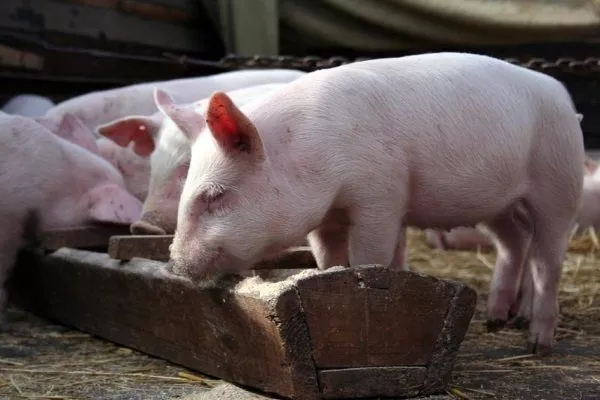
Concentrated feeds include all grains, dried residues from starch and sugar beet production, bran, meal and oilcake.
Essential nutritional supplements
Minerals and amino acids are an essential part of the diet. Digestible protein is especially important. During the first two months of fattening, the daily requirement is 230-250 g, and during the following two months, 350-380 g.
Fish meal is a source of complete protein.
When feeding meat to pigs, additives such as table salt, crushed shells, chalk, and limestone are always added to their diet. These supplements replenish calcium, phosphorus, and sodium deficiencies in the animals' bodies.
Fattening pigs also require feed phosphates, lake silt and wood ash.
Amino acids are found in foods such as:
- flour of different types;
- rice;
- semolina;
- pearl barley;
- oatmeal;
- buckwheat.
The following vitamins and minerals are vital for pigs:
- vitamin A;
- vitamin B1;
- vitamin B2;
- vitamin B3;
- vitamin B12;
- carotene;
- iodine;
- zinc;
- manganese;
- cobalt;
- phosphorus;
- calcium;
- iron;
- copper.
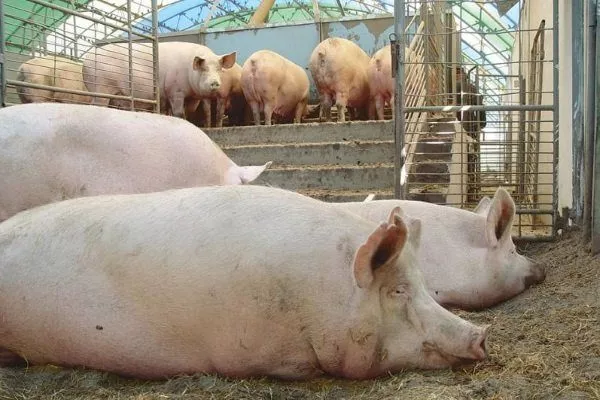
An animal should receive at least 20 g of calcium and 10 g of phosphorus per day. These elements are especially important for pigs that are growing rapidly.
- Start with mineral supplements from the first days of fattening.
- Gradually increase the proportion of protein supplements.
- Include vitamin premixes at the final stage.
- Monitor the animals' reaction to new additives.
Also in the pig diet there are such additives as:
- AzobacterinThis supplement replenishes the need of pigs for vitamin B12.
- Monosodium glutamate, stimulating the appetite of animals and improving the taste of pork.
- EtoniusThe additive improves the quality of pork meat.
Various premixes containing macro- and microelements, amino acids and vitamins are also used as additives.
Experts often recommend the Borka premix. It's suitable for pigs of all ages. It contains:
- phosphorus;
- calcium;
- copper;
- zinc;
- manganese;
- iodine;
- vitamin A;
- vitamin B2;
- vitamin B3;
- vitamin B5;
- lysine;
- methionine;
- antioxidant.
Premixes have a number of important functions:
- prevent the development of diseases associated with metabolic disorders in the body;
- fully satisfy the daily requirement of animals for microelements and vitamins;
- ensure the normal development of young animal organisms;
- reduce feed costs.
Homemade pet food recipes
Grains used for feeding pigs raised for meat are boiled or steamed. They are most often prepared in the following manner:
- For 1 kg of grain take 2 liters of hot water.
- The food is poured with water and mixed.
- The container with grain is covered with burlap.
- Leave the mixture to steam for 5 hours.
Silage is a valuable, succulent feed. It can be prepared by mixing ingredients such as:
- sugar beets (60%), corn on the cob (30%), carrots (10%);
- vegetables (50%), steamed potatoes (45%), grain waste (5%).
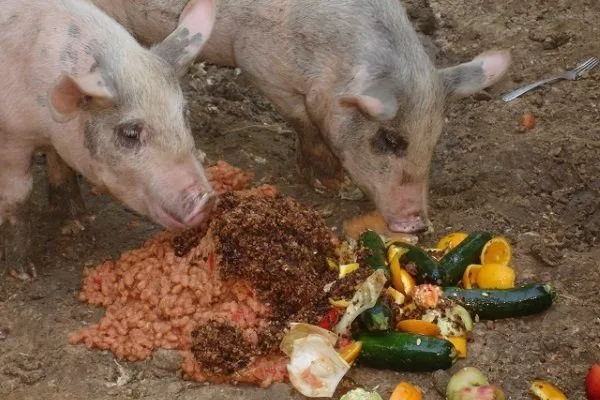
The silage mass is crushed, placed into bins, well compacted and covered.
You can also prepare nutritious compound feed at home. It has the following composition:
- barley – 400 g;
- oats – 300 g;
- alfalfa flour – 160 g;
- meat and bone meal – 120 g;
- sunflower cake – 80 g;
- chalk – 20 g;
- salt – 10 g.
All ingredients must be ground and mixed thoroughly.
Compound silage is also a beneficial meat feed composition that pigs enjoy. This compound feed contains chopped, juicy root vegetables, vegetables, and greens such as carrots, sugar and semi-sugar beets, cabbage, and lupine. The percentages can vary:
- potatoes – 40%;
- clover – 30%;
- carrots and cabbage – 15% each.
Also, combined silage can have the following composition:
- corn cobs – 60%;
- pumpkin – 30%;
- green mass of legumes – 10%.
Another option involves the following proportions:
- sugar beet – 50%;
- carrots – 20%;
- green beans – 20%;
- hay dust – 10%.
Yeasting feed to improve pig appetite
Yeast-infused feed improves the animals' appetite, accelerates the digestion of other feed consumed by pigs, and also has a positive effect on body weight.
Yeasting can be done using sponge and straight methods.
The safe method is as follows:
- 20 liters of warm water are poured into the container;
- add 100 g of diluted yeast, pour in 10 kg of dry fine feed, mix everything thoroughly;
- The mass is left for 8 hours to ferment, stirring every 25 minutes.
The sourdough, or starter, method is slightly different from the previous one. Pour 5 liters of warm water into a 20-liter container, add 100 g of yeast, and stir thoroughly. Then add 2 kg of compound feed, stir, and let it sit. After 6 hours, add 15 liters of warm water and 7 kg of dry concentrate. Let it sit for 2 hours, then use it as a food supplement.
Watch a video on how to effectively fatten pigs for meat using a highly digestible, homogeneous liquid feed prepared using a special "Mriya" unit:
Fattening pigs for meat production aims to produce 70% lean meat. Special feeding techniques are used to raise animals for meat production. Organic supplements and clean water are also essential. Furthermore, the animals require specific living conditions. A combination of proper nutrition and favorable living conditions allows farmers to achieve lean meat with minimal fat.