
Pregnant sows are raised to produce as many piglets as possible. Nutrition during this period is crucial. A proper diet is important not only for the health of the sow and her piglets but also reduces the risk of serious complications. Furthermore, proper sow nutrition is essential for a healthy lactation period.
Dietary considerations at different stages of pregnancy
The gestation period (pregnancy) of pigs lasts 112-115 days. Animals at different stages of pregnancy require specific dietary composition.
In the so-called low gestation period (the first 12 weeks of pregnancy) the embryos are poorly developed, so there is no need to significantly increase the amount of food consumed.
Immediately after conception, the amount of feed should be reduced slightly. During the early stages of pregnancy, pigs should be fed moderately. Their daily feed intake should not exceed 2-3 kg.
IN high gestation period (from 13 to 16 weeks of pregnancy) the fetuses begin to actively develop, so the animals require much more food compared to the usual diet.
Changes in feeding proportions should be made gradually, avoiding stress. Dietary changes should be made 3-5 days in advance. A sudden change in diet can cause spontaneous abortion and labor complications.
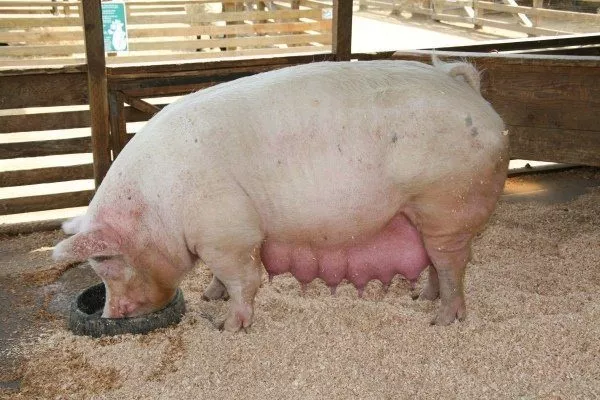
The amount of food consumed must be controlled, as the farmer's goal is to avoid obesity, which increases the risk of complications during and after childbirth.
Four days before farrowing, the sow's feed intake is reduced by exactly half. This will reduce the load on the digestive system and also reduce premature milk production. Reducing the feed intake will also have a beneficial effect on the sow's appetite during the suckling period.
During the second period of pregnancy, a pregnant sow should gain 25 to 40 kg of weight.
Diet of a sow at different stages of pregnancy
There is an optimal diet structure for pigs for each period of pregnancy.
Feeding during the low-pregnancy period
During the first period of pregnancy, the sow should eat:
- concentrated feeds (40-60%);
- succulent feed (30-40%);
- roughage (10-35%);
- animal feed (5-8%).
During the first stage of pregnancy, sows should be given more fiber to help them feel full faster and avoid hunger. It's recommended to lightly moisten the feed with clean water. Mineral supplements and table salt are also added to the main feed.
During the first stages of pregnancy, calcium supplementation is important. Chalk is effective in this case.
| Type of compound feed | Period of application | Submission form |
|---|---|---|
| KK-53 | Low pregnancy period | Wet mashes |
| PC-53 | Low pregnancy period | Wet mashes |
| KK-54 | High gestation period | Dry form |
| PC-54 | High gestation period | Dry form |
During the low-gestation period, compound feeds such as KK-53 and PK-53 are used. The feed is provided as a wet mash, with one part feed to three parts water.
Feeding frequency: 2 times a day.
Feeding during the high pregnancy period
During the second period of gestation, sows' diets include concentrated feed (40%) and roughage and succulent feed (the remaining amount of the total ration). The second type includes:
- cake;
- potato;
- beet;
- carrot;
- melons;
- barley;
- corn.
During the second stage, compound feeds KK-54 and PK-54 are used.
During the pre-farming period, concentrated feeds account for up to 75% of the sows' diet, while succulent and roughage feeds account for 25%. Dairy and fermented milk products, fish, and meat scraps are also introduced into the sows' diet before farrowing.
Immediately before farrowing, the sow should be fed a full diet of foods containing vitamin A (silage, wheat bran, carrots). Hay or legume meal should also be added to the animals' diet at this stage.
Feeding frequency: 3 times a day.
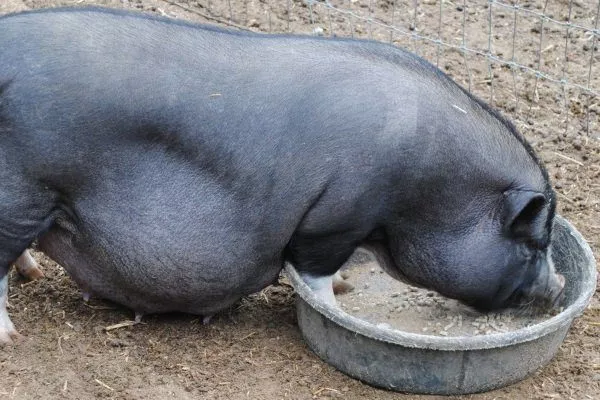
At this stage of pregnancy, sows are also given chalk (20-30 g per day), limestone (20-30 g), and table salt (40-45 g). Fish oil, ground shell rock, and protein-vitamin concentrates (PROkorm) are also added to the diet.
Feeding Features by Season
During the summer, pregnant sows' diets are supplemented with various greens. Fresh beans, peas, and lupines can also be fed at this time of year. These contain a lot of protein, which is essential for expecting sows.
In summer the diet looks like this:
- hay flour – from 800 g to 1.5 kg;
- succulent feed – from 2 to 3 kg;
- meat or fish scraps – 150-300 g;
- whey – from 2 to 3 l;
- various concentrates.
In summer, pregnant sows can be walked outdoors so they can freely enjoy root vegetables and fresh green grass.
In the fall, pregnant sows are given plenty of processed vegetables. Potatoes must be boiled. Never feed frozen or rotten feed, hard cake, or sunflower husks.
In winter, carrots, wheat bran, and silage are included in the diet to replenish the vitamin A deficiency.
Feed must be fresh, not frozen, not rotten, not moldy: fungi present in fermented mixtures damage the placental layer of the fetus and can provoke abortion in sows.
Feeding methods
There are two main ways to feed pregnant sows:
- CombinedIn this case, in addition to compound feed, basic feeds are used: greens, grass and corn silage, and hay. This combined method ensures high-quality and rapid satiety.
- Compound feedFeeding pregnant sows compound feed without including the main feed. In this case, achieving satiety is much more difficult. To prevent sows from developing stress due to this, ensure the compound feed is enriched with wheat bran, chopped straw, or hay.
The dangers of overfeeding and feeding considerations for obese pregnant sows
Overfeeding sows that are about to give birth to piglets can have dangerous consequences, such as:
- complication of the birth process due to weak labor activity;
- loss of piglets due to the large weight of the sow, which crushes them with her own body;
- low fertility;
- loss of appetite in the sow, which affects her weight and lactation capacity.
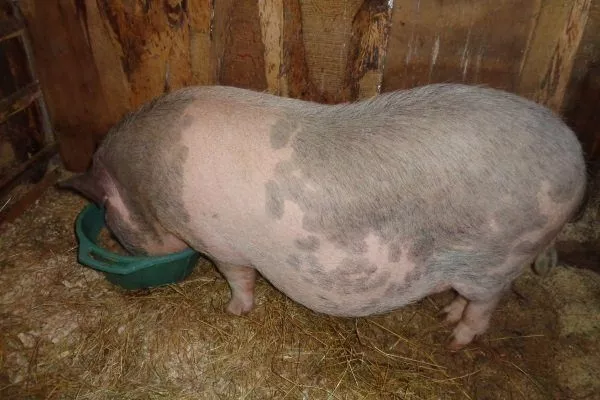
To "unload" the sows' digestive tract, the proportion of plant components should be increased and carbohydrates should be slightly reduced. This should be done carefully to avoid the opposite effect—emaciation.
Low-energy feeds can cause low-birth-weight piglets and infertility in young sows.
Daily feed requirements for sows
The norms of various components present in the diet of pregnant sows depend on their weight and age.
For pigs under 2 years of age, the daily feed norms are as follows:
- A mixture of concentrates. In winter, 1.3 kg in the first half of pregnancy and 2.2 kg in the second. In summer, this figure will be 1.6 kg for the first half of pregnancy and 2.5 kg for the second.
- Tubers or melons. In winter, 8 kg for the first half of pregnancy and 6 kg for the second. In summer, this food is not necessary.
- Hay flour. In winter, 1 kg is recommended during the first and second trimesters of pregnancy. In summer, it is not included in the diet.
- Legumes. They are not included in the diet of pregnant sows during winter. In summer, the recommended amount is 10 kg during the first half of pregnancy, and 7 kg during the second half.
- Meat or fish scraps in the diet in both winter and summer for any period of pregnancy amount to 100 g.
- Milk waste in both winter and summer in the first half of pregnancy reaches 1 kg, in the second – 500 g.
- Protein. For young sows in the first half of pregnancy, the amount of digestible protein should be 405-415 g in winter and 490-495 g in summer.
Sows over 2 years of age require a slightly different diet composition:
- A mixture of concentrates. In winter, 700 g during the first half of pregnancy and 1.2 kg during the second. In summer, this figure will be 1.2 kg for the first half of pregnancy and 2 kg for the second.
- Tubers or melons. In winter, 9 kg for the first half of pregnancy and 7 kg for the second. In summer, this food is not necessary.
- Hay flour. In winter, 1.3 kg is recommended during the first and second trimesters of pregnancy. It is not included in the diet during the summer.
- Legumes. They are not included in the diet of pregnant sows during winter. In summer, during the low-pregnancy period, the norm is 10 kg, and during the high-pregnancy period, 8 kg.
- Meat or fish scraps in the diet in both winter and summer for any period of pregnancy amount to 100 g.
- Milk waste in both winter and summer in the first half of pregnancy reaches 1 kg, in the second – 500 g.
If we determine the energy threshold for feed, then during the first 84 days of gestation, sows are fed at a rate of 1.2 feed units per 100 kg of live weight. In the last month before farrowing, they are fed 1.5-1.7 feed units per 100 kg of live weight.
Compliance with all daily norms when formulating a diet for a pregnant sow will help prevent exhaustion and obesity, and will also ensure a normal birth.
Read more, How to make a pig feeder yourself.
Vitamins and minerals
The diet of pregnant sows should be enriched with various mineral supplements and vitamins, which they may experience a deficiency of during pregnancy.
Pigs require the following supplements (the amount is determined for 100 kg of live weight):
- calcium – 12 g in the first 84 days and 13-14 g in the last 30 days;
- vitamin B1 – 2.6 mg;
- vitamin E – 41 mg;
- sodium – 2 g;
- crude fiber – 40 g;
- vitamin B5 – 81 mg;
- vitamin B3 – 2.3 mg.
Drinking regimen
Low-pregnancy and high-pregnancy sows weighing 120-150 kg have different water needs. Low-pregnancy sows require 8-12 liters per head per day, while high-pregnancy sows require 10-15 liters per head.
The water should be at a certain temperature and not exceed 10 degrees Celsius. Cold water can cause a spontaneous abortion.
On large pig farms, regular monitoring of water pressure in drinking bowls is required. Ideally, 2 liters of water should be collected per minute.
Pregnant sows should have constant direct access to water so that they can drink whenever they want.
Pregnant sows require a special, structured diet. The food must contain the necessary amount of nutrients. They must also have direct access to clean water. When nursing a pregnant sow, avoid emaciation or obesity.