
The Yaroslavl breed ranks first in milk yield and fat content, with a lifespan of approximately 20 years. However, after 10 lactations, keeping cows is no longer profitable, as milk production declines, as does fertility.
History of origin
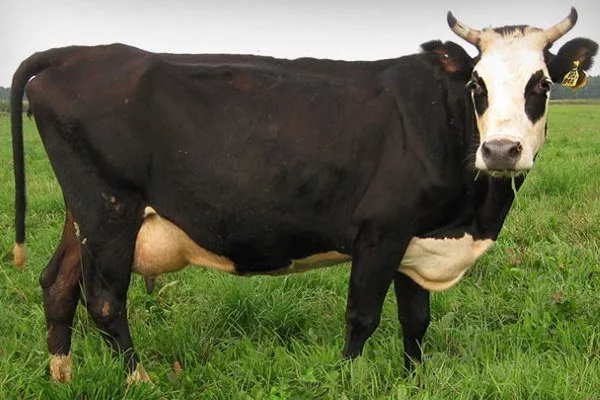
The Yaroslavl cattle breed was developed in the 19th century in the Yaroslavl province. The history of this breed's development reveals no trace of selective breeding. Livestock breeders simply followed past breeding practices. Back then, milk production was the primary focus, and breeding bulls were well-fed. The Yaroslavl breed was officially listed in the breeding register in 1933, but efforts to improve both its appearance and its milk and meat production continue to this day.
A little about the breed
The mature Yaroslavl breed reaches a shoulder height of 127 cm. Calves weigh 30 kg at birth, but quickly gain weight. At six months, they reach 180 kg, and at one year, 350 kg. A mature heifer can weigh 500 kg, and a bull 650 kg. Breeders are typically larger, weighing between 800 and 1200 kg live.
Character and appearance
Yaroslavl cows are typically black, but can also be red-and-white or black-and-white. The main distinguishing features of these cows are their thin, low hooves and light-colored horns, which darken at the tips. Their faces are white with dark "spectacles." Their heads are narrow yet lean.
The Yaroslavl cow's build is distinct and milky, with strong bones and an elongated body, with an angular overall shape. There is a thin layer of subcutaneous fat, and the muscles of both cows and bulls are not very well developed.
In addition, there are other characteristics of Yaroslavl cattle:
- narrow but deep sternum;
- quite a wide backside;
- the neck is long and covered with folds;
- the withers are high;
- The belly is large, where the ribs are widely spaced.
The face, belly, tip of the tail and legs are white, and the nose is mostly black.
Spreading
In former times, the Yaroslavl breed of cattle was popular in the following areas:
- Yaroslavl;
- Ivanovskaya;
- Kalininskaya;
- Volgograd;
- Kostroma;
- Tyumen.
As of January 1, 1985, there were 800,000 Yaroslavl cows and bulls in the country. The breed was developed to meet the high demand for milk and beef by breeding in the following Russian cities:
- Moscow;
- Saint Petersburg;
- Yaroslavl.
Productive qualities
Yaroslavl cows are highly productive, especially in terms of milk production. Furthermore, they excel at reproductive functions and become excellent mothers after giving birth.
Milk
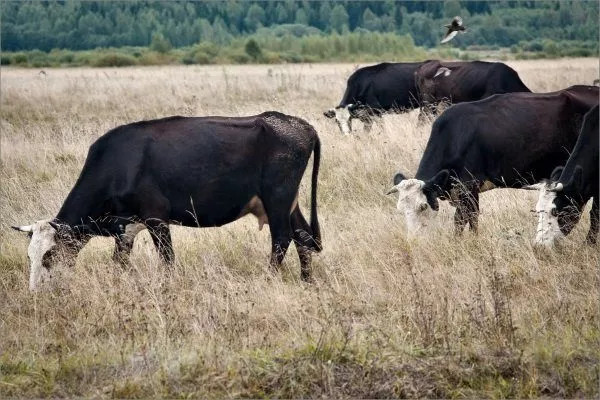
The main advantage of this breed is its high milk yield. These cows have well-developed, round udders. One cow can produce 3,000 to 6,000 liters of delicious milk per year. Record-breaking cows can yield as much as 12,000 liters of milk per year. A first-time heifer produces 2,200 kg of milk in 12 months.
Milk fat content is 4.5%, which is a respectable figure. The product is often used not only fresh but also in the production of cheeses, kefir, cottage cheese, and butter, both at home and in industrial settings. If milk yield exceeds 6,000 kg, the fat content increases to 5.20%.
Meat
Yaroslavl cattle are considered heavy, but in terms of meat production, there's no selective breeding. For this reason, the meat yield after slaughter is only 45%. Feeding animals with more protein (grain, good bran) can increase meat yield.
Yaroslavl cows have good reproductive performance and high calf productivity. They carry their calves easily, and 90% of calves are healthy. A newborn calf weighs 30 kg. If breastfed and well cared for, it will gain 800 grams per day. At one year of age, a bull calf can weigh 400 kg.
Keeping cows
Yaroslavl cows don't require special attention or special care or housing conditions. However, it's worth noting some maintenance recommendations:
- at the end of autumn, the cowshed should be insulated and disinfected;
- it is necessary to ensure that there are no drafts in the room;
- windows are installed high;
- Cow hygiene is important, namely washing the entire body and adjusting the legs;
- To prevent animals from getting sick, the premises must be cleaned daily;
- To avoid mastopathy, females should have their bedding changed regularly;
- In the barn, you need to monitor the air temperature; high readings should not be allowed;
- the cow should be milked at a certain time;
- there should be a lake or river near the walking area;
- the first days the animals graze for 2 hours, gradually increasing the time to 16 hours;
- Once a month, it is necessary to call a veterinarian to examine the animals and systematically carry out the necessary vaccinations.
In the area where cattle will live their lives, 3 buildings must be built:
- Cowshed. It's built from adobe, brick, or regular logs. If you build a barn out of brick, the building will be cold, and animals may become ill during the cold season.
During construction, it's necessary to calculate the area required per cow, then multiply this figure by the total number of cows. One head requires 6 square meters; if you plan to raise a heifer, then allocate 10 square meters.
It is recommended to insulate the floor or at least lay a thick layer of bedding, which should also be sloped at a 3-centimeter angle. Inside, a space should be separated for a stall measuring 1.7 by 1.1 meters, in front of which a feeder and waterer should be installed. - Manure storage. To do this, it is enough to make a square of 2.5 by 2.5 meters, taking into account that approximately 10 tons of manure will be removed from one livestock per year.
- Shed for storing feed. It can be constructed from ordinary boards. The hay supply is stored in a room measuring 10 by 4 by 3 meters. The hay can also be stored in a simple stack under a small shelter.
- ✓ Ensure that the barn area is at least 6 square meters per cow.
- ✓ Check that the floor has a slope of at least 3 cm to ensure drainage.
Care
A cow that has just given birth requires special care. Feeding should be increased daily, gradually returning to the previous amount. For the first three days, the animal should be fed five times a day. Before each milking, the udder should be washed with warm water and massaged only with warm hands, otherwise it may develop. mastitis.
To achieve high milk production, milking should be done at the same time each day, with the udder gently massaged beforehand. Milking should be done to the last drop to avoid problems, and then gently massaged again at the end.
Nutrition
Regarding the nutrition of Yaroslavl cows and bulls, bulk feed is important, but the amount of food consumed must be monitored. The diet is based on the available feed.
Dairy cows of this breed can consume half of their entire ration as bulk feed, and even more in the summer – 68%. Roughage (hay, straw, chaff, and husk) can make up 30 to 50%.
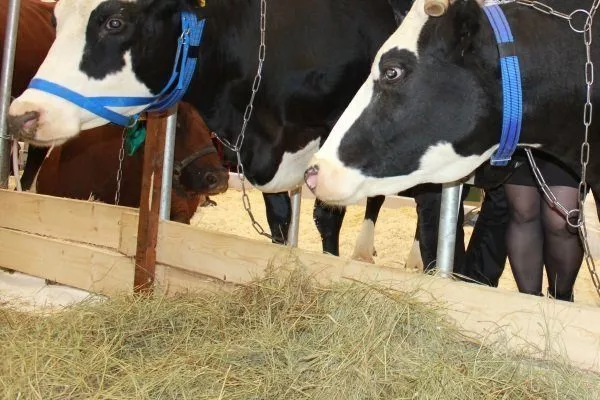
The table describes the differences in feeding depending on the time of year, productivity, pregnancy, new milk yield, etc.
| Season (winter and summer) | Feeding features related to reproduction | Features of feeding during pregnancy and lactation | Feeding fresh cows | Feeding cows during milking period | Feeding during the grazing period |
| In winter, cows and bulls should be fed 33% silage, 33% haylage, and 10% sugar beet. In summer, green fodder should account for two-thirds of the total feed. | The amount of compound feed or meal is determined by the amount of primary feed in the diet (grass or hay) and the amount of milk produced. For example, if milk yield is 4.5 tons or more per year, the cow is fed compound feed (mashed compound feed). | A month and a half before the expected due date, Yaroslavl cows are weaned. This should be done gradually, and the diet should be adjusted just as slowly. Succulent feed is reduced—grass, silage, beets, and concentrates (meal, compound feed)—until completely eliminated, leaving only hay. Water intake is reduced: if the cow is producing a lot of milk, three buckets of water per day can be given, and if she is producing little, two buckets. | Seven days before parturition, succulent feeds, root vegetables, silage, and preservatives are completely eliminated. During this period, mixed grass and meadow hay are the only foods allowed. Three days after parturition, the cow is gradually given silage, haylage, and root vegetables, gradually increasing the dose. | Feed intake continues to increase as milk production increases until the cow begins to produce more milk. Hay, silage, and haylage can be fed in unlimited quantities. With average milk yields, the cow is fed twice a day; with high yields, three times a day. | The transition of animals to pasture should be gradual to avoid a decrease in milk production. Initially, cows are kept outside for 2-3 hours, after being fed half of their feed. |
Read about the specifics of feeding calves from birth here.
Diseases
The most important characteristic of the Yaroslavl cow is its strong immunity. They almost never get sick and can even prevent infection. leukemiaExperts believe that this breed is the least susceptible to this disease. If one animal in the herd becomes ill, the others will remain uninfected. An infected cow is not treated and is immediately slaughtered.
Common diseases that Yaroslavl cows rarely suffer from:
| Name of the disease | Description |
| Paratuberculous enteritis | The animal becomes infected through the gastrointestinal tract; it retains its appetite, but develops 24-hour diarrhea. If the condition isn't treated promptly, the cow may die from exhaustion. |
| Vibriosis | This disease is chronic. During mating, the animal can become infected from its partner, resulting in a miscarriage. |
| Stomatitis | This condition is an inflammatory process in the mouth. It can occur due to the consumption of coarse foods or chemicals that can damage the mucous membrane. |
| Esophageal obstruction | This pathology can occur when eating large pieces of root vegetables, experiencing severe fear while eating, or experiencing a spasm; the esophagus can become blocked by a foreign object. |
| Scar swelling | The rumen may swell if the cow eats feed after rain or after dew, or if it eats poor-quality feed. |
Keeping calves
Proper care is important for a newborn calf:
- As soon as the cow licks the baby with her tongue, it is placed in a separate cage, it is placed on a thick layer of straw, and the room temperature must be at least 12 degrees;
- in the first days, calves should be given fresh milk to drink about 7 times a day, starting with half a liter and increasing to 3 liters;
- the next day after birth, it is recommended to give about a liter of warm clean water;
- the bedding is changed every morning and evening;
- Feeding utensils are washed and scalded with boiling water;
- The calf is kept in a separate cage for about 3 months, then transferred to the cow, but there must be a partition between them;
It's not advisable to let calves out to pasture with other animals, as there's a risk of worm infestation. Calves eventually grow up and are called young animals, requiring slightly different care:
- Cleaning the barn and washing the calf.
- Change the bedding twice a day.
- Timely rational nutrition.
- Cleaning feeders and waterers after each meal.
Young animals need to be fed three times a day; they love succulent feed and hay with concentrates.
Breeding
An important condition for good productive qualities of Yaroslavl breeds is proper preparation for calving:
- timely start-up of the animal (cessation of milking), this should happen when the milk yield decreases to one and a half liters;
- proper feeding and proper care of the cow from the last milking until birth (2 months before the expected date of birth);
- In winter, pregnant heifers are allowed to drink only water at room temperature;
- It is necessary to carefully monitor the feed, it should not contain rot or diaper rash;
- two weeks before giving birth, succulent feeds are excluded from the diet (this should be done when the udder has increased in size and the belly has dropped);
- Just before the birth, the barn should be thoroughly cleaned.
- Stop milking 2 months before the expected due date.
- Eliminate succulent foods 2 weeks before giving birth.
- Perform a thorough cleaning of the barn before the calf is born.
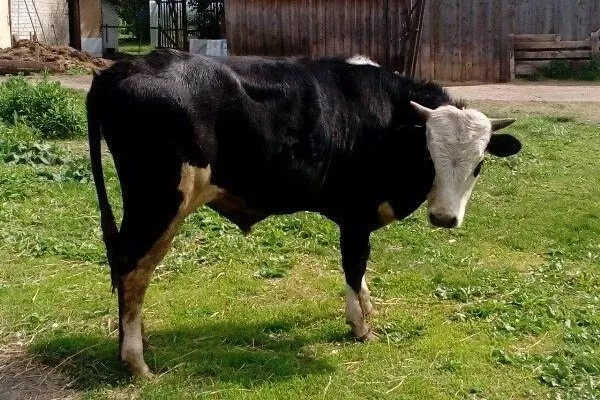
Immediately after birth, the calf is presented to the mother for licking. If the cow refuses this, you should wipe it down with straw and place it in a warm place to dry. Half an hour after birth, the cow is offered clean, warm water with added salt (100 grams of salt per bucket of water).
After birth, straw and manure must be buried and burned.
Pros and cons
Every cattle breed has its advantages and disadvantages. Today, the Yaroslavl breed is considered the best in terms of milk yield and fat content. Among the advantages of the Yaroslavl cow are:
- unpretentiousness to feeding and living conditions;
- they don’t eat much and still remain healthy animals;
- able to withstand negative natural factors;
- a good immune system helps prevent dangerous diseases;
- record holders for producing large quantities of milk with high fat content and high protein content;
- good genes, when crossed with other breeds they will inherit good milk production;
- high reproductive rate in cows, during the entire reproductive period they are capable of giving birth to up to 5 calves;
- Animals of this breed can be purchased anywhere, in particular in all regions and areas of Russia.
Now let's talk about the disadvantages:
- narrow and sunken chest;
- muscles are poorly developed;
- animals cannot graze for long periods of time or walk long distances;
- short stature;
- a wide, poorly proportioned backside, a roof-shaped sacrum, because of which the cow will not be able to give birth to a large calf on her own;
- low and thin legs, due to which the animal can easily get injured, in particular fractures;
- immediately after giving birth, the cow falls and remains in a horizontal position for a long time, as she cannot stand up on her feet;
- The breed is bred for milk production; keeping it for meat is not profitable.
Farmers' reviews
People don't think cows are particularly beautiful, but that's not the most important criterion. The important thing is that their milk production is high, which can't be said about meat. Because they're light in weight and don't consume much feed, this is advantageous for cattle breeding. Moreover, they're not picky eaters, which also has a positive impact on their livelihood.