
Mastitis (inflammation of the mammary glands) is the biggest milk loss for farmers. A cow is out of milk production for a long time, and restoring her milk production takes time and medication. Even after treatment, the milk remains unfit for sale for some time because it contains antibiotics.
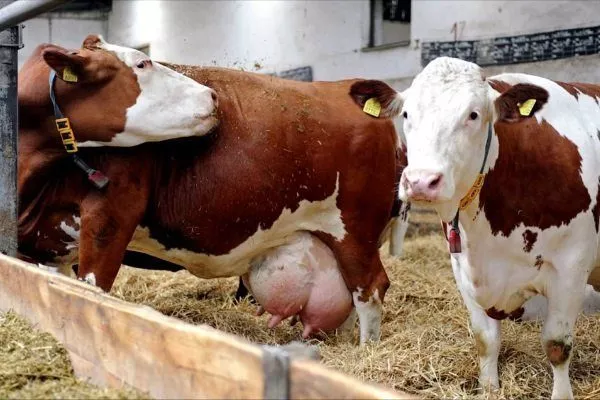
Causes of mastitis
In most cases, mastitis is caused by the cattle breeder's own fault—something was done wrong, and the animal pays the price. Inflammation most often occurs due to a weakened immune system. A cow is especially weak after calving, and any triggering factor can be fatal.
In 85% of cases, mastitis occurs due to the penetration of pathogenic bacteria into the body - streptococci, staphylococci, E. coli, etc., through wounds, nipple canals and other organs.
Let's consider below the causes of mastitis.
1. Violation of conditions of detention:
- low temperatures – inflammation can begin due to hypothermia;
- non-compliance of the microclimate with sanitary parameters;
- dampness and cold in the barn, unsanitary conditions.
Risk factors by category
| Category | Main risks | Preventive measures | Critical period |
|---|---|---|---|
| Content | Temperature <10°C, humidity >75% | Microclimate control 2 times a day | Winter, rainy season |
| Milking | Residual milk >200 ml/share | Milking control | The first 2 months of lactation |
| Nutrition | Deficiency of vitamins A, E, selenium | Premixes with antioxidants | Dry period |
| Calving | Placenta retention >12 hours | Oxytocin injections | The first 7 days after calving |
2. Violation of milking techniques and rules:
- failure to comply with hygienic requirements when preparing the udder for milking;
- the cow has not been milked;
- the mammary glands are not completely emptied - pathogenic bacteria multiply in the residual milk, which presses on the parenchyma of the mammary gland;
An animal that receives poor nutrition, which leads to a weakened immune system, is more likely to develop mastitis.
3. Complications after childbirth:
- the placenta was delayed;
- endometritis.
4. Presence of injuries, cracks in the nipples or insect bites.
5. Injury to cows due to conflicts - if animals are walked without a leash.
6. Complications after treatment – usually caused by tetracycline antibiotics.
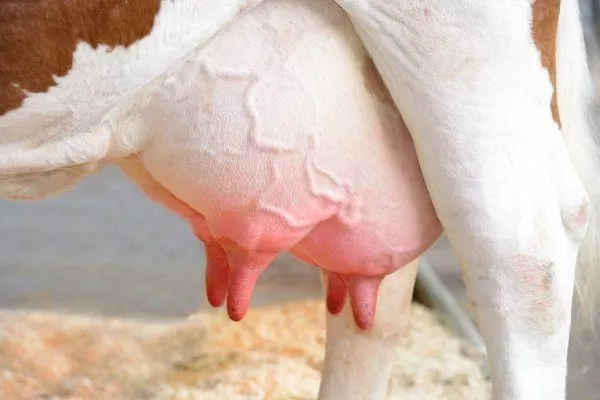
Symptoms of mastitis
Mastitis has many forms and manifestations, and the course of the disease can vary. However, all forms of the disease share the same symptoms:
- The animal is depressed.
- Loss of appetite.
- There is swelling in the udder. He has a fever. The udder is enlarged—either all or just some lobes. It is painful to palpate.
- The temperature of the entire body may rise.
- The milk's consistency has changed. It tastes and colors different from normal milk, often containing blood or pus.
- By palpating the udder, you can determine the presence of nodes and seals.
Diagnostic errors
- ✓ Incomplete milking before examination
- ✓ Ignoring udder temperature
- ✓ No comparison of shares
- ✓ Testing only morning milk
There are forms of mastitis in which the animal's mammary glands change color – they become spotty.
Attentive cattle breeders can detect the problem early, before the cow's udder becomes swollen and her temperature rises. The risk of developing the disease increases after calving and during the first to second month of pregnancy. The following symptoms may indicate mastitis:
- The nipple has turned red. At the beginning of milking, traces of flakes or curd-like balls are visible in the milk.
- Over time, if the disease is not treated, a viscous secretion will be observed from the glands.
Types
For successful treatment, it's important not only to detect mastitis early but also to correctly identify its type. This can be done based on symptoms and test results.
Clinical
In clinical mastitis, the udder hardens and swells, and the affected area becomes hot. Symptoms depend on the severity of the disease:
- in a mild form, there are flakes and lumps in the milk;
- in a moderate form, the udder swells, hardens, turns red and becomes painful;
- in severe cases – intoxication, the animal’s condition is critical.
Comparative characteristics of mastitis forms
| Form | Somatic cells/ml | milk pH | Udder temperature | Forecast |
|---|---|---|---|---|
| Subclinical | 500,000-1,000,000 | 6.8-7.2 | +0.5-1°C | Favorable |
| Catarrhal | 1,000,000-2,000,000 | 7.0-7.4 | +2-3°C | Conditionally favorable |
| Purulent | >3,000,000 | 7.5-8.0 | +3-5°C | Careful |
| Gangrenous | Tissue necrosis | >8.0 | +5-7°C | Adverse |
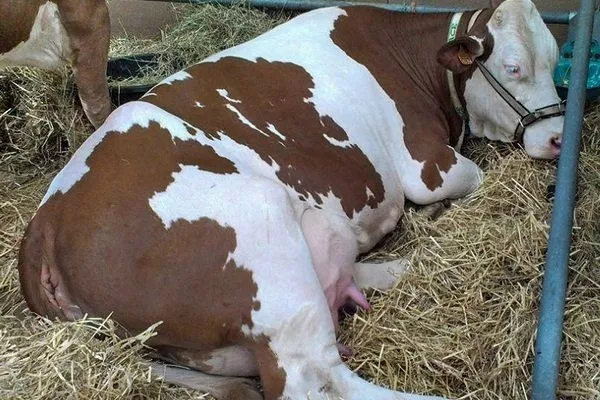
Subclinical
This form of the disease is dangerous because it can be latent. It often remains asymptomatic for a long time. It can be identified through laboratory testing, including somatic cell counts and microflora analysis. If subclinical mastitis is not detected promptly, it will progress to clinical mastitis.
Chronic
As with subclinical mastitis, this form of the disease is latent. A cow may remain unaware for a long time. The bacteria that cause the disease reside in the tissues. The chronic form occurs when the cow's body overcomes the short-term inflammation and appears to recover. To diagnose chronic mastitis, the following are used:
- visual assessment of milk - it is watery, with fragments of cereal;
- tests;
- by settling method.
If the animal does not receive adequate treatment, the disease will periodically worsen.
Catarrhal
It usually occurs due to improper milking. Most often, only one lobe of the udder is affected. The infection penetrates the tissue, affecting the milk ducts and mucous membranes. The bacteria enter through the teat. External symptoms:
- small nodules near the nipple - they appear on the 5th day of the illness;
- in the first days the animal feels normal, then a high temperature appears;
- the cow eats poorly and becomes weak;
- The milk becomes low-fat and contains cereal.
Purulent
Symptoms of the purulent form:
- Hardenings appear on the animal's udder.
- The temperature at the compaction site increases.
- The body temperature is very high – 40-41 degrees.
- Milk contains pus.
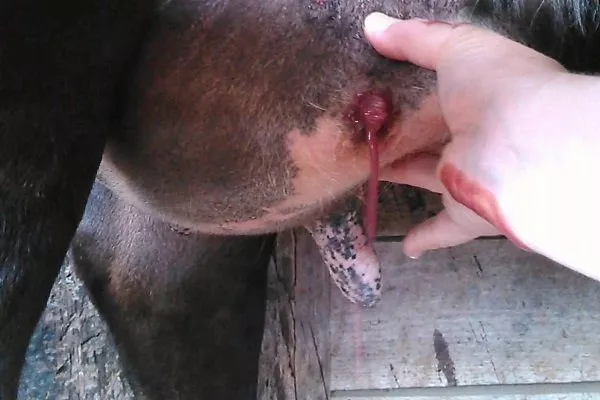
Abscess on the udder of a cow
In case of abscess and phlegmon the prognosis is unfavorable – the animal will not be able to recover.
With purulent inflammation of the udder, the following may also occur:
- Abscess. Abscesses appear on the mammary gland, growing and merging. The cow has a high fever. The disease leads to destructive changes—part of the gland stops functioning. With weakened immunity, metastases occur.
- PhlegmonWith this purulent form, a diffuse purulent lesion appears. Milk expressed from the affected lobe is gray and contains many clots.
Purulent-catarrhal
If pus accumulates in the alveoli and milk ducts, purulent mastitis becomes purulent-catarrhal. It occurs as a result of the activity of pyogenic bacteria. The cause of the disease:
- poor conditions of detention;
- problems in the reproductive system.
Visible symptoms disappear within 3-4 days of the onset of the disease. This form of mastitis either resolves or becomes chronic.
Serous and acute serous
Appears after calving. Only part of the udder becomes inflamed. Symptoms:
- swelling and redness of the udder;
- compaction and increase in temperature of the inflamed area;
- The milk is liquid, with flakes, more like water.
In the serous form of the disease, milk becomes bluish.
Fibrous
This form most often occurs as a consequence of catarrhal mastitis. Symptoms:
- hemorrhages are visible in the affected tissues;
- discharge of pus.
Fibrous mastitis often results in gangrene or metastases to other organs. The prognosis is poor.
In the fibrous form, the protein fibrin enters the tissues and accumulates there, causing circulatory problems and even necrosis.
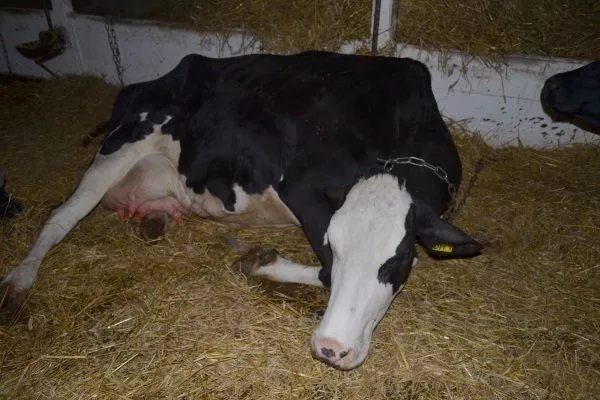
Hemorrhagic
It is accompanied by thinning of the walls of the mammary blood vessels. Blood seeps into the tissue and milk ducts, clogging them. Characteristic symptoms:
- milk has a reddish or pinkish tint;
- There are purple spots on the skin of the udder.
Gangrenous
This is the most severe case of mastitis. Its development is preceded by circulatory problems. Symptoms:
- the tissues of the affected lobes become dead, blue-black in color;
- A foul-smelling liquid is released from the udder - brown or green, with protein flakes.
The worst prognosis is that the animal may die if the infection spreads to other vital organs.
Diagnostics
Successful treatment of cows depends on timely diagnosis of mastitis. There are three forms of the disease:
- acute;
- hidden;
- chronic.
In 90% of cases, cows are diagnosed with chronic mastitis. It can be identified by the quality of the milk—it's watery, low-fat, and uneven.
Veterinarians diagnose mastitis. Based on clinical data, the specialist determines the type of disease the animal has. The farmer's job is to promptly monitor the udder condition, check for mastitis, and, if mastitis is detected or suspected, contact a veterinarian. There are many methods for detecting mastitis, including testing and various laboratory studies. The diagnostic process is as follows:
- Visual inspection of the cow and udder.
- Determining the onset of the disease – when symptoms appeared.
- Determining the cause – what triggered the disease.
- Taking samples and analyses.
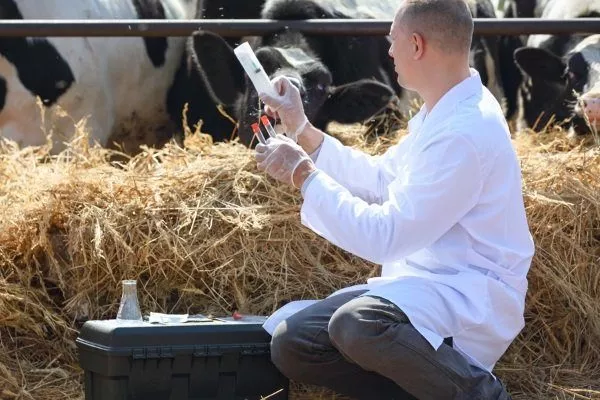
To understand the disease, the veterinarian will determine the animal's living conditions, diet, milking method, and past illnesses. Before prescribing treatment, the following procedures are performed:
- Milk is being milked out - the udder secretion must be carefully examined.
- Temperature, pulse, and respiratory rate are measured.
- The lymph nodes in the udder area are examined.
- The temperature, size and density of different lobes are compared.
- The color of the udder is determined and the integrity of the skin is checked.
- They palpate the nipples for any lumps along their entire length, from the base to the very bottom.
Mastitis tests
The cattle breeder's task is to conduct mastitis testing during periods of increased risk:
- beginning of lactation;
- every month after the start of lactation;
- after launch;
- 2 weeks before calving.
If a cow isn't examined and treated promptly, previous lactation levels will be impossible to restore. In severe cases, the animal dies due to mammary gland atrophy and gangrene. Latent mastitis has no obvious symptoms, so specialized tests are used for its timely diagnosis.
Mastidine solution testing
Mastidine allows you to determine the number of leukocytes and pH level.
- Drain the first three streams of milk from each lobe of the udder.
- Collect 1 ml of milk from each lobe in separate containers. Add 1 ml of 10% Mastidine solution.
- Milk with Mastidin is thoroughly mixed with a wooden or glass stick for 20 seconds.
- If the product has acquired a jelly-like consistency, then the cow has udder inflammation.
Testing takes 15 minutes. Disadvantages of Mastidin testing:
- The drug is expensive.
- Once the bottle is opened, it should be used quickly – it has a short shelf life.
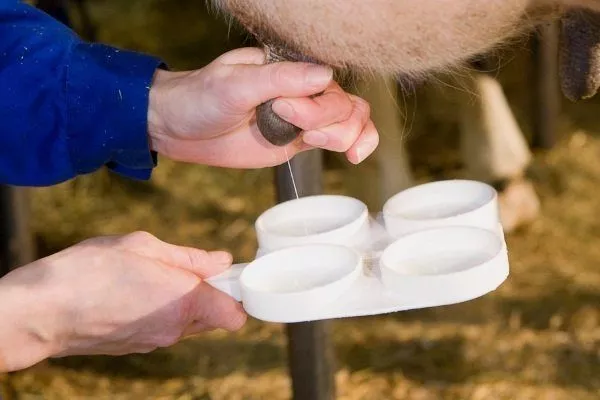
Rapid testing of udder lobes
To test cows for subclinical mastitis, special test plates are used. They have four indentations with circular grooves. Milk is dripped into the plates for testing. The following can be used for testing:
- 5% dimastin solution;
- or 2% solution of mastidin.
The hemispherical lunulae are black and white. The color scheme is chosen to facilitate the diagnosis of mastitis:
- pus and blood are clearly visible on a white background;
- On the black one there are casein clots and white flakes.
The arrangement of the holes is designed so that they can be easily numbered according to the udder lobes.
Sedimentation test
Mastitis can be diagnosed using a settling test. However, it is not considered reliably accurate, so it is used as a supplementary test. The test procedure is as follows:
- After milking, 10 ml of milk is extracted from each teat. The milk from each teat is placed in a separate container.
- The milk taken for the dough is placed in the refrigerator for 17 hours – the required temperature is 10 °C.
- After the time has elapsed, examine the milk under a light. Note the color, sediment, and thickness of the creamy layer. The result is determined as follows:
- A healthy cow's milk is white and free of impurities.
- The patient has watery milk. Sediment is 1 mm.
- If the thickness of the cream is less than 5 mm, the cow has an inflammation; if it is more than 1.5 cm, the animal is healthy.
Since the method is unreliable, the above-described testing is performed afterward. No more than seven days should elapse between tests.
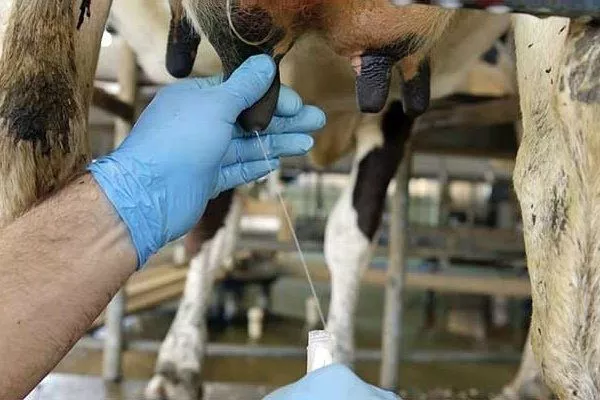
Bromothymol test
Veterinary medicine uses a variety of diagnostic methods. If one test doesn't reveal a problem, it needs to be replicated with another. For example, there's the Bromthymol test:
- Take a 0.5% solution of Bromothymol.
- Distilled water or wine alcohol is poured into the indicator.
- Two drops of the resulting mixture are added to 1 ml of milk.
- Observe the color – the shade is used to draw a conclusion about the presence of mastitis:
- in a healthy cow the color will be greenish or yellowish;
- in cows with latent inflammation - bright green, yellow or blue.
Mastiton testing
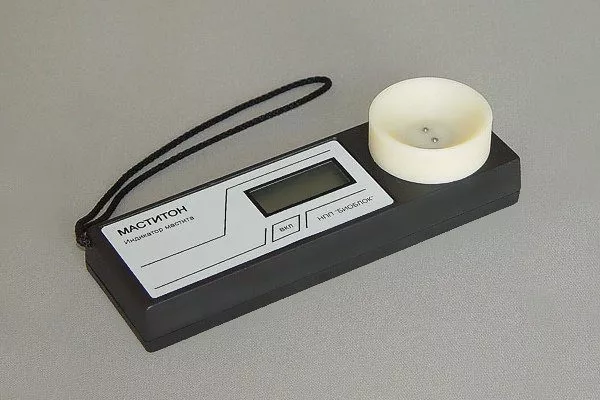
Milk from sick cows has a different salt content; the disease can be detected by measuring electrical conductivity. Such devices are typically used when examining large numbers of cows. One such device is the Mastiton. The reading range is from 0 to 1999. Results and diagnosis:
- Less than 450 indicates good milk and a healthy cow. There's a 99.9% chance the animal is free of mastitis.
- 450-600 – mastitis may occur.
- More than 600 – the clinical stage develops.
Measurements should be taken repeatedly, preferably daily. If the device shows more than 600 units, an additional test should be performed—for example, using Mastidin.
The disadvantage of the Mastiton device is its large margin of error, which is more than 30%!
Tips for diagnostics using Mastiton:
- Test milk from all milking areas. This is especially true for older cows that have had other illnesses. If, for example, the milking area shows 450 in three milking areas and 600 in one, the risk of developing the disease is extremely high.
- Cows that have had mammary inflammation are at risk. Their score is above 500. However, this result is a consequence of the disease.
- If the device shows more than 500 in a large herd, it is necessary to check the milking machines - perhaps the milking technique is not correct.
Treatment of mastitis
A cow diagnosed with mastitis should be separated from the herd. If the herd is grazing, the sick animal should not be allowed to pasture but should be kept in the barn. What should be done first?
- Give the cow less succulent and coarse feed and less drinking water to reduce milk production.
- Change the straw bedding twice a day - this will prevent the spread of germs.
- Express milk six times a day, with a minimum of four. Inexperienced cattle breeders think that if a cow's udder is sore, she doesn't need to be milked. However, milking promotes the release of microorganisms, along with the milked milk. Milking helps reduce swelling.
- The procedures are performed only with disposable instruments to prevent re-infection.
Antibiotic therapy regimens
| Preparation | Dosage | Route of administration | Well | Waiting period |
|---|---|---|---|---|
| Bicillin-5 | 10,000 U/kg | Intramuscularly | 3 days | 5 days |
| Mastisan | 10 ml/share | Intrammar | 3-5 days | 4 days |
| Nitox | 1 ml/10 kg | Single intramuscular injection | — | 7 days |
| Penersin | 5-10 ml/share | Through a catheter | 3 days | 5 days |
Drug treatment
Medication is expensive, but in many cases, it's the only way to help the animal. For mastitis, the following are commonly used:
- Hormonal drug - oxytocin. To speed up recovery. This drug is dangerous for pregnant cows, as it can trigger premature calving. The medication is administered subcutaneously at a dose of 5 units per 100 kg of body weight. Before administering the hormone, milk is extracted, and then oxytocin is administered intrajugularly.
- Antibiotics. Before administering antibiotics, it's important to identify the type of infection causing the inflammation. This is done by analyzing the microflora in a laboratory. Only specialists can prescribe the correct medication, but the owner can administer them to the animal themselves. Antibiotic administration routes:
- Intramuscular injections. At the onset of general intoxication, potent medications are used, such as "Bicillin-5" or "Nitox."
- Penersin, Masticide, and Mastisan are administered through a catheter. These medications should be administered for 3-4 days.
- Intramammary injections – the substance is administered directly into the udder. The medication is sold in syringes – Mastisan or Gamaret. The udder is completely drained of milk before the injection.
- The drug is administered via a novocaine block placed above the udder. This method requires specialized skills.
After using antibiotics, milk is inedible for another 5 days after the end of treatment.
Antibiotics may also be prescribed for mastitis after the pathogenic bacteria has been identified:
- Benstrep – sold in glass vials. Effective against gram-positive bacteria.
- Maximax – sold in dosing syringes. Effective against staphylococci, streptococci, pathogenic anaerobes, etc.
- Penmycin kills gram-positive and gram-negative bacteria. It does not affect viruses or fungi.
- Dorin - affects microbes that multiply in the exudate of the udder.
- Penicillin.
- Erythromycin.
- Monomycin.
- Neomycin and others.
Solutions must be warmed to the cow's body temperature before administration. 80 ml is sufficient for one injection.
If the case is advanced, the cow is prescribed a combination of medications. For example, a good combination is:
- penicillin and streptomycin;
- streptomycin and erythromycin;
- neomycin and tetracycline.
If a cow has a chronic purulent form, antibiotics may not help. If parenchymal atrophy occurs, the milk ducts do not recover; instead, the infection spreads further and further.
In this video, specialists discuss treating mastitis with nonsteroidal anti-inflammatory drugs:
Complex treatment
Mastitis not only affects a cow's udder but also affects her overall health. Therefore, a sick animal must receive comprehensive treatment. Antibiotics alone are not enough to treat mastitis—it's important not only to kill the infection but also to restore the cow's immune system. If the animal has an acute form of the disease, the following are used in addition to antibiotics:
- liquid solution of streptocide - intravenously;
- inside the udder - 1% solution of streptocide or 2.5% solution of ichthyol.
If the cow has a severe form of the disease, antibiotics are supplemented with:
- 40% glucose solution;
- 10% calcium chloride/gluconate solution (100-150 ml);
- 0.25% novocaine solution (0.5-1 ml per 1 kg of weight).
In parallel, the following procedures are performed on the animal:
- applications with valet or anixid;
- application of camphor or ichthyol ointments;
- warming with paraffin or ozokerite - on the 3-5th day;
- warming up with an infrared lamp.
In particularly complex conditions – with purulent inflammation, abscess, gangrene, phlegmon, the animal is recommended to additionally administer:
- Glucose 40% – 400 ml.
- Calcium chloride or gluconate solution – up to 150 ml.
- Saline solution with novocaine – 1 ml per 1 kg of weight.
- Urotropin with calcium chloride – 10 ml.
- 1% calcium permanganate solution – in case of gangrene, it is injected directly into the nipple of the affected lobe.
- Caffeine – to support the body.
If abscesses or pustules appear, they must be lanced. This procedure should only be performed by a specialist. Lanced abscesses require care like open wounds.
The video discusses the most popular, inexpensive, and effective medications for mastitis.
Massage
For mastitis, massage of the udder and teats is recommended. Before milking, the udder is wiped with warm water, and then each teat is gently and smoothly massaged, one at a time. The movements should act as if pushing the teats upward. Note:
- For serous and fibrous forms, if there is no pain yet, massage twice a day. Massage should begin from the bottom.
- In case of catarrhal massage, on the contrary, they start from the top.
- Massage is contraindicated in case of hemorrhagic mastitis.
Traditional methods
Mastitis is a serious condition that requires testing and veterinary supervision. It is not recommended to rely solely on so-called "folk" treatments. Lack of adequate medical care can be fatal for the animal. Folk remedies should only serve as a supplement to treatment. What can be done to alleviate the condition of a cow with mastitis?
- make vodka compresses;
- apply grated carrots, coltsfoot leaves, cabbage leaves, bean flour;
- apply compressors with rice starch - it must be diluted with boiled water to the consistency of sour cream;
- lubricate the udder with an ointment made from a mixture of starch and vegetable oil;
- make compresses from milk, rye flour and butter;
- apply kombucha;
- apply a mixture of milk and baked onions;
- Apply finely chopped daffodil bulbs.
In case of mastitis, warming up and hot compresses are prohibited – elevated temperatures promote the proliferation of microbes.
Experienced cattle breeders also recommend using eucalyptus ointment to combat lumps. You will need:
- eucalyptus leaves;
- soap grass;
- Japanese acacia.
Take 4 tablespoons of each ingredient. Pour 1 cup of boiling water over the mixture and simmer for 5 minutes. After steeping and straining the decoction, add 100 g of butter. Apply the resulting ointment to the udder.
Compresses help relieve inflammation and reduce pain. Given the complexity of the disease, it's unlikely that compresses will help an animal with, for example, purulent mastitis. Folk remedies are only a supplement to treating the inflammation. Inadequate treatment can lead to the following consequences:
- the disease becomes chronic or latent;
- part of the udder is lost;
- in the worst case, the animal dies.
Prevention
To prevent cows from developing mastitis, it's important to follow proper husbandry practices and milking techniques. Mastitis prevention measures include the following:
- Animals must be kept in clean and warm premises.
- Only professionals should handle cows. This is especially true in milking parlors.
- Cows must receive high-quality and nutritious feed.
- Animals must be under the supervision of an experienced veterinarian.
- The condition of the udder must be monitored - cuts, wounds, and cracks must be responded to promptly.
- Machine milking operators must exercise extreme caution when using automated milking systems. Rough or unskilled movements can cause illness.
- Milking should be done regularly - at equal intervals.
- Before and after milking, it is essential to massage the udder.
Pre-milking treatment protocols
- ✓ Mechanical cleaning of nipples (30 sec)
- ✓ Treatment with disinfectant solution (0.5% chlorhexidine)
- ✓ Drying with disposable wipes
- ✓ Milking the first streams into the tester
- ✓ Putting on milking cups after 60-90 seconds
Mastitis is a serious disease that, although it can begin almost unnoticed, can lead to the culling of animals. To prevent losses, timely diagnosis and prevention are essential, and if a problem arises, veterinary assistance is needed.