
Bovine leukemia is characterized by infection with an RNA oncovirus. Malignant tumors affect the hematopoietic system, spreading to other internal organs. The disease is incurable.
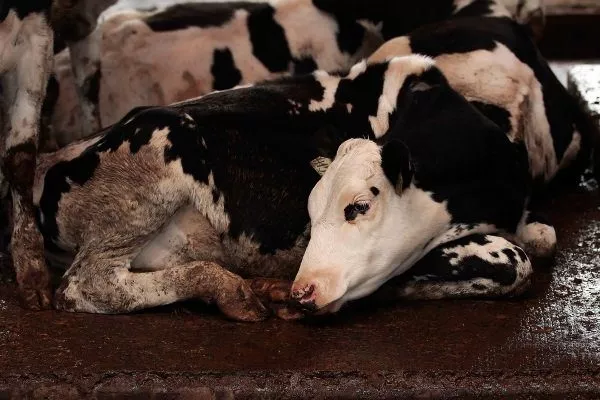
What are the causes and how is the virus transmitted?
The leukemia virus carrier is a modified ribonucleic acid macromolecule of the animal itself. After entering the body of cattle, it alters the structure of circulatory cells, thereby disrupting their functionality. This leads to excessive lymphocyte production, tissue proliferation, and tumor formation.
The latent incubation period is quite long—up to 7 years. This period can be completely asymptomatic. However, the cow is a carrier of the virus and can therefore infect other animals.
Transmission routes virus:
- direct contact with a sick animal;
- through working utensils and tools;
- through semen from an infected bull;
- through blood and saliva;
- the virus is spread by blood-sucking insects – mosquitoes, bedbugs, etc.;
- through milk, colostrum, amniotic fluid, placenta.
Factors, affecting infection:
- low level of immunity, when owners provide poor-quality feed and keep cattle in inappropriate conditions;
- crowded content;
- stress (when animals are beaten);
- the presence of any pathologies and the lack of adequate treatment;
- genetic influence.
The virus is transmitted in various ways and is not affected by climate, season, or external factors. However, the microorganism is vulnerable to heating to 60 degrees Celsius and treatment with chlorine and 3% sodium hydroxide.
Learn more about bovine leukemia and how the virus is transmitted in this video:
Stages of the disease
Forms diseases:
- Enzootic species It is found mainly in adult cattle and lasts for a long time.
- Sporadic type Affects young animals up to 3 years of age. Rare.
Stages bovine leukemia:
- Stage No. 1 - Incubation (latent) is characterized by the moment the infection enters the animal's body. The duration varies—the stronger the cow's immune system, the longer the latent stage lasts. There are no symptoms.
- Stage No. 2 Hematological. The structure of bovine blood changes, the concentration of leukocytes increases, leading to the development of leukemia. Symptoms appear only in the gastrointestinal tract. The disease can be detected based on the collected test results.
- Stage No. 3 - tumor. Neoplasms grow in the hematopoietic organs. This stage appears after 5 years from the time of infection.
Leukemia pathogens are primarily found in milk, so farmers are required to regularly submit samples to a microbiology lab for testing. It's important to remember that the infection is highly transmissible.
Symptoms
Symptoms begin to appear in stage 2, and as the disease progresses, the signs intensify and become more complex. Leukemia can be identified by the following symptoms:
- The cow develops persistent diarrhea, which can suddenly turn into constipation. Blood clots may also be found in the feces.
- The lymph nodes swell, reaching the size of a ball. The eyeballs also enlarge, bulging out (exophthalmos).
- The animal becomes susceptible to all sorts of diseases. The slightest chill leads to a cold.
- The cow becomes infertile (barren). If a pregnant female is impregnated, she miscarries.
- Infected calves are constantly ill – they have difficulty breathing and develop digestive problems.
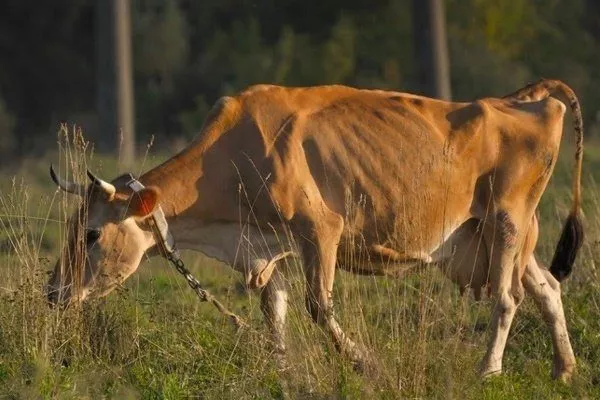
- Cattle rapidly lose weight and tire quickly. Exhaustion occurs.
- The cow becomes weakened and her breathing quickens.
- If you look at the udder, you will notice a distortion in the size of the lobes. The dewlap, belly andthe udder swells.
- The quality of milk deteriorates and the quantity decreases significantly.
- The animal begins to limp on its hind limbs.
- Visible growths form on the body.
Possible complications and consequences for the animal
Veterinarians and farmers commonly believe that leukemia is a sure-fire death. This is true, as no effective vaccine has been developed to date, despite decades of repeated research. Therefore, if one animal is infected, the farm owner must care for the rest of the herd.
Is there a danger to humans?
As it turns out, bovine leukemia is dangerous for all cattle. But how does this disease affect the human body? After all, we consume meat and milk. As numerous tests have shown, the human body is immune to bovine leukemia strains. No cases of infection have been reported worldwide.
However, medical professionals recommend caution when consuming animal products. These viruses are adaptable, flexible, and mutable, easily adapting to any environment. This doesn't guarantee that a new, unknown strain of BLVV could emerge at any time, posing a threat to human life and health.
Drinking untreated milk or eating meat from an infected animal is contraindicated. This is because cancer viruses accumulate toxic and other harmful substances in the cow's body. This can lead to a toxic illness in humans.
It is known that the pathogen is destroyed by heat treatment, so contaminated food products must be boiled. However, high temperatures cannot destroy the toxins. Therefore, consuming such meat and milk is strictly prohibited.
Diagnostics
To establish a diagnosis, a blood sample must be taken from the animal, as the virus initially attacks the circulatory system. Consequently, it localizes there. Leukoblastic cells are affected. The test is based on the following methods:
- RID – immunodiffusion reaction. Blood is collected two weeks after the tuberculosis test. If the cow is pregnant, the biological fluid is collected one month before calving or 30 days after calving. All animals over six months of age should be tested in this manner.
- Hematological analysis The test measures the concentration of lymphocytes in the blood over a 36-hour period. If an accurate result is not obtained during the test period, the test is repeated after a month. Typically, the count decreases, but increases again with further testing.
If the result is positive and observed twice by both methods, the animal is culled. If only the hematological test shows a positive result, the cow can be considered healthy. Histological, serological, and virological testing may also be performed.
Treatment of leukemia
Leukemia is incurable. This is because the pathogen attacks lymphocytes. To destroy the virus, the lymphocytes would have to be neutralized, which would lead to immunodeficiency. Simply put, a condition similar to HIV and AIDS develops.
If two or more infected cows are detected on a farm, the farm is considered leukemia-affected. Based on this, restrictions are imposed and a herd recovery plan is developed.
Restrictions:
- Separate infected cattle from healthy ones. Sick animals should not be kept with other livestock; they must be culled.
- Even if an animal is in the early stages of leukemia, collecting milk or consuming milk is strictly prohibited. The same applies to meat after slaughter.
- Cattle cannot be transported to another location or even within a given town. Permission must be obtained from the veterinary service.
Livestock health improvement Disease control can be carried out using various methods, depending on the extent of infection in the herd. All methods involve testing the entire herd, slaughtering infected animals, and partially replacing animals. Farmers must strictly adhere to disease prevention and control requirements and adhere to veterinary and sanitary regulations during livestock and veterinary procedures.
Initially, blood must be drawn from each animal. If leukemia is confirmed, the infected cattle are immediately moved to another location and then slaughtered. The remaining cows undergo ongoing testing. If no further cases are detected within six months, the farm is considered leukemia-free.
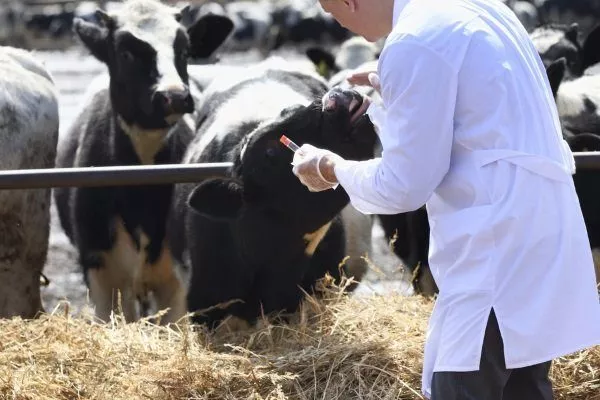
Since the farmer loses most of his cows after culling the sick animals, he needs to replenish his herd. This is accomplished by purchasing from other farms. It is important to adhere to quarantine regulations.
Preventive measures
Preventative measures are included in the list of mandatory actions for cattle management. This helps prevent infection and further spread of leukemia:
- Cattle should only be purchased from farms with no history of leukemia in their pedigree. Bulls and cows must be completely healthy.
- Quarantine is mandatory. Newly arrived cows are housed in a separate facility for two months. During this period, the cows are examined by a veterinarian and tested at least twice. If the results are negative, the cattle are reintroduced to the general herd. If positive, they are sent to fattening.
- RID-positive individuals are kept in a separate room and are intended for fattening.
- If a calf is born from a sick cow, it is tested for leukemia several times, since not all young animals are infected by their mother.
- It's also advisable to keep cows with weakened immune systems separately, as there's a risk of infection. Farmers should feed them special supplements to strengthen their immune systems.
- Milking machines, veterinary treatment and other procedures always begin with completely healthy cows.
- Calves are numbered using liquid nitrogen, and instruments are disinfected thermally and chemically.
- Breeding bulls should be bled four times a year.
- Pregnant cows are examined 30-60 days before the expected calving.
- Sanitary conditions for herd maintenance must meet standard requirements. All instruments, equipment, and inventory must be thoroughly disinfected.
- Free mating of bulls and cows is excluded.
- If the farm does not have an inseminator, sperm is purchased and sent for laboratory testing before insemination.
- ✓ Use of chlorine or caustic soda (3%) for processing instruments.
- ✓ Heat treatment of instruments at a temperature of at least 60 degrees.
Bovine leukemia is a dangerous disease that can be easily transmitted from a sick animal to a healthy one. Therefore, prevention is a crucial part of farm management. Leukemia can affect not only cows, but also goats, sheep, and other livestock. Ensure the health of your cattle from birth.