
The most dangerous and "popular" mushrooms include almost all types of fly agarics and the death cap. They can disrupt the gastrointestinal tract, cardiovascular system, and nervous system, and completely damage the brain. And no amount of heat treatment can neutralize the deadly toxins contained in these mushrooms. However, there are other poisonous mushrooms that are no less dangerous. This article will introduce you to such mushrooms.
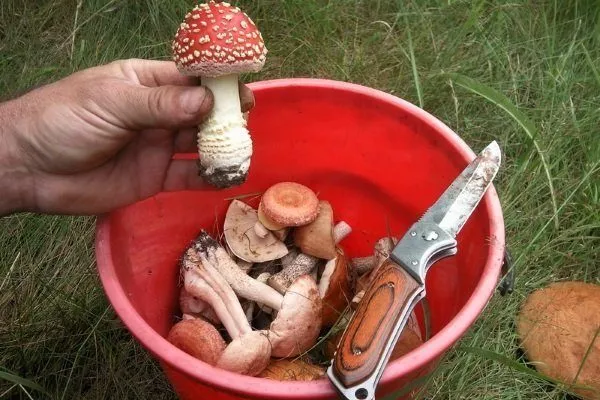
The most common poisonous mushrooms
The "meat of the earth," as mushrooms are sometimes called, truly has a unique flavor that lures lovers of the quiet hunt to seek out mushroom spots again and again. Experienced "hunters" for this delicacy of nature are well aware that The most common and dangerous among poisonous ones are the following::
- death cap;
- stinking fly agaric;
- panther fly agaric;
- false value;
- satanic mushroom;
- sulfur-yellow false honey fungus.
| Name of the mushroom | Cap color | Peculiarities | Toxins | Symptoms of poisoning |
|---|---|---|---|---|
| Death cap | White, greenish | Looks like champignons | Amatoxins | Liver and kidney damage |
| Satanic mushroom | Gray, olive | Looks like a porcini mushroom | Muscarine | Gastrointestinal and nervous system damage |
| Fly agaric | Red, white | Bright colors | Ibotenic acid | Hallucinations, death |
| Patouillard's fiberwort | White, red | Looks like champignons | Muscarine | Nervous system damage |
| Waxy talker | White | Pleasant smell | Muscarine | Heart and gastrointestinal tract damage |
It's important to be aware of the existence of conditionally edible mushrooms, which have a selective effect on the body depending on the circumstances. In the worst case, such mushrooms can cause moderate to moderate poisoning. These include:
- violin (felt milk cap);
- rowan (some species are conditionally edible, while others are poisonous);
- volnushka;
- pig, etc.
This category of mushrooms contains toxic resins that adversely affect the digestive system. Appropriate treatment can serve as an antidote: prolonged soaking in water, changing it periodically, or salting for at least 1.5 months. However, in some cases, this may not be sufficient.
Here, for example, false chanterelles In some countries they are considered edible (and even among Russian mushroom pickers there is such a belief), but with the caveat that they cause an allucinogenic effect, as well as digestive upset.
We do not recommend eating (or even touching) mushrooms that are of questionable safety, not to mention truly dangerous (poisonous) mushrooms.
Characteristic signs of poisonous mushrooms
Neither in the animal nor plant worlds do "look-alikes" exist that have similar external characteristics but are completely different in character. But this is precisely the case with mushrooms. For example, the same species can be divided into harmless and poisonous, yet they are very difficult to distinguish without knowing the key false signs.
Each type of poisonous mushroom growing in Russia has its own characteristics, which should be known to anyone who is not ready to eliminate home-picked mushrooms from their diet. To avoid making a fatal mistake, it is important to thoroughly study and memorize the descriptions of mushrooms that are harmful to health and life.
The main rule is to carefully examine the appearance of the mushroom, the color of the cap and gills, the shape of the stem, and the condition of the flesh when cut.
Death cap
This is the world's most famous poisonous mushroom, also known as the green fly agaric. It appears from midsummer to late autumn and can grow in groups or alone. It thrives in pine and deciduous forests, especially at the edges. It is found in Russia, many European countries, and even in America.
At the first stage of development, the cap resembles a bell, then becomes convex. Its surface is attractive for its velvety texture and perfectly smooth surface. The cap diameter is 4-11 cm. The subcapital gills and stem are white.
Distinguishing it from an edible mushroom requires exceptional attention. The death cap is initially covered with a solid white film. This film then peels off over time, forming a rim around the stem. It also has a basal sheath, a sac-like thickening.
The danger of the death cap lies not only in the presence of deadly toxins, but also in its striking resemblance to the beloved button mushroom or russula. Populations of both are found in similar locations, and they share the same color and stem shape as the edible mushrooms.
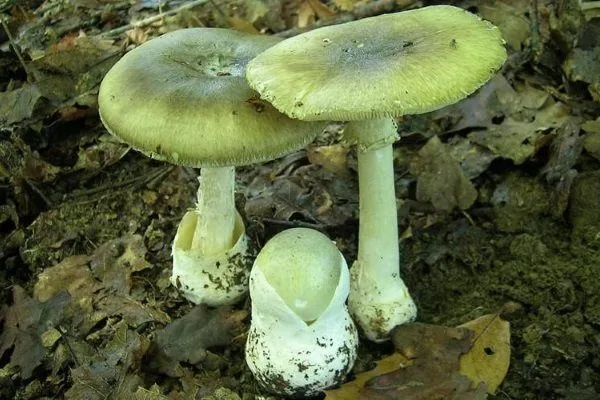
Unfortunately, they are often confused, leading to severe poisoning, from which not everyone survives. The toxins contained in death caps are heat-resistant and water-soluble, retaining their lethal properties. Consuming just 50 grams of death caps is guaranteed to be fatal.
There's a variety of toadstool that's the spitting image of a champignon. It's pure white, which makes it intriguing. But a closer look reveals it's just another trick of these half-living, half-plant creatures. The gills under the cap are also white, blending in with the white of the mushroom. In champignons, the gills are initially pinkish, darkening as they ripen.
There are medications that can neutralize the powerful toxins found in death cap mushrooms. Unfortunately, however, the symptoms of poisoning from this mushroom remain latent for a long time (up to two days), which often leads to death when precious time is lost to save the victim.
The death cap doesn't have the usual mushroom aroma. It's called the stinking mushroom for a reason.
Satanic mushroom
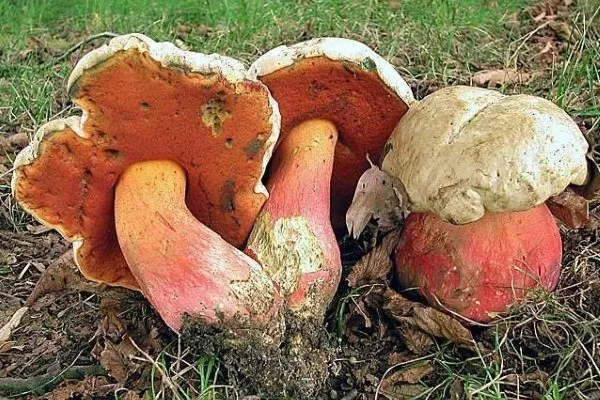
This giant looks very similar to porcini mushroom or oak tree, and is just as attractive. It is often found in oak and mixed forests in Russia. It can be found in temperate climates and European countries. The active growth period is from June to September.
The cap of this "monster" can reach 25-30 cm, and is gray or olive-green in color. The stem, with a mesh pattern, gradually changes color—at first yellow, then yellow-red. Its height ranges from 5 to 15 cm, and its thickness is up to 10 cm.
The plates under the cap also change color depending on the stage of development of the mushroom: first greenish, then yellow, orange, red, brown-red.
If satanic mushroom When cut, the white flesh will first turn pink, then blue. A young mushroom, when cut, smells like rotten onions; a mature one, like carrion.
Fly agaric
It's hard to find a more attractive mushroom than the red fly agaric. As it matures, white flakes form on the cap's surface. It's the red cap with white polka dots that is the mushroom's main attraction. This mushroom, with its attractive coloring and shape, often causes fatal consequences for inexperienced mushroom pickers, especially children.
Its habitat is not limited to the territory of Russia; it grows with equal success in European, Asian countries and even in Australia.
It's important to know that this mushroom comes in a variety of colors: from white, greenish, gray, to bright red. There are many species of mushrooms in the genus Amanita, and most of them are deadly.
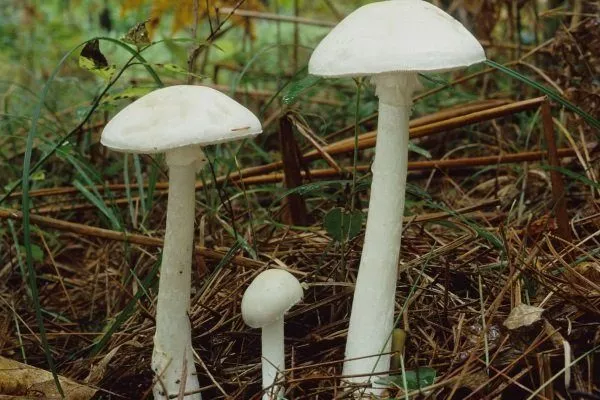
The stinking fly agaric is the most poisonous of all its relatives. It's less attractive and resembles a toadstool. It has a conical, yellowish cap. When cut, it emits a foul odor. Folklore often used it as an insect repellent. Traditional healers used fly agaric-based potions to treat nervous disorders.
Stinking fly agaric
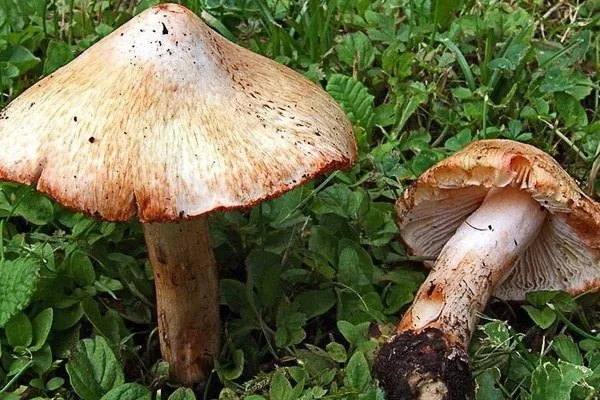
Patouillard's fiberwort
Grows in entire families and is a member of the agaric mushroom family. It appears in coniferous and deciduous forests, as well as in parks and artificial shelterbelts, as early as early May and maintains its population until August. It is found in both Asia and Europe.
When young, it has a white, cone-shaped cap, easily mistaken for a champignon. With age, it turns yellow and then red. The cap margin, which ranges from 3 to 9 cm in diameter, is wavy and cracks over time. The subcapital gills are thin, initially white, then darkening to a brownish hue. The cylindrical stem is short—only 1.5 cm—and smooth, blending in color with the cap.
When cut, the white flesh is only slightly pink and has a soft, fruity aroma. An important feature: the entire mushroom is uniform in color, with a noticeable thickening at the base of the stem.
Waxy talker
It grows in open, grassy areas: meadows, parks, squares, and forest edges. It can be found throughout Russia and many European countries. The mushroom is small: the maximum cap diameter is 6 cm. When young, the cap is convex; when mature, it becomes concave. The white gills beneath the cap darken immediately when pressed. The stem is tall, straight, and tapers slightly toward the bottom.
The danger of this mushroom lies in its visual appeal. It's difficult to recognize it as poisonous, as it has a rather pleasant smell and is white in color. However, it's important to remember its key distinguishing feature: the gills are fused to the stem.
This mushroom contains the toxin muscarine, which can affect the digestive organs, heart, and glands.
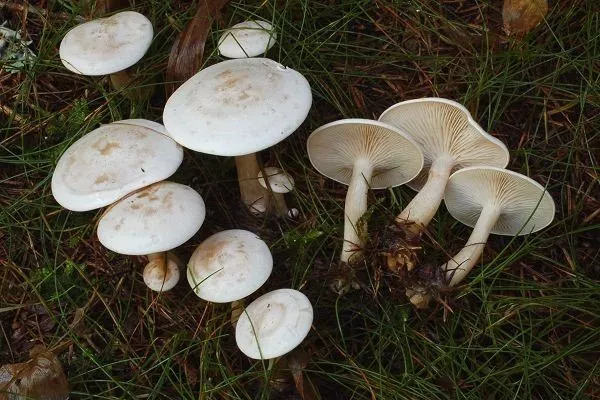
Considering that the waxy talker at a young age is practically indistinguishable from the edible mushroom of the rowan family, it is better not to touch it.
Other poisonous mushrooms
False Valuy It differs from the edible one in that it has no scars on the cap.
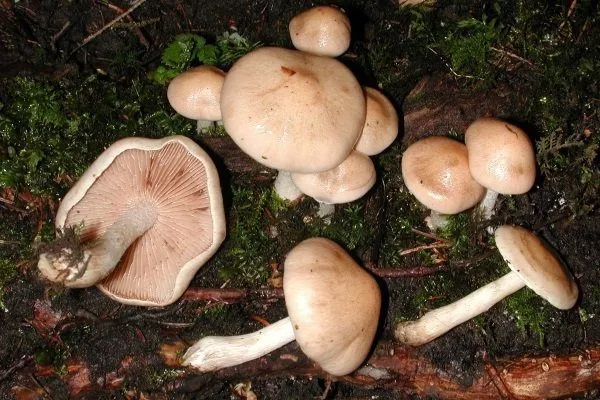
False Valuy (also known as Hebeloma sticky)
False honey fungus (especially sulfur-yellow) They are distinguished by a gray-yellow or greenish interior cap, and the stem lacks a rim. They are also distinguished by an unpleasant odor that is very unlike that of a mushroom.
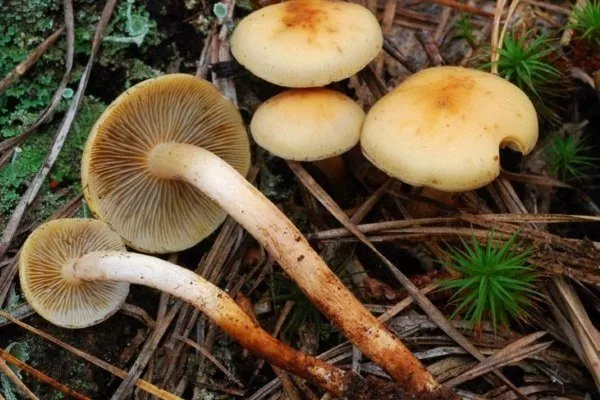
False honey fungus
Poisonous rows These mushrooms are difficult to distinguish from the conditionally edible varieties and russulas. Poisonous mushrooms have a cone-shaped or flat cap with a small, sharp tubercle in the middle. The cap's color ranges from smoky gray, green, to bright yellow. A cut reveals a pinkish hue.
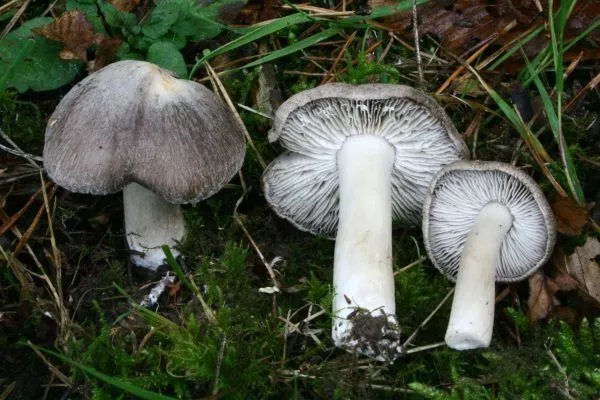
Poisonous rows
Bordered Galerina lives in coniferous forests, is very similar to honey fungus, but differs from it by the absence of a ring on the stem.
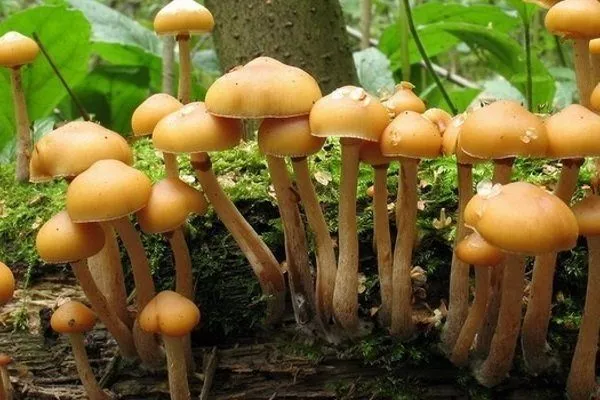
Bordered Galerina
Features of poisoning
When eating any poisonous mushrooms, a person experiences the following symptoms:
- Acute pain in the abdominal area (stomach and intestines).
- Nausea and vomiting.
- My head is spinning.
- Weakening or loss of consciousness.
When certain types of poisonous mushrooms enter the body, other symptoms may also occur. For example, death cap causes a condition that can be divided into 3 phases:
- Latent pregnancy lasts from 60 minutes to 1.5-2 days.
- Digestive system damage – from 1 to 2 days.
- Kidney and liver dysfunction - the next day.
The first stage is dangerous due to the absence of symptoms. The second stage entails severe vomiting, headaches, diarrhea, abdominal cramps, and severe weakness. During this period, urgent measures are necessary to ensure the patient's survival. The final stage involves the appearance of tarry stools, yellowing of the skin, blood in the urine, and vomit resembling coffee grounds. At this stage, it is extremely difficult to save the patient's life; death is most likely.
Satanic mushroom This is one of the most insidious, as the human body doesn't give any signs of poisoning for 12 hours. During this time, the deadly toxins have time to damage the victim's internal organs. Only after half a day do the first signs appear: vomiting, diarrhea, and dizziness. These symptoms are accompanied by yellowing of the skin and eyes, and irregular heartbeat. Urine the color of dark beer, a noticeably enlarged liver, and clouded consciousness—this is a critical condition, when it is almost impossible to save a person from death.
Fly agaric Causes severe stabbing pain in the peritoneum, loose stools, profuse sweating, excessive salivation, lacrimation, and severely constricted pupils. The poisoned person experiences high fever, increased agitation, and possible hallucinations and slurred speech.
This video provides visual information about the main characteristics, similarities, and differences between poisonous and edible mushrooms:
First aid for poisoning
Gastric lavage is the most important step at the first sign of mushroom poisoning. This procedure can be done at home and should be repeated up to five times. The victim should drink at least five to six glasses of water, then induce vomiting. To do this, take a spoon and press on the back of the tongue.
- Rinse the stomach.
- Call an ambulance.
- Take absorbents.
- Ensure peace.
After these procedures, the patient is sent to bed, warm heating pads are placed on the extremities, and strong black tea is given. In the first stage (shortly after eating poisonous mushrooms), if diarrhea is not present, mild laxatives are given. Blood pressure should be monitored to prevent a sharp drop, which laxatives can cause by dehydrating the body.
Next, it's advisable to take absorbent supplements, the most common of which is activated charcoal. It can remove toxins and detoxify the body.
All these actions should be done immediately until the ambulance arrives, which must be called in advance.
The world has been told countless times how dangerous poisonous mushrooms are, but unfortunately, not everyone behaves sensibly when eating questionable varieties. No one is advocating for people to give up mushrooms; learning to recognize them correctly will reduce the risk of poisoning to zero.
I don't get it, are you talking about poisonous or inedible? (Dissing the article title and content)
1. Some fly agarics are edible, like the pink one. But the pink boletus is inherently poisonous! And it's very little different from the oak muscaria!
2. Don't mention bitter, gallbladder, or peppery flavors; that's a one-time experience without eating them! And they're very good at camouflaging themselves! Pictures won't help in different regions!
3. Most importantly, when picking "questionable" mushrooms, you should know how to prepare them in advance. I'm talking about the naturally non-poisonous milky mushrooms: fiddleheads and milk mushrooms, and even some fly agarics.
I once foolishly avoided chopping up almost a hectare of hedgehog mushrooms because I couldn't remember how to cook them, but it turns out you can cook them any way you want. Now I add a couple of dried ones to every soup—and the taste is completely different! This Japanese OMAMI will smoke you!
We're thrilled to have experienced mushroom growers reading us! This is an overview article written for those with "some experience," so to speak. For those more experienced, there's a forum where you can share your experiences for the benefit of all.
A small number of fly agaric species are conditionally edible (for example, the gray-pink fly agaric must be cooked properly, but the raw mushroom remains toxic, meaning that undercooking can pose a risk of poisoning. It can also be confused with the panther mushroom, a highly poisonous mushroom that often grows near the gray-pink fly agaric). Therefore, we discourage readers from tempting fate by eating even conditionally edible fly agarics, as there is a significant risk that an "edible" fly agaric will cause disastrous consequences for a person's life.
Some people even boil and eat red fly agaric mushrooms multiple times, but no one can guarantee that such manipulations won't cause poisoning. Therefore, such a risk is unjustified.
Many considered the fly agaric mushroom edible until a number of cases of poisoning were reported. In short, it's best not to mess around with fly agarics.
In addition, you forgot about the newly developing mycotherapy.
For Russian sorcerers, mushrooms are powerful medicinal concentrates, almost resuscitative, but the school is practically lost.
Please study mycotherapy.
Special thanks for NOT demonizing the pigs, although that's a whole other story, covered in three dozen rumors...
This is already the field of medicine (alternative), and not a topic for mushroom pickers who collect mushrooms for use as a food product.
You can share your experience and knowledge in any area of interest to readers here - https://gardengrove-en.desigusxpro.com/groups/klub-gribnikov/We look forward to seeing you!