
If such representatives of the whitefish family as vendace, whitefishWhile many people have heard of the omul and whitefish, the broad whitefish and schokur are less well known to anglers. This is because they are found only within the Arctic Circle. They are a freshwater, semi-anadromous fish with a lifespan of 26 years.
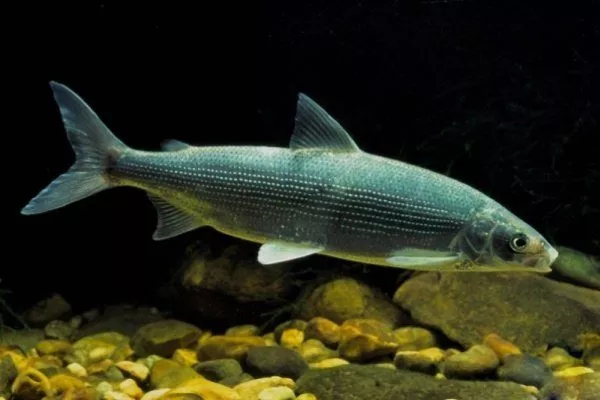
How to recognize a chir?
| Name | Maximum length | Weight Limit | Color of fins |
|---|---|---|---|
| Chir | 80 cm | 16 kg | Dark gray |
| Shchokur | 50 cm | 3 kg | Dark gray |
The fish is large, reaching a maximum length of 80 cm and a weight of 16 kg. However, fishermen typically catch specimens no longer than 50 cm and weighing around two to three kilograms.
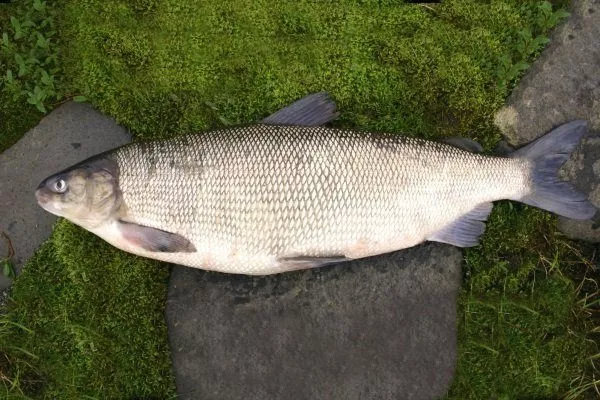
The broad whitefish's body is fleshy, high, and strongly compressed at the sides. The entire body, except for the head, is covered with large scales that adhere tightly to the body. The head is very small, disproportionate to the body, with a hooked nose. The mouth is lower, and the broad whitefish picks up food from the bottom; the upper jaw is wide and short, protruding forward.
It is a salmon-like fish, so it has an additional fin—the adipose fin—which is a fold of skin. All fins are dark gray, the back is also dark, the sides are silvery with a yellowish tint, on which bronze stripes can be seen, and the belly is a light yellow-white.
Habitat of the schokur
| Name | Water type | Habitat | Food base |
|---|---|---|---|
| River form of shokura | Flowing | Rivers with a small current | Good food supply |
| Shchokur lake-river type | Standing | Continental lakes | Abundance of food |
This fish species inhabits only cold, clear waters. Therefore, it is found exclusively in the Arctic, in rivers flowing into the coldest ocean—the Arctic Ocean. It is particularly fond of the Yenisei River. It is also caught in Kamchatka and in the waters of the Siberian region.
Each species of whitefish, depending on its habitat, is classified as a river or lake-river type, and the shchokur is no exception:
- River form of shokura The fish lives in rivers with running water, preferring areas with a gentle current. In such areas, the fish finds a good food supply; in areas with a strong current, food is much scarcer.
- Shchokur lake-river type It lives permanently in mainland lakes, emerging only during spawning season, heading for the small rivers that flow into the lake. Here, the fish thrive, with plenty of food. After all, many insects lay their larvae in stagnant water.
Nutrition
At first, the fry's diet consists solely of small organisms that drift freely in the water column and cannot resist the current—plankton and benthos—various organisms that live on the bottom and in the soil of inland lakes. As they grow older, the young begin to consume bottom dwellers.
The main food of adults:
- numerous crustaceans;
- mollusks;
- larvae of chironomid mosquitoes (jerk mosquito or bell mosquito).
Various insect larvae act as accompanying food.
The schokur's diet is most varied and intense during the warmer months. In winter, the fish loses its appetite, is inactive, and eats nothing at all during spawning season.
More has been written about feeding pond fish. Here.
Spawning
All broad whitefish, regardless of type, migrate to rivers for spawning. In early August, sexually mature individuals (sexual maturity occurs at 6-7 years of age) head to spawn. Late in the fall, they find a suitable spawning site with a rocky, pebble, or sandy bottom, slow current, and depth of up to 2.5 meters.
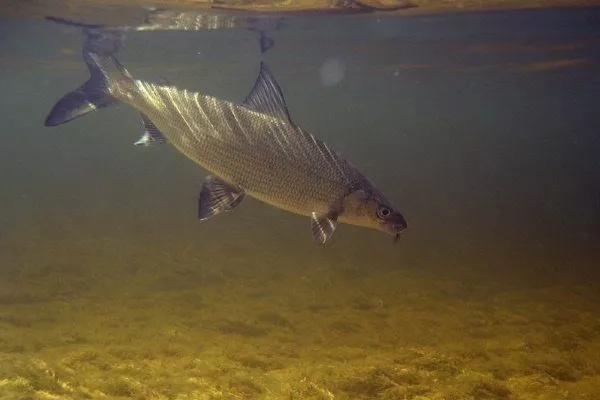
Other species prefer small flowing lakes where the water is constantly refreshed. High oxygen concentrations in the water are essential for normal fry growth.
During spawning, the female and male transform into their "nuptial" plumage. Both individuals develop small, pinhead-sized white epithelial tubercles. These cover the body, head, and fins. The female can be distinguished from the male by the white first ray of the pectoral fins, while the rest of the fins remain dark gray and untouched.
The fish spawn in October and November, when the water temperature in the reservoirs cools to +1°C. Spawning lasts for 20 days and can continue during ice formation, which helps maintain the population.
The female spawns up to 250,000 large, light cream-colored eggs. The larvae emerge in March. Spawning is not annual and can occur at intervals of 3-4 years.
After spawning, the fish return to their primary habitats, with some individuals seeking new habitats. After hatching, the fry gradually migrate downstream, gaining weight.
Catching
The broad whitefish is a valuable commercial fish, but there is no dedicated commercial fishery for it, as it inhabits hard-to-reach and remote waters.
The remoteness of its habitat allows it to maintain its population, making it the least endangered species. Fishing for the schokur is prohibited only during spawning season.
Anglers catch this fish using spinning rods, fishing rods, and bottom tackle. They bite well during the day, as this is when the fish are active and hunting. Shchokur are wary, so be quiet and careful when fishing.
Whitefish take both natural and artificial bait. A worm or a piece of shellfish is baited on the hook. When choosing artificial baits, preference is given to those that imitate flying insects and their morphological forms, which are colored brown in various shades.
- ✓ The rod should be made of carbon fiber or fiberglass to ensure strength.
- ✓ The optimal line diameter is 0.25-0.35 mm, preferably monofilament or fluorocarbon.
- ✓ The float should be transparent so as not to scare away the fish.
When choosing a spinning rod, pay attention to the rod. It should be durable—made of carbon fiber or fiberglass, of sufficient length and stiffness. Since schokur can grow to a large size, it's important to take care of the line to prevent it from breaking and depriving the angler of a catch. The best options are monofilament line, fluorocarbon line (the latter is less visible in water due to its low refractive index and is very elastic, resistant to deformation), or a durable cord with a diameter of 0.25-0.35 mm and a dark color.
A spinner with fur plumage or small wobblers act as bait.
When using a float rig, choose a telescopic or Bolognese rod, attach it to a spinning reel, and sturdy line. The float shouldn't spook the fish, so a clear ball-shaped float is the best option. The rig is cast downstream.
Nutritional value
The broad whitefish is renowned for its tender and fatty meat. Its high fat content stems from the harsh conditions the fish inhabit, and without sufficient fat, they simply cannot survive.
100 g of the product contains 88 kcal, proteins - 18 g and fats - 2 g.
Among the beneficial substances, it contains a large amount of niacin, or vitamin PP, which plays a significant role in redox reactions of energy metabolism. A deficiency of this vitamin can lead to gastrointestinal and nervous system dysfunction and negative effects on the skin.
And also the following mineral composition:
- chromium;
- chlorine;
- zinc;
- fluorine;
- molybdenum;
- nickel;
- sulfur.
A large proportion is chromium, which is necessary for regulating blood glucose levels and enhancing the action of insulin.
Shchokur is used in a variety of dishes. It is smoked, salted, dried, fried, baked, and boiled. Its small number of bones and juicy meat make it an ideal filling for pies, dumplings, and cutlets. It is also used to make stroganina and sugudai, a fresh fish dish.
Growing schokur
The fast-growing broad whitefish is of great interest for breeding in artificial reservoirs located in the northern regions of the country; however, it is not farmed on an industrial scale. Two-year-olds are fed chironomids, while three-year-olds are fed a 50:50 diet of chironomids and mollusks.
- ✓ The water temperature in the reservoir must correspond to the natural habitat conditions of the schokur.
- ✓ Provide a varied diet, including chironomids and mollusks.
- ✓ It is important to maintain high oxygen levels in the water.
When fish of different ages and species are raised, overall fish productivity decreases. In northern regions, fingerlings weigh up to 30 g, two-year-olds up to 400 g, and three-year-olds up to 800 g. When raised in warmer regions, weight increases sharply. Fingerlings gain up to 200 g, two-year-olds up to 1000 g, and three-year-olds up to 1850 g, respectively.
So, broad whitefish, or schokur, is a rare and little-studied fish. However, it is of culinary interest because it is ecologically clean and disease-free.