
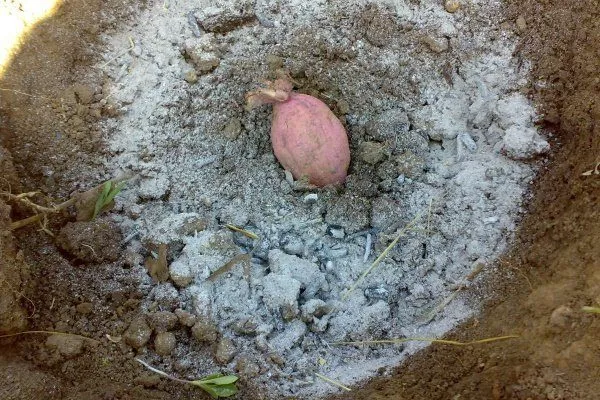
The Romano potato is a root vegetable popular among many gardeners, whether they grow it for home consumption or for sale. Its low maintenance, high yield, and ease of cultivation are the main advantages that make this variety popular. This article covers key aspects of planting this root vegetable.
The Origin of Romano
Romano potatoes were first mentioned 7,000-9,000 years ago. The variety originated in South America. Ancient Indians cultivated potatoes in what is now Bolivia, and they consumed the potato not only for cooking but also as an idol, worshiped and considered a living being.
Historical evidence suggests that potatoes were used to determine the time of day. The Inca tribe used the cooking time as a standard, with 60 minutes being ideal.
The first documented use of potatoes in Europe was in Spain in 1573. In just a short period of time, the vegetable became extremely popular practically throughout the world. Initially considered an ornamental plant, it soon became poisonous.
The French agronomist Antoine-Auguste Parmante definitively demonstrated the health benefits of potatoes, their rich vitamin and micronutrient content. Following his findings, potatoes began to be used in France, and soon in Russia as well. The product appeared in Russia thanks to Peter the Great, who brought a sack of tubers from Holland for cultivation in certain provinces. Initially, the product was served in aristocratic homes. Later, the peasant population also experienced its amazing flavor.
Today, it is very difficult to imagine a normal diet without potatoes, as this product is used to prepare a wide variety of dishes and plays a significant role in the economies of many countries.
Features and detailed description of potatoes
Romano is suitable for many regions of Russia. It can be grown on both small farms and commercially. The tubers are ideal for commercialization. The variety is characterized by high yields and excellent storage qualities. The plant grows compactly and upright.
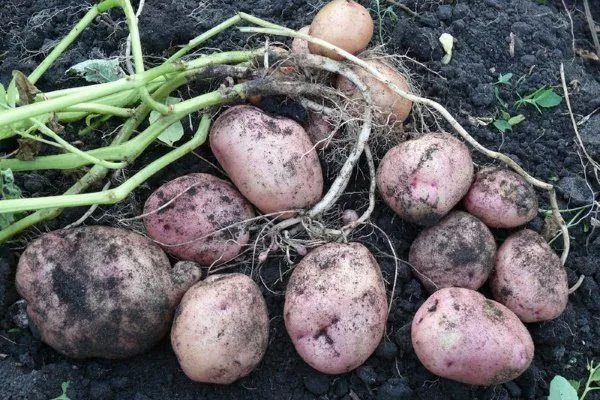
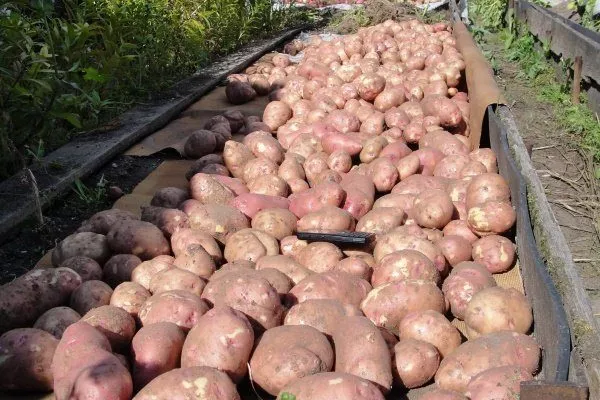
The Romano potato is considered a seed variety. It has small, dark green, slightly wavy leaves that grow densely. The branches are compact, not spreading. The flowers are large, reddish-purple, and clustered in corollas. The berries are small and sparse. The tops develop quickly, but the tubers grow more slowly, with a delay. The yield is excellent, with 7-9 large root vegetables harvested from a single plant. There are virtually no unmarketable potatoes; all the potatoes are uniform in size and rounded. The tubers have a thick skin, protected from mechanical damage.
The variety is sensitive to soil nutrient levels and produces low yields when grown in poor, infertile soils. Depending on soil fertility and harvest time, yields range from 11 to 32 tons per hectare. The maximum yield at the end of the growing season can reach 34 tons per hectare.
It is known that the percentage of starch in the tuber is above average, which is why the potato boils well.
General characteristics of potatoes are given in the table:
| Criterion | Description |
| Potato variety | Romano |
| General characteristics | the best mid-early variety, universal, high-yielding |
| Ripening period | 65-80 days |
| Weight of commercial tubers | 70-90 g |
| Starch content | 14-17% |
| Peel color | pink |
| Pulp color | light cream |
| Number of tubers in a bush | 7-9 |
| Productivity | 110-340 c/ha |
| Shelf life | 98% |
| Disease resistance | moderately resistant to late blight, susceptible to scab |
| Preferred growing regions | any |
| Consumer qualities | excellent taste, can be used for preparing any dish |
| Features of cultivation | the possibility of cutting seed tubers before planting |
Important aspects of cultivation
The Romano variety has proven itself to be an undemanding crop. It's suitable for growing in virtually any location, regardless of groundwater levels, light levels, or soil types. However, to ensure a good harvest of high-quality fruit, certain growing guidelines must be followed.
Priming
A site with maximum sun exposure is selected, as this directly impacts the yield. As with other crops, soil preparation is required in the fall. The soil should be dug, after which lime is added at a rate of 1 cup per square meter. In the spring, a complex mixture is added.
Preparation of planting material
The seed material and its quality directly affect the future harvest quantity and the taste of the root crop. Before planting, potatoes are pre-selected and then processed. Preparation begins in the fall, during the harvesting process. The dug-up roots are left in the hole to dry. For this purpose, the most beautiful, dense, and spreading plants are dug up.
Preference is given to small, even fruits, discarding tubers affected by rot.
After drying for approximately 5 hours, the selected material is placed in a warm, dry room protected from the sun. It is then placed in the cellar, not mixed with the rest of the harvest. Whole potatoes without mechanical damage or cracks are separated from the remaining tubers and placed in a dry place to dry. Only after these steps can preparation begin.
Preparing tubers
A few weeks before planting potatoes in the ground, place the prepared tubers in a warm, dry place, away from direct sunlight. At temperatures of 18-20 degrees Celsius, the roots will dry and sprout more quickly. To prevent the tubers from drying out during this time, mist them occasionally with water.
Disease prevention is essential. Fungicides are used for this purpose. Ash, sprinkled on damp potatoes and left to dry, can help increase yields.
The landing process
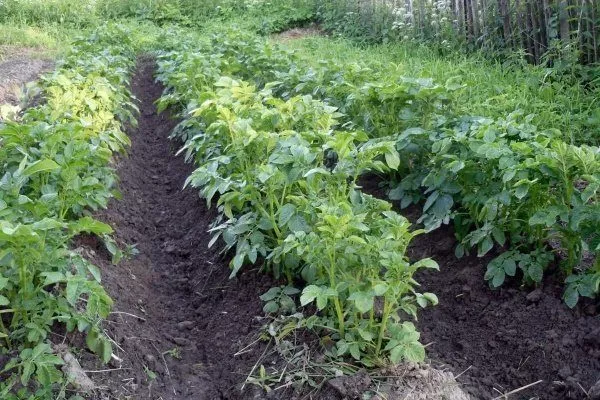
To increase the yield and facilitate subsequent potato care, it's important to follow the planting pattern and adhere to the rules. Ideally, keep a distance of 40 cm between holes. The distance between rows should be at least 70 cm.
The landing process is carried out as follows:
- Place mineral fertilizers into prepared holes 20 cm deep and dig them over thoroughly.
- Place the planting material.
- Sprinkle the tubers with soil and water the area.
To protect the first shoots from spring frosts, they are buried under a 5 cm layer of soil. If this is not done, the harvest will be small.
Care
The Romano potato is a vegetable crop that requires careful cultivation. With timely care, you can ensure high-quality fruit and increase your yield.
| Loosening the soil | Watering | Hilling | Processing |
| Surface tillage is necessary to remove weeds and prevent the formation of a dry crust on the surface of the soil after rain. | Potatoes only need to be watered during periods of prolonged drought. | Fine soil with lumps sprinkled on potato stems will help enrich the plant's root system with oxygen and increase the space for tuber development. | Insecticides applied to potatoes will help prevent the development of infectious diseases and prevent the harmful effects of insects. |
The Romano potato variety is very sensitive to soil nutrition and therefore requires constant fertilization. Fertilization is applied in three stages:
- When the first shoots appear. The specially moistened soil is watered with organic compounds. Manure or bird droppings solutions are used for this purpose. First, let the fertilizer sit for 48 hours, then prepare a solution in a ratio of 1:15 (manure to water). 500-700 ml of solution is required per potato plant.
- In the budding phase. During this period, it's best to use a mixture made from 80 g of ash and 5 g of potassium sulfate. This amount is appropriate for one square meter of area.
- During the flowering period. Spread 30 g of superphosphate over 1 square meter.
Romano potatoes are a highly nutrient-dense crop. With proper and timely fertilization, a bountiful harvest is guaranteed.
Fighting bugs and diseases
Romano potatoes are virtually immune to late blight, potato cancer, and tobacco mosaic. If grown in the same spot for long periods or under unfavorable conditions, they may be susceptible to scab and golden nematode.
| Name of the disease | Full description | Signs of the disease | Treatment methods |
| Potato nematode | The root system is attacked by worms. The first signs of infestation appear 40-50 days after planting. | The stems weaken and turn yellow prematurely. The number of tubers forming decreases or disappears altogether. The disease is transmitted through the planting of diseased tubers or when potatoes are planted in contaminated soil. | Nematodes can be controlled with specialized chemicals. Bazudun is considered the most effective.
It is important to take preventative measures: treat potatoes with potassium permanganate before planting, observe crop rotation, and plant white mustard, tansy, and asters around the perimeter. |
| Common scab | A fungal disease that affects the skin of root vegetables. Fruit quality deteriorates, marketability declines, and waste increases. | The disease develops when potatoes begin to bloom. Infection is caused by planting diseased seedlings or contaminated soil. It most often develops due to hot weather or shallow planting of tubers. | It's best to treat seeds and soil with Trichodermin. Crop rotation is recommended for preventative measures. |
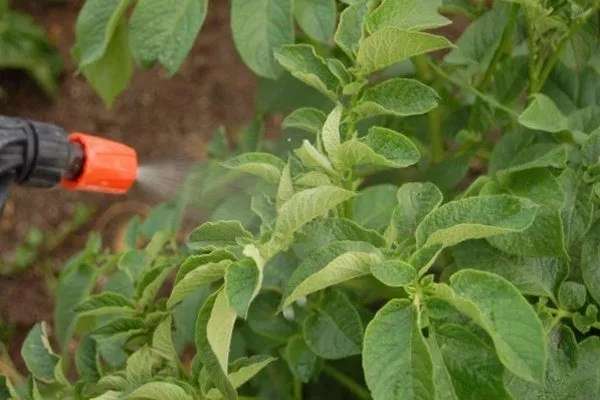
Potatoes often suffer from Colorado beetles, which appear as soon as the green mass emerges. To avoid spraying the plants during the first few days, they should be sprayed with Prestige before planting. Bombardir, Aktara, and Komandor are effective plant sprays that can help protect potatoes from these insects.
- Before planting, treat potatoes with potassium permanganate.
- Observe crop rotation.
- Plant white mustard, tansy, and asters around the perimeter.
All about harvesting and storing Romano potatoes
The Romano potato harvest period begins in late August or early September, depending on the region's climate.
Experienced gardeners recommend following these rules regarding harvesting:
- To ensure better ventilation of the tubers and their drying, it is advisable to dig up potatoes in clear weather.
- Ten days before harvest, mow down weeds and tops. This will help the potato skins become firmer and prevent damage during transportation and storage.
- The dried, harvested potato tubers are left in bags for several days. They are then sorted and stored.
Storing potatoes During the winter, store in a basement, cellar, or crawlspace. Maintaining a room temperature of 2-5°C and 90% humidity is essential to ensure long-term storage of the tubers, preserving their flavor and appearance.
| Temperature | Humidity | Lighting |
|---|---|---|
| +2-5°C | 90% | Absent |
Positive and negative qualities
The Romano potato variety has many advantages and a few disadvantages that need to be taken into account to avoid any difficulties in the future.
| Pros | Cons |
| A thick skin not only has a positive effect on the potato, protecting it from damage, but also makes it difficult to peel properly.
Low frost resistance is the second drawback of Romano potatoes. Another disadvantage is the risk of exposure to scab and golden nematode. |
Reviews and opinions about the variety
Today, you can find many reviews of the Romano potato variety online. This potato is popular with many gardeners due to its low maintenance and ease of planting. Here are some reviews of the variety:
Romano potatoes are extremely popular today among many farmers who have tried them once. Romano is a high-yielding variety with proper cultivation and care. It produces large, uniform roots with an attractive presentation and excellent flavor.
Are Romano potatoes genetically modified?
No, Romano is not included in the list of genetically modified potato varieties.