
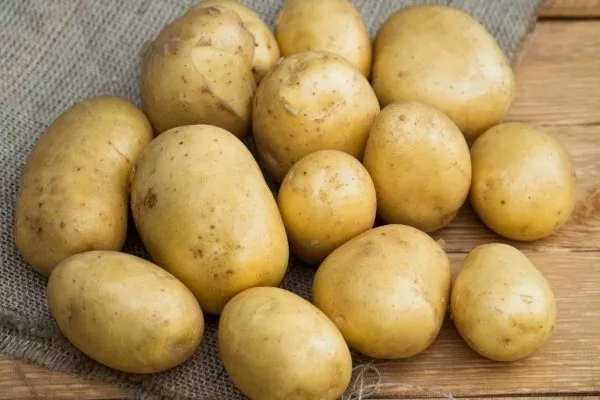
If you need to grow potatoes in the Central, Central Black Earth, Volga-Vyatka, or North Caucasus regions, you can choose Golubizna. This mid-late variety produces its first harvest 100 days after the first shoots emerge. We recommend learning more about its characteristics, planting, and growing tips below.
Description and characteristics of the variety
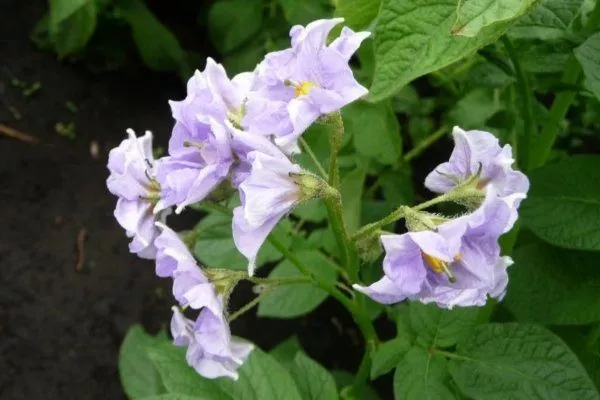
This variety was developed by Russian breeders at the A.G. Lorkh All-Russian Research Institute of Vegetable Crops in 1993. It received its name for its vibrant blue flowers. When planted in a garden bed, the plant looks beautiful, resembling a cornflower field from a distance. Golubizna is popular among gardeners because it easily adapts to weather changes, is resistant to many diseases, and produces a high yield with proper care. Detailed characteristics of the variety are presented in the table below:
| Characteristic | Description |
| Name | Blue |
| Originator | A. G. Lorkh All-Russian Research Institute of Vegetable Crop Protection (Russia) |
| Type of appointment | Potatoes are a table type, so they are suitable for preparing a variety of dishes, including mashed potatoes and French fries. |
| Maturation | Golubizna is a mid-late variety, with a ripening period of 3 months (approximately 100-115 days). |
| Productivity | A 1-hectare plot can yield up to 500 centners of fruit. A single bush produces 9-11 fruits. |
| Weight of root crops | 90-120 g |
| Starch content | 17-19% |
| Type of commercial tubers | They have a round-oval shape with a blunt tip. The skin is slightly rough (netted) and light beige in color. It is covered with wide, shallow-to-medium-deep holes. |
| Pulp | It has a white color that does not change during cooking and a crumbly structure. |
| Type of bushes | The bushes are medium-height and not sprawling, giving them a neat appearance. The leaves are large and bright green, which remains throughout the growing season. The bushes are covered with cornflower-blue flowers, which become a beautiful addition to the garden. |
| Shelf life | 95% |
| Preferred climate regions | Volga-Vyatka, Central Black Earth, North Caucasian |
| Resistance to diseases and weather conditions | It has low resistance to nematodes, moderate resistance to late blight, and high resistance to common scab and rhizoctonia. It tolerates drought and temperature fluctuations well. |
What is the best time to plant potatoes?
The best time to plant Golubizna is considered to be between May 1 and 10. If the spring is warm, planting can be done earlier. Generally, when choosing the planting time, consider weather conditions—the soil temperature should be at least 6-7 degrees Celsius. Potatoes easily adapt to cool soil, maximizing the absorption of nutrients. If the temperature is warmer, the tubers will only absorb nitrates.
If you are even slightly late with planting, this will affect the yield and taste of the ripened potatoes.
Preparing the site for planting
First of all, a gardener must choose the right site for planting potatoes. To do this, follow these rules:
- the area must be well lit by the sun, since in partial shade and shade it will not be possible to get a good harvest;
- the area must be protected from drafts;
- Peat, sod-podzolic and chernozem soils are considered the most suitable for potatoes, and they should be loose and light, but soil with an alkaline reaction is unacceptable;
- The best predecessors of Golubizna are winter and leguminous crops, annual grasses and flax.
- ✓ Soil pH should be between 5.0-6.0 for optimal potato growth.
- ✓ The soil must be well drained to avoid water stagnation.
You should not plant tubers if the soil is excessively waterlogged, as this will cause the soil to become dense and heavy, preventing the fruit from developing.
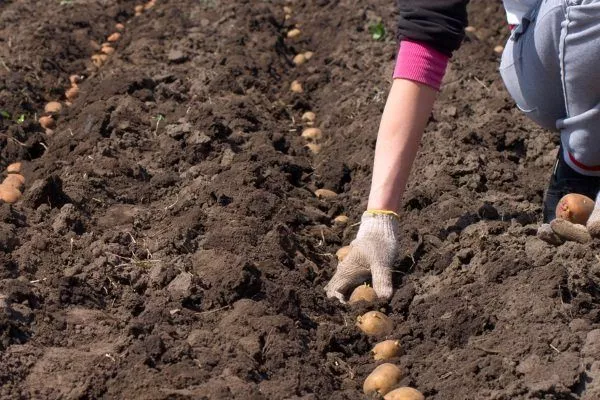
It's recommended to prepare the potato plot in the fall, as soon as the harvest is complete. The plot should be dug over and fertilized with mineral or organic fertilizers. It's a good idea to remove couch grass. Another way to prepare for spring potato planting is to sow green manure in the following order:
- Level the soil with a rake.
- Sow mustard and phacelia seeds. Scatter them everywhere and cover with soil using a rake.
- In spring, cover the green manure with a layer of soil about 10 cm thick.
Green manure is a green fertilizer that is an excellent nutrient for potatoes planted in the spring.
Preparation of seed material
Particular attention must be paid to preparing tubers for planting, as this also affects the crop's yield. The following steps are required:
- About a month before planting, remove the planting material from a storage place, such as a cellar.
- Sort the tubers, selecting only healthy ones, as otherwise, diseased roots can infect the majority of the harvest. In addition to the quality of the tubers, it's important to pay attention to their size and approximate weight. For planting, it's best to choose large potatoes weighing between 50 and 100 grams.
- Place the potatoes selected for planting in boxes in 2-3 layers, then move them to a warm, sunny spot to allow the shoots to emerge from the eyes. The vernalization process takes approximately 30-40 days.
- Immediately before planting, disinfect the tubers. To do this, prepare a weak solution of potassium permanganate with copper sulfate. Soak the potatoes in the solution for half an hour, then dry them. Larger potatoes can be further divided into 2-3 pieces.
Potatoes must be handled carefully to avoid tearing off the sprouts, as this will reduce the plant's yield by approximately 20%.
Planting methods
There are two ways to plant this variety:
- combIt's used in areas with high humidity and heavy rainfall, making it suitable for heavy soils. It requires forming rows of 20 cm high ridges, and then planting the tubers in them.
- RidgeIt's used in arid climates, meaning it's suitable for dry soils. You need to prepare two rows of 1-meter-wide beds, and then plant root crops in them.
Regardless of the specific method, the following general rules should be taken into account:
- The distance between rows should be 70 cm, but in humid regions it can be 90 cm. The distance between the holes should be 30-35 cm.
- In moist loamy soils, plant the tubers 6-8 cm deep, in light soils 6 cm deep, and in heavy soils 4-6 cm deep. In hot climates, planting holes 10-12 cm deep in light soils can be done.
- If the tubers have not undergone vernalization, in moist soil, potatoes without sprouts can be planted at a depth of 8 cm, but in arid regions, the planting depth should be increased to 12 cm.
- Place a handful of a mixture of 1 cup of manure or compost, 1/2 cup of ash, and 1 tablespoon of powdered bird droppings into each hole. Mix this mixture with soil and cover with 2 cm of soil. Then place the tuber upside down, cover with soil, and level the soil with a rake.
Planting care
Once the potatoes have been planted, proper care of the plant is required to obtain a good harvest.
Watering
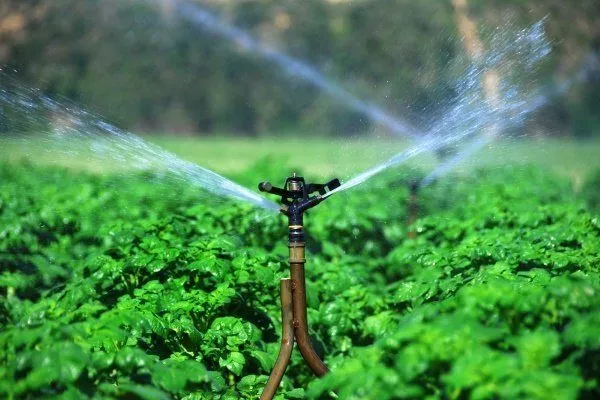
This variety is considered drought-resistant, so frequent watering is not required. It only requires irrigation during dry and hot weather. Three waterings are recommended throughout the growing season.
Loosening and hilling
Potatoes need to be loosened and hilled to increase oxygen access to the roots and promote their additional germination, which will make the plant stronger and allow for a better harvest.
Loosening the soil should be done after rain or watering to prevent a dense crust from forming, which can impede root aeration. Hilling should be done the first time after rain, when the first shoots emerge, and the second time when the tops reach a height of 20 cm.
How to properly hill up potatoes is described here.
Fertilizing
The crop is fertilized when the first shoots appear, during budding, and during flowering. A total of three fertilizing applications are made:
- FirstThe plant is watered with a solution obtained by dissolving 1 tablespoon of urea and bird droppings, as well as 0.5 liters of mullein, in 10 liters of water.
- SecondPotatoes are fed with a mixture of 1 tablespoon of potassium sulfate and 2-3 tablespoons of wood ash per bucket of water.
- ThirdFor the final feeding, use a mixture of 2 tablespoons of superphosphate and 1 cup of mullein per bucket of water.
Regardless of the composition of the fertilizer, the plant is watered at the rate of 500 ml of solution per 1 bush.
During the active growth phase, the plant requires a large amount of nitrogen, so in June you can apply root feeding in the form of an infusion, which is prepared as follows:
- Take equal parts of nettle tops and banana peels.
- Pour water over it and let it sit for several days.
- Dilute the resulting tincture in water until a light brown solution is obtained and water the holes.
In June, you can also apply foliar feeding. To do this, water the green foliage of the plant with a nettle infusion.
Weeding
During the potato growth period, weeding is essential, as weeds can harbor fungal spores and various insects that can later pose a threat to the potato plant. Furthermore, many grasses draw nutrients from the soil, preventing the potato plant from receiving sufficient nutrients and poor growth.
Diseases and pests
Blueberry is resistant to scab, various types of rot, cancer, rhizoctonia and alternaria, but the following diseases and pests pose a threat to it:
- Late blightPotatoes are affected by damp and cool weather. In this case, it is recommended to treat the potatoes with a mixture of 150 g of slaked lime and 100 g of copper sulfate per bucket of water. A special fungicide, Hom, can also be added to the water.
- ChlorosisThe disease is identified by darkened leaf veins and a wrinkled appearance. Treatment can be achieved by treating the plant with a potassium permanganate solution (approximately 5 grams of potassium permanganate per bucket of water).
- Colorado beetleAmong the most common potato pests, the Colorado potato beetle stands out. It can be effectively controlled using specialized products, including Dilor and CommanderThey are sprayed on the tops several times throughout the growing season. To avoid pests, many gardeners prefer to treat the seed with products such as Prestige and Taboo.
- Mole cricketTo get rid of this pest, the plant can be treated with a product called Medvetox. Follow the instructions strictly.
It is advisable to treat plants at the first signs of disease, but this should not be done less than 3 weeks before harvesting, keeping in mind the toxicity of the preparations.
Harvesting and storage
Potatoes can be harvested in late August or early September. To accurately determine the harvest time, pay attention to the tops. They should look slightly wilted, and the leaves should not be a deep green color. Two weeks before harvest, it is recommended to cut the tops back to about 15 cm.
Potatoes are best dug on a sunny day, allowing them to dry thoroughly and allowing any remaining soil to be easily removed. In any case, the harvest must be completed before the soil begins to freeze. This is best done with a pitchfork—gently dig up the side of the plant and gently tug on the tops. First, place the roots in a bucket, then spread them out on a covering material placed on the ground to dry.
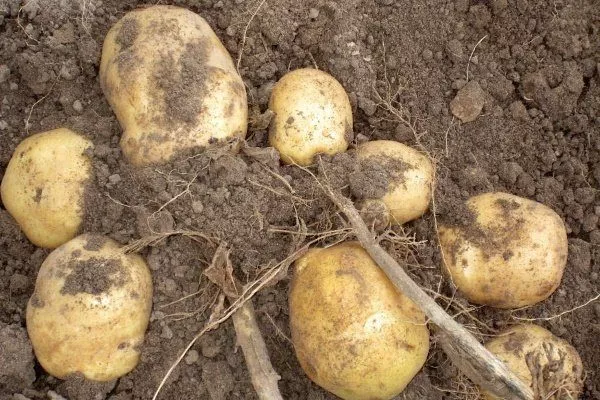
Once the tubers have dried, it's a good idea to sort them. Set the potatoes aside for eating and immediately select the tubers as seeds for next season. Make sure the tubers are disease-free and smooth and even. If the tubers have even the slightest cracks, punctures from a pitchfork, or scratches, they should be set aside for immediate consumption.
To increase shelf life, potatoes should be treated with copper sulfate. Dilute 2 grams of copper sulfate per bucket of water and then spray the root vegetables.
Potatoes are best stored in a cellar. The optimal temperature is considered to be between 1 and 4°C. At lower temperatures, the tubers will freeze, which will affect their quality, while at higher temperatures, they will sprout and lose nutrients. Potatoes should be stored in boxes up to 1.5 m high. It's important to allow air to reach the potatoes and allow excess moisture to evaporate.
To protect the fruit from rotting, place plant leaves between the layers to act as a barrier against spoilage. These can include fern, rowan, wormwood, or goutweed leaves. Additionally, inspect the potatoes monthly to promptly remove any rotten roots.
Rejuvenating Golubizna: Growing from Seeds and Mini Tubers
Potatoes can become smaller and their yields decline each year, as each successive generation of root crops is susceptible to a wider range of diseases than the previous one. In this case, you can update the variety by growing it from botanical seeds. We'll explain how to do this below.
Seed collection
After the Golubizna blooms, green berries remain, which should be found and collected before the leaves begin to yellow. Then, they should be placed on a warm windowsill to ripen. Once the berries are soft, they should be cut open and the seeds removed, dried, and stored until spring.
Sowing seeds for seedlings
The collected seeds should be sown for seedlings as follows:
- Prepare and disinfect the soil, then water it. Watering immediately after sowing will pull the seeds deeper, preventing them from reaching the surface.
- Place the seeds in a row, pressing them lightly into the soil with a toothpick.
- Cover the planting with a lid, plastic or glass.
- Move the seedlings to a warm place (at least 25 degrees Celsius). A windowsill is ideal.
Caring for seedlings
To grow seedlings on a windowsill, you need to consider the following rules:
- the emerging seedlings will have roots on the surface, so they should be covered with loose soil up to the leaves or transplanted into another container with the lower part of the stem and root buried deep;
- water the seedlings carefully using a thin stream along the walls of the container or from a syringe under each root so that water does not get on the leaves and stems;
- Provide potato seedlings with bright light, including through backlighting, otherwise the plant will stretch out, lie on damp soil and die from black leg;
- From March until planting in open ground, when the threat of frost has passed, carry out 2-3 pickings with deepening or sprinkling with soil without replanting (hilling).
Planting seedlings in open ground
Once nighttime temperatures no longer drop below freezing, the seedlings can be transplanted into open ground. Otherwise, they will need to be covered with protective material in case of frost. Seedlings can be planted in any pattern. For example, several roots can be placed in a single hole, spaced 15-30 cm apart.
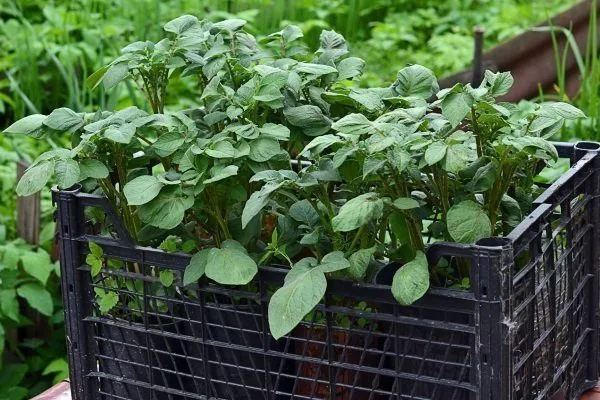
Unlike potato tubers, seedlings don't need to be completely earthed up, otherwise they won't be able to break through the soil to the surface. Furthermore, to ensure a good harvest of mini-tubers, regular watering, loosening, and fertilizing are recommended, including anti-stress products such as:
- Epin;
- Fertika Lux;
- Energen;
- Novosil.
Collection and storage of mini-tubers
Typically, one bush grown from seed produces 20-30 seed tubers, each the size of a quail egg. These are the super-elite material of Golubizna. They can be harvested in August-September, when the tops begin to yellow.
The harvested potatoes should be treated with a bright pink solution of potassium permanganate and then spread out to dry and be planted. This can be done on a windowsill or in the garden in partial shade under a canopy. In any case, the location should be dry, warm, well-lit, and ventilated. After a week, the seed can be collected and transferred to a basement or cellar for storage. In the spring, the mini-tubers should be removed and planted outdoors in the same way as regular tubers.
An alternative method of rejuvenation
If the plant hasn't produced botanical seeds because all the flowers have fallen off and no fruit has set, you can try this rejuvenation method:
- Immediately after flowering, cut 1-2 stems from the strongest bushes.
- Remove the tops and bases from the stems.
- Place the stems in a dark place, placing a layer of straw up to 20 cm high underneath them.
By autumn, healthy material – small tubers the size of a pea – can be found in the leaf axils.
To avoid growing the super-elite Golubizna from seeds, planting material can be purchased in the store, but at an inflated price.
Pros and cons of the variety
This potato variety is very popular among gardeners due to the following positive characteristics:
- does not react to changes in temperature conditions;
- tolerates drought well, as it has a developed root system;
- has strong immunity to many diseases, including viral ones;
- gives a high yield - up to 500 c/ha;
- grows on different types of soil.
Golubizna is a variety developed by Russian breeders. During the growing season, the plant is very attractive, blooming with blue flowers. It is popular among gardeners due to its resistance to many diseases. Furthermore, the variety produces a high yield and grows in a variety of soil types. Mature potatoes have an excellent flavor and a crisp texture.