
Purple potatoes, with their purple flesh, appeared in Russia relatively recently (after 2007), but have already won the hearts of those who appreciate the exotic. This is not surprising, as they can be used to prepare familiar dishes, but with a twist—the purple color.
General characteristics of purple potatoes
Purple potato varieties originate from a wild plant native to South America. For a long time, they remained uncultivated in European countries until modern scientists began breeding these wild plants into various modern hybrids and varieties. The result is unusual tubers with a host of beneficial properties.
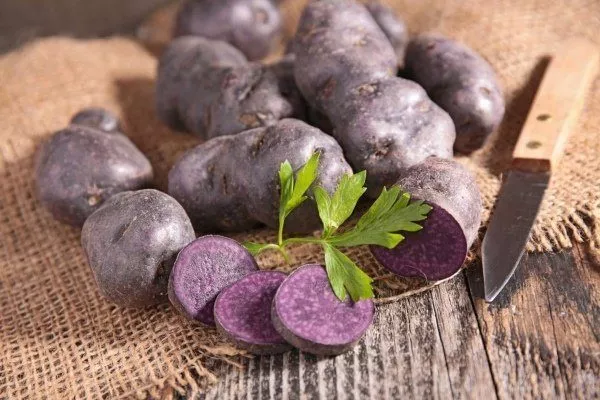
This root vegetable is a perennial vegetable from the nightshade family. It is distinguished by the fact that the inner flesh is slightly lighter in color than the peel.
Natalia Smorchkova explains how to grow purple potatoes, their appearance, and their taste in the video below:
Appearance
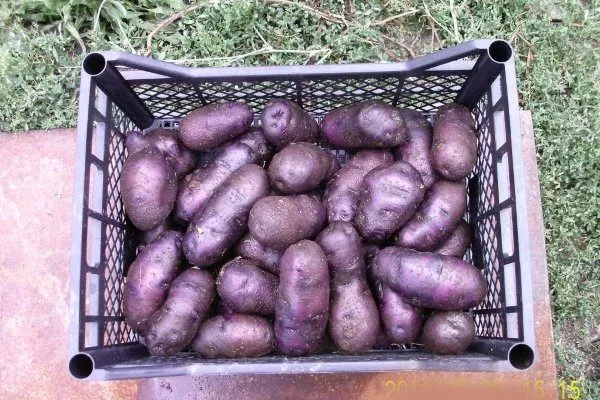
The potato's exterior, like its flesh, has an exotic purple hue. However, lilac, light pink, and delicate purple varieties are also available. Distinguishing features:
- oblong shape;
- the pulp has a medium starchy structure;
- thick skin;
- maximum length – 10 cm (depending on variety);
- the pulp may be fully or partially colored;
- when boiled - crumbly;
- weight – 50-200 grams.
Taste characteristics
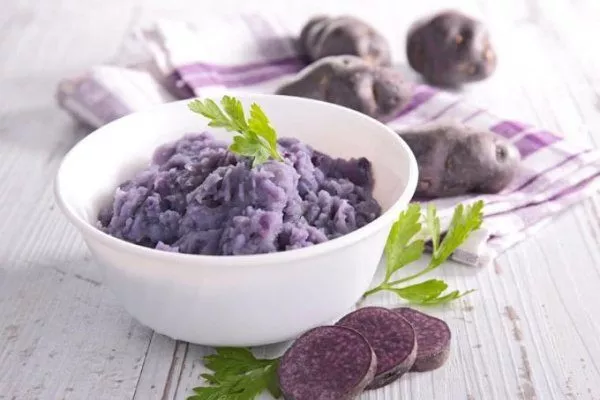
Purple potatoes have a special characteristic—a delicate nutty flavor that adds a unique piquant touch to cooked dishes. However, these potatoes are not suitable for frying. They are primarily used for mashed potatoes.
Varieties of purple potatoes
| Name | Ripening period (days) | Tuber weight (g) | Pulp color |
|---|---|---|---|
| Violette | 90-110 | 70-100 | Violet |
| All Blue | 80-100 | 150-200 | Purple-blue |
| Red Wonder | 75 | 100-150 | Purple with red veins |
| Explosion | 60-70 | 100-120 | Lilac with blue spots |
| Lilac | 70-80 | 100-150 | Blue and white marble |
| Gourmet | 80-90 | 100 | White and purple |
| Salblue | 70-80 | 100 | Violet |
| Surprise | 75-85 | 120-150 | Pink |
| Wonderworker | 80-90 | 100-120 | Violet |
| Purple Cream and the Northern Lights | 90-100 | 100-150 | Purple with white veins |
| Nacre | 85-95 | 100-120 | Violet |
| Night | 80-90 | 100-150 | Dark purple |
There are many varieties of purple potatoes that have been developed by both foreign and domestic breeders:
- Violette (Amethyst, Negress, French, or Chinese truffle) is characterized by large tubers and an intensely colored core. It has a long shelf life, and the skin is the darkest of all varieties. It is a late-ripening variety and versatile in cooking.
- All Blue ("all blue"). The color is lilac-blue, ripening is mid-late, weighing up to 200 grams. It has a short shelf life.
- Red Wonder – medium weight, ripens in 75 days. Distinguishing features include red veins and sunken eyes.
- Explosion. An early variety, weighing no more than 120 grams. The color is lilac, but with blue spots. Doesn't store well.
- Lilac The flesh is marbling (blue-white). The fruit is medium weight, early-mid-season, and round-oval in shape. Its distinctive feature is a sweet almond aftertaste.
- Gourmet weighs 100 grams, color is white and purple.
- Salblue. Each tuber weighs 100 grams. A special feature is that it can be used in salads without boiling.
- Surprise. The pulp has a pink tint and weighs up to 150 grams.
- Wonderworker contains a significant amount of vitamin C, is characterized by medium ripeness and low yield.
- Purple cream and Northern Lights. The pulp has white veins.
- Nacre is distinguished by its shiny skin.
- Night. The flesh is exceptionally dark, without inclusions.
Each variety has common characteristics, but their main distinguishing feature from regular potatoes is that vitamins and nutrients are most concentrated in the skin, so it is recommended to cook potatoes in their skins.
Features of planting, growing and care
With proper care and adherence to agricultural practices, increased yields can be achieved. Therefore, it's important to strictly adhere to the prescribed standards.
Planting site, soil preparation:
- Purple potatoes should be grown on the sunny side, most often in the south-western areas.
- The plant loves plenty of oxygen, so the soil should be thoroughly dug and loosened before planting. The soil should be fluffy and light.
- The best soil is loamy, floodplain, neutral, sod-podzolic.
Purple varieties are planted at the same time as regular potatoes – April, May.
Preparation of planting material:
- If you're planning to plant seeds, you should first soak them using the traditional method and allow them to germinate. At home, the sprouted seeds are planted in pots, after which seedlings emerge.
- When using tubers, they should be germinated within a month. The air temperature should be between 14°C and 18°C. The roots should receive sufficient sunlight.
Hilling and loosening:
- The first soil digging is done before frost sets in. This is necessary to ensure that pathogens are killed during the cold weather.
- Loosening and hilling is carried out regularly after the first shoots have appeared.
- If a dry crust has formed on the soil, be sure to loosen and hill up the soil.
Read more in the article: How to make a hiller from a bicycle.
Watering:
- The first watering is carried out after germination.
- The plant is watered for the second time after the buds have formed.
- The third is when the flowers fall.
If there's no rain, light watering weekly is recommended. However, overwatering is not necessary, as purple potatoes don't tolerate moisture. This leads to rot. However, overdrying the soil should also be avoided.
Fertilizer:
- The first fertilization is done during the preparatory stages before planting. Use 60-75 kg of compost per 100 square meters of soil. Additionally, add a mineral fertilizer consisting of 3 kg of superphosphate and 1.5 kg of potassium salt (per 100 square meters).
- When planting, add a handful of wood ash and 1 teaspoon of nitroammophoska or nitrophoska directly into the hole.
- ✓ Use ash only from deciduous trees, as it contains more potassium and phosphorus.
- ✓ Avoid pine ashes due to their high resin content, which can harm plants.
Landing rules:
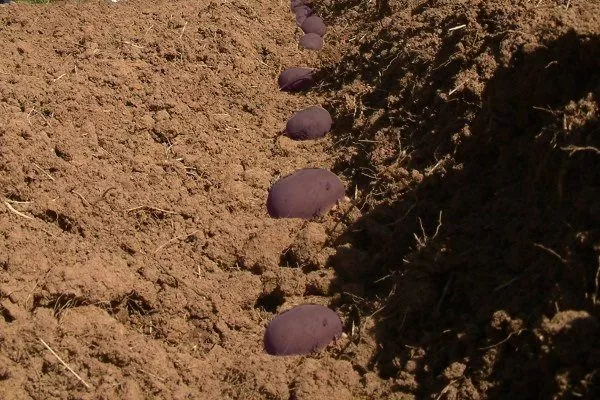
- depth – 9-11 cm;
- distance between holes – 29-31 cm;
- distance between rows – 59-61 cm.
Pest and disease control
The advantage of purple varieties is their immunity to such diseases, such as scab, rot, and cancer (subject to proper agricultural practices). Moderate resistance to Colorado potato beetles and other pests, as well as late blight, is noted. Therefore, it is necessary to treat the plants with appropriate products.
As a preventative measure, it's advisable to treat seedlings or tubers with a standard potassium permanganate solution before planting. To prevent pest attacks, rotate the planting location periodically, alternating potatoes with beans, phacelia, and cabbage.
How to store purple potatoes?
Purple potato varieties prefer cool, dry, and dark conditions. Only under these conditions are the roots susceptible to disease.
Before storing, be sure to inspect each potato, removing any damaged ones. Periodically sort through the potatoes, removing any damaged ones.
Pros and cons of purple potatoes
Advantages:
- piquancy of taste;
- good yield;
- unusual shade (you can surprise your guests);
- resistance to major diseases;
- rich in nutrients.
Flaws:
- there are a number of contraindications;
- thick skin;
- need for fertilizer;
- It rots when it rains.
Culinary uses
The purple variety was once considered a unique, exquisite potato, fetching exorbitant prices. It produced unusual dishes with a piquant, nutty flavor.
Nowadays, this vegetable is readily available to everyone, so housewives and restaurant owners actively use it in cooking. It's fried, boiled, and baked. It makes excellent potato pancakes, French fries, zrazy, draniki, chips, salads, mashed potatoes, baked dishes (especially layered ones), soups, and much more. Vareniki with purple filling are especially unique.
But its special feature is its use in dietary nutrition, as it promotes weight loss, saturates the body with microelements, and accelerates metabolism.
Cooking instructions:
- It's best to boil this vegetable in salted water. This will preserve all its beneficial nutrients.
- After boiling in their skins, the peel comes off easier than from regular varieties.
- The best combination is considered to be with beans, meat, vegetables, fish and herbs.
- To make the potatoes boil faster, add 1 tablespoon of butter, and after boiling (like beets), place the pan under cold water with ice cubes.
- It is forbidden to use a blender, as the mass will turn into a paste.
- When peeled potatoes boil, their natural coloring is released, giving the water an emerald green hue. Don't let this discourage you; the broth can be used to make soup or sauce.
- Due to the coloration of the water, the purple variety cannot be cooked together with white potatoes and other vegetables.
- It cooks quickly, which is something to keep in mind.
Recipes for some dishes:
- Salad. Grate boiled potatoes, add herbs and garlic, season with salt and pepper, and dress with mayonnaise. It's great as a sandwich spread.
- Roast the whole potatoes, peel them, and cut them in half. Arrange them on a plate, generously drizzling them with Greek yogurt. Sprinkle some herbs on top.
- Chips. Peel the raw potatoes and cut into slices. Pat dry with paper towels. Prick the sides with a fork. Sprinkle with salt. Place the chips in a metal sieve and drop into boiling vegetable oil. Place on the towel until the fat drains.
- Cook a standard noodle soup, but add purple potatoes (the broth will have a greenish tint). Add grated processed cheese and herbs toward the end of cooking.
- Casserole. Boil the potatoes and mash them. Add a raw egg and a little warm cream. Layer the sautéed mushrooms, onions, and carrots on the bottom of the pan, then top with the purple puree. Repeat this process 2-3 more times. Top with herbs and cheese.
Possible contraindications and indications
Purple potatoes have virtually no contraindications, but their consumption should be limited in the following cases:
- low blood pressure (hypotension);
- individual intolerance;
- constipation;
- low acidity of gastric juice;
- end-stage obesity.
It is necessary to eat this vegetable for the following pathologies:
- hypertension (high blood pressure);
- diabetes mellitus;
- weakened immunity;
- intoxication;
- some diseases of the heart and circulatory system;
- inflammatory processes in the body.
Benefits and harms of use
Health benefits of purple potatoes:
- Lowering blood pressure.
- Slowing down the aging process (due to a shock amount of antioxidants).
- Strengthening the immune system, which, in turn, prevents the development of colds, infectious and other diseases.
- Normalization of water balance.
- Improving the functionality of the endocrine system.
- Sharpening of vision.
- Strengthening the walls of the circulatory system.
- Lowering blood sugar levels.
- Eliminates flatulence, accelerates the digestion process.
- Reducing acidity in gastritis.
- Reducing inflammation in internal organs.
- Maintaining myocardial function.
- Eliminates irritability.
- Sleep is normalized.
What harm can there be:
- Eating potatoes when contraindicated can worsen certain illnesses: hypotension can lead to a hypotensive crisis, etc.
- When overeating potatoes (overeating): flatulence, heaviness in the stomach, constipation, bloating.
- In case of individual intolerance: an allergic reaction occurs.
Reviews
This variety is easy to distinguish from others—it has dark spots on the tops. When I dug it up, I was really disappointed—the tubers weren't visible in the ground, so I had to call my daughter to help. The harvest was quite good, and the tubers are very large. I didn't expect such a good result just from the buds. The only problem was the Colorado potato beetle. This potato beetle likes the beetle more than other varieties. So I harvested it almost every day, often poisoning it.
Purple potatoes are rich in nutrients, have a unique color, and a piquant flavor. They are used to treat diabetes and certain other health conditions. They are easy to grow and care for, but they do have their own contraindications. If you decide to plant them in your garden and eat them, be sure to consider all the above.
We've been growing purple potatoes at our dacha for three years now. The variety is unknown, and we don't really care. They taste just like other potatoes. But the color is quite attractive, a bright purple, and they're healthier than regular potatoes, too.
Judging by the photo, this is a purple majesty or purple. Incidentally, it has a very good shelf life and a pleasant, mild flavor.