
The Khalif eggplant is a mid-season variety, gaining immense popularity due to its large fruits, pleasant flavor, and resistance to some pests and many diseases. However, to grow successful fruits, it's important to familiarize yourself with the variety's characteristics, its features, growing conditions, and harvesting and storage requirements.
Description and characteristics of the variety
The main characteristics of the variety are presented in the table:
| Variety | Time from emergence to harvest | Time from the beginning of flowering to harvesting of fruits | Bush | Spikes |
| mid-early | 115-120 days | 30 days | semi-spreading, height up to 70 cm | are absent |
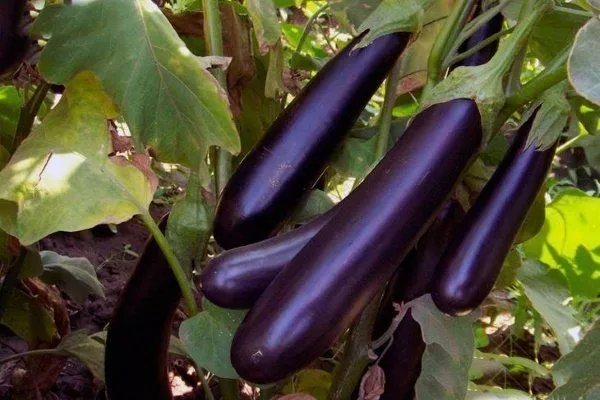
Features of the fruits of the Khalif variety:
| Form | Length | Diameter | Weight | Color | Surface | Pulp |
| elongated, club-shaped, slightly curved | up to 20 cm | up to 6 cm | up to 250 g | dark purple | glossy | whitish |
The fruits are completely free of bitterness! Therefore, this variety is widely used in cooking and home canning.
Growing process
Khalifa eggplants are grown from seedlings, which can also be grown at home if basic growing conditions are followed.
- ✓ Check the seeds for germination by placing them in water: good seeds will sink to the bottom.
- ✓ Pay attention to the expiration date of the seeds to avoid low germination.
Preparing and planting seeds
Seed planting begins in March. To do this, the planting material is treated in a specific manner:
- They are kept in the solution for 3 days. potassium humate;
- For disinfection, place in a solution of the drug Fitosporin.
Prepare the soil in the fall. Mix peat (6 parts), compost (2 parts), and garden soil (1 part). You can also use store-bought soil, but be sure to check for all the ingredients listed.
Before planting seeds in the soil, it is also disinfected with steam in a water bath. The soil itself can also be disinfected before planting. Read on to learn how to do this correctly and safely. here.
The seedlings are planted in trays or cups, as the plants do not tolerate being pricked out. They are buried 1 cm deep in moist soil. The containers are covered with plastic film to create a greenhouse effect. The seeds germinate within 10-15 days.
Conditions for seedlings and care
Once the first shoots emerge, the containers with the sprouts are moved to a well-lit area. The following conditions are provided for the seedlings:
- Clear temperature regime. Daytime temperatures are 20-24°C, and nighttime temperatures are not lower than 16°C.
- Timely watering. They are produced when the top layer of soil dries out and watered with warm water.
- Lighting. If daylight hours are insufficient, supplemental lighting is provided. This is done using phytolamps or fluorescent lights, which are turned on morning and evening.
- Timely transshipment. When the seedlings develop 1-2 leaves, they are transplanted into larger containers. This is done by transshipment, without damaging the root ball.
- Hardening. Fourteen days before planting, the plants are transferred to the balcony. Initially, leave them there for a couple of hours, gradually increasing the time.
Planting in the ground
When the seedlings are 2-2.5 months old, they are planted in open ground or a greenhouse. By this time, the plants already have 8-10 leaves, and the stems reach 25 cm in height.
The site should be selected in advance; it should be wind-protected but well-drained. In the fall, the soil is enriched with humus during digging, and in the spring, the soil is loosened. Khalif eggplants grow well after cucumbers, carrots, onions, cabbage, and legumes.
If peppers or potatoes were previously grown in the area, it is better to choose another area, and here eggplants can only be planted after 3 years!
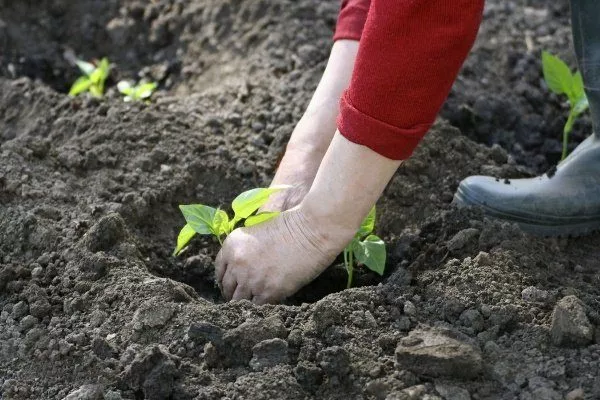
Prepare planting holes for the seedlings, adding a handful of wood ash to each and covering it with a little soil. Water the hole generously and place the seedlings in it. Cover the roots with soil and compact it lightly. Space the rows up to 60 cm apart, and the holes 35-40 cm apart.
Plant care
When caring for young plants, the primary focus is weeding and loosening the soil. Also, since the fruits grow quite heavy, the bushes are tied to metal or wooden stakes. Five to six strong ovaries are left on each bush, and the rest are removed. Eggplants are not side-sonned, but yellow leaves and deformed fruits are removed promptly.
Organizing proper watering
The Khalif eggplant variety requires constant watering. However, the frequency depends on the plant's developmental stage. For example, before the eggplants begin to bloom, they should be watered approximately once a week. During a dry season, the frequency is increased to once every 3-4 days. To retain moisture in the soil, the surface is sprinkled with peat.
Lack of moisture leads to disastrous consequences - shedding of ovaries and falling of leaves.
For watering, use settled water at a temperature of at least 25°C. Pour it under the plant's roots, being careful not to damage the leaves and stems.
Loosening and hilling
After watering, loosen the soil to prevent crust formation. Around young plants, loosen the soil to a depth of 4-5 cm, when buds and flowers appear, to a depth of 5-6 cm, and after fruit set, to a depth of 7-8 cm. Since eggplants have a shallow root system, loosening the soil deeper than 8 cm is not recommended. After loosening, hill the bushes to a depth of 5-7 cm.
Do I need to apply fertilizer?
Many people believe that Khalif eggplants require no fertilizer or supplemental feeding, but this isn't entirely true. Regular feeding not only increases the plant's resistance to diseases and pests but also increases yield. Before flowering, nitrogen-rich fertilizers are applied. At this stage of development, applying cow manure to the roots is beneficial. Dilute it with water at a ratio of 1:15. Diammophoska (20 g per 10 liters of water) is used as a mineral fertilizer.
After flowering, eggplants are watered with solutions containing phosphorus and potassium. Dissolve 30 g of potassium sulfate and superphosphate in 10 liters of water.
Diseases and pests
The Khalif eggplant variety is susceptible to attack by spider mites and Colorado potato beetles. These insects can carry various diseases, so it's important to protect the plants from pests. Pollination with wood ash or tobacco dust is effective, as are chemical pesticides such as Carbofos or Klant.
The variety is resistant to verticillium and fusarium wilt. However, if the disease does strike the plant, it cannot be saved. However, neighboring plants should be treated with Fitosporin or Baktofit.
To prevent diseases, disinfect seedlings and gardening tools. The greenhouse is regularly ventilated, and the soil is moistened regularly.
Harvesting
The harvest is harvested approximately one month after flowering begins, preventing overripening. Overripeness is indicated by the appearance of a green color. The fruits ripen unevenly, so they are picked selectively, checking every 2-3 days. Ripeness is indicated by the color, size, and gloss of the surface.
- ✓ Appearance of a green tint on the fruits.
- ✓ Loss of surface gloss.
- ✓ Increased pulp hardness.
You can also determine the ripeness of eggplants by simply pressing on the fruit. If the skin bends but quickly returns to its original position, then the vegetable is ripe.
They are cut with pruning shears, stems included; twisting or picking the fruit is not permitted. Up to 20 fruits, or 3 kg of produce, are harvested from one bush.
Eggplants contain a dangerous substance called solanine, which can be harmful to health if harvested at the wrong time!
Storage of crops
To increase the shelf life of vegetables, follow these rules:
- When cutting the fruits, leave at least 3 cm of the stalk, and be sure to ensure that it does not detach from the eggplant itself;
- the harvest is collected on warm, dry days;
- Never wash vegetables before storing them; use a cloth to wipe off any dirt.
Vegetables can be stored in the refrigerator; they will retain their flavor for 3-4 weeks. If the harvest is large and does not fit in the refrigerator, you can store the eggplants in a basement or room with a constant temperature of 3 to 10°C and a humidity level of 75-85%. Under these conditions, the vegetables will last at least 2 weeks.
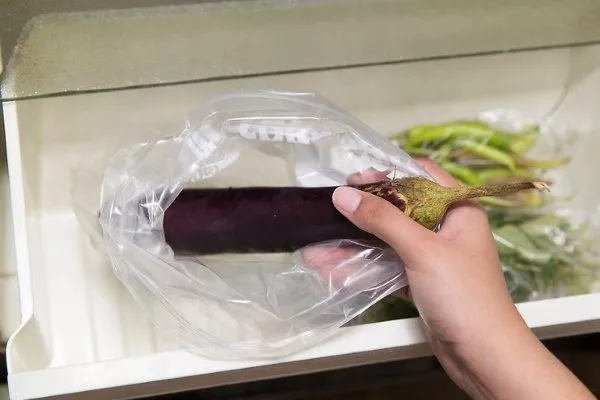
For storage, you can use a tightly sealed plastic bag or a cardboard box with ventilation holes. Place the vegetables in a single layer, and it is recommended to wrap each one in parchment paper.
Reviews of the Khalifa eggplant
The Khalif eggplant is particularly prized for its low maintenance, high yield, and excellent flavor without bitterness. Planting and growing require specific knowledge, and care involves timely watering, fertilizing, and soil loosening. If all recommendations are followed, the plants will reward you with a bountiful harvest.