
Humates are a group of elements that stimulate plant development and growth. They consist of naturally occurring substances and have a comprehensive effect on the soil. Humates are not fertilizers, but they can be an excellent substitute. If desired, you can make your own humates.

What are humates?
Humates are natural elements formed in the soil during the breakdown of plant fiber. They are also known as humic acids. These elements are classified as sodium- or potassium-based salts. For garden crops, humates replace fertilizers.
Humic acids are formed when:
- peat;
- brown coal;
- sapropel;
- leonardite.
| Type of raw material | Humic acid content, % | Notes |
|---|---|---|
| Peat | 30-50 | The most accessible source |
| Brown coal | 5 | Contains heavy metal impurities |
| Sapropel | 15-30 | Low quality due to impurities |
| Leonardite | 40-80 | The most effective, but expensive |
Of the listed elements, coal contains the least amount of humates. Humic acids account for 5% of the total solid fuel content. Leonardite is the easiest source of humates. This component contains 40% to 80% humic acids.
The first humates were created 60 years ago. Professor Lidiya Khristeva authored the research that led to the discovery of these elements. She was the one who identified the beneficial properties of humic acids.
When humates get into the soil:
- stimulate the work of microorganisms;
- improve soil structure;
- promote the penetration of water and oxygen into the soil.
This improves soil quality, resulting in enhanced plant growth and increased yields. Humates do not contain environmentally hazardous substances, making them suitable for use in any conditions.
Types and beneficial properties of humates
Humates are divided into two categories: ballast and non-ballast. The latter category is characterized by higher efficiency because it contains a higher number of active ingredients. Ballast humates contain a substrate and impurities, resulting in a lower percentage of active ingredients.
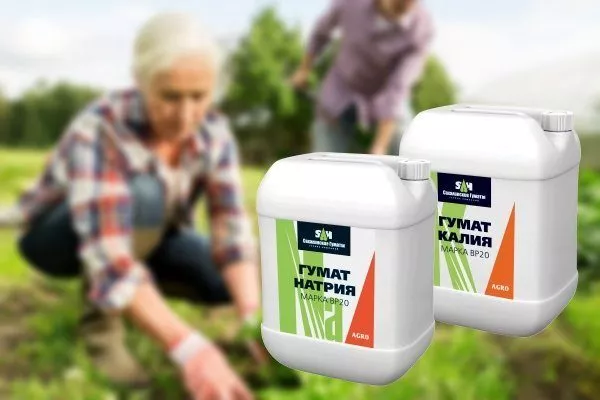
The quality of humic acids depends on the raw materials they are made from. Depending on their composition, these elements are classified into two types:
- sodium humates;
- potassium humates.
Both types have a similar effect when used, but differ in characteristics and properties.
Sodium humate
Sodium humate is an organic substance and is used to increase plant resistance to:
- stress;
- frost;
- drought.
Sodium humate provides plants with nutrients that help them maintain their leaves and buds for a long time. The only drawback of this substance is its incompatibility with alkaline soils.
Potassium humate
Potassium humate is an organomineral additive. It is intended for:
- seed treatment before sowing;
- rooting cuttings;
- processing of tubers and other planting material.
For greater effectiveness, we recommend using "Humate +7 Microelements." This substance is an improved version of humic acid with added microelements.
Learn more about how to prepare and use "Humate +7" at home by watching this video:
When using potassium humate, sugar gradually accumulates in the soil, making fruit and berry plants sweeter.
What are the benefits of humates when growing garden crops?
Humates are used in gardening and horticulture because:
- reduce the need for nitrogen fertilizers by half;
- make herbicides, fungicides and insecticides more effective;
- improve the quality of the harvest.
If horticultural crops are grown for commercial purposes, the use of humates increases the cost of the product.
Humates are considered the safest plant growth and development stimulants for human health. They strengthen the plant's root system, making it better able to withstand:
- adverse weather conditions;
- diseases;
- pest attacks.
Humic acids accelerate plant metabolism and growth, allowing plants to better absorb beneficial micronutrients. They also accelerate photosynthesis, resulting in increased greenery. Indoor use of humates promotes more intense and high-quality greening of ornamental plants, with healthier, more vibrant foliage.
By stimulating the plant development process:
- bloom more abundantly;
- have better ovaries;
- bear fruit before the due date.
Humates normalize metabolism and improve the quality and energy value of grown produce. Their use is recommended for soil contaminated with:
- radionuclides;
- pesticide residues;
- herbicides;
- mineral fertilizers.
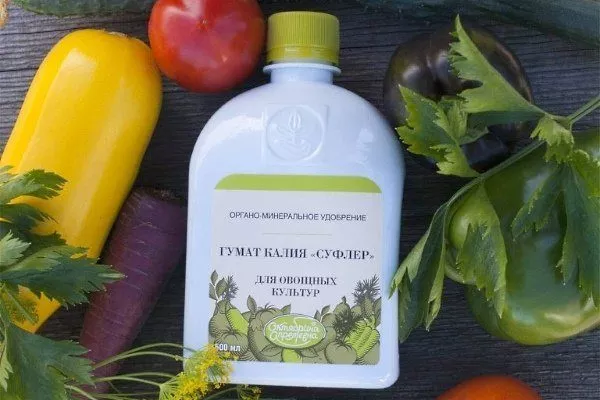
When large amounts of chemical protective substances accumulate in the soil, crop yields decrease. Humic acids help remove elements from the soil that negatively impact its quality.
When used in combination with pest, weed, and disease control products, humates will reduce the incidence of burns and damage to plants.
Heavy soil prevents plants from obtaining the necessary micro- and macronutrients. Humic acids reduce excess moisture and soil acidity and accelerate the formation of humus.
By using humates, you can partially or completely eliminate the need for mineral fertilizers, saving additional money. Potassium humate is cheaper than standard mineral supplements.
How and why are humates used?
The use of humates is permitted in any industry requiring improved soil quality. Humic acids are used in:
- gardening;
- growing grain crops;
- viticulture;
- growing vegetable crops;
- fertilizing indoor ornamental plants.
Humates are classified as hormone-like substances. They are used as pre-sowing seed treatment to improve seed survival. Regardless of the type of humate, their application is similar.
Seed treatment
Before treating seeds with humates, prepare them according to the instructions. Humates are sold as a powder, which is then diluted with water to make a solution. The standard ratio of components: one tablespoon of humates per 10 liters of water. If pre-sowing seed treatment is carried out, the components are mixed in a different ratio: 0.5 grams of humic powder per 1 liter of water.
It is recommended to prepare humates in bulk, using a 2-liter plastic bottle. This container will require 1 gram of active ingredient. A teaspoon is recommended for dilution. One gram of humate equals one-third of a teaspoon.
When using liquid humates, the solution is prepared by diluting 100 milliliters of the active substance in 1 liter of water.
Seeds are treated with humic acid by soaking. The procedure lasts for two days. After this, the seeds are removed and left to dry. Once dry, they are ready for planting.
If you are processing cucumber or flower seeds, the soaking period should not exceed 24 hours.
To learn more about how to prepare humates for seed and plant treatment at home, watch this video:
Plant fertilizing
Ballast humates are used for plant nutrition. Humic salts are applied for this purpose in two ways: root and foliar. The root method involves standard watering. A tablespoon of humic powder is diluted in 10 liters of water, after which the desired plants are watered with the mixture.
Foliar feeding is done by spraying. This method of using humates requires a weaker solution. For 10 liters of water, 3 grams or one teaspoon of humic powder is needed.
Top dressing is carried out during the growing season or fruiting period. If the plant is not blooming or has no buds, humates are not recommended. Fertilizing should also not be done if harvesting is scheduled within three weeks.
When fertilizing with humates, it is necessary to follow a number of rules:
- at least 3 liters and no more than 10 liters of solution are used per square meter;
- During the growing season, plants are sprayed 2 to 6 times;
- for feeding beets, cabbage, zucchini, carrots, spraying with potassium humate is done 4 times during the season;
- processing of fruit and berry plants is carried out together with pesticides and herbicides during the period of formation of fruit ovaries;
- Fertilizing garden flowers is carried out in spring no more than 6 times over the course of two weeks;
- Indoor plants are treated once every 15 days from March to September.
If liquid humate is used, the solution is diluted by mixing 50 to 100 milliliters of the active ingredient per 10 liters of water. The mixture is then poured under the plant roots at a rate of 3 to 10 liters per square meter.
Soil cultivation
Only powdered humates are intended for soil treatment. The purpose of this use of humic salts is to detoxify and improve the soil structure. The substance is pre-mixed with sand and then sprinkled on the soil surface. To treat one square meter of soil, 50 grams of powdered humate is required. After the entire required area has been treated, the soil should be loosened to allow the substance to penetrate better.
This procedure should be performed in the spring before planting and in the fall after harvesting. Nutrients are gradually washed away by precipitation and watering, resulting in deterioration of the soil quality. Without potassium and sodium humates, the soil will gradually become deficient in magnesium and iron.
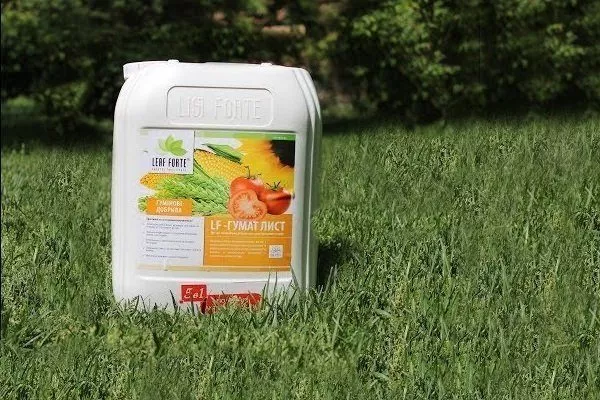
The specified norm must not be exceeded – an excess of humic salts in the soil can cause a negative reaction.
How are humates used with manure and compost?
The use of humates together with manure and compost has a number of advantages:
- acceleration of the plant development process;
- reducing the minimum required rate of humates for soil cultivation by 2-3 times;
- the efficiency of humic salts does not decrease;
- harmful bacteria and microorganisms contained in manure are destroyed;
- the level of ammonia in the compost is reduced to a minimum.
To prepare the fertilizer, the components are mixed in a ratio of 10 grams of humates per 10 kilograms of manure. Humic acids are best mixed with cow dung. The process of using humates with manure and compost is as follows:
- Fertilizer preparation is carried out no later than 2 months before its use;
- A standard solution is prepared from humic powder and used to water the mullein;
- the manure is thoroughly mixed for high-quality decomposition;
- Before use, mullein is dissolved in water in a 1 to 1 ratio and infused for 2 weeks;
- The resulting substance is mixed again with water in a ratio of 1 to 10, after which it is poured under the plants.
It is recommended to apply humates and manure to the soil in the evening. This substance should not be applied directly to the roots of plants. Instead, furrows should be made between beds or near bushes and the fertilizer should be poured into these furrows.
Which humate is better?
The quality of a humate depends on the raw material from which it is made. The most effective is a substance based on leonardite. However, this element is rare, making humates made from it expensive.
- ✓ Check the humic acid content
- ✓ Make sure there are no harmful impurities
- ✓ Consider the type of soil and plants
- ✓ Pay attention to cost and availability
Peat humates are the most commonly found commercially. They are among the most affordable growth stimulants and boast the highest quality humic salts in this price range.
Sapropel humates are the cheapest. They are easier to buy than their peat-based counterparts, but their quality is lower. This is due to the large number of impurities, which are not removed due to the costly process.
It is not recommended to purchase humates made from brown coal, as they contain heavy metal impurities.
When comparing potassium and sodium humates, both the advantages and disadvantages of each are highlighted:
- Potassium humate provides plants with the main component for growth, but is expensive;
- Sodium humate is more affordable, but it prevents the formation of potassium and pollutes the soil with toxins.
Potassium humate is considered more beneficial and is suitable for most plants. Sodium humate, despite its drawbacks, also provides plants with essential nutrients and is compatible with certain plants, such as onions and beets.
The highest-quality Russian humates are produced in the Baikal region and Sakhalin. Products from both regions are available for purchase. The source of production is indicated on the packaging, so inexperienced buyers will have no trouble choosing.
Humates are humic salts that improve soil quality and stimulate plant growth. They can be used on both outdoor and indoor plants. However, humates must be used strictly according to the instructions. Otherwise, they can cause harm to the soil and plants.