
Soil is rich in a variety of microorganisms, including those that pose a potential threat to plants. To eliminate harmful substances and microbes from the soil, most gardeners prepare it in advance for planting. Let's consider which methods and means of soil disinfection are successful and most effective.
Why disinfect the soil before planting seedlings?
Every year, invisible pests, fungi, and destructive microorganisms accumulate in the soil. To ensure healthy plants emerge and a full harvest, the optimal solution would be to remove the top layer of soil each season and replace it with fresh soil. However, this process would be quite labor-intensive and costly.
Therefore, most gardeners prefer to clean the soil using specific methods. Pre-prepared and treated soil will provide stable vital energy to young seedlings and prevent the penetration of harmful microbes. Let's consider a few important points:
- Soil cleaning is usually carried out in spring or summer – before the start of the gardening season and after the harvest.
- The ideal soil for seedlings should be soft and loose so that sufficient oxygen can nourish the plant roots.
- The treated seedling base contains natural complexes of micro- and macroelements, which are added in strictly established proportions.
- It is necessary to control the acidity of the soil so that the plants do not get sick in the future.
- When choosing a method for clearing soil, one should take into account climate and weather conditions, the consistency and composition of the soil, as well as the diseases that crops in a particular area are most often susceptible to.
When disinfecting the soil yourself, follow the established proportions!
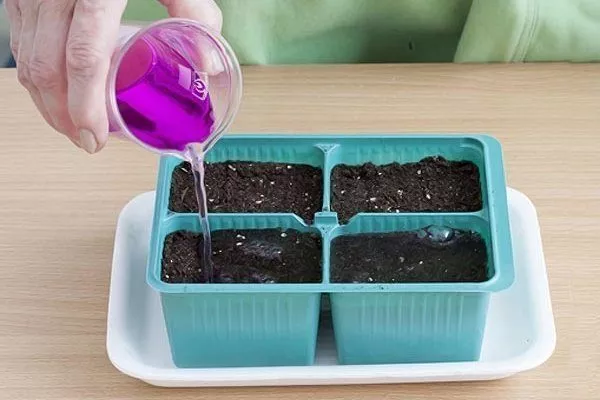
Options for thermal treatment of soil
To ensure the seedling bed is free of harmful microbes, it is treated with special methods and products. Below are the most popular soil treatment methods:
| Type of processing | What's the point? | Flaws |
| Calcination | The procedure involves heating the soil at high temperatures—this can be done by frying it in a pan, baking it in the oven, or baking it in a microwave. To heat the soil, spread it onto a baking sheet in a layer approximately 5 cm thick and place it in an oven preheated to 70-90°C for 30-40 minutes.
During the baking process, the soil experiences a steaming effect, which cleanses the soil of all harmful microorganisms. | It should be taken into account that at high temperatures, beneficial substances are destroyed; the soil can lose its beneficial properties and functions and become dry as dust. |
| Freezing | To freeze-treat the soil, place the required amount of soil in a canvas bag in the fall and take it outside when the temperature drops below -15°C. The substrate is kept in the cold for about a week—during this time, all harmful insect larvae, fungi, and bacteria are destroyed. The bag is then brought into a warm room for a while, and the freezing process is repeated. A large freezer is suitable for this process. | This procedure isn't suitable for all types of soil. For example, freezing can leave behind bacteria that cause late blight or clubroot—diseases that can be eliminated by calcination. |
| Steaming | This method involves treating the soil with hot steam or water; this method is considered the most economical. To steam, place a bucket of water on the stove and bring to a boil. Place the required amount of soil in a cloth bag and place it on a rack or colander over the boiling water. The steam has a disinfecting effect, killing pest larvae. Alternatively, pour boiling water over the prepared soil and let it dry. | The steaming method is disadvantageous because it destroys not only harmful microbes but also beneficial substances. |
After such sessions, be sure to spread the soil on a baking sheet in a 5-7 cm layer and let it cool so that the soil is enriched with oxygen.
- Allow the soil to cool and become saturated with oxygen.
- Add biologically active supplements to restore microflora.
- Check soil acidity and adjust if necessary.
After any thermal treatment of the soil, it must be revived with nutrients so that it remains fertile for as long as possible and produces a rich harvest.
You can see the process of preparing the soil for steaming as one of the methods of soil disinfection:
Disinfection of soil with special substances
In addition to exposing the seedling base to hot and cold temperatures, there are methods for cleaning with additional substances. Soil cleaning is carried out using chemical and biological substances.
Chemicals for soil disinfection They are used in the most extreme cases—when neither heat treatment nor biological purification methods have yielded results. Such substances include:
- Bleach – destroys most pathogenic microorganisms; apply to the soil 6 months before planting seedlings at a rate of up to 200 g/1 sq. m. However, it should be noted that not all seedlings respond well to this substance.
- Formalin This product combats the microbes that cause blackleg disease. It should be added to the soil two weeks before planting the seedlings. Dissolve 200 ml of a 40% solution in a bucket of water and pour it into the soil. This amount is sufficient for 1 square meter of the area. Then cover the treated area with plastic sheeting; humus or mown grass can be used as cover. After three days, remove the protective layer and dig the soil.
- Chemical agent TMTD in the form of powder or suspension Add it to the seedling bed immediately before planting. This substance is harmless to plants. To apply, simply dilute the 0.6% suspension in a bucket of water and pour it into the soil.
- Using copper sulfate Disinfect the soil in the fall, after harvesting. The optimal amount is 50 grams of the product per bucket of water. Treatment with this substance is permitted once every five years.
Don't overdo it: copper sulfate in large quantities is harmful to plants!
Biological substances They revitalize the soil, increase the number of beneficial bacteria, and reduce toxicity. Among the biological soil additives that can achieve a cleansing effect, the following can be highlighted:
- Trichodermin – essentially an antibiotic containing biologically active substances that are produced when harmful competing fungi appear. This product works by releasing beneficial fungi that suppress the activity of pathogenic microbes and bacteria. The product is mixed at a ratio of 1 gram per 1 kg of soil, first dissolving the substance in water.
- Baikal EM-1 Ideal for preventative soil treatment before planting seedlings and after harvesting. Add 150 ml of the product to a bucket of water and stir. The optimal amount to use is 2.5 liters of solution per square meter of soil.
- Alirin-B – combats root rot. Dissolve one tablet in 5 liters of water and water the sprouts.
- Fitosporin-M The active ingredients begin to work after dissolving the product in water, suppressing harmful bacteria, normalizing the microflora, and increasing resistance to various diseases in seedlings. To treat 1 square meter of area, dissolving 6 grams of the product in a bucket of water is sufficient. Criteria for the selection of biological drugs
- ✓ Compatibility with soil type.
- ✓ Contains beneficial microorganisms.
- ✓ No negative impact on plants.
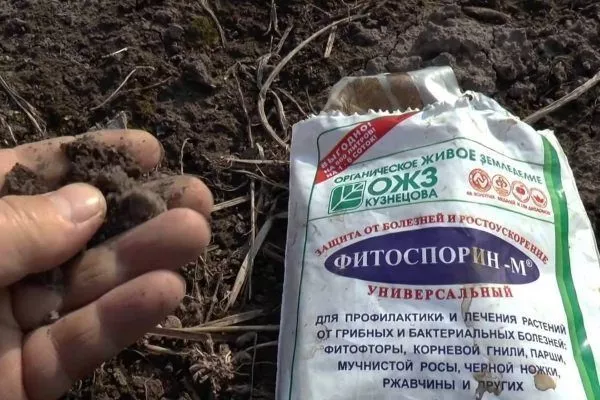
Mixing chemical and biological products is strictly prohibited. To avoid damaging the beneficial compounds, wait approximately two weeks between applications.
Soil disinfection using folk remedies
Along with the described disinfection methods and agents, folk methods of soil treatment are equally popular. Folk methods are considered environmentally friendly and, for the most part, effective:
- Disinfection with potassium permanganate – used primarily for chernozem and sod-calcareous soils. Dissolve 5 grams of manganese crystals in 10 liters of water and water the area at a rate of 30-50 ml of solution per square meter.
- Garlic tincture Destroys small pest larvae and minimizes the risk of plant spotting, late blight, and rust. Pour a liter of boiling water over 1 head of crushed garlic and let it steep for a week. For spraying, dissolve 50 ml of garlic infusion in 10 liters of water. Onions, from which a similar infusion can be prepared, have antimicrobial and antifungal properties.
- Infusions of medicinal herbs - calendula, celandine, nettle, marigold They have a disinfectant effect and help strengthen the plant's immune system. To prepare a nettle solution, pour 5 liters of boiling water over 700 grams of the plant, cover, and leave in a warm place until fermentation begins. After 5 days, when the solution has fermented well, strain it and use as directed: add 1 liter of extract to 10 liters of water and use as plant food.
- Ash-based alkali treatment – kills harmful microorganisms. 0.5 kg of ash is poured into 3 liters of water, mixed thoroughly, brought to a boil over high heat, and left for a while. The top layer of the solution is the ash lye, which is skimmed off, diluted in water in a 1:2 ratio, and used to water the seedlings two weeks before planting outdoors.
This soil preparation method for planting seedlings using biologically active additives is suitable for gardeners who do not use heat treatment:
All of the above methods yield positive results. It's important to consider the type of soil being cultivated and the type of seedlings that will be growing in it. In any case, it's important to prepare the soil for planting to avoid protracted soil diseases and fertility loss.