
Quails are undemanding birds when it comes to food and care, but their behavior can sometimes exhibit a "wild" quality that can be frustrating for poultry keepers, especially beginners. In the wild, this behavior is understandable. To maintain a healthy population, weak and sick individuals have no place in the flock. However, in captivity, aggression can seem excessive. The causes and solutions for this problem are discussed further in this article.
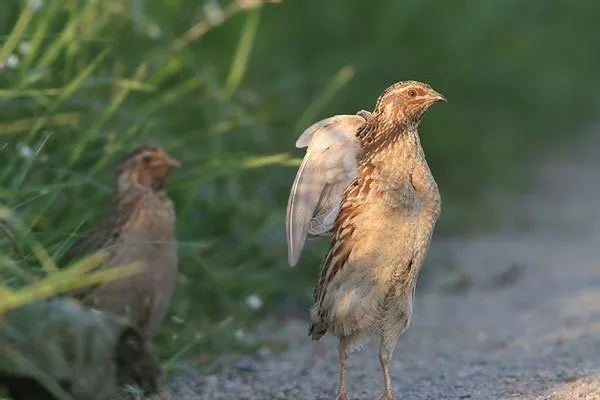
The main reasons for pecking
Among the main reasons for “pecking each other” the following can be highlighted:
- poor nutrition;
- cramped conditions;
- insufficient or excess lighting;
- struggle for leadership;
- stress;
- drafts.
If you see a bloodied bird, or if the blows are most often aimed at the head (eye injuries are dangerous), neck, or feet, you should immediately isolate it. Also, separate the aggressor to prevent it from injuring other birds and causing peaceful birds to follow suit. For example, males become very aggressive during puberty and attack everyone indiscriminately. Next, you need to determine the cause of the cannibalism.
Poor nutrition
Oddly enough, poor nutrition, a lack of protein, macro- and microelements in the diet, and food depleted of vitamins forces birds to seek replenishment in the feathers and blood of their relatives.
The appearance of "bald" quails in a flock signals that the birds lack:
- sodium;
- potassium;
- calcium.
Birds can pluck feathers from both each other and themselves. A poultry farmer regularly loses eggs in a nest because quail can peck at them. Eggs are a source of vitamins, calcium, and protein.
Purchasing high-quality materials will help correct the situation. compound feed, which contains all the vital nutrients for the bird's body in optimal proportions. Some experienced poultry farmers recommend adding hemp seeds, which also have a rich chemical composition, to the feed. White cabbage can help prevent cannibalism. It contains amino acids, vitamins, and calcium.
Insufficient protein is another cause of aggressive behavior. Protein deficiency affects the birds' appearance—they become bald, meaning feathers fall out, their skin becomes irritated, and their skeletal structure changes. Therefore, boiled fish, meat and bone meal, and powdered milk are introduced into the diet.
To replenish vitamins and minerals, quails should be fed sprouted grain, fresh grass, shells, chalk, limestone and yeast.
| Additive | Benefit | Recommended quantity |
|---|---|---|
| Hemp seeds | Rich chemical composition | 5-10% of the total diet |
| White cabbage | Amino acids, vitamins, calcium | Sheet 2-3 times a week |
| Boiled fish | Source of protein | 1-2 times a week |
| Meat and bone meal | Proteins and minerals | 5% of the total diet |
| Dry milk | Proteins and calcium | 2-3% of the total diet |
In rare cases, quail begin to peck each other due to low food supply. They lack food and, trying to gain a place at the feeder, attack their "competitors." In this case, simply increase the amount of food; for example, 30-35 grams of food per quail is considered normal.
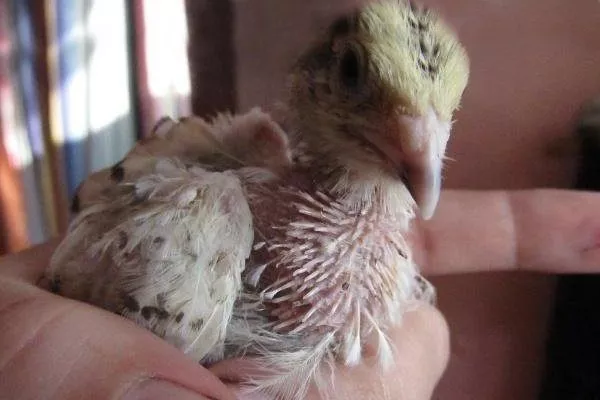
The basics of feeding quails are described in this article.
Close containment
Steppe species require personal space. Failure to observe this simple rule results in strong and healthy individuals pecking at their neighbors.
Reducing the number of birds in cages or rooms quickly solves the problem. However, it's important to keep in mind that moving birds between different cages can also lead to aggressive behavior. Birds don't like newcomers. This is especially true if several males are housed in the same cage. It's recommended to keep them away from each other.
When placing birds in cages, the following rules must be observed:
- if the cage is large, then 80-100 representatives are placed per 1 sq. m;
- If the cage is small, then for each bird it is necessary to maintain a space of 130 sq. cm;
- It is not recommended to keep more than 30 individuals in a standard-sized cage (90x40 sq. cm).
How to make a cage for quails yourself – read here.
Battle for leadership
Dominance struggles between males are a common cause of injury to other dominant males. Since there are five females to every male in the wild, the ratio should be approximately the same in captivity. However, in the wild, females and their nests are spaced widely apart and do not overlap, so conflicts between males are virtually nonexistent. However, in a cage, this is unavoidable due to the limited space.
In captivity, males often display aggression toward each other. This can be due to a lack of females or because young males seek to "take over" the cage. Therefore, it's best to avoid introducing young males into established families.
The only solution to this problem is to provide the males with the required number of females (4-5 quails per male). It's also a good idea to provide the birds with adequate personal space.
Although males usually initiate the pecking, females that have finished laying eggs sometimes join in. Sick, old, and weakened individuals are primarily targeted.
It is recommended to move quails that have finished laying eggs away for a while.
Stress
Quails are delicate birds, and stress can be caused not only by their living conditions but also by psychological factors. For example, birds quickly become accustomed to one owner. Changing owners can cause discomfort, which can lead to nervousness in quail, which can lead to aggression towards each other.
Moving quail to a new cage can also cause pecking and anger. Therefore, it is not recommended to change their habitat too often, as they have a hard time adjusting to a new environment.
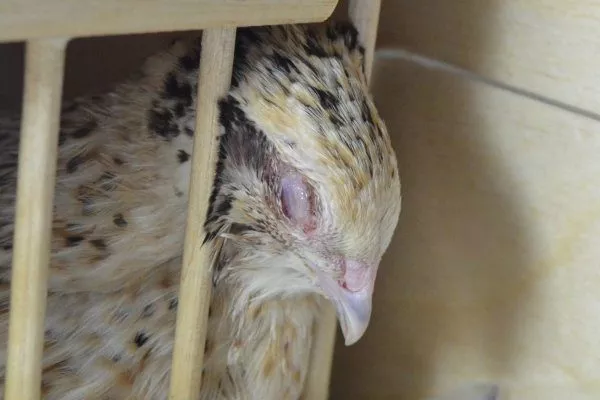
The correct maintenance of quails is described here.
Lighting
Excessive or insufficient lighting irritates quail, which in turn makes them aggressive and quarrelsome. The main reasons for a bird's twitchy behavior due to lighting include:
- Frequent, abrupt switching on of lightThis is especially annoying for birds after dark. Light intensity should change smoothly; sudden changes frighten birds. This is achieved with a dimmer—a light regulator designed to change the electrical output.
- Lack of ultraviolet raysLack of light (ultraviolet) usually occurs in winter, when the day becomes very short.
- Too short or too long daylight hours for quailsQuails need 12-14 hours of daylight all year round.
- Long-term flickering of light bulbs, caused by temperature changes. Avoid flickering lights, as this can also trigger aggression.
- Using lamps of incorrect power and spectrumFor poultry houses, 40-watt blue or red spectrum fluorescent lamps are suitable. This light has a calming effect on the birds.
- Placing cages too close to light. Birds are best advised to avoid excessive brightness, whether it's natural or artificial light.
Poor ventilation or drafts
Quail are very sensitive to drafts. Loud sounds accompanied by wind can stress them out and also impact their health. Stress and irritability are two factors that together lead to inappropriate behavior in birds. A complete lack of ventilation can also cause this condition; the air becomes stagnant in the room, depriving it of oxygen. As a result, these steppe dwellers, accustomed to open spaces and gentle breezes, begin to show restlessness, which culminates in aggressive behavior.
Therefore, the room where the birds live must be well sealed. Drafts should be prevented. All cracks in the floor, roof, and walls should be well caulked, and the window should be covered with a thick layer of plastic film. Ventilation openings with a draft should be provided to ensure air exchange within the shed. However, air should be drawn in from within the shed, not blown in from outside.
What to do with injured birds?
If a bird has already been injured, it must be removed and kept separately from other birds until it fully recovers. Most often, wounds initially occur on the body and legs, as these are easier to hit, and the legs are generally vulnerable.
If you notice a bird fluffed up, with its wings drooping and eyes half-closed, in no hurry to reach the feeder, and showing apathy toward everything around it, you should immediately examine it thoroughly. Pay particular attention to the condition of its wounds. If bacteria or pathogens are present, antibiotics are required for treatment. Signs of wound infection include:
- presence of pus;
- abscesses;
- severe redness;
- local increase in temperature.
- Immediately isolate the injured bird from the others.
- Inspect the wounds for signs of infection.
- Treat the wounds with an antiseptic or antibiotic, depending on the condition.
- Provide hygienic conditions for the injured bird.
- Introduce vitamin supplements into your diet to speed up recovery.
The wound is regularly washed with a penicillin antibiotic solution or Vetbicin. In severe cases, antibiotics are administered intramuscularly, strictly adhering to the dosage.
Therefore, it's best to inspect your flock daily and identify injured birds early. Wounds without signs of inflammation or infection heal faster and don't require strong medications. They can be disinfected with hydrogen peroxide and treated with a healing ointment such as Levomekol or Vishnevsky. Brilliant green is also acceptable. The main thing is to prevent the wound from becoming infected with pathogenic bacteria.
The cage containing the sick animal must be kept hygienically clean. It must be cleaned regularly. It is recommended to disinfect the cage before placing the pecked animal there.
A vitamin-rich diet can significantly help an injured bird recover. Calcium-rich foods can also help bones heal quickly. It's worth noting that a healthy quail can recover on its own, but seriously injured birds are advised to be culled.
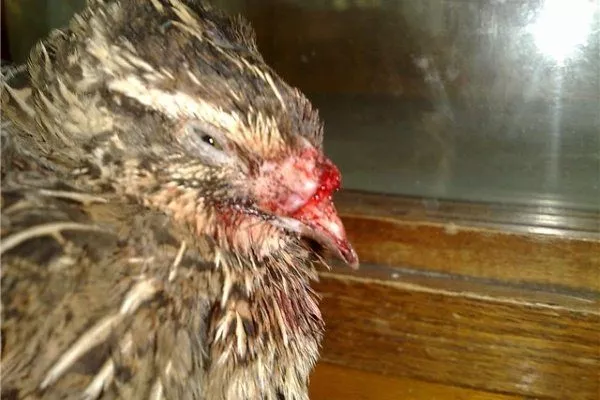
It is not recommended to eat quail that have died from pecking unless the cause of the "inappropriate" behavior is clear. It is unknown what diseases the bird is infected with, and these may include infectious diseases that can be transmitted to humans.
Helpful tips
To avoid unpleasant situations, it is recommended to adhere to some basic rules for keeping quails:
- Good care, proper nutrition, sufficient daylight hours and an optimal number of birds in the room reduce the likelihood of quails pecking at each other.
- Ash baths are a great way to calm birds and relieve stress. To do this, they need to be able to roll around in the ashes without any obstacles.
- It's best to keep males and females separate, allowing males to spend short periods of time with them. Young quail should not be housed with older birds.
- Birds affected by the "cannibalistic tendencies" of their fellows are immediately relocated. Wounds are treated to prevent infection. Their feet are treated with hydrogen peroxide.
- If the aggressor simply cannot calm down and behaves this way because of their nature, then drastic measures are taken. The beak is carefully trimmed a few millimeters with a sharp instrument. The procedure must be carried out with great care, as one awkward movement and the bird could lose its tongue.
Aggressive behavior is common among quail. Typically, there's one instigator in a flock, who then leads the rest of the birds to imitate the bad behavior toward the culled bird. However, identifying the aggressor early and isolating it from the other birds can help mitigate the situation. Creating favorable and appropriate living conditions for the birds can prevent their cannibalistic tendencies from becoming apparent.