
In Eastern countries, keeping quail at home is considered good luck. These birds have a beautiful song and are often used as pets instead of parrots. However, to get the most out of keeping quail at home, there are a few things to consider.
Is it possible to keep quails in an apartment?
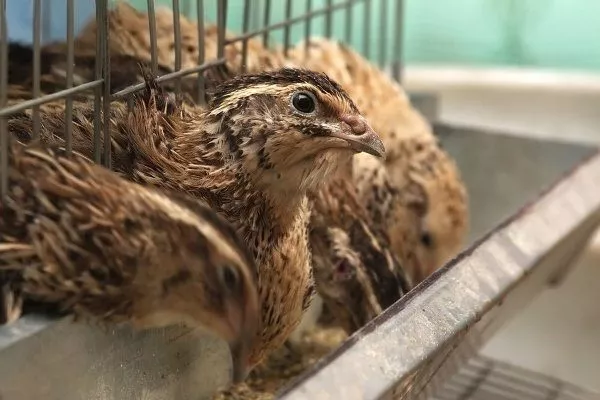
Keeping quails in an apartment is possible, but you'll face a number of challenges. If you don't provide the necessary conditions, the bird will weaken and lay eggs infrequently, and the cage will develop an unpleasant odor.
In a cramped structure, the quail will not feel comfortable, and the bird will develop health problems. Many diseasesThe diseases that quail suffer from are also dangerous to humans. Therefore, when keeping this species in an apartment, care must be taken to ensure they are not disturbed.
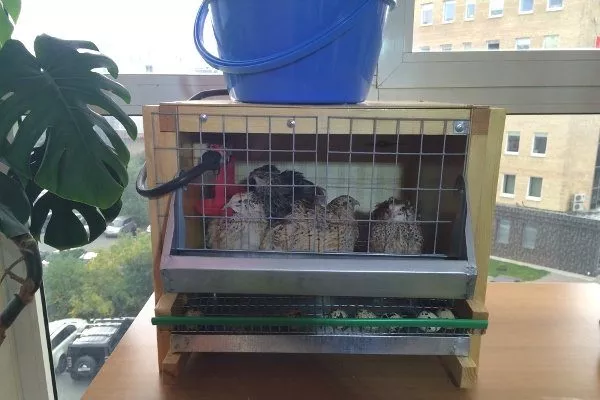
Quail are an easy-to-care-for bird. However, without proper knowledge, it's difficult to provide suitable conditions. A standard apartment temperature is suitable for quail. The key differences are their feeding schedule and the need for sufficient light.
Inexperienced people often make the mistake of thinking that quail are a source of dirt and noise. For example, the Japanese subspecies is known as the "mute quail" because members of this species rarely make any sounds.
Dirt and odor are eliminated by daily cleaning and the use of sawdust to absorb moisture.
How to choose quails?
Quail is divided into four categories depending on its purpose:
- egg;
- meat;
- meat and egg;
- decorative.
The egg and meat-egg categories of quail are virtually identical, producing similar amounts of meat and eggs. Significant differences are observed when birds are raised commercially on a large scale.
The best poultry breeds
Quail are most often kept for egg production. The most popular quail breeds used for this purpose include:
- Japanese – During the year, one individual produces about 300 eggs.
- English Black – the annual egg production rate for one individual does not exceed 280 pieces.
- English white – differs from the English black quail only in its plumage.
- Marble – a mutated variety of Japanese quail, capable of producing up to 300 eggs per year.
- Kaitaverse – Estonian quail, which can produce about 310 eggs per year.
| Breed | Annual egg norm |
|---|---|
| Japanese | 300 |
| English Black | 280 |
| English white | 280 |
| Marble | 300 |
| Kaitaverse | 310 |
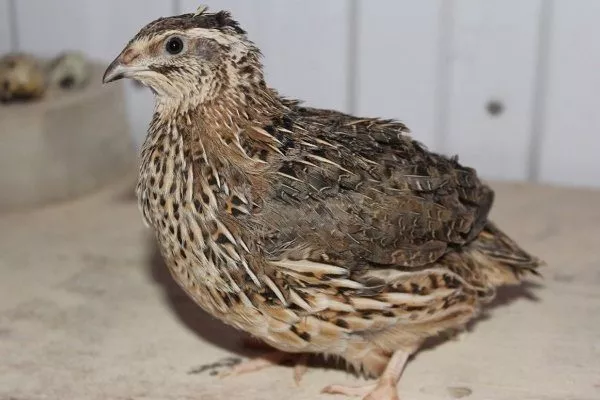
Japanese quail
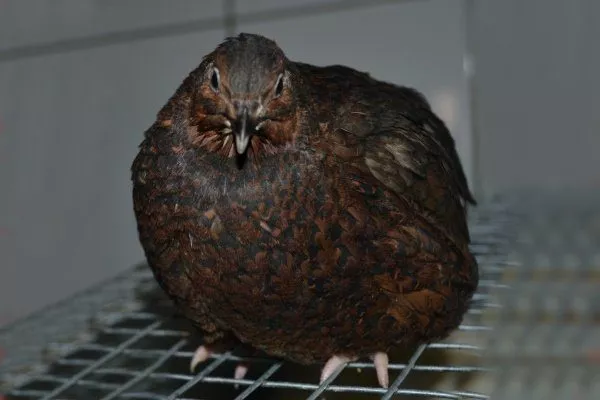
English Black Quail
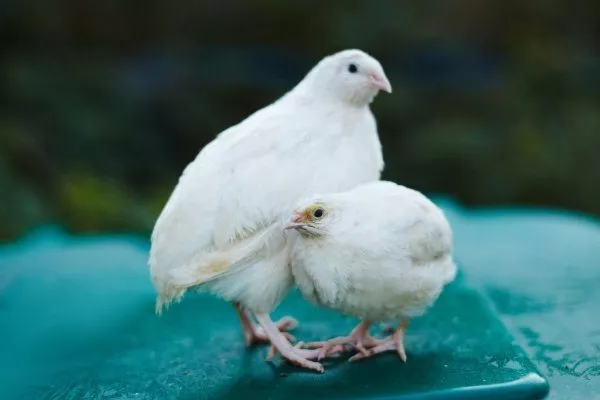
English White Quail
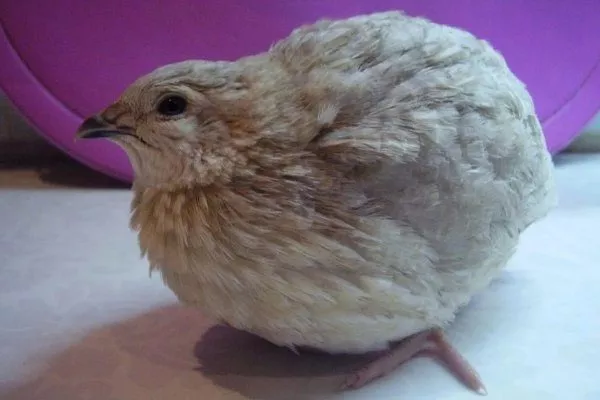
Marbled quail
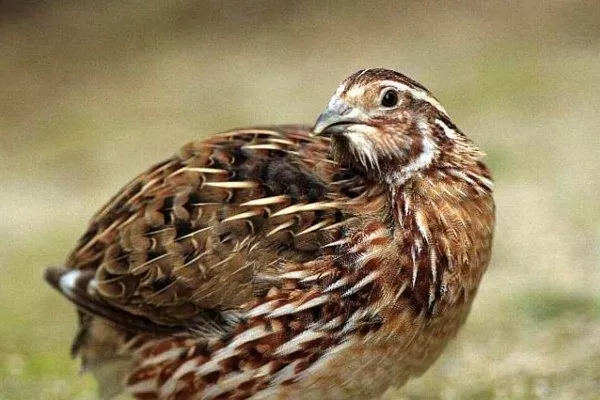
Quail Kaitavers
For egg production, Japanese quail are the best choice. However, this species is poor at hatching eggs, making them unsuitable for breeding. English quail are recommended for this purpose. Kitavers can also be bred for eggs, but their disadvantage is their large size. They require more space and feed. Among meat breeds, only one species, the Pharaoh, stands out.
Selection criteria
Regardless of the purpose, the primary criterion when choosing a bird is its health. A healthy bird has:
- even straight legs;
- whole claws;
- clear eyes without inflammation and disease.
If birds are being purchased for breeding, the male must be larger than the female. Females of some quail species can reach 300 grams. Therefore, if a male weighs 150 grams, he should not be purchased. This is life-threatening for the male, as larger females may peck him to death. If a male has a large rump but a small tail, he is also not recommended. This indicates that the bird has become overweight and will not breed in this condition.
To save money, it's recommended to purchase chicks—this option is suitable for experienced poultry farmers. If you're inexperienced in keeping quail, you should buy month-old birds.
Differences between females and males
Quails reach sexual maturity at three weeks of age. Before this time, primary characteristics cannot distinguish males from females. Early in life, males are less active than females. However, this method does not provide a 100% guarantee of sex determination.
If you need to distinguish between a male and a female, you should pay attention to the color of the head and chest:
- In males the head is almost always darker than in females, and the spots on the chest are light and indistinct;
- in females, on the contrary, the color on the head is less distinct, and the spots on the chest stand out in a dark color;
- The beak of males is darker than that of females.
Differences can also be found in physical characteristics. Males have a powerful beak and head. Females weigh more but have a less graceful figure. For this reason, if breeding is planned, the male should be older than the females. Otherwise, the females will not recognize him.
Cell requirements
Quail should not be kept in cramped cages. They should be spacious and have a lock. Unsecured cages can easily allow birds to escape. Rectangular cages are preferred. Quail should not be allowed to roam freely around the house, as this can be dangerous for the birds, especially if you have pets.
After purchasing or making a cage, it is prepared for housing quails:
- there is a flooring underneath the cage;
- the walls of the cage are covered with plywood;
- The front of the cage is left without plywood to allow air to enter.
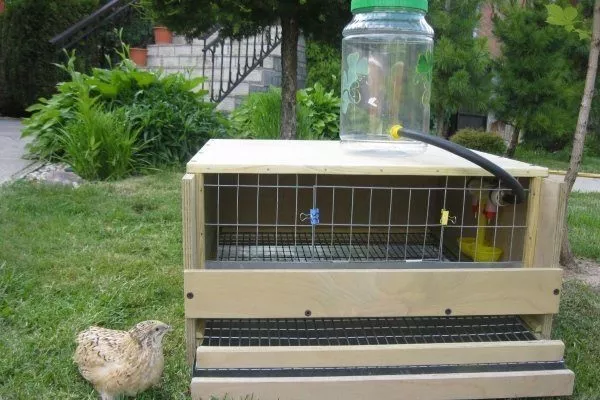
Read more, How to make a quail cage yourself.
The cage size is determined by the number of quails it will house. A cage with a floor area of one square meter can accommodate 50 quail. If the birds are given less space, they will lay fewer eggs. The cage height should not exceed 25 centimeters. It is recommended to use a soft fabric mesh for the top of the cage.
To protect the birds from drafts, the cages are placed 80 centimeters above the floor. The feeder and waterer are located in separate parts of the cage. A small box is placed in the cage for collecting eggs.
Boxes with ash and sand in the cage will help birds fight parasites.
Necessary equipment
In addition to cages, keeping quails in an apartment will require additional equipment, including:
- feeders (for automatic feeding it is recommended to use hopper models);
- drinking bowls (preference should be given to automatic devices);
- incubator (if necessary for breeding quail chicks);
- trays for collecting droppings under cages.
The equipment listed above can be purchased at specialty stores or made at home. However, making automatic waterers and feeders yourself is not possible. Any box filled with soft material will do for collecting eggs.
Conditions of detention
The room in which the cage or enclosure with quails is located must be equipped with:
- artificial lighting;
- heating system or heater;
- backup power supply;
- exhaust ventilation.
| Condition | Meaning |
|---|---|
| Temperature | +16 to +24°C |
| Humidity | 50-70% |
| Lighting | 16-18 hours |
Quail are afraid of loud noises. Therefore, if there is an airfield, road, or establishment with loud music nearby, the area containing the birds should be soundproofed.
Lighting
Depending on the species, quail should be provided with the required daily lighting duration. Japanese quail, for example, thrive with a 16-18 hour daylight period. Fluorescent lamps are used for artificial lighting. The lights are turned on at 6 a.m. and off at 11 p.m. This system can be omitted from early May until the end of August.
Temperature
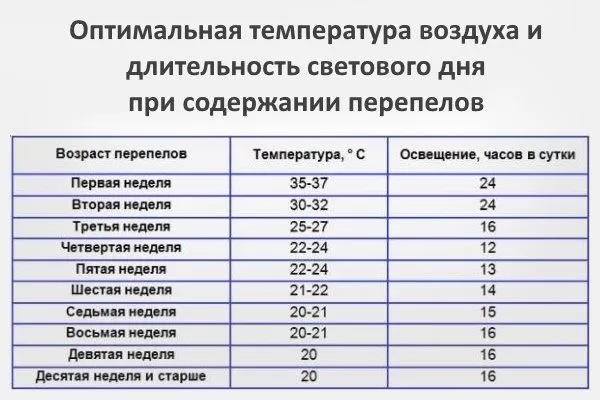
The minimum temperature at which quail can survive for a short time is 0 degrees Celsius.
To maintain egg production, birds should be kept in a room with a temperature of +16 to +24 degrees Celsius.
Crowned quail can thrive in temperatures as low as 10 degrees Celsius. The maximum temperature for laying eggs normally is 38 degrees Celsius, which is most often recorded in summer. However, in this case, a supply of fresh air is essential.
In Germany and the UK, many poultry farmers often keep quail without heat all year round. The birds survive in these conditions, but depending on the season, they stop laying eggs.
The ideal humidity level for raising quail is between 50% and 70%. Humidity is measured using a psychrometer. As the temperature rises, the humidity should also be increased. If suitable conditions are not achieved during the summer, the birds should be provided with sufficient water.
Feeding
The simplest and most effective way to feed quail is with a special purchased one. compound feed, containing the necessary elements. In this case, no additional supplements are required. If commercially available quail feed is unavailable, similar chicken feed can be used. It differs in that it has a lower protein content, which ensures high egg production.
Chicks
If using chicken feed, supplements containing crude protein are required. This component is found in:
- cottage cheese;
- fish;
- minced meat.
Specialized quail feed is 90% cheaper than parrot feed. If the temperature in the room where the birds are kept drops or the day lengthens, the portion size should be increased.
The daily requirement includes 2-4 feedings. If you have a hopper feeder, the amount of food in it will last for several days. To prevent spoilage, the food should be stored in a cool, dry place with minimal exposure to light.
Chicks can also be fed with mixtures. Making your own feed requires the following ingredients: grain, protein, meal, oilcake, vitamins, and microelements. The ingredients are loaded into a grain crusher. As the birds mature, it is recommended to produce this feed in pellet form.
Adult bird
When feeding quails yourself, you need to ensure that the basic diet includes:
- proteins;
- corn;
- vitamins;
- mineral components;
- water.
The use of crushed shells is also allowed.
To ensure good egg production, a quarter of an adult female's diet should consist of crude protein. In Japan, it's common to feed quail a mixture of rice and fish scraps. These ingredients are mixed in equal parts and then presented to the birds. To prevent parasites, the fish should be boiled first. To increase the vitamin content of the feed, greens are added. These can be used indefinitely.
The quail cage must have clean water. It must be changed 1 to 2 times per day. The water containers must be washed.
Feeding quails should be based on the following principle:
- in the morning: from millet, boiled fish and chopped greens;
- for lunch: wheat bran, grain mixture and grated carrots;
- in the evening: from millet, wheat, corn, boiled fish and chopped greens.
The largest portion is the evening feed. Feeders can be made of any material except wood. Salt is dangerous to quail, so its use in feeding the birds is prohibited.
Peculiarities of breeding in an apartment
Quails have a weak incubation instinct. To raise chicks at home, you need to purchase an incubator. This equipment is available at hardware stores and comes in a variety of capacities.
Incubation
It's quite difficult to find incubators specifically designed for quail eggs. Therefore, chicken incubators can be used for this purpose. A device that can hold up to twenty chicken eggs can accommodate eighty quail eggs.
When using an incubator, a number of features should be taken into account:
- For incubation, you can use eggs that are less than one week old;
- the heating of the eggs is distributed unevenly, and the difference can be half a degree Celsius, so it is necessary to periodically change their position;
- The average incubation period is about 2.5 weeks.
- Use eggs that are up to one week old.
- Periodically change the position of the eggs to ensure even heating.
- Maintain temperature depending on the week of incubation.
During the incubation period, the temperature is adjusted depending on the week the eggs are in the incubator:
- the first week and a half – +38.5 degrees Celsius;
- until the last week – +38 degrees Celsius;
- before the end of the incubation period – +37.5 degrees.
Once the incubation period is complete, the chicks gradually begin to hatch. If the eggs selected were approximately the same age, the process will occur simultaneously, with a maximum of five hours between them.
More about quail incubation read here.
Keeping chickens
After birth, the chicks quickly become covered in down. They should be kept in brooders—special boxes for raising chicks. The room where the newborn birds are kept is maintained at a temperature of approximately 35 degrees Celsius (95 degrees Fahrenheit) with 24-hour lighting. When the chicks reach one month of age, the temperature is reduced to 26 degrees Celsius (80 degrees Fahrenheit), and the daily light requirement is reduced to 18 hours or less.
To ensure maximum chick survival, they need to be fed high-quality nutrition containing vitamins, minerals, and protein immediately after hatching. You can provide the required amount of nutrients by purchasing commercial chick feed.
You can learn more about how to properly incubate quail eggs at home by watching this video:
Keeping and breeding quail is a labor-intensive process. But with knowledge of the technology and specifics, you can gain practical experience that will make this task a breeze. Keeping quail will ensure a constant supply of fresh eggs and, if necessary, meat.