
Quails are among the most undemanding poultry, with a robust immune system capable of resisting many avian diseases. For this reason, they are popular with farmers and breeders. Most quail diseases arise primarily from poor housing conditions and an improperly selected diet, but infectious diseases are also possible.
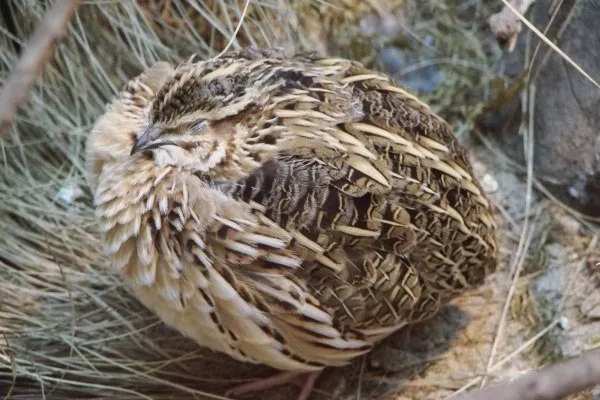
Infectious diseases of quails and their treatment
Conjunctivitis
An inflammation of the mucous membrane of the eye and respiratory tract. It is one of the most common diseases in poultry. It is caused by poisoning with ammonia gases or medications.
The first symptoms are noticeable to the naked eye: young birds slow down in growth and become more lethargic. White discharge sticks to the eyelids and dries on the feathers and skin around the eyes, forming a thick crust.
First and foremost, ensure there's sufficient space for the birds and adequate ventilation in the coop. Sick birds should be temporarily moved to open-air aviaries. If the disease progresses, consult a veterinarian to prescribe medication.
Newcastle disease (or pseudoplague)
It can be transmitted from birds to humans, causing eye diseases. Causes of pseudoplague include: eating uncooked food, droppings from other birds, sick pets, and improper housing.
The disease occurs in two forms: symptomatic and asymptomatic. In the former case, the bird exhibits general weakness and malaise, greenish droppings with blood clots and streaks, and a foul odor from the beak. Other symptoms may include seizures, numbness in the legs, and an abnormal head position. Asymptomatic birds exhibit no symptoms, but the virus can be present in the blood.
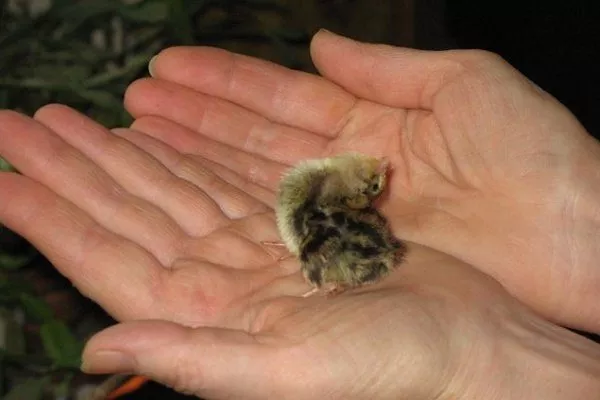
Newcastle disease: chick throws head back
If symptoms of pseudoplague are detected, attempting to treat birds on your own is strictly prohibited, as this could transmit the virus to humans. Consult a veterinarian, who will prescribe a detailed treatment plan, including antibiotics.
Prevention of pseudoplague involves following proper housing standards: keeping the pens large enough so that the quail are not crowded, cleaning the poultry house regularly while wearing protective clothing, and avoiding contact with other poultry.
Orynthosis, or bird flu
This is another infectious disease that affects both birds and humans. In humans, the disease manifests itself as difficulty breathing, pneumonia, and enlargement of the liver and spleen.
Symptoms of illness in quail include seizures, ruffled and soiled feathers, and loss of appetite. Birds exhibiting these symptoms should be isolated away from healthy birds, a veterinarian should be called, and the sick bird should be given a supplement of essential vitamins and minerals.
Helminthiasis
A disease characterized by the presence of parasites in the respiratory tract. It is transmitted from sick to healthy individuals through shared drinking water.
Symptoms include: the appearance of coughing in birds, difficulty breathing, shortness of breath.
To prevent the widespread spread of the disease in birds, the following measures must be taken:
- keep adult birds separate from young birds;
- keep the cages clean;
- each adult bird should be kept in a separate cage;
- When new birds appear, they need to be isolated from the rest for a month.
Smallpox
It is a viral disease characterized by the appearance of a rash on the mucous membranes around the eyes, wart-like growths on the beak and eyelids, and chills.
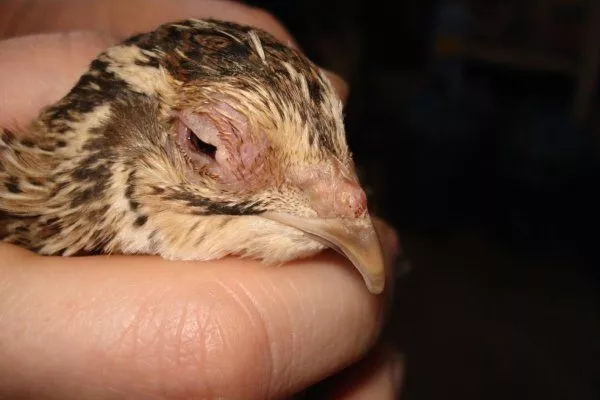
The disease must be treated with antibiotics, the feed must be enriched with vitamins A and B, and potassium iodide must be added to the water.
Salmonellosis
A disease affecting the gastrointestinal tract of birds, leading to intoxication. It is contagious to humans. It is caused by the pathogenic Salmonella bacterium, which does not form spores.
The main symptom of this disease in quail is loose stool. There is no effective treatment, so the birds are culled and the poultry house is disinfected.
Aspergillosis
It primarily affects young birds, while in adult birds the disease is latent. It is a form of fungal disease.
Symptoms of aspergillosis in quail include lethargy, increased drinking, labored breathing, and a blue tint to the beak and feet. Self-treatment is not recommended.
Colibacillosis
This disease is rare in quail, but when it occurs, it can affect the entire flock of young birds. The disease is caused by Escherichia coli.
Symptoms of colibacillosis can appear over a period of four months. These include an upset stomach, a blocked anus, and a bluish beak.
This disease can be treated with special antibiotics prescribed by a veterinarian. Adding acidophilus milk to the feed is also recommended. To completely eliminate the infection, it is advisable to thoroughly disinfect all areas, feeders, and equipment.
Feather eaters
Parasites that feed on dead skin cells, down, and feathers. They reproduce rapidly. These parasites cause discomfort and severe itching in birds, which can result in weight loss, decreased egg production, and frequent mortality among young.
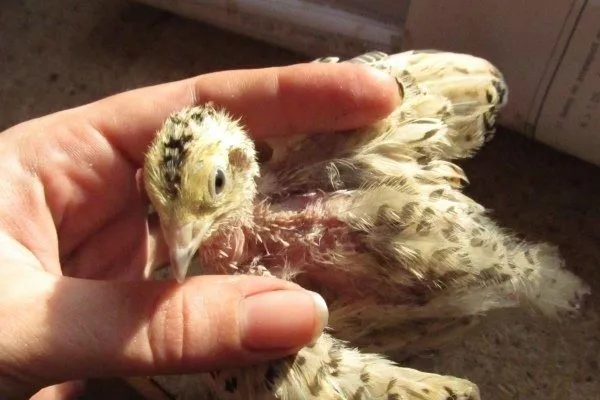
One method of combating parasites is to install an ash bath filled with dry sand and wood resin, along with sulfur powder. Cleaning the quail in this bath frees them from parasites.
Cholera (pasteurellosis)
Caused by the pathogenic bacterium Pastcurella multocida, the disease is characterized by blue beak and bloody diarrhea, but an asymptomatic form is also possible. A fatal season is inevitable.
Disease outbreaks are seasonal, caused by sudden cold snaps and temperature stress. To continue quail breeding, it is necessary to contact a veterinarian to disinfect the premises.
Pullorosis
Symptoms include lethargy, inactivity, whitish or greenish-brown mucus-laden droppings, and anus blockage. Birds affected by this condition tremble, lose balance, squeaking, and retreating to a corner of the cage.
If such symptoms appear, blood tests should be performed on the entire flock. The sick bird should be removed, and any birds that were in close contact with it should be quarantined. To completely eliminate any traces of the disease, a thorough disinfection of the premises and equipment is necessary.
Many avian diseases are dangerous not only for quail but also for humans. Therefore, if you suspect an infectious disease in birds, you should consult not only a veterinarian but also a general practitioner.
Quail diseases caused by poor nutrition and maintenance
Despite the many infectious diseases, quails often have immunity against them, which cannot be said about diseases caused by an unbalanced diet and improper living conditions.
Deficiency of a certain group of vitamins, hypovitaminosis
The most common problem. Symptoms include loss of appetite, ruffled feathers, drooping wings, and head tilt.
Hypovitaminosis develops with prolonged vitamin deficiency or improper use, leading to metabolic disorders in quail. Over time, a more severe form, avitaminosis, can develop. For treatment and prevention, vitamins and vitamin supplements are recommended, with an emphasis on vitamin-rich feed varieties.
An excess of vitamins and minerals can also lead to illness. Everything should be in moderation.
| Vitamin | Symptoms of deficiency | Norm per 1 kg of feed |
|---|---|---|
| A | Dry eyes, flaking skin | 12,000 IU |
| D3 | Rickets, soft shell | 2,000 IU |
| E | Muscular dystrophy | 25 mg |
| B2 | Curvature of the fingers | 4 mg |
| K | Hemorrhages | 1 mg |
Prolapse of the oviduct along with the egg
A fairly common occurrence, caused by improper feeding and poor housing conditions. Early egg laying with prolapsed oviducts is typical of young birds that transition to adult food before reaching reproductive age.
To prevent the occurrence and development of this problem among quail, it is recommended to add more green fodder to the daily feeding, and add yeast, meat and bone meal, or fish meal in small quantities to the feed.
Eggshell deformation
Eggshell structure can deteriorate due to insufficient calcium, vitamin D, and other minerals in the diet. In this case, the shell becomes more like a soft shell.
Calcium can be added to birds' bodies using chalk, crushed shells, or food supplements.
Cannibalism and egg pecking
A common problem among quail, this condition occurs when there is a high density of birds per square meter of the room, excessively bright light, and an unbalanced diet.
Cannibalism can be combated by expanding the quail enclosures, fencing off the most aggressive individuals, and adhering to feeding standards.
Rickets (vitamin D deficiency)
It primarily affects young birds and causes anemia, stunted growth, and abnormal skeletal development. Symptoms include softening of the beak and claws, deformities of the limbs and chest, and reduced mobility.
Adults typically experience reduced egg production, with eggs having thin or even no shells at all. If such eggs are placed in an incubator, the brood will develop rickets from the very first days.
Baldness (alopecia), or feather loss
This condition occurs with drafts and excessively dry conditions in the room. The head, neck, and back are the areas most affected by hair loss. Feathers lose their strength and break and fall out more often. Repairing the barn and adding yeast to the quail's feed can help.
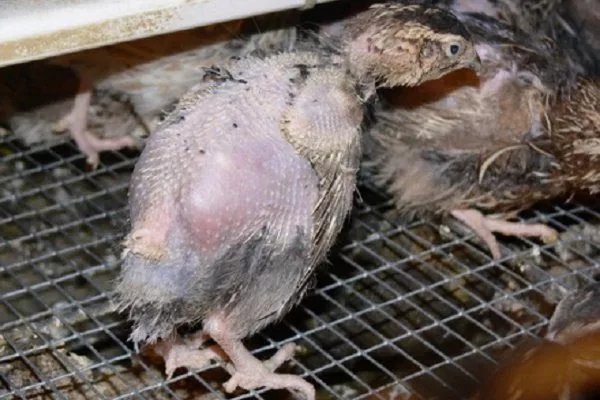
Goiter catarrh
It occurs when birds are fed low-quality feed. Symptoms include: a swollen crop, gray fluid leaking from the beak and nostrils, loss of appetite, and, in chronic cases, the development of a hanging crop.
You can treat this condition yourself by emptying the crop. To do this, turn the bird upside down and gently massage it from the crop to the beak. Repeat this several times, and then, for 24 hours, feed the bird only water with a hydrochloric acid solution. The next day, you can feed the quail soft milk feed.
Diarrhea
A fairly common occurrence, caused by poor feed quality. Adult quails stop laying eggs, gain weight, and produce a bluish-green stool.
Diarrhea can be treated by administering Furazolidone tablets to a glass of water. It is also recommended to switch to a higher-quality food.
Quail poisoning
Characterized by gastrointestinal upset, birds exhibit depression and increased thirst. In cases of poisoning, a flaxseed decoction with added vegetable oil can be given. For prevention, quail are recommended to be given chamomile infusion or antibiotics.
Quail diseases due to injuries and bruises
Quails are very timid and active birds, so they can often suddenly take flight when frightened or stressed. The fragile bones of their chest and limbs can break on the cage walls or during an awkward landing. Head injuries can cause internal bleeding and brain contusions.
In this case, the feathers around the damaged area are trimmed, and the wound is treated with iodine, a solution of potassium permanganate, or furacilin. A sterile bandage is applied. It's best to isolate the injured bird from other birds to prevent further injury and infection.
If you haven't witnessed a bird being injured, you might notice the problem this way: the quail moves slowly and unnaturally, has no appetite, and there are visible signs of bruising and inflammation.
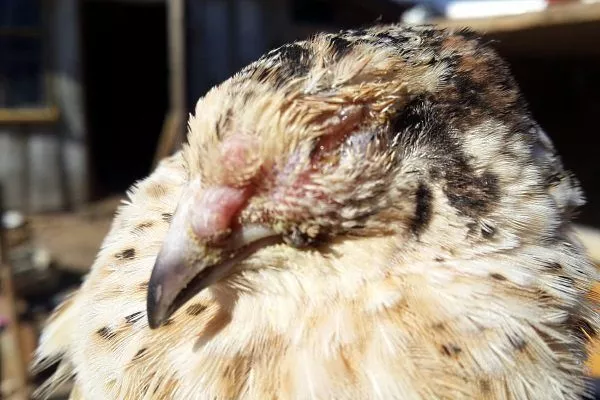
Eye injury in a quail
To reduce the risk of injury to birds, the following steps are recommended:
- Place walking pens and cages for quails at a distance from children's playgrounds and the location of other domestic animals;
- When carrying out construction work, it is better to move the quails to a quiet, remote place or cover them with an impermeable cloth;
- be careful when feeding and cleaning cages;
- the side and back walls of the cage should not be transparent;
- A nylon fishing net will protect the ceiling and help soften head impacts.
- Isolate the bird in a separate cage
- Stop the bleeding with a swab soaked in hydrogen peroxide
- Treat the wound with chlorhexidine
- Apply a sterile bandage
- Give vitamin C (50 mg/kg of weight)
- the height of the cage should not be more than 25 cm.
Trauma Action Plan
Methods of disease prevention
Many quail diseases can be prevented simply by observing the proper conditions and timely preventative measures:
- Maintaining a suitable temperature regime so that the birds do not languish from the heat and do not freeze.
- Maintaining proper lighting conditions will help prevent aggressive behavior.
- The rooms where the birds are kept must be spacious, well-ventilated, free of drafts, and cleaned regularly. The air should not be musty or dry.
- The daily diet of birds should contain all the necessary vitamins, minerals and green food in the appropriate dosage.
- Keep the water in the drinking bowls clean, change fresh water regularly, and disinfect the drinking bowl.
- Feeders and drinking bowls must be kept clean, and any food or droppings must be removed.
- Avoid any interaction with other pets and birds.
- Adults and young animals must be kept in separate pens and cages.
- When purchasing new birds, they should be quarantined for a month.
- There can only be one quail in one cage.
- Disinfect incubators and eggs with formalin steam before laying.
- Remove bird droppings daily.
- Monitor the quails' health, noting any changes in their appearance and behavior. If there is any suspicion, isolate sick individuals in a separate room.
- If a dead bird is found, place the body in a bag and send it to a veterinary clinic for examination. This procedure will help determine whether the bird died from an infection and whether there is a risk to the rest of the brood.
- At least once a week, treat equipment, feeders and waterers with a 0.5% formalin solution.
Watch a video about the common signs of sick quail and measures to prevent bird diseases:
By following all recommendations, quail diseases will be minimized or even completely avoided. The main rules for keeping quail are sufficient space, cleanliness, high-quality feed, and monitoring their health. These rules will not only help protect the brood but also ensure the safety of you and your family.