
The Manchurian quail is a golden-colored bird, attractive for its appearance, high productivity, and calm disposition. Quail are bred not only for the sale of meat and eggs, but also for personal enjoyment. This article discusses the care, breeding, and feeding of quail.
Description and characteristics of the breed
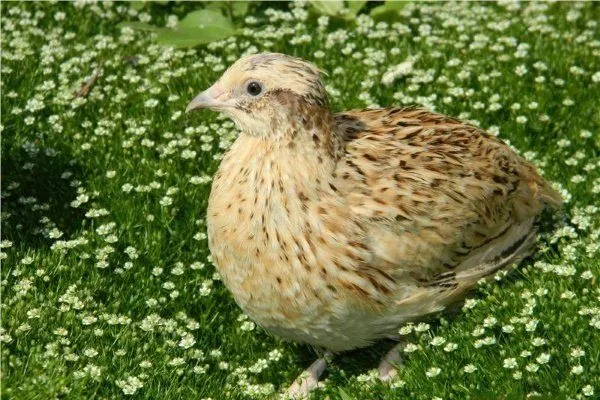
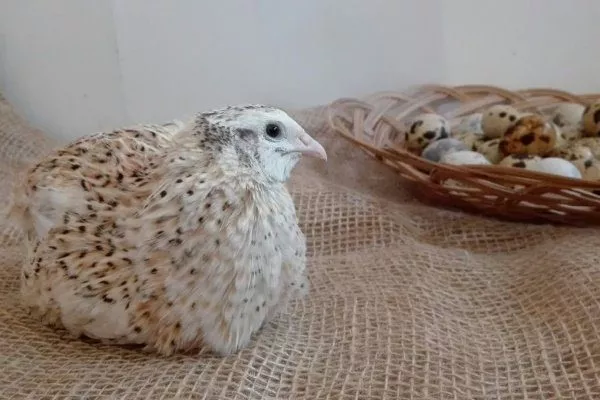
The Manchurian quail is predominantly golden in color, with a distinct mask on the male. These birds are popular for breeding as ornamental birds, as they are in no way inferior in appearance to any exotic breed. However, they don't require as much attention.
These animals often have a duller coloration, albeit with a pleasant yellow hue. Manchurians are small birds, but several times heavier than their wild ancestors. Females are slightly larger than males, but it's unlikely that a hen will be fattened to more than 200 grams.
Compared to the Texas broiler quail, Manchurian quail seem downright tiny. Texas quail can weigh almost 500 grams. Crossing these quail with Manchurian quail creates a charming crossbreed.
Temperament of quails
These birds are quite impulsive and capricious. Even at a young age, the largest female becomes the leader among the other birds. She is the one who lays the first egg, which is usually the largest, and the egg-laying period is the longest. The female will not allow weaker birds to approach the feeder; sometimes she will even peck at her own kind. Before laying an egg, the hen makes loud squeaks and throws her head back during the laying process.
Manchurian quails are quite timid. As soon as any external stimulus appears, they begin to frantically dart about, trying to take flight. When excited, they stretch their bodies, and their feathers become excessively smooth. Peaceful birds do not attempt to escape from an open cage.
When fully sated, the birds doze peacefully, tucked away in a cozy shaded spot. They sleep lying down, stretched out on the floor. Quail are social creatures: loneliness negatively impacts their mood and well-being. When the owner turns on the light in the morning, the males, eager to demonstrate their importance, begin to dart around the females. If the balance of the females in the cage is disrupted, the males begin to trample each other.
Differences between male and female
Males and females of this species differ in several external and behavioral characteristics. The following are highlighted:
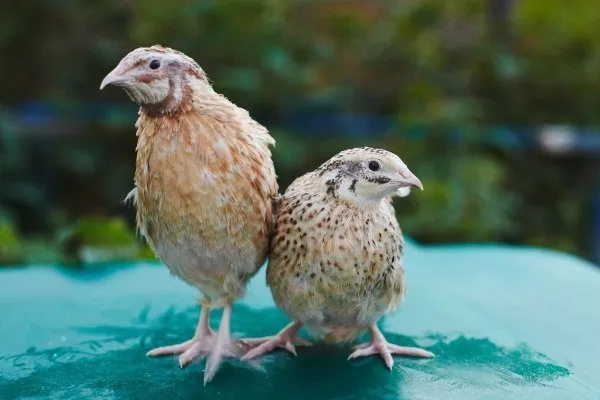
- Color. Males have a more saturated color than females.
- Cloacal gland. Starting at one month, with the onset of puberty, males are easy to identify. Press on the gland, which resembles a small bump in the cloaca area. When pressed, males produce a distinctive foamy fluid. Another clue is that the male's cloaca is slightly larger than that of the female.
- Neck extension. At three weeks of age, males begin to emit a characteristic squeak, while stretching their necks.
- A bead on the chest. Males lack black markings on their chests, while females do. In extremely rare cases, the markings may not appear at all.
- Number of variegated spots. In general, the female has more bright spots in her coloring.
- Mask on the head. Only on the crown of the male's head is there a characteristic striped colored spot.
Productivity of Manchurian quail
The productivity of domestic quail is the most important indicator for a breeder to determine the right breed. As for Manchurian quail, their productivity requires a more detailed examination:
- Females begin to lay their first eggs already at 5 weeks of age.
- The eggs are slightly larger in size than those of other quail varieties, about 15 g.
- Females produce 200-220 eggs per year.
- The weight of females reaches up to 300 g with good fattening, and the weight of males does not exceed 260 g already at 6 weeks of age.
- The birds are distinguished by their non-dark carcass, which gives them an attractive commercial appearance.
| Indicator | Manchurian | Japanese | Texas |
|---|---|---|---|
| Average weight of a female | 200-300 g | 120-150 g | 350-500 g |
| Egg production (pieces/year) | 220 | 300 | 200 |
| Egg weight | 15-16 g | 9-11 g | 12-14 g |
| Age of onset of laying | 45 days | 40 days | 50 days |
| Feed conversion (kg/kg gain) | 3.2 | 2.8 | 3.8 |
Manchurian quails have tasty, tender, dietary meat.
There are two varieties of quail: wild and domestic. They differ significantly:
| Domestic specimen | Wild specimen | ||||
| Live weight of the male | Total | Commodity | Live weight of the male | Total | Commodity |
| 270 g | 190 g | 140 g | 90 g | ||
| Live weight of the female | 300 g | 250 g | Live weight of the female | 150 g | 100 g |
| Egg production | 220 pieces per year (less often – 280 eggs during the year) | Egg production | 220 eggs per year | ||
| Egg weight | 16 g | Egg weight | 14 g | ||
Home care
Breeding quail in Russia is challenging due to the cold northern climate and harsh winters across virtually the entire country. Manchurian quail are warm-loving birds, unlike some chicken breeds that adapt well to Russian winters. When raising quail on a backyard farm, it's important to understand that feed costs will be higher than those of commercial quail farming.
To ensure proper maintenance and successful growth of birds, it is necessary to create favorable conditions for them.
Premises
The location of the farm doesn't matter. Proper arrangement of the premises is crucial. A suitable location for quail breeding is a country house or an insulated barn with sufficient space for unimpeded movement.
Cell
A breeder should take into account the active nature of these birds. Songbird cages or terrariums are the best starting point for keeping them. Six adult birds are recommended for every 30 square meters.
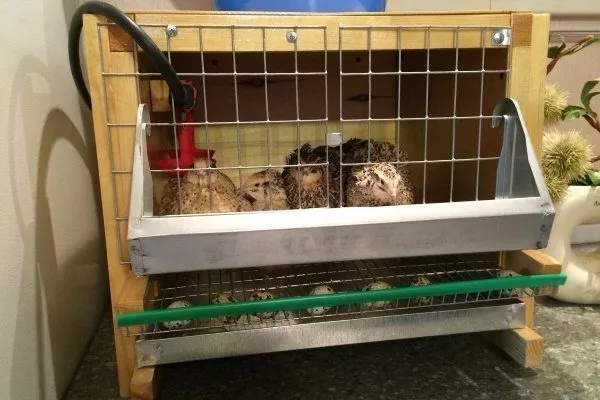
It is written about how to build a cage for quails with your own hands here.
Paper must be laid on the bottom of the cages and removed daily to remove droppings. The birds prefer sand, which provides a comfortable resting surface. If healthy young are to be raised, the stocking density should be reduced. Therefore, the more birds there are per square meter, the greater the chance of mating. Nesting is not necessary; hens prefer to lay their eggs directly on the floor.
Temperature conditions
The room temperature should be maintained at 20-22 degrees Celsius. An acceptable range is 18-25 degrees Celsius. If the temperature drops below the recommended level, the hen may stop laying eggs. It's best to avoid temperature fluctuations, as this can cause the quail to try to force their way to the center of the cage, crowding other birds.
Ventilation
The main requirements are a warm, dry room and fresh air, regardless of whether there are windows. Birds have active metabolisms, so they especially need constant cooling, which can be achieved by providing a well-ventilated room rather than cold air.
If your birds start losing feathers, it's a sign of drafts in the room. Wind negatively impacts their plumage and well-being: birds lose most of their feathers and their egg production decreases. Therefore, it's preferable to breed birds indoors without windows.
Lighting
One of the key factors in ensuring high egg production is the length of daylight. If there are windows in the room, bright light should not penetrate, as the birds react negatively to it. You can cover them with thick curtains or paint them.
Standard 40-50W bulbs are considered the most optimal option for cage lighting. To ensure high-quality hatching eggs, the room should be illuminated for 17 hours. Lights should be turned on and off at the same time every day according to a schedule.
Humidity
Humidity levels should not fall below 55%. In low humidity conditions, quail begin to drink a lot of fluids and practically refuse to eat, which negatively impacts not only their plumage but also their egg production. If quail notice stiff and ruffled feathers, breeders should provide containers for natural evaporation, thereby increasing the humidity.
Exceeding 75% is also undesirable. The most acceptable humidity level for quail is considered to be 60%.
Industrial content
In addition to keeping Manchurian quail as pets, breeders raise them for the sale of their meat and eggs. This type of farming is no different from raising chickens for both egg and meat production.
The density of quail per square meter depends on the size of the birds. While chickens typically have a density of 5-6 birds per square meter, quail numbers can exceed 50. Golden quail are slightly larger than their egg-laying counterparts, so it's recommended to limit their numbers to 50 birds per square meter. The height of the cage shouldn't be much higher than the quail itself.
The advantage of this breed is that the quail carcass attracts buyers, as the light-colored feather stumps are not noticeable against the plucked skin. And the light-colored meat doesn't deter inexperienced consumers. Dark-colored quail breeds, after plucking, have predominantly black feather stumps and a blackish tint around the belly. This doesn't add to the appetite.
When raising quail for meat production, there's no need to separate males from females. To produce edible quail eggs, females must be separated from males and fed a special feed. The other requirements are the same as for raising quail for meat production.
Feeding
Annual feeding plan
- January-March: compound feed PK-1 + sprouted wheat (20% of volume)
- April-June: transition to PC-2 with the addition of fresh herbs (up to 30%)
- July-September: PC-2 + vegetable waste (carrots, cabbage, beets)
- October-December: PC-1 + vitamin premixes (3% of feed weight)
The basis of the diet for golden quails is considered to be grain mixtures containing wheat, crushed corn, millet, or barley. To increase performance egg production It is advisable to give birds green food: nettles, clover, green onions, etc.
The diet should definitely include succulent, mashed vegetables such as potatoes, cabbage, beets, and carrots. These foods promote rapid weight gain. It's also important to ensure there's plenty of warm water in the water bowl, changing it every 48 hours.
A mandatory requirement is to provide separate feeders for mineral feed, dividing them into sections. Crushed shells, chalk, and gravel are added to these sections on a regular basis.
Since birth
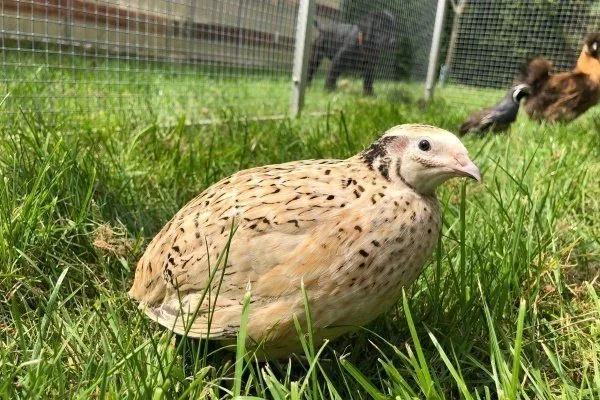
From the moment they hatch, chicks need vitamins and minerals. High-quality compound feed containing a variety of nutrients is recommended for young birds.
The chicks are fed according to a specific schedule:
| Period | What to feed |
| From 4th day | Introduce finely crushed corn grits, cottage cheese and complete compound feed for chicks into the feed. |
| From day 8 to day 20 | The diet consists solely of compound feed. The addition of greens, meat scraps, and carrots is permitted. |
| From the 20th day | Feed the chicks in the same way as the adults. |
All food is given to the birds fresh and in small quantities. To prepare the feed, all large and hard pieces are finely chopped. By 2.5 months, the young birds have completed their growth and begin sexual maturity. Most hens begin laying eggs at 45 days of age.
Feed the quails Water from vacuum-sealed drinkers is required, but they shouldn't be deep or wide—the chicks could drown in them. Therefore, pebbles are placed at the bottom of the drinkers. Use boiled water.
During adolescence
To feed adult birds, the feeders and waterers are placed outside the cage. The birds poke their heads through the bars to feed. This method is economical. Adult birds should be fed three times a day, using 30 g per bird.
The best diet for hens is a balanced laying feed. Occasionally, grain, greens, fruit, and garden scraps can be added to the grain. Crushed shells, sand, chalk, and boiled fish should be included in the diet. It's important not to overfeed the birds, as obesity in hens can lead to decreased egg production.
In winter
During the cold season, the usual diet should be supplemented with sprouted wheat or green onions. These foods help strengthen the bird's body, as they contain a large amount of minerals.
Starting in summer, it's recommended to stock up on dried herbs, which are an excellent source of vitamins. Clover, nettles, and alfalfa are preferred. Feed the birds daily with grated carrots, cabbage leaves, or potatoes.
In summer
Summer is considered less expensive due to the lush greenery growing in the garden. During this time, golden quail should be fed spinach, lettuce, or beetroot. It's a good idea to occasionally feed them earthworms.
To obtain meat
When the birds reach two months of age, they are separated by sex. Males and culled females are housed separately and fattened to produce meaty carcasses.
Birds are fattened in a separate room, where the temperature is set at 22 degrees Celsius and the lighting is dimmed. Birds fattened for meat follow a different feeding schedule:
- Feed quails large portions 4 times;
- feed the birds green food in the first half of the day;
- Give grain scraps in the evening.
The fattening period lasts approximately two months. Slaughter can begin once the birds have reached the required body weight. Before slaughter, do not feed the quail for six hours, leaving only water in the drinking bowls.
Breeding Manchurian quails
Keeping Manchurian quail is important, but without breeding, the farm will be of little benefit. It's important to know the factors that will allow you to effectively increase your quail population while raising them:
Pairing
Future parents should be between 2 and 8 months old. Younger or older birds have low fertility rates. The best solution is to use quail from different broods for mating to avoid inbreeding.
To obtain high-quality hatching eggs, one male and three to four females are placed in a specially designated mating cage. The resulting eggs should be stored at 12 degrees Celsius for five to seven days, turning them every two days.
Incubation
Before placing eggs in the incubator, the breeder carefully inspects them: any rounded, oblong, damaged, too light or dark, or those with thick shells or limescale are discarded. The eggs are placed in the incubator with the blunt ends facing up.
Particular attention is paid to the temperature and humidity that are maintained in the incubator at different periods:
- 12 days: temperature – 37.7 degrees; humidity – 55-60%;
- Day 13-15: temperature – 37.2 degrees; humidity – 50%;
- Day 16 and until chicks hatch: temperature – 37 degrees; humidity – 70%.
| Parameter | Days 1-5 | Days 6-12 | Day 13-15 | Day 16-18 |
|---|---|---|---|---|
| Temperature | 37.8°C | 37.7°C | 37.2°C | 37.0°C |
| Humidity | 60% | 55% | 50% | 70% |
| Egg turning | 6 times a day | 4 times a day | 2 times a day | Do not turn |
| Ventilation | Closed | Open at 25% | Open at 50% | 75% open |
Read more about incubating quail eggs Here.
Growing
During the first day, it's especially important to protect the chicks from any sources of cold or drafts. When the chicks are seven days old, they are moved to a cage with a temperature of approximately 36 degrees Celsius (98.6 degrees Fahrenheit). Each subsequent week, the temperature is lowered by 4-5 degrees Celsius (4-5 degrees Fahrenheit). Then, keep the chicks in the same conditions as the adult birds.
For feeding Manchurian quail, it's best to use special broiler feed. Boiled, finely chopped eggs are also helpful. Add potassium permanganate to the water for the first three days, then simply give it plain water.
Read about the types of feed for quails and the correct feeding of the bird. Here.
Quail diseases
Quails are easy-to-care-for birds. However, if they don't have suitable living conditions, they can become ill. The most common quail diseases are:
Infectious diseases
Contagious diseases are considered the most dangerous for quail. The most common diseases are:
- Pseudoplague. This may be accompanied by green droppings with bloody discharge, an unpleasant odor from the beak, and immobility. The virus may also be present in the quail's blood but not cause any symptoms. There are also milder symptoms, including frequent seizures, numbness in the limbs, and an abnormal positioning of the neck and head.
This disease cannot be treated on its own, as the virus can be transmitted from birds to the breeder. A veterinarian can treat the animals using strong antibiotics. - Ornithosis. Birds exhibit ruffled feathers, dirty skin, and severe convulsions, sometimes leading to death. If these symptoms of ornithosis are detected, prompt treatment is essential. First and foremost, each sick bird should receive a full complement of essential vitamins. Furthermore, the breeder must isolate the sick bird.
- Helminthiasis. A contagious disease in which parasites develop in the trachea, causing difficulty breathing in birds. Helminthiasis is also accompanied by coughing and severe shortness of breath. Treatment should only be performed after examination by a veterinarian.
- Aspergillosis. An equally serious disease for Manchurian quail is the fungal infection aspergillosis. Adults may show no symptoms, but young birds may experience the following symptoms: general weakness, intense thirst, difficulty breathing, and bluish discoloration of the feet and beak.
Treatment of this disease is only possible by a veterinarian who uses effective medications, usually the antibiotic Hepatonic. - Pasteurellosis. Another name for pasteurellosis is "fowl cholera." The disease typically develops rapidly, first affecting the liver, then disrupting metabolism, and finally leading to sepsis. There is no treatment for the disease.
Read more about quail diseases here.
How much does it cost and where can I buy it?
Prices for Manchurian quail in Russia vary up to 200 rubles per adult.
In any case, the cost of the bird depends on its age:
- daily quails – 25 rubles;
- weekly quails – 35 rubles;
- 21-day-old quail – 60 rubles;
- Monthly quails – 75 rubles.
You can purchase Manchurian quail from trusted breeders who have been breeding birds for many years and can guarantee high quality.
Shipping
Once the chicks reach two weeks of age, they can be transported. For this purpose, the chicks are placed in cardboard boxes with pre-drilled ventilation holes. It's important to consider their energy exchange, as the birds themselves and the air around them quickly heat up. It's important to ensure the birds always have access to water. If long-distance transport is necessary, be sure to avoid exposing the young quail to risk. Transporting them in this case is only suitable for adults at least two months old.
Experienced poultry farmers do not recommend handling birds frequently, as they are very sensitive to human contact and experience pain.
Advantages and disadvantages of poultry
The breed's main advantages include the rapid turnover of funds in this business. The time from purchasing young birds to receiving profit from the sale of meat and eggs from adult birds is minimal. Furthermore, breeders don't spend much on feeding and maintaining Manchurian quail.
The breed also has other advantages:
- The average weight of a bird is 150 g. Quails carefully selected for incubation can gain weight up to 300 g.
- Quail eggs weigh approximately 15-16 g, which is significantly heavier than those of other breeds. For example, Japanese quail eggs weigh only 11 g.
- Thanks to their golden plumage, Manchurians are attractive due to their external characteristics and are therefore more valuable.
- Birds have increased resistance to many diseases.
- Quails have an excellent appetite and are not picky eaters.
The disadvantages include the following points:
- Quails are of average weight, so restaurants and butcher shops are reluctant to buy them.
- The breed is notable for its low egg production. On average, one quail lays about 220 eggs per year. However, with proper care and a balanced diet, egg production can reach 280 eggs.
Farmers' reviews
Bird breeders speak positively of Manchurian quails:
Manchurian quails are unique birds, captivating with their striking golden plumage, low cost of ownership, and simple care. The key is to ensure they don't overfeed, are always well-watered, and are kept clean. Only under the right conditions will they be able to raise high-quality birds for sale as carcasses and eggs.