
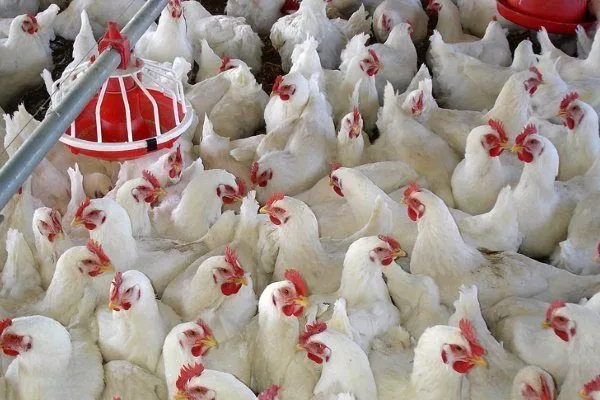
Broiler chickens are a meat-producing breed of poultry characterized by their genetically determined rapid weight gain with relatively low feed costs. By two months of age, broilers reach a weight of 2 kg or more. They are raised exclusively for meat production, as they lay few eggs.
General characteristics of the breed
Broilers are a breed of chicken that is a hybrid of meat-oriented individuals.
When discussing this variety, it's worth noting that using the word "breed" when referring to broilers is not entirely accurate. This term refers to a meat-oriented hybrid and can be used to describe not only chickens but also geese, ducks, and rabbits. A hybrid is created by crossing different breeds.
Chicken varieties obtained this way inherit the best qualities from their parents. Thanks to crossbreeding, broiler chickens develop rapidly and are ready for slaughter as early as 50 days old. Broilers older than 50 days become less profitable: the costs of their maintenance and feed are not justified, as they stop gaining weight at this age.
To produce broilers, breeders cross two meat-producing chicken breeds: the White Cornish and the White Plymouth Rock. The resulting broilers are then crossed with members of the White Cornish breed.
The main characteristic of hybrid chickens is their rapid weight gain. A chick can gain 30 to 80 grams in a single day.
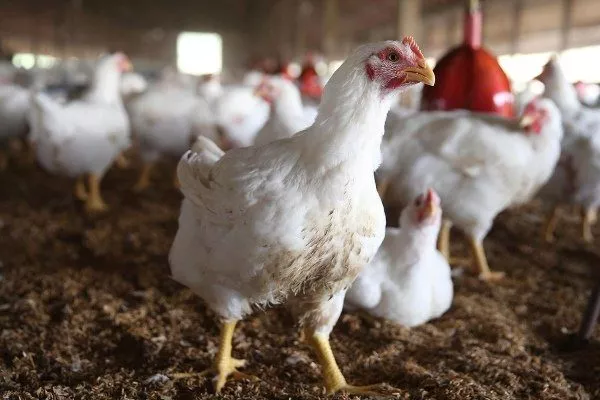
Broilers have broad breasts and strong legs. Their wings are small and their plumage is white. Hybrid chickens have a yellowish tint or are completely yellow.
Hybrid individuals are not able to pass on their characteristics to their offspring.
Advantages and disadvantages of broiler farming
Breeders often acquire broiler chickens for business purposes. The rapid production of good-tasting poultry meat makes broiler farming particularly profitable.
The advantages of such an activity include the following:
- high productivity – fast growth and weight gain: at 6 weeks of growth, the broiler reaches 2-2.5 kg, after 50 days the body weight of the chicken is up to 3 kg, the rooster – up to 5 kg;
- the birds are undemanding to the conditions of keeping;
- high survival rate – this figure is 94-98%;
- the opportunity to get a meaty breast and massive legs;
- 100% guaranteed sales of products;
- the best ratio of feed input and final output.
The disadvantages of the broiler farming business include the following:
- the need for constant feeding;
- the need for careful selection of high-quality feed, since otherwise the risk of death and the development of various diseases increases;
- constant control over temperature and humidity levels in the chicken coop;
- the inability to independently hatch full-fledged broiler chickens;
- the need to constantly provide birds with clean water at a certain temperature.
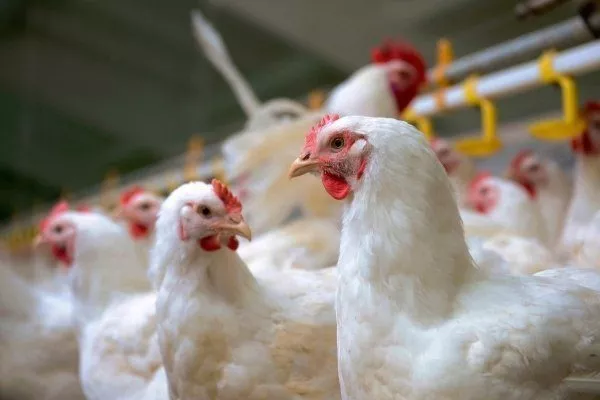
Broilers require high-quality feed and adequate living conditions, but the farmer quickly produces large quantities of high-quality products, making this type of business particularly profitable.
Breeds of broiler chickens
There are certain breeds of broiler chickens that are most often preferred for industrial farming:
| Breed | Average weight at 6 weeks, kg | Average weight at 50 days, kg | Egg production per season, pcs. |
|---|---|---|---|
| COBB-500 | 2 | 3 | Low |
| Competitor-3 | 2 | 3 | Good |
| ROSS 308 | 2.5 | 3.5 | Low |
| Hydro-6 | 1.5 | 2.5 | 160 |
| Shift 8 | 3 | 4 | Low |
| Broiler-M | 1.8 | 2.5 | 160 |
| Tricolor | 4 | 5 | 300 |
COBB-500
This is the most well-known variety of broiler chicken. Representatives of this breed are resistant to various diseases, and young birds demonstrate good survival rates. A distinctive feature of the COBB-500 broiler is its bright yellow skin color.
The meat of this breed is the most sought-after on the market. They have strong legs and a wide brisket. They are ready for slaughter at six weeks of age, weighing approximately 2 kg at this stage.
Competitor-3
These chickens are resistant to infections and exhibit good productivity. They have a broad chest and strong thighs and drumsticks. These broilers are also characterized by good egg production.
Representatives of the Konkurent-3 breed gain 50 grams of weight per day. Within six weeks, their weight increases to 2 kg or more.
ROSS 308
Representatives of this breed are short and have well-developed muscle mass. Their skin color is not pronounced, and their skin is pale. The birds have a fairly wide breast. After one month, a chick weighs 2.5 kg.
Hydro-6
Broilers can produce up to 160 eggs in 40 days. At 1.5 months, a chick reaches a weight of 1.5 kg. Each chick gains 30 to 80 g per day.
Shift 8
This broiler variety was developed in Russia. These chickens acclimate well and grow rapidly. They can be slaughtered at forty days. At this stage, their weight reaches 3 kg or more.
Broiler-M
These chickens are a hybrid of miniature chickens and other cockerel breeds. They have compact bodies and short legs.
Despite their small size, broilers of this breed lay large eggs, each weighing up to 60-65 g. Egg production is up to 160 eggs per season. At two months of age, the bird weighs 1.5-1.8 kg.
Tricolor
These broilers were bred in France. They have a distinctive coloration: their feathers are three different colors. Tricolors have large, wide bodies. Hens reach 4 kg, roosters up to 5 kg. A laying hen produces up to 300 eggs per season.
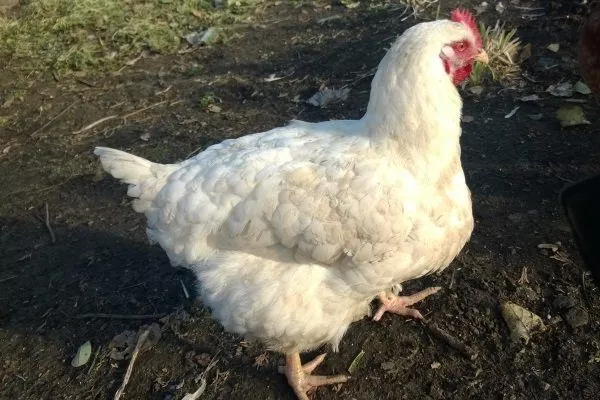
The KOBB-500 broiler chicken breed
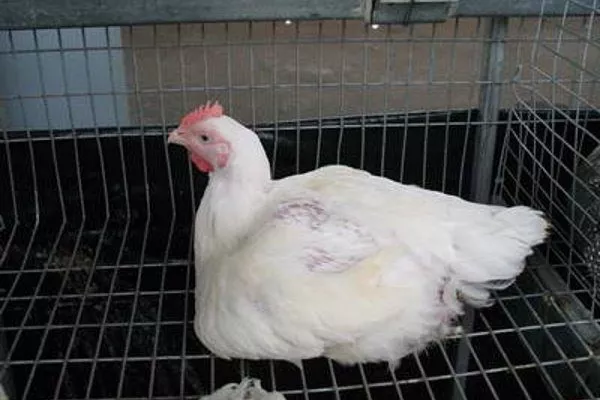
The "Konkurent-3" broiler chicken breed
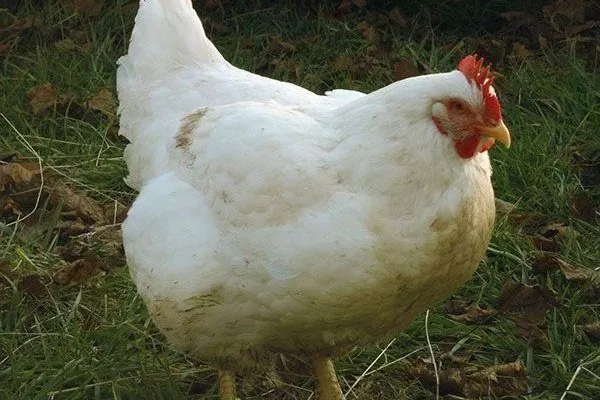
The ROSS 308 broiler chicken breed
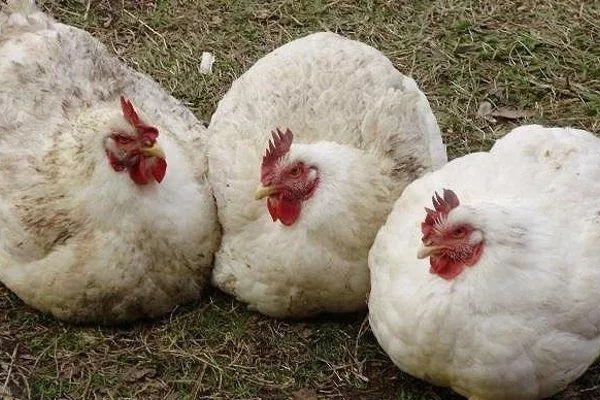
The Gibro-6 broiler chicken breed
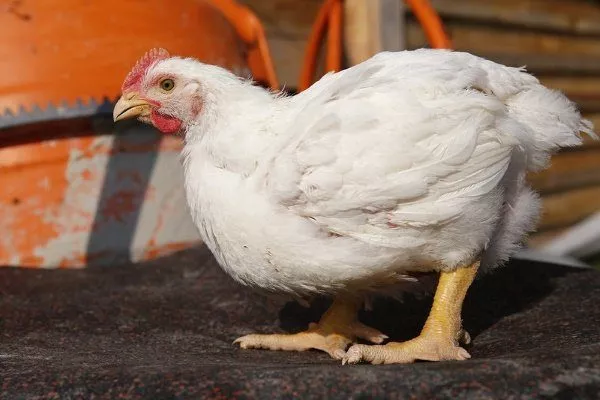
Broiler chicken breed "Smena 8"
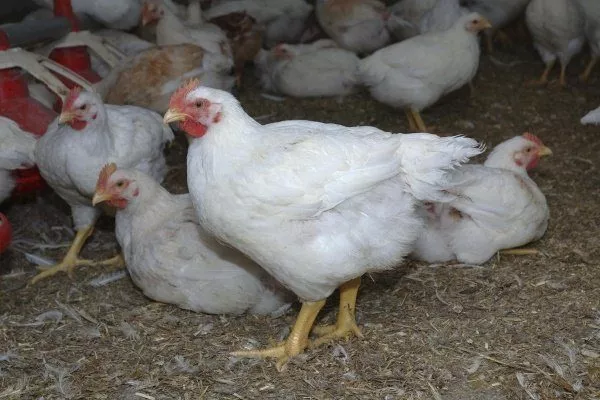
Chicken breed "Broiler-M"
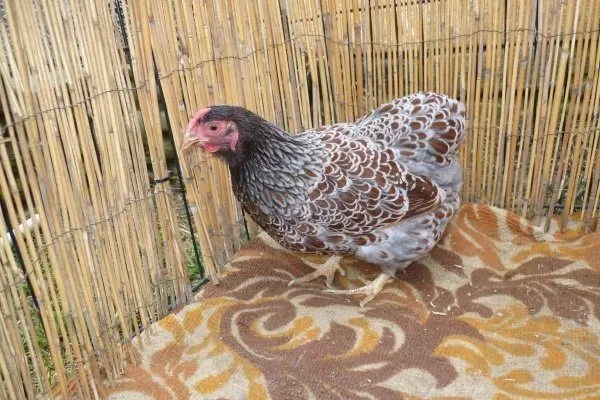
Tricolor broiler chicken breed
The most efficient meat producers among broiler breeds are considered to be the KOBB-500 and ROSS 308 broilers.
Conditions for keeping broiler chickens
To ensure the full development of broilers, it is necessary to provide them with comfortable conditions.
Setting up a chicken coop
To build a chicken coop, you can use any traditional materials: brick, wood, or cinder block. The walls can be lined with plywood or metal sheets. The walls should be at least 2 meters high.
The foundation walls should be raised 30-40 cm above the ground. This is necessary to provide protection from rodents and other pests.
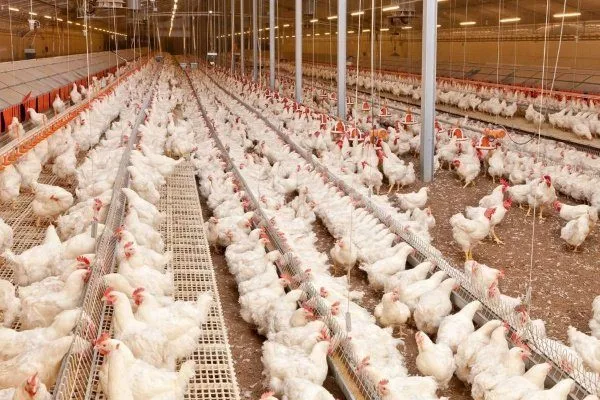
Before setting up a broiler chicken coop, you need to calculate the area of the room. This will depend on the number of chicks. No more than 10 chicks should be housed per square meter. If cages are used, then the same area, depending on the number of floors, can accommodate twice as many chicks.
Before placing the chicks in the chicken coop, the following preparatory measures must be carried out:
- Thoroughly disinfect the room. The walls should be plastered and coated with lime, which inhibits microbial growth. If floor-based storage is planned, the floor should also be coated with lime.
- Provide a high-quality ventilation system. Ammonia buildup and unsuitable humidity levels in the room increase mortality. Humidity in broiler coops should be maintained between 50-60%.
- Lay a covering on the floor. It should be dry and loose. Sawdust or straw can be used. The layer should be at least 10 cm thick.
- Plaster all cracks that cause drafts. It's not recommended to plug them with rags or other temporary solutions, as curious birds may peck at this section of the wall and damage their tongues or beaks.
- Install heaters and incandescent lamps. Regardless of the season, the room temperature should be maintained at around 30 degrees Celsius during the first weeks of broiler life. Later, as slaughter time approaches, it can be lowered to 20 degrees Celsius.
Accommodation options
There are two main options for arranging broilers in a separate room: floor and cage.
The floor-mounted version is easier to implement and organize, and is also cheaper, but it has the following significant disadvantages compared to the cellular version:
- irrational use of space;
- increased costs for heating the chicken coop, electricity and ventilation;
- high level of pollution, which increases the risk of developing diseases;
- the need for more frequent cleaning of the premises.
When raising broilers in cages, the temperature should be higher than when raising them on the floor. In this case, the temperature should not fall below 34 degrees Celsius in the upper tiers.
When arranging the cages, it is necessary to take into account that there should be a metal mesh on the bottom, and under it a tray designed to collect excrement.
It is worth choosing cage housing if the number of livestock is large.
The premises must have a drainage system for waste. The coop must also be equipped with lighting. A walk-in pen, enclosed with mesh, should be built near the main indoor area.
Necessary equipment
For complete equipment of broiler chickens the following is required:
- Perches: each chicken requires a perch 30 cm wide;
- vertical drinkers (for chickens up to 3 weeks old);
- frontal drinkers (for broilers aged 3 weeks and older);
- feeders;
- heating lamps of 100 W each;
- feed bin;
- battery cages (for cellular rearing of birds);
- heat fan (when keeping poultry on the floor);
- food storage compartment.
To save money, you can make your own feeders and waterers. A simple waterer is made from a five-liter bottle of water placed in a wide bowl or basin. A feeder can be made from a large plastic bottle cut in half.
Nutritional Features
To quickly get well-fed broiler carcasses, you need to properly organize the bird's diet.
- ✓ Protein content of at least 20% for chickens and 18% for adult birds.
- ✓ No mold or foreign odors in the feed.
- ✓ The presence of vitamin and mineral supplements indicated on the packaging.
Standard feeding schedule
The diet of broiler chickens depends on their age.
- up to 18 days the birds are given starter feed;
- in the first week, each chicken receives 15 g of feed, in the second – 30 g, in the third – 50-60 g, in the fourth – 80 g;
- From the end of the second week, ground corn is added little by little to the diet.
The diet for daily broilers includes:
- crushed barley (8%);
- fermented milk products (sour milk, kefir, whey) – 12%;
- cake (14%);
- crushed wheat (16%);
- crushed corn kernels (50%).
Calcium is introduced into the diet from two weeks of age. Sources of calcium for broilers include chalk, eggshells, and shells.
Broilers over one month old require a different composition and proportions. Birds need:
- feed fat (1%);
- dry milk (3%);
- greens (3%);
- feed yeast (5%);
- fish or bone meal (7%);
- crushed wheat (13%);
- meal (19%);
- crushed corn (48%).
To fatten the birds, you need a large amount of compound feed with the addition of ground corn, barley, and millet.
Once the chicks reach three weeks of age, boiled potatoes are introduced into the diet. They can replace up to a fifth of the grains.
At the age of one month, broilers can be given cabbage leaves and beet tops.
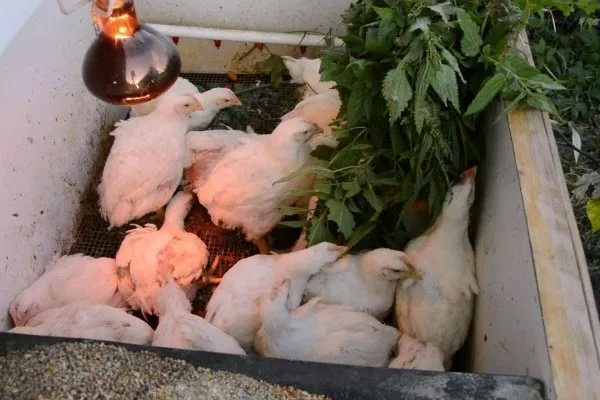
New products should be introduced gradually, not all at once.
Prohibited foods
Broilers should never be fed the following:
- boiled potatoes;
- leftovers of smoked meats and sausages;
- fresh milk;
- cheeses;
- expired, stale products;
- chocolate;
- melon and watermelon rinds, melon pulp;
- citrus.
Adding vitamins
When broilers are 5 days old, vitamin supplements are introduced into their feed. Water-soluble vitamins are most often used for these birds.
Birds kept indoors are given fish oil, Tetravit, and Tetramag. These are added to the bird's water bowl 2-3 times a week.
On the first day of life, chicks should be given a sugar solution (a teaspoon of sugar per liter of purified water).
Possible diseases
Despite the resistance of most broiler varieties to various diseases, the risk of their development should not be ruled out.
Most often broilers suffer from the following: chicken diseases, How:
Coccidiosis
This disease affects the gastrointestinal tract. Coccidiosis in chicks causes diarrheaThe feces are yellow or green. The birds' weight rapidly declines. The disease is characterized by a high mortality rate.
For treatment and prevention, Coccidiovit and Baycox are used, added to drinking water or feed. To prevent coccidiosis, it is necessary to maintain sanitary and hygienic standards.
Bronchopneumonia
This disease is one of the most dangerous, life-threatening conditions in birds. Bronchopneumonia usually develops due to severe hypothermia. Characteristic signs include difficulty breathing with wheezing, coughing, rhinitis, loss of appetite, and poor feather condition.
The disease is treated with antibiotics. Prescribed medications include gentamicin, tetracycline, and chloramphenicol. Treatment should be started immediately, at the first sign of symptoms. At an advanced stage, it is very difficult to cure birds.
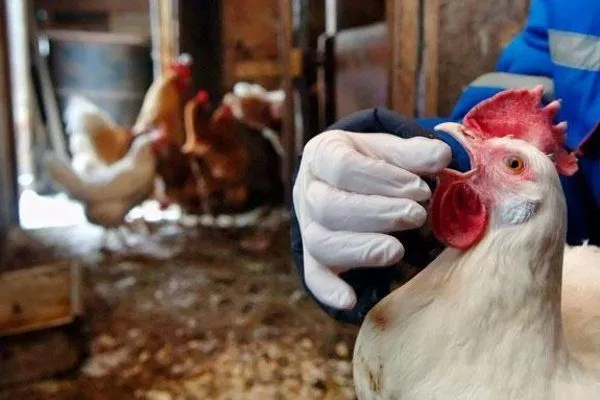
Dyspepsia
This disorder is most often observed in chicks under 2-3 weeks of age. It is associated with an underdeveloped digestive system and a lack of enzymes. Dyspepsia develops due to the consumption of moldy, soured feed and drinking stale water.
Disease prevention involves regular feed and water changes. Treatment is with a glucose and ascorbic acid solution. Weaker chicks are given mineral and vitamin supplements (Forte Universal).
Colibacillosis
This disease causes purulent-necrotic changes in the internal organs of broilers. The causative agent is E. coli, which enters the bird's body through feed and water, as well as the feces of infected birds and animals.
Symptoms: blue beak, loss of appetite, intense thirst, and loose, green feces, sometimes with blood. The disease can spread to the eyes, causing the bird to lose its sight.
Treatment is only possible in cases of subacute or chronic disease, as acute colibacillosis quickly kills the bird. The mainstay of treatment is the antibiotic Levofloxacin.
Maintaining a clean chicken coop, providing a nutritious diet, clean water, and avoiding drafts in the room significantly reduces the risk of disease in broiler chickens.
Common mistakes when raising broilers
Inexperienced breeders often make mistakes, which affects the condition of the birds and their growth process.
The most common mistakes are:
- Incorrect diet during the first week of chicks' lives. During this period, broilers' digestive systems are weak, so they cannot digest heavy foods. During the first seven days, chicks should not be fed cottage cheese, grains, boiled eggs, or greens. Chicks require specialized, balanced feed.
- Temperature imbalances in the coop. Newborn chicks require high temperatures—between 32-34 degrees Celsius. The transition to lower temperatures should be gradual. The temperature should be reduced by 1 degree Celsius weekly. Monitor the chicks' well-being: if they are too hot, their appetite and activity will decrease.
- Providing too much space. To ensure birds gain weight quickly, they need to be kept in a confined space, in a room where they can't be active.
- Refusal of preventative measures. To prevent the risk of disease in broilers, chicks should be vaccinated and given antibiotics from the first days of life. These treatments will prevent mass mortality from pasteurellosis, salmonellosis, and other serious diseases.
- Consult with a veterinarian to establish a vaccination schedule.
- Acquisition of necessary vaccines and preparation of equipment for their administration.
- Establishing a quarantine zone for newly arrived birds before vaccination.
Another important and dangerous misconception is the belief that broilers don't require special care. These birds require regular cleaning of the premises and replacement of unused water and feed with fresh food and water.
Business plan for breeding broiler chickens
Once an entrepreneur has decided to breed broilers as a profitable business, he or she must develop a detailed business plan.
Initial investments include the following expense items:
- registration of activities, obtaining permits - about 20,000 rubles;
- purchase of chicks: the cost of one chicken is from 40 rubles;
- purchase of the first batch of compound feed – about 50,000 rubles;
- chicken coop equipment (including feeders, waterers) – about 200,000 rubles;
- installation of ventilation and lighting systems – about 100,000 rubles.
If you don't own your own premises, you should add the cost of purchasing or renting one to this list. The cost of ready-made poultry houses designed for 1,000 birds (turnkey) will be approximately 1,500,000 rubles.
You should also pay attention to your monthly expenses. This list includes the following items:
- technical maintenance – about 20,000 rubles;
- utility bills – about 15,000 rubles;
- purchase of feed – 50,000 rubles;
- purchase of consumables, bedding – 10,000 rubles;
- registration of veterinary certificates and certificates – 5,000 rubles;
- transportation costs – 10,000 rubles.
In addition, funds are needed to pay salaries to employees and taxes.
The profitability of this type of business will be 30%. The payback period is 12 to 14 months.
An entrepreneur has several distribution channels. These are:
- point on the market;
- supply to retail chains;
- sales via online store;
- supply to catering establishments.
As production develops, additional by-products are developed, increasing profits. These include not only poultry carcasses, but also feathers, down, bird droppings for fertilizer, eggshells, and butchery scraps for feed production.
It is also possible to sell day-old and grown chicks to private individuals.
Another business option is to purchase an incubator and eggs. This allows you to hatch day-old chicks for sale.
Watch a video about the specifics of raising broiler chickens for sale:
Broiler chickens gain weight quickly and are ready for slaughter in 40-50 days. They have large breasts and strong legs, making raising these birds economically viable. Proper care and management of the birds ensures a profitable business.