
The largest chickens are exclusively meat and egg laying animals. They have average egg production and high meat yield. Giant chickens are distinguished by their weight and height, including their stockiness. This article examines the largest chickens in the world, as well as record-breaking animals.
| Name | Rooster weight (kg) | Chicken weight (kg) | Egg production (pieces/year) | Egg weight (g) |
|---|---|---|---|---|
| Cochin China | 4 | 6 | 110-120 | 55-60 |
| Jersey Giant | 5 | 3.7-4.5 | 150-200 | 60-70 |
| Hungarian giant | 4-5 | 3.5-4 | 180-200 | 60-65 |
| Gilan breed | 6-11 | 6-11 | 150 | 80 |
| Malin | 5.5 | 4.5-4.7 | 140-160 | 65-70 |
| Gate | 4.5-7 | 3-4.5 | 120-150 | 60-65 |
| Orpington | 5-7 | 3.5 | 160 | 70 |
| Master Gray | 7 | 4 | 300 | 70-90 |
Cochin China
This is one of the oldest chicken breeds, known in Indochina since the 18th century. The breed's origin is believed to be the Vietnamese region of Cochin China in the Mekong River Valley. In China, these interesting and unusual birds were considered valuable and sacred, and for this reason, they served as ornaments at the imperial court. After the Anglo-Chinese Opium War ended, Queen Victoria often received Cochins as gifts.
Chickens became very popular with English poultry farmers and were exported to America. They remain popular and in demand to this day. Breeding efforts have resulted in chickens with a variety of colors, including partridge, black, white, fawn, and blue.
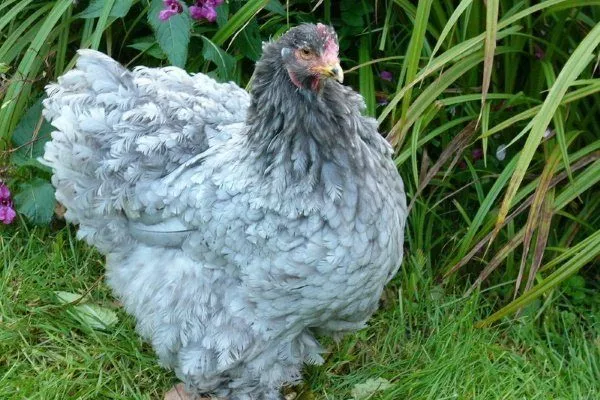
Before the Revolution, poultry was actively bred on Russian farms. They were particularly prized for their high egg production during the winter. Today, the population has declined, due to the high cost of breeding hens. Cochins are often kept as ornamental birds and for breeding.
The distinctive features of birds include the following criteria:
- strong and powerful shins;
- dense plumage;
- live weight of hens – 6 kg, roosters – 4 kg;
- chickens are very hardy and adapt well to regions with cold and long winters;
- Over the course of a year, laying hens produce 110-120 eggs weighing 55-60 g, ocher-brown in color with a yellow yolk.
- ✓ Resistance to low temperatures.
- ✓ Dense plumage for protection from the cold.
Chickens possess excellent natural qualities and are widely used to develop new breeds of meat chickens. These birds were used to develop the Brahma chicken breed, which has led to the creation of many modern broiler crosses.
Jersey Giant
A large breed of chicken developed in the United States in the 1920s. Breeders focused on the musculature and growth rate of the young, resulting in a breed that is easy to care for. The breed's name actually reflects the birds themselves.
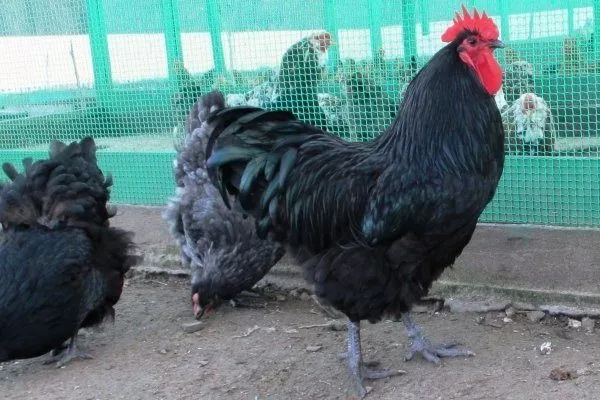
Hens are considered excellent layers with a calm disposition. Both males and females grow quickly, gaining weight quickly. Hens reach a live weight of 3.7-4.5 kilograms. Roosters weigh around 5 kilograms by the age of 12 months.
Poultry farmers must take certain characteristics of these birds into account: they are prone to obesity, and their diet must be closely monitored. Jersey Giants also require ample space, and if they are raised for more than a year, their meat becomes less tasty.
Hungarian giant
A plump chicken, whose name immediately suggests that this animal was bred in Hungary. The bird is distinguished by its impressive size. Hungarian breeders wanted to develop a bird that would delight with excellent productivity. Another goal was to create a variety that would be unpretentious, easy to raise, and adaptable to any climate.
To achieve these goals, breeders used Orpingtons, crossing them with local, village chickens with excellent performance characteristics. The results were quite good:
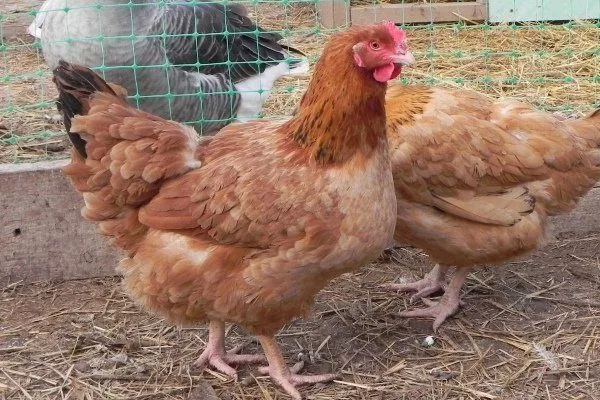
- The birds have a fiery red coloring. Their plumage is somewhat reminiscent of a fox's fur. In their native land and in some other countries, the Hungarian giant is called the red broiler.
- Hens are known for their excellent brooding ability. They often mother their young twice in a single season. Hungarian hens are known for producing viable, healthy offspring that gain weight quickly. Chick survival rates are around 95%, but chicks often suffer from slow feathering—they require a warm room with stable temperature and humidity.
- Externally, these birds are unremarkable, except for their heavy weight and impressive size. They are characterized by dense feather coats and a proportional body with well-developed muscles. An adult rooster weighs 4-5 kilograms, while hens weigh 3.5-4 kilograms.
- Birds are unfussy eaters. They require regular feeding containing protein and vitamins. They also need ample space to roam. It's believed that free-ranging birds have tastier meat than caged birds.
Gilan breed
A gigantic bird, considered to be very ancient. For this reason, it's difficult to determine its origin. Scientists are more inclined to believe that the hen originated in the Gilan province of Iran. However, researchers from other groups dispute this theory, believing that the Gilan hen originated in Persia.
In Makhachkala, poultry farmers have even formed a club to revive this breed. They are doing everything they can to popularize it and increase its numbers.
Distinctive characteristics of the Gilan bird:
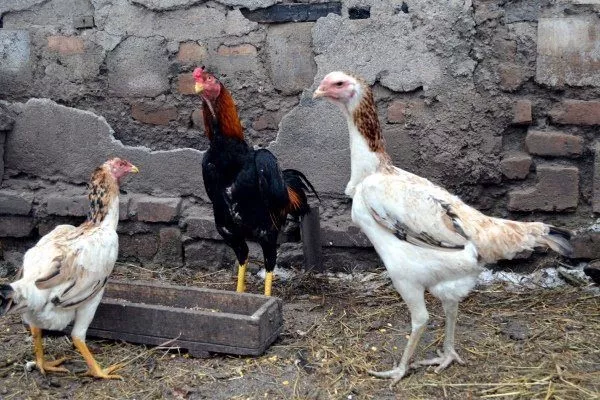
- This breed has a unique appearance. It is characterized by its tall stature, upright body, elongated neck, and long yet stable legs. The birds have well-developed muscles, but their tall stature prevents them from being considered large and barrel-shaped. This variety was originally considered a fighting bird, as its body type is typical of fighters. In appearance, the Gilan chicken is similar to the Orlov chicken.
- Gilan hens are considered caring mothers to their chicks. They have a well-developed maternal instinct and are prone to organization. Roosters are strict and uncompromising, and will not allow strangers into their territory. They may not tolerate being near other chicken species, but they do not quarrel with each other.
- Gilan storks weigh between 6 and 11 kg. They grow for a year and a half, reaching sexual maturity late. Egg-laying begins at 1 to 1.5 years of age. Females lay approximately 150 large eggs weighing up to 80 grams per year.
- The advantage of the breed is its increased resistance to cold and frost, high immunity, endurance and ease of care.
Malin
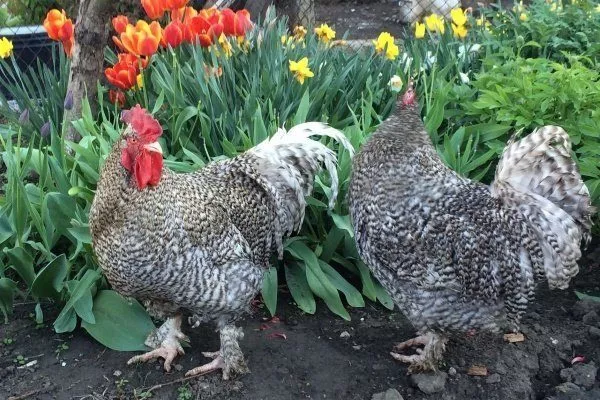
The unusual cuckoo-like coloring inspired the birds' name. Belgian breeders wanted to create a large broody hen with a unique flavor. To achieve this, they used Flanders, Shanghai, Brahma, and other hens.
Over several generations, they achieved consistent results. For over a hundred years, farmers from around the world have been successfully breeding Malin chickens.
Birds have many advantages:
- They are not prone to obesity. Their entire body consists mainly of muscle mass.
- Malinois have a trapezoidal, well-proportioned body. Distinguishing features include a strong, broad back, a rounded chest, and powerful legs. The bird's distinctiveness lies not only in its size (it has a decorative appearance thanks to its feathered legs and the beautiful pattern on each feather), but also in its unique coloring—each feather is adorned with a striped pattern of gray and white lines.
- A rooster can weigh up to 5.5 kg, and a hen up to 4.5-4.7 kg. However, some poultry breeders boast incredible results – often showing birds weighing 7-8 kg at shows.
- Adult hens are fed three times a day. They must be kept at an optimal temperature and humidity level, and avoid being over-chilled. Due to their lush plumage, birds are often susceptible to parasite attacks. Frequent preventative maintenance is recommended. Birds also suffer from vitamin deficiencies during growth and egg-laying periods.
- Birds do have a maternal instinct, but not always. For this reason, many breeders avoid allowing Malin hens to nest on the nest; it's possible the birds will abandon it after a couple of days. The chicks are resilient, with an average survival rate of 97%.
Gate
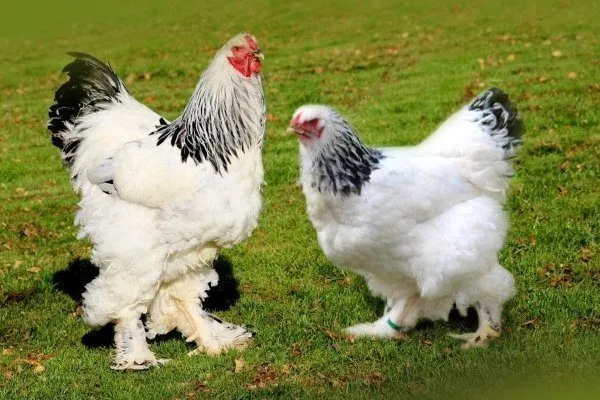
Gate - This meat and egg chickens, possessing excellent weight characteristics. The breed's distinctive features include an attractive appearance and lush, soft plumage. The birds have distinctive feather "trousers" on their legs. Animals come in light, dark, and partridge-colored varieties:
- Light birds They have been widely distributed in Europe since the 1950s. They have white plumage, with dark feathers on the tail and neck. They are distinguished by good production qualities and a unique appearance. Their posture is proud, slightly dignified. Hens weigh approximately 3-4.5 kg, and roosters at least 4.5 kg.
- Dark chickens They are similar to their light-colored relatives, but have dark plumage with light feathers on the neck and back. In addition to their excellent meat quality, they are prized for their appearance—they often make a beautiful addition to the chicken coop. They have a calm disposition and do not mind being around other breeds. A dark-colored rooster weighs around 5 kg, sometimes 6-7 kg. Hens weigh up to 3-4.5 kg.
- Partridge representatives Outwardly, they are virtually indistinguishable from white and dark birds, as described. The only difference is the red and black coloring on a fawn background. Hens weigh approximately 3-4 kg, and roosters 3.5-4.5 kg.
Broiler
Raising broilers allows for the rapid production of low-cost meat products, which is especially beneficial for large poultry farms and small farms. The first broilers were produced by English poultry farmers who crossed two large breeds.
Broilers are not a breed, they are a hybrid with unfixed genetic characteristics that do not appear in subsequent offspring.
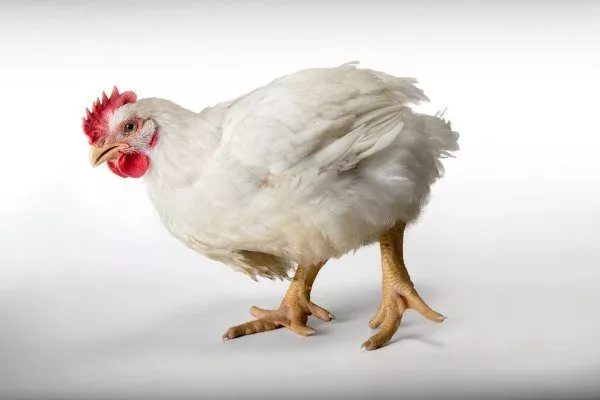
Every year, poultry farms succeed in developing new breeds, typically using Cornish, Brahma, Rhode Island, Langash, Cochin, Plymouth Rock, and Cochin chickens. Broilers are distinguished by their low feed and maintenance requirements and increased disease resistance.
Chickens tend to gain muscle mass quickly, but they are no larger than large chickens. The largest Ross-708 broiler weighs 2.9-3 kilograms at 35 days of age.
Orpington
The largest English breed, the Orpington, was developed in the second half of the 19th century in the city of the same name. Breeders at the time wanted to produce a chicken with exceptionally white skin, free of yellowing. This was required by English quality standards. They crossed the chicken with the Cochin breed, which resulted in not only an exotic-looking animal but also a highly productive bird.
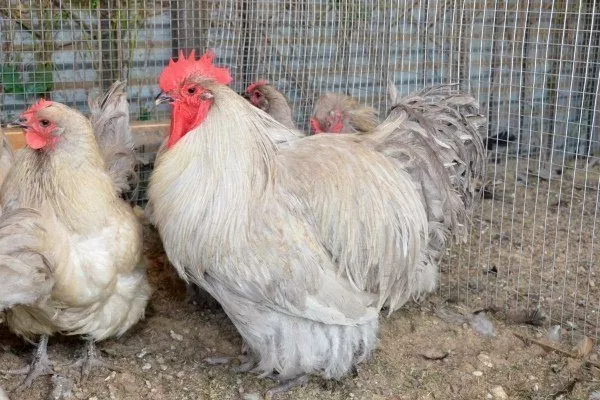
Poultry farmers immediately appreciated the bird. Besides its attractive appearance, the breed produced an average of 160 large, brown eggs weighing up to 70 grams. High meat production was also noted. At one year of age, roosters weighed up to 5 kilograms, sometimes even 6-7 kilograms. Hens weighed up to 3.5 kilograms.
Orpingtons inherited their strikingly majestic appearance from the Cochin. These birds have a massive body with a broad chest, a small head topped with a leaf-shaped crest, and fairly long wattles.
Birds come in a variety of colors: hawk-like, yellow, black, brown, gray, white, and ash-gray. Chickens are easy to care for, but the young grow slowly and require a large amount of feed.
Master Gray
The coloring is the main reason for this name. The bird's white plumage is marked with gray and black spots. A necklace of black feathers surrounds the neck. The bird was developed in France by breeders from the Hubbard company. The breed is considered a meat and egg breeder.
A distinctive characteristic of this bird is its exceptional productivity. Hens can weigh up to 4 kilograms, while roosters can weigh up to 7 kilograms. Hens produce up to 300 large eggs weighing 70-90 grams per year. They reach sexual maturity at 3.5 months.
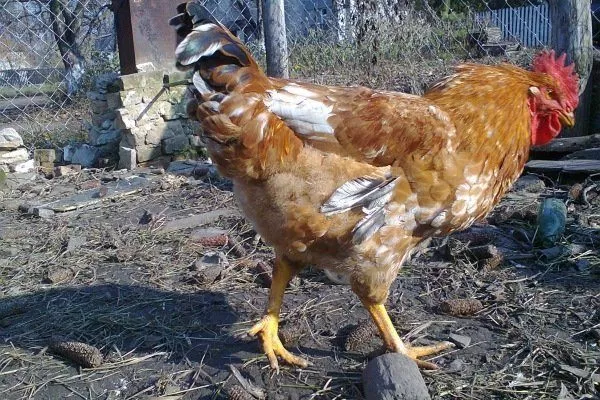
Poultry farmers especially value this breed due to its nearly 100% survival rate and rapid weight gain. An advantage is that the birds don't suffer from confinement and can be kept in cages. Their meat is firm, similar in consistency to that of domestic chickens. At the same time, the meat is tender and tasty. The birds have well-developed chest muscles, which contributes to a high yield of lean white meat, suitable for baby food.
Individual record holders
Setting personal poultry farming records has long been popular. Today, many chicken owners compete with each other, striving to achieve the highest results and make history. Some simply want to share their achievements and offer some advice to aspiring poultry farmers.
The largest birds, which became famous thanks to their owners and known throughout the world, are presented:
| Name | Weight (kg) | Height (cm) | Breed |
|---|---|---|---|
| Little John | 6 | 66 | Gate |
| Big Snow | 10:36 | 43.2 | Whitesulli |
| Rooster Coburn | 11 | 91 | Gate |
Little John
This name was given to a Brahma rooster by its owner, Jeremy Goldsmith. This giant bird lives in Essex, England. At 12 months old, little John already stood 66 centimeters tall. It's likely that by his second year, the bird will have grown even taller. The owner doesn't directly explain what contributed to the rooster's rapid growth, but hints that he feeds him a special diet.
Jeremy Goldsmith allows children to come to his rooster's check-ups, and doesn't even mind that he's fed chips and popcorn.
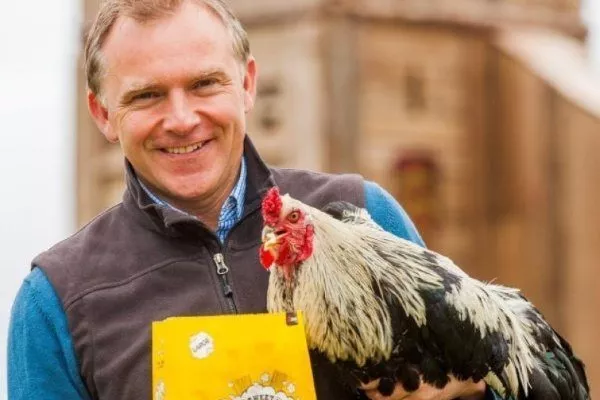
The previous record holder, Melvin, was 6 centimeters shorter than Little John. He was also held by Jeremy Goldsmith.
Big Snow
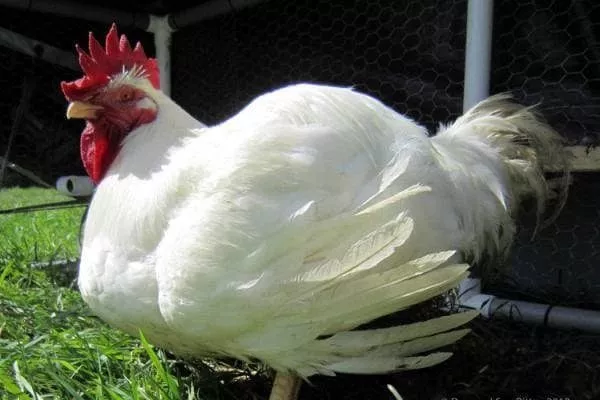
This nickname was given to an officially registered record-holding rooster in the heavyweight category. The bird belonged to Australian Ronald Alldridge, originally from Queensland. The rooster was registered in 1992, at which time it weighed 10.36 kilograms, with a shoulder height of 43.2 centimeters and a chest circumference of 84 centimeters.
The Whitesulli is a fairly rare breed of bird. Individuals can weigh 8-10 kilograms. The bird's owner was very proud of his pet, as evidenced by the many photos he took with celebrities, including Big Snow. In the fall of 1992, the bird died of natural causes.
Rooster Coburn
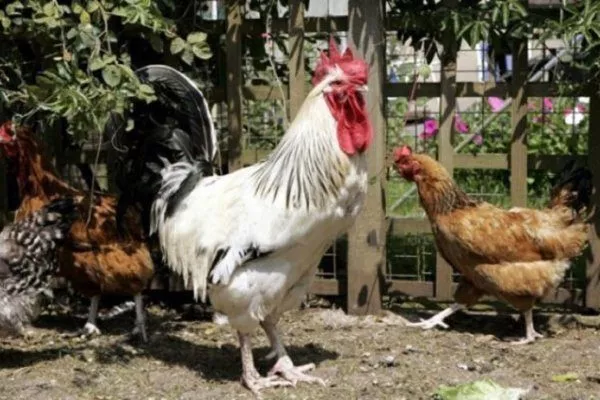
A record-holding Brahma chicken from the UK. His curious name was given to him in honor of the lead character in the American film "True Grit." He weighed 11 kilograms and stood 91 centimeters tall. Rooster Coburn is owned by a married couple, Mr. and Mrs. Stone. They claim the bird is a true guardian of his coop, keeping even foxes away.
Peculiarities of keeping large chickens
The largest chickens are often easy to care for. However, poultry farmers must consider several aspects associated with raising these heavyweights:
- The chicken coop must be kept clean. Regular cleaning is essential to ensure the birds' good health and protect them from various diseases.
- Large birds require space, so consider this when preparing the coop for breeding. It's a good idea to let the birds go outside. A comfortable aviary with 1-2 birds per square meter will provide the animals with the most comfort.
- Due attention is paid to ventilation. Bird excrement produces ammonia, which accumulates on the floor and negatively impacts the animals' health.
- When constructing a poultry house, it's important to consider the size of the birds. The animals won't be able to fly over the fence or jump up. Therefore, nests and perches shouldn't be placed too high—the hens should have easy access to them. As a last resort, a poultry farmer can build a ramp.
- Because females are prone to frequently crushing eggs or ejecting them from nests, they require careful monitoring to avoid losing unborn offspring.
- It's recommended to cover the floor of the poultry house with sawdust, straw, grass, or other soft materials. Heavy weights often cause falls, even from short heights, which can lead to injury.
- Birds' combs are very sensitive and can become damaged at temperatures of 0 degrees Celsius and below. During cold weather, it's best to move birds to a warmer room or oil their combs.
There are numerous large chicken breeds worldwide. They all share a common trait: large size, unique appearance, and high egg and meat production. Most poultry farmers breed large birds for the purpose of selling eggs and carcasses, which results in excellent profits.