
When choosing a chicken breed for breeding in Siberia, it's important to consider the region's extremely low temperatures. Some breeds tolerate the cold better than others, maintaining normal egg and meat production. While the conditions of the farm play a significant role, the region's climatic nuances also need to be taken into account. Let's look at the chicken breeds that are best suited for the Siberian region.
| Object | Chicken weight, kg | Rooster weight, kg | Egg production, pcs/year | Egg weight, g |
|---|---|---|---|---|
| Rhodonite | 2 | 3 | 300 | 65 |
| Siberian upland bat | 2-2.5 | 3 | 150-180 | 55-60 |
| Chinese silky | 1.5 | 2 | 100-120 | 35-40 |
| Lesser naked neck | 0.7-0.8 | 0.8-1 | 150 | 30 |
| Orlov breed | 2 | 2.5 | 200 | 45-60 |
| Pale Brahma | 3-4.5 | 4-5 | 110-120 | 60 |
| Pavlovskaya | 1.6-2 | 2.1-3.5 | 130-150 | 45-60 |
| Poltava clay | 2-2.5 | 3.2 | 200-210 | 60 |
| Pushkinskaya | 2.1-3.5 | 3.5 | 200-250 | 60-70 |
| Hercules | 2.1-3.5 | 3.6-4 | 150-200 | 45-60 |
| Zagorsk salmon | 2.1-3 | 3.5 | 200-250 | 60 |
Rhodonite
This breed was developed by Russian breeders between 2002 and 2008. The breed's birthplace is the Sverdlovskaya poultry farm. The breeders' efforts were successful—the Rodonit is ideal for breeding in harsh conditions. These small, red-haired hens lay eggs superbly, despite low temperatures. The breed is popular among residents of central Siberia, as it maintains high egg production even in unheated rooms.
- ✓ Resistant to temperatures below -30°C.
- ✓ Ability to maintain egg production in short daylight conditions.
- ✓ The presence of thick plumage to protect against frost.
The breed was initially marketed as a factory breed for industrial production. However, Rhodonites also caught the attention of private owners, and are now one of the most popular breeds for backyard poultry farms.
Direction. Egg.
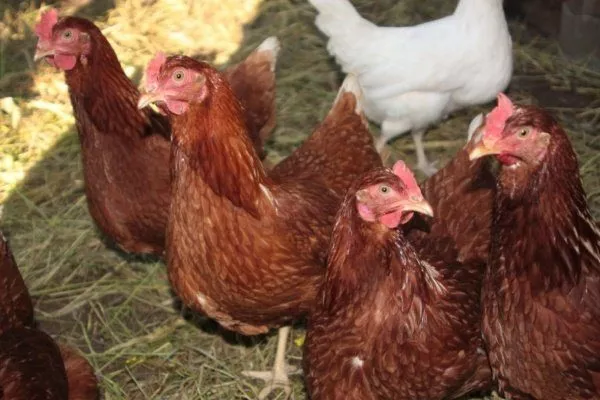
Appearance. They resemble Lohmann-Browns in appearance. These chickens have a small head and a leaf-shaped comb. The wattles are large and bright red. The beak is yellow, with a brown stripe down the middle. The plumage is brown, with small reddish flecks. The legs are medium-length and yellow. The back is sloping, and the chest is moderately convex. There is a gray sheen on the wings and at the end of the short tail.
Productivity. 300 eggs per year. Carcass weight is 2 and 3 kg for hens and roosters, respectively. Due to their small weight, the breed is not profitable for meat production.
Rhodonite eggs, compared to those of other breeds, are highly nutritious. On average, one egg weighs 65 g.
Other features. Poor brood hens. Incubators or other breeds of hens are used for breeding. They are known for their calm and friendly nature. There are usually no conflicts within the group. The birds are practically tame. They are not picky eaters. They easily adapt to new feeds, changes in habitat, and changes in living conditions. They begin laying eggs early – at 4 months.
Conditions of detention. They tolerate harsh Siberian conditions perfectly. The coops do not require heating. Fresh air has a positive effect on egg production.
You can find more information about the Rodonite chicken breed. here.
Siberian upland bat
Almost nothing is known about the origins of this breed, other than that it originated in Russia. These chickens have been bred for hundreds of years, including in the harsh conditions of Siberia. The first official description of the Siberian Upland Chicken's appearance dates back to 1905. In the early 20th century, the breed nearly disappeared, being supplanted by highly productive foreign crosses. Today, the breed is in need of restoration—even in Siberia, it is rare.
Direction. Meat and eggs.
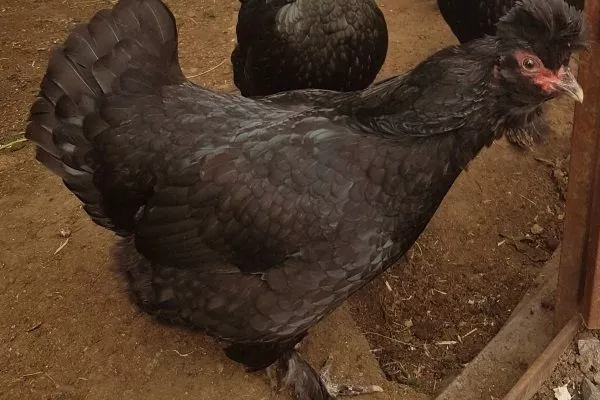
Appearance. These chickens have a magnificent exterior and can be kept for ornamental purposes. Three plumage colors are available: white, black, and blue. Any other color is not allowed; individuals that do not meet the standards are rejected. Their heads have a lush crest. Their entire body is covered in lush plumage, reminiscent of a fur coat. Their legs have "pants" that cover the feet completely, right down to the toes. The head is powerful and rounded. The wattles, comb, and earlobes are red. The beak is wide and short, black or dark gray.
Productivity. Egg production: 150-180 eggs per year. Egg weight: 55-60 g. Hen weight: 2-2.5 kg, rooster weight: 3 kg.
Other features. The hens are calm and timid. The roosters are good protectors, but not bullies. The downy legs are active and noisy. Sexual maturity occurs at 6 months. The brooding instinct is very well developed. Thanks to their luxurious coats, the hens successfully incubate 8-10 eggs. The hens are very protective and will never abandon their chicks.
Conditions of detention. Downy-legged chickens are remarkably hardy and undemanding. However, they respond well to favorable conditions, immediately increasing productivity. Siberian frosts don't harm the birds. If chickens roam outdoors on frosty days, even their combs and wattles don't freeze. They tolerate frost well thanks to their "pants" and the structure of their V-shaped comb, hidden under a fluffy cap. They prefer clean, dry bedding. Dirt and moisture negatively impact their health and appearance. It's advisable to insulate the chicken coop. Daily ash-and-sand baths are recommended.
Chinese silky
The history of Chinese Silkie chickens is believed to have begun a thousand years ago. The breed originated in China.
Direction. Ornamental and egg-producing. In Eastern countries, the black meat of silky chickens is prized – it is considered a dietary and delicacy.
Chinese Silkie chickens have an unusually black meat and bones. This is due to a genetic condition called fibromelanosis, which causes the insides of the chicken to have a bluish-black color.
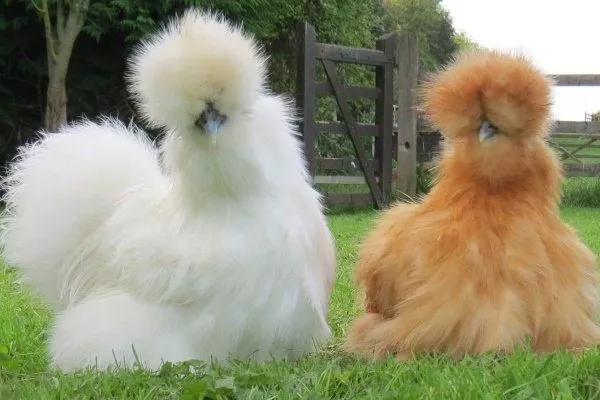
Appearance. A small head with a small dark beak. Small wattles and a rose-shaped comb are hidden under down. The neck is long, the body is rounded, and the legs are short. Dense down is everywhere. The tail is small. Coloration varies from golden to white. The feathers resemble down or wool, giving this breed of chicken a remarkably picturesque appearance.
Productivity. Lays a maximum of 100-120 eggs per year. Egg weight is 35-40 g. A hen weighs 1.5 kg, a rooster – 2 kg.
Other features. Friendly and sociable, they have a well-developed brooding instinct. They make excellent foster mothers.
Conditions of detention. They tolerate cold well. However, this breed is primarily decorative in Siberia. Sanitary requirements are standard. These chickens cannot fly at all—they don't need perches. They are not picky eaters. To ensure that the Chinese breed lays eggs in cold weather, the coop needs to be insulated and the lights turned on for 12-14 hours.
Lesser naked neck
A German breed whose history dates back to 1905. Its ancestors are fighting Kulmhuns and Malay chickens.
Direction. A dwarf-type meat and egg breed. Ornamental appearance is an acquired taste. Raised primarily in backyards, the breed is of little interest to large poultry farms.
Appearance. The head is small. The beak is long and narrow. The eyes are orange-red. The wattles are large, bright red in roosters. The neck is bare, without feathers. The comb is rose-shaped and fleshy. The legs are of medium length. The tail is narrow and elongated. The coloring is variegated, in various shades.
Productivity. Egg production: 150 eggs per year. Egg weight: 30 g. Hen weight: 0.7-0.8 kg, rooster weight: 0.8-1 kg.
Other features. Temperament: Calm and friendly. Egg-laying begins at 5-6 months.
Conditions of detention. Despite their naked necks, these birds tolerate frost well. They don't require much space, but if they have access to a run, egg production increases. The breed is known for its calm disposition, so high enclosures are not necessary. They are picky about their food.
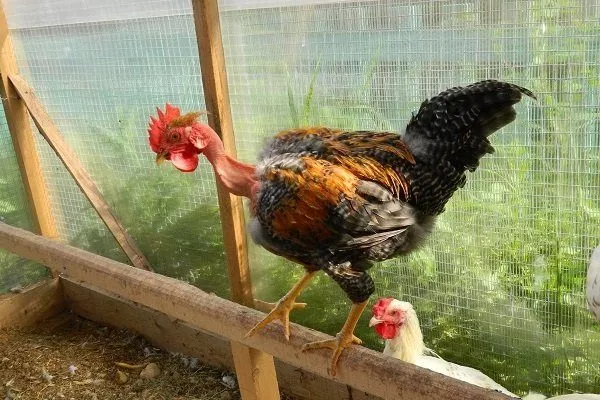
Orlov breed
An ancient Russian breed. The Russian Imperial Poultry Society adopted its standards in 1914. Orlov chickens are similar in appearance to Fighting chickens.
Direction. Meat, egg and decorative.
Appearance. The head is medium-sized. The beak is long, wide, and strongly curved. The eyes are amber-red. The wattles are hidden under the plumage. The comb is small and rose-shaped. The body is large and wide, and the set is high. Coloration: fawn, calico, black.
Productivity. Egg production: 200 eggs per year. Egg weight: 45-60 g. Hens and roosters weigh 2 and 2.5 kg, respectively. Meat has excellent flavor.
Other features. They are aggressive. It's best to keep them separate from other breeds. They are reluctant to incubate eggs. Their brooding instinct is weak. A disadvantage is their late maturation and slow growth of the young.
Conditions of detention. They are frost-resistant, but in Siberian conditions, it's best to keep Orlov chickens in insulated coops. They're not picky eaters, but they require a balanced diet to ensure high egg production.
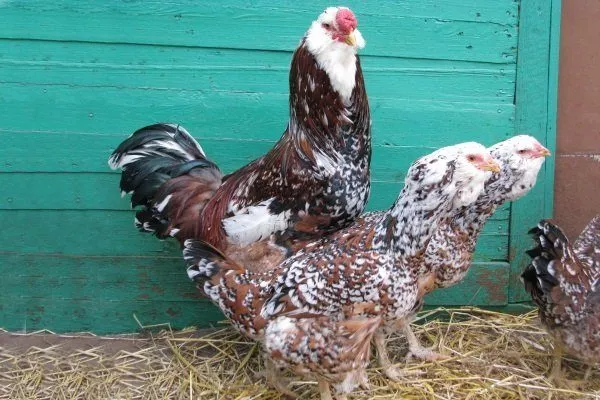
Pale Brahma
Gate – This is an American breed that was developed by crossing Cochins, Chittagongs, and Malayan chickens. It is a very large bird.
Direction. Meat.
Appearance. The small head has a fleshy, pod-shaped, toothless comb. The neck has a thick mane. The body is massive and high-slung.
Productivity. Egg production is 110-120 eggs per year. Hens weigh 3-4.5 kg, roosters - 4-5 kg.
Other features. Friendly. They have a strong brooding instinct. A drawback is that the hen, due to her weight, can crush the eggs and injure the hatched chicks.
Conditions of detention. Egg production depends heavily on living conditions. They won't lay eggs in a poorly maintained coop. They need ample space to roam, so fenced aviaries are built for them. They tolerate frost and high humidity well. They are resistant to snow and frost—qualities invaluable in Siberia.
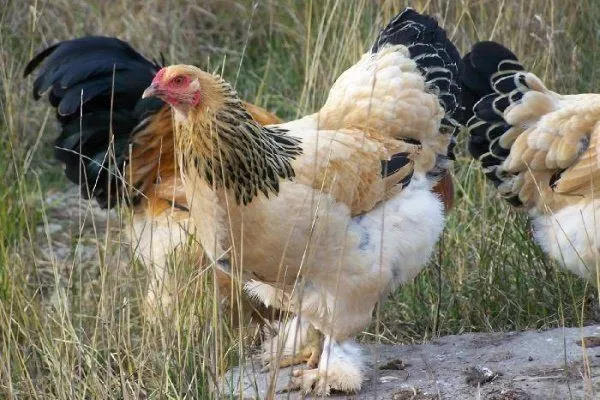
Pavlovskaya
This is a very beautiful breed, named after the village of Pavlovskoye, located in the Nizhny Novgorod region. The breed's history dates back to the 18th century. By the early 20th century, Pavlovkas had almost disappeared. Now the breed has been revived, restored, and brought up to the 1905 standards.
Direction. Decorative and fighting.
Appearance. A small bird with a proud carriage and wings held tightly against its body. The crest is undeveloped. A high crest adorns the head. It comes in two color varieties: silver and gold. These are the recognized standard colors, but other varieties include smoky, black, and black-and-white "Pavlovkas."
Productivity. Egg production: up to 130-150 eggs per year. Egg weight: 45-60 g. Hen weight: 1.6-2 kg, rooster weight: 2.1-3.5 kg.
Other features. Egg-laying begins at 6-8 months. They are inquisitive and peaceful. They rarely become brood hens. Roosters are quarrelsome and capable of killing a rival. Therefore, there should only be one rooster per coop.
Conditions of detention. Requires an insulated coop. Suitable for Siberia, but requires special care. The temperature in the coop should not drop below 0°C. Outdoors, in severe frost, the combs and wattles may freeze. Feeding is standard. To maintain the brightness of the plumage, add sulfur to the diet.
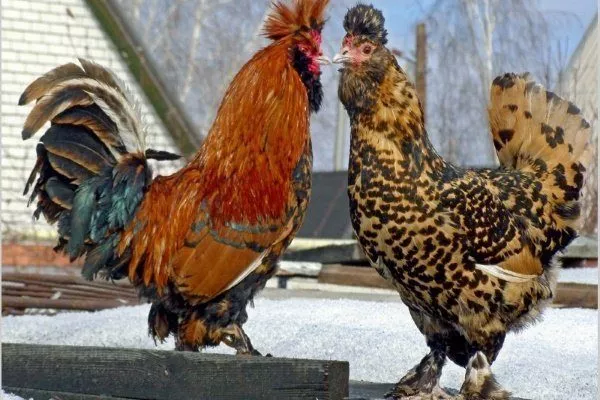
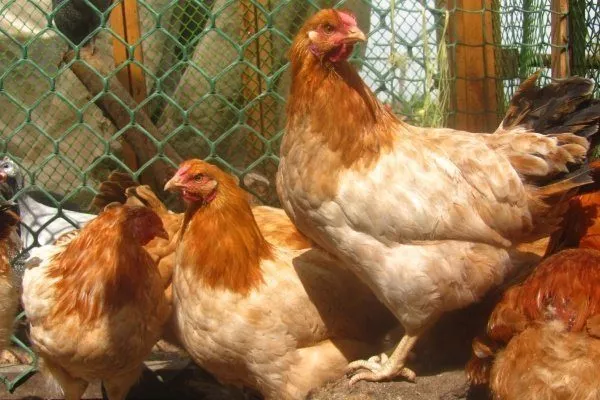
Poltava clay
The breed was developed by crossing local Ukrainian breeds and Fawn Orpingtons. Breeders aimed to improve egg production. The breed is intended for specialized egg production. This breed is not widely developed in Russia. The birds are only available in Ukraine.
Direction. Egg and meat.
Appearance. The Poltavka has a massive build, a broad back, and a powerful chest. The head is medium-sized, the beak is short, the neck is short, and the comb is leaf-shaped, pink or bright red. The coat color is clay, cuckoo, and black. All external characteristics indicate that the breed is adapted to a harsh climate, and indeed, Poltavkas tolerate the rigors of Siberian winters very well.
Productivity. Egg production: up to 200-210 eggs per year. Egg weight: 60 g. Hens weigh 2-2.5 kg, roosters – up to 3.2 kg.
To increase productivity, Poltava clay hens are crossed with Leghorns, which then increases their productivity to 240 eggs per year.
Other features. Peak egg production lasts for four seasons, then gradually declines. Hens have a strong maternal instinct. Chickens can be bred without an incubator. They are sociable and docile. Roosters are not pugnacious. A drawback is their uncontrollable appetite.
Conditions of detention. This breed is known for its frost resistance. It is recommended to keep them in insulated coops with an organized run. The temperature in the coop should not fall below 5°C. Although the breed is Ukrainian, its excellent adaptive properties—hardiness and frost resistance—make it suitable for breeding in the Siberian region.
Pushkinskaya
The breed was created in the 1970s. The breeding site was the Institute of Genetics and Development of Agricultural Animals (Pushkino, Leningrad Region). The breed was officially approved in 2008. Its full name is Pushkin Striped-Pied.
Direction. Egg and meat.
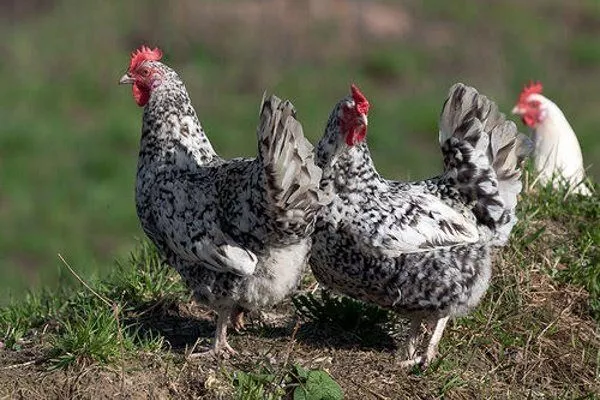
Appearance. A strong, massive body. Legs are set wide apart, and the body is deep—a characteristic appearance for layers. The head is small, adorned with a rose-shaped comb. The neck is long, and the mane is lush. The coat is black and white.
Productivity. Egg production: up to 200-250 eggs per year. Egg weight: 60-70 g. Hen weight: 2.1-3.5 kg, rooster weight: up to 3.5 kg.
Other features. Egg-laying begins at 4-5 months. They have a very calm disposition. They react poorly to danger and can become prey to predators while out walking. Roosters are very active, so one rooster is kept per flock of 25 hens.
Conditions of detention. They are unpretentious and undemanding in terms of housing conditions. They are suitable for breeding in Siberian conditions. A good diet is essential for comfortable wintering without loss of egg production; then, laying hens can successfully overwinter even in unheated, but carefully insulated, coops.
Hercules
The cross was developed in 2000 from the best chicken breeds—both egg and meat. The breeding process took over 10 years at the National Agrarian University of Ukraine and the Borki Research Institute. However, due to a discrepancy between the actual qualities and the claims, the popularity of this interesting and promising breed has waned somewhat.
Direction. Meat and eggs. Crossbreeds and broilers.
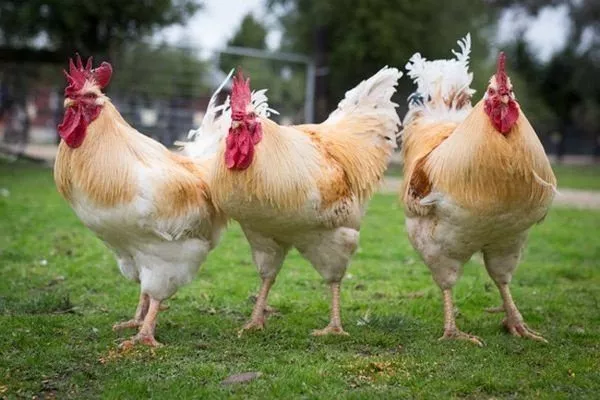
Appearance. The body is massive and broad, with a full belly and developed ribcage. The head is small and features a bright red, leaf-shaped comb. Long red wattles. The beak and legs are yellow. Hercules geese come in white, golden, silver, variegated, and cuckoo varieties. White Hercules geese are the most productive.
Productivity. Egg production is up to 150-200 eggs per year. Egg weight is 45-60 g. The yolk is very large. The hen weighs 2.1-3.5 kg, the rooster 3.6-4 kg. In two months, the bird gains 2 kg of weight.
Other features. Calm and gentle in nature. Curious, they enjoy being outside. In mixed flocks, they dominate, suppressing birds of weaker breeds.
Conditions of detention. For fattening, hens are placed in cages with limited mobility. Laying hens, on the other hand, are given access to a range. Having thick, dense plumage, they can overwinter in unheated coops. Frost-resistant, they are suitable for breeding in harsh climates. However, deep litter is essential in the coop.
Zagorsk salmon
The breed was developed by the Zagorsk Institute of Poultry Farming in 1955. Yurlovskaya, Russian White, New Hampshire and Rhode Island chickens were used.
Direction. Meat and eggs.
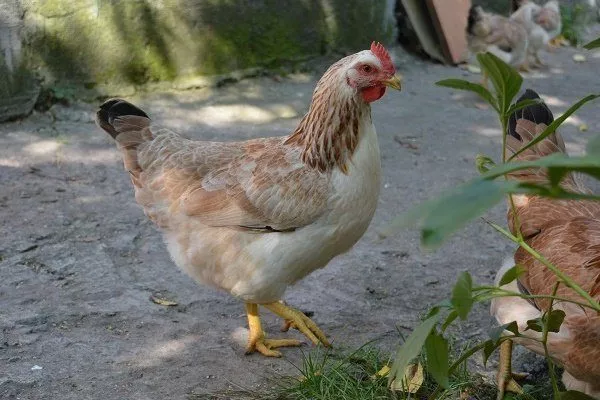
Appearance. The body is large and elongated, slightly stretched. The legs are strong and yellow. Roosters have a broad head with a leaf-shaped, bright red comb. Their coloring is tricolor. The main plumage and tail are black with a green tint, the rump and mane are silver, and the wings are mottled with reddish-brown speckles. Hens have a more compact body and a graceful head. Their plumage is light, beige, with brown and salmon shades.
Productivity. Egg production is 200-250 eggs per year. Egg weight is 60 g. Hen weight is 2.1-3 kg, rooster weight is 3.5 kg.
Other features. Egg-laying begins at 6-8 months. The brooding instinct is not developed, so egg production remains stable throughout the year. They feed well when free-range. They are friendly and docile, but not aggressive. Roosters are active; there should be 15-18 hens per rooster. They inherited their vocal singing from the Yurlovskaya breed.
Conditions of detention. This breed is suitable for northern regions. It is frost-resistant and undemanding in terms of housing conditions. To maintain egg production, the temperature in the coop should be maintained at no less than 0°C. They are not picky eaters – they can eat grain, food scraps, and mixed feed.
Foreign frost-resistant breeds
Countries with a climate similar to Russia's, with harsh, prolonged winters, can share their breeding achievements. Frost-resistant breeds suitable for breeding in the Siberian region include:
- Icelandic Landrace. Icelanders developed this breed over centuries. They succeeded in creating a very frost-resistant breed suitable for Siberia and other regions with moderately warm or cool summers. Landrace cattle do not tolerate heat well.
They are very beautiful in appearance, with lush plumage—red, black, blue, fawn, and others. Their dense plumage allows them to withstand extremely low temperatures, protecting their skin and internal organs from frostbite even in the harshest snowstorms. Hens weigh 2.5 kg, and roosters 3.5 kg. They lay about 220 eggs per year, each weighing 60 g. They lay eggs year-round. - Red-capped. This is an old English breed. It was once widely bred by farmers, but is now being replaced by new, promising breeds. The breed is of interest to Siberian farmers – Redcaps are almost as frost-resistant as the Icelandic Landrace and also lay eggs year-round, regardless of the season.
This is an egg-laying breed, so Red-capped hens have a small body size. They lay about 200 eggs per year, each weighing 60 g. The meat is very tasty. They lack the broodiness instinct. The plumage is predominantly dark red, brown, and black. The tail is blue-black, with a dark semicircle on the side. - Appenzeller. This is a rare Swiss breed. They are used for both egg production and ornamental purposes. Their advantage is their exceptional robust health. They are accustomed to living in cold, high-altitude regions and are not afraid of harsh winters, making them of interest to breeders in Siberia.
These birds have a V-shaped comb and crest. Their plumage is black, with a golden or silvery sheen. The breed's history spans approximately 300 years, but they are currently being replaced by more promising competitors. These birds are friendly and non-confrontational, and the hens are attentive brooders. Hens weigh 1.5 kg, and roosters 1.8 kg. They lay up to 150 eggs per year. - Lakenfelder. Origin: Belgian or Dutch. This is a very rare breed, on the verge of extinction. Only experienced professionals should keep this breed. The plumage is black and white. Mostly black or white chicks are born, indicating a decline in the breed. The dense plumage protects the birds from frost, humidity, and temperature fluctuations.
Lakenfelders are very calm. They are bred for both meat and eggs. They lay up to 180 eggs per year. A hen weighs 3 kg, and a rooster 2-2.5 kg. A hen is heavier than a rooster, which is rare in hens. They are demanding in terms of nutrition, which directly affects productivity. They are considered a difficult breed to care for and breed. - Bielefelder. Bred in Germany. The breed was registered in 1980. Their "krill" plumage is a pattern of black and gold stripes. They are very hardy, so they can be bred in the Urals and Siberia. Hens weigh up to 4 kg, roosters up to 4.5 kg. They lay about 230 eggs per year. Each egg weighs 65-70 g. They gain weight quickly. They are cold- and disease-resistant and easy to care for. They are phlegmatic, so it is recommended to keep them separate from other breeds, otherwise they will be pushed away from the feeders.
- Faverolles. Faverolles. This is a French meat breed, developed in the area of the same name. They are distinguished by their unique "hairstyle"—feathers under the ears that point sideways and upward. They have "breeches" on their legs. Hens weigh up to 3.5 kg, roosters up to 4 kg. They lay up to 160 eggs per year.
The breed is cold-resistant, making it of interest to Siberian breeders. They require ample exercise and are not suited to cages. Their advantages include early maturity, tasty meat, and consistent egg production year-round. Their disadvantages include a tendency to overeat and become obese.
Chickens are hardy and can thrive in the harshest climates. Some breeds adapt better than others to the harsh Siberian cold, maintaining high productivity. However, without proper care, even the most frost-hardy chickens will lose productivity or even die.