
These chickens appeared in 1860 in America, they are quite productive, but are also considered decorative breed and delight their owners with their good disposition. The breed is divided into two types: standard, which meets the standards, and dwarf. The specifics of breeding and the challenges a breeder may face are discussed further in the article.
Characteristics and description
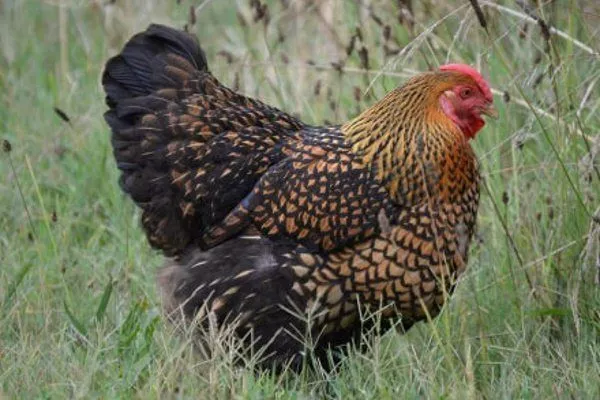
Wyandotte chickens are a meat and egg breed. These medium-sized birds are moderately heavy and tolerate climate change well, including cold winters.
- ✓ The ratio of hens to roosters should be strictly maintained at 10:1 to prevent stress in the birds.
- ✓ Ultraviolet baths are necessary for the prevention of parasitic infestations, especially in winter.
They come in standard and dwarf varieties. They live in both small families and large groups. When creating families, the hens-to-rooster ratio should be maintained at 10:1.
The physical structure of a breed indicates its productivity:
- a small but strong bird;
- with a small, broad-browed head, decorated with an original crest that fits close to the head;
- earlobes and earrings are oblong in shape, rounded at the bottom, of medium length;
- strong, not long neck with a collar covering the shoulders;
- the metatarsus should be without feathers, yellow;
- the tail is small;
- A characteristic feature is the feather edging over a significant part of the entire plumage.
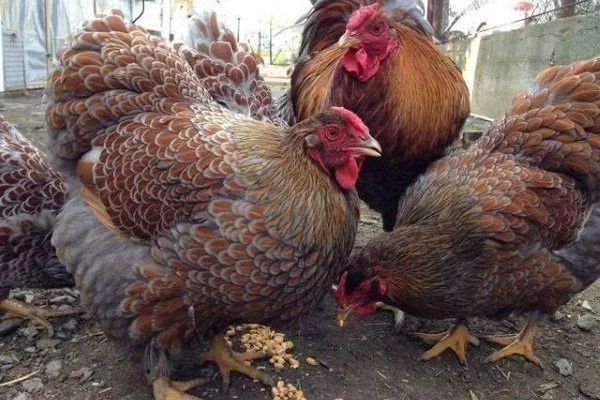
Standard Wyandottes have 16 plumage color variations, while dwarf Wyandottes have 28.
Popular colors:
- red with different colored borders;
- blue;
- striped;
- golden;
- silvery;
- partridges;
- pure black;
- snow-white.
Fans of this breed report that solid-colored chickens lay the most eggs, while those with blue feathers lay the fewest. This may have something to do with selective breeding.
Characteristics of standard individuals:
- roosters reach a weight of 3.8 kg;
- chickens – 3 kg;
- the laying hen begins to lay eggs at 6-9 months;
- productivity per year is up to 140 eggs weighing 48-62 grams.
With good care and proper feeding, one Wyandotte can produce up to 200 eggs per year.
Characteristics of dwarf chickens:
- the rooster weighs 1.2 kg;
- chicken – 900 grams;
- start laying eggs at 4-5 months;
- the hen lays 120 eggs annually;
- each egg weighs 45-52 grams.
You can see what a silver Wyandotte looks like, as well as the behavior of hens and roosters while out walking, in the video below:
Advantages and disadvantages
The main advantages of the breed are:
- good egg production, which is maintained during the cold period;
- high hatchability and viability of chicks;
- fast fattening – chickens quickly gain muscle weight;
- friendliness – they get along well with their relatives and other inhabitants of the poultry yard;
- good taste of meat and eggs;
- stable cold tolerance.
There are also a number of disadvantages:
- are sedentary and therefore suffer from obesity;
- easily become infected with infectious diseases from other birds;
- It is a rare breed, so it is expensive.
Dwarf Wyandottes are bred more as an egg breed than a meat breed. Another undeniable advantage is their low feed consumption.
Content
Maintenance is straightforward and not much different from caring for other breeds. Wyandottes can be kept in a spacious cage in winter and in an aviary or outdoor run in summer.
Heating of the poultry house is not required in European winter conditions.
The cage, aviary and walking area must meet the following parameters:
- 1 sq. m of area per 10 heads of poultry.
- For dwarfs, the following formula is suitable: 15 birds per square meter.
- It's also important to understand that dwarf Wyandottes reach full size by four months, while standard Wyandottes reach 3 kg by six months. Therefore, the cage shouldn't be too cramped as the birds mature.
- When building a cage or enclosure, it is worth considering the possibility of organizing ultraviolet baths.
- The poultry house must be well lit. Windows are provided for this purpose.
- In winter, supplemental lighting with lamps is necessary. Lighting directly impacts the egg production of hens.
- Nests should be sturdy and low above the floor, spaced well apart.
- Perches are installed at a height of 60 cm from the floor.
- The perch bars must be strong to support the bird, which is rapidly gaining weight.
- The floor of the chicken coop is lined with wood shavings, sawdust, husks, straw, or leaves. This should be changed every two weeks.
- It is essential to have a container with sand and ash to clean feathers from parasites.
- If it is possible to graze Wyandottes on grass, this would have a positive effect on the egg production of the hens.
- Standard Wyandottes can thrive on half an acre of land, while dwarf Wyandottes can thrive on half that area.
- Wyandottes are not big fans of flying, but it is better to fence the area to prevent wild animals from getting in.
Diet
Representatives of this breed should be fed with high-quality food, to which the following should be added:
- protein supplements;
- vitamins;
- minerals.
Basic feeding rules:
- Wyandottes are fed 3-4 times a day with grain mixtures.
- Greens are added seasonally. In winter, dry alfalfa is used.
- To ensure strong egg shells, eggs need sufficient calcium. This can be replenished by adding crushed eggshells and ground shells to the feed.
- You can improve the quality of meat by adding vitamin and mineral supplements to the feed, which can be purchased at veterinary stores.
- Chickens really love strawberries.
- It is important not to overfeed the birds, so the feeders are left for 1 hour and then removed until the next feeding.
- If your chickens are gaining excess weight, they need to increase their exercise. To do this, place the feeder on a platform so the birds are forced to constantly jump onto it.
- There must be containers with clean, fresh water in the chicken coop and in the run.
The bird's physical condition is revealed by its tarsi - they turn pale if the bird does not receive quality food.
Breeding
Learning to breed Wyandottes isn't easy. Breeders face a number of challenges:
- You need to master the skills of breeding the desired colors, and also keep in mind that selection is determined by both the paternal and maternal lines. To do this, you need to use a color calculator. However, this only provides a rough guide, as there are many hybrids of this breed.
- Breeders recommend avoiding the possibility of hybridization (crossbreeding within a population), which reduces immunity and egg production and degrades the appearance. This is not easy, given that only two Wyandotte lines are common in Russia—from Poland and Germany.
- Buying hatching eggs - standard and dwarf eggs differ little from each other in color and size.
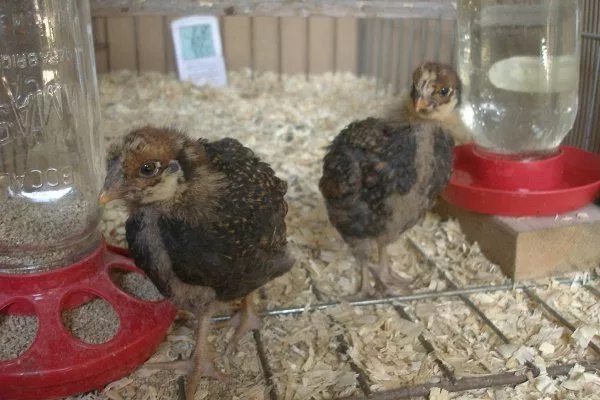
- Buying young birds – the coloring of newly hatched chicks can vary greatly. The adult bird's coloring can only be determined after its first molt.
On farms, Wyandottes are bred to preserve genetic material for breeding crosses.
Methods of withdrawal
Chicks are hatched both in incubators and naturally. In this respect, they are no different from other chicken breeds, and there are no special requirements for the process.
Eggs selected for incubation must weigh at least 55 g and have a smooth, undamaged surface. They should be stored in a cool place for up to 14 days.
With natural brooding, enough eggs are placed under the hen so that they are completely hidden in a single layer. The hen will incubate them for 20-21 days. After that, she will take over the care of the chicks. All the breeder can do is provide the chicks with adequate food and clean water.
When breeding in an incubator, the following sequence is followed:
- the incubator is heated to 25 °C (this is considered room temperature);
- the eggs are brought into the room where the incubator is installed so that they warm up to room temperature;
- eggs are placed in an incubator and set the temperature to 39 °C;
- on the 12th day the temperature is reduced to 38.5 °C;
- From the 19th day until hatching (20-21 days) maintain a temperature of 37-38 °C.
Hatched chicks should be kept in a brooder, with temperature control. Alternatively, they can be placed under a broody hen, if available (the hen can be any breed).
Starting at two weeks of age, chicks are taken out into the open grass for 15-20 minutes. A covered, draft-free run can be set up specifically for young chicks. It's important that the run has both sunny and shaded areas. The duration of these walks is increased gradually.
After fledging, the chicks are transferred to a common hen house, but the sleeping area must be additionally heated with an infrared lamp if the young are growing up without a broody hen.
Chickens are fed boiled eggs mixed with semolina or starter feed until they reach one month of age. After that, they are given greens, dairy products, and a mixture of meat and fish scraps.
Possible diseases
Birds are generally healthy. The most common illnesses include:
- Parasitic infestations – most often affect Wyandottes. Therefore, avoid contact with other animals and birds and regularly disinfect the coop and nests.
- Arthritis – can develop due to dampness in the chicken coop. To prevent this, monitor the litter, change it regularly, especially if it gets damp, and ensure good ventilation.
- Infectious diseases – most often affect young individuals. Preventive measures and timely vaccinations are essential.
- Disinfect the poultry house every 2 weeks.
- Ensure that young animals are vaccinated in the first days of life.
- Change the bedding regularly to prevent dampness.
For other chicken diseases, read on HereChicks are most vulnerable to various diseases up to 10 days old, after which their health improves.
Where to buy? Price
It's best to purchase Wyandottes from specialized nurseries. The following have proven themselves to be effective:
- Moscow region, Mytishchi, Pogranichny tupik street, building 4. "Orlovsky dvorik".
- Moscow region, Balashikha. "Kingdom of Chickens".
The price of a hatching egg is 40-50 rubles per piece.
An adult standard-sized rooster can be purchased for 500 rubles.
An adult chicken costs about 400 rubles.
Breeding Wyandottes in Russia isn't particularly profitable due to the high price of breeding birds imported from abroad. However, if you establish a successful business, you can reap a handsome profit, as chicks and hatching eggs can be sold at a high price. Furthermore, Wyandottes can provide a farm with high-quality meat and eggs.