
Egg-laying ability is prized in egg-laying hens. Good layers won't produce much meat, but that's not required of them; the key is consistently high egg production. While a hundred years ago, a hundred eggs a year seemed like the ultimate dream for poultry farmers, today's hybrid egg-laying hens easily lay 200-220 eggs.
General characteristics of egg breeds
Dozens, hundreds of egg-laying breeds have been developed that are suitable for both home and commercial breeding. They all share common characteristics:
- Light weight – up to 2.8 kg.
- Long, sweeping wings.
- Activity and mobility.
- Good appetite. Laying hens have excellent metabolisms, so they need to feed constantly.
- Early sexual maturity. Egg-laying hens are ready to lay eggs at five months.
- There is practically no brooding instinct.
Egg-laying breeds don't require any special care. However, they do require supplements—vitamins and minerals—to strengthen their shells. Egg-laying breeds, compared to meat and meat-and-egg breeds, offer the following advantages:
- high egg production;
- large eggs;
- hard eggshell;
- high immunity;
- good survival rate of chicks;
- undemanding to diet;
- calm and non-aggressive disposition.
Let's look at the best egg breeds bred on poultry farms, farms, and private households.
| Name | Egg production, pieces/year | Egg weight, g | Average weight of a hen/rooster, kg |
|---|---|---|---|
| Leghorn | 220-250 | 55-58 | 2/2.6 |
| Russian white | 200-244 | 50-75 | 1.8/2.5 |
| Hisex Brown | 305-320 | 70 | 2.3/2.6 |
| Loman Brown | 300 | 65 | 2/3.5 |
| Fayoumi | 100 | 40-45 | 1.5/2 |
| Ushanka | 170 | 50 | 2/2.8 |
| Andalusian | 160-180 | 60 | 2.5/3.3 |
| Araucana | 180 | 56-72 | 1.8/2.4 |
| Tetra | 230-250 | 60 | 2.5/3.5 |
| Dominant | 300-320 | 65-70 | 2.2/3 |
| Minorcas | 200 | 70 | 3/4 |
| Pushkin striped-motley | 220-270 | 58-60 | 2.4/3 |
| Hamburg | 190-250 | 60 | 2/2.5 |
| Moscow Black | 220-280 | 55-60 | 2.5/3.5 |
| New Hampshire | 200 | 58-60 | 3/3.7 |
| Kuchinskaya Anniversary | 160-200 | 57-60 | 2/2.4 |
| Plymouth Rock | 170-190 | 60 | 3.4/4.5 |
| Barbezieux | 200-250 | 60 | 3.5/4 |
| High Line | 250 | 50-65 | 1.8/2.3 |
| Breckel | 220 | 65 | 2.2/2.7 |
| Italian Partridge | 180 | 58 | 2.5/3 |
| Shaver Brown | 300 | 58-63 | 2/2.5 |
Leghorn
Leghorn Leghorn is an Italian breed developed in the early 19th century. The breed immediately gained popularity due to its fast growth, early maturity, and high egg production. Since the 1960s, Leghorn crossbreeding has been practiced, producing super-egg-laying hybrids. Famous egg and egg-meat crossbreeds have been created based on Leghorn chickens: Rhodonite, Hisex, Loman and others.
Direction. Egg.
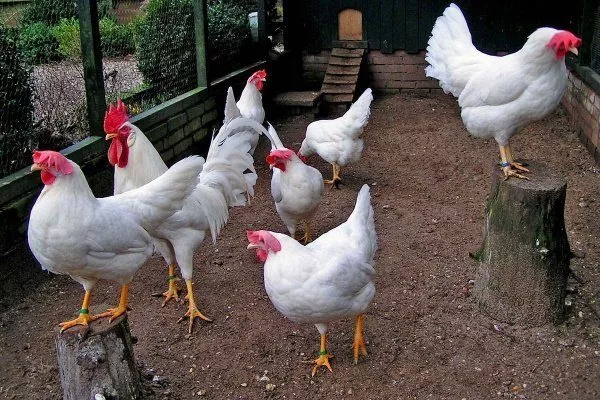
Appearance. They are distinguished by their lean body structure, sloping back, and high-set chest. Their heads are medium-sized and their legs are long. Roosters have a bright red, leaf-shaped, upright comb. Hens have a small comb, which falls to one side after they begin laying eggs.
Roosters have white wattles. Their eyes are reddish or orange. Their beaks are yellow. Their skin has a yellowish tint. Their tails are bushy. Most often, their plumage is white. However, the breed standards specify 20 color variations—motley, black, golden, cuckoo, and others. In Russia, Leghorns are known as white chickens, while colored ones are usually imported from Europe.
Productivity. Egg production is 220-250 eggs per year. Hybrids produce up to 310 eggs. Egg weight is 55-58 g. Hens weigh 2 kg, roosters 2.6 kg. Meat production is low; a 4-5 month old rooster weighs 1-1.5 kg.
Other features. Early sexual maturity begins at 4.5 months. If well-cared for, hens' egg production, unlike crossbreeds, does not decline in the second or third year of life. A hen lays one egg per day, taking a break for molting. Poultry farmers note that Leghorns are shy and nervous, prone to egg pecking.
Pecking can be triggered by any number of adverse factors, including overcrowding, a lack of protein in the feed, dirty feathers, boredom, or bright lighting. In factory farms, beaks are trimmed to prevent pecking.
Conditions of detention. The breed is hardy and resilient. It adapts easily to heat and cold. They can be kept in cages or aviaries. To prevent pecking, the hens are fed a high-protein diet (15% of their daily intake), dimmed lighting, and provided with outdoor exercise.
Russian white
The breed was developed from Leghorns in the 1830s. Thanks to selective breeding, the White Russian was the most popular breed on domestic poultry farms until the 1890s. Today, it has lost ground to egg-laying Leghorns and their crosses. Selective breeding to improve the breed continues.
Direction. Egg.
Appearance. The proud carriage of the body is elongated upward. The chest is broad, the neck is thick, and the belly is voluminous. Pure white plumage. Roosters have a fluffy tail. The legs and beak are yellow. The comb and wattles are bright red. The earlobes are white. The head is small, the comb is leaf-shaped, tilted to the side in the hen.
Productivity. Egg production ranges from 200 to 244 eggs per year, depending on the breed strain. Egg weight ranges from 50 to 75 g. Egg color is perfect white and elongated. Hens weigh 1.8 kg, and roosters 2.5 kg. The meat is not very palatable and is lean. A six-month-old rooster weighs up to 2 kg.
Other features. They are characterized by their unpretentiousness, hardiness, high immunity, and resistance to stress. They are resistant to many diseases (leukemia, carcinoma, Marek's disease). They maintain high egg production into their 2nd and 3rd year of life. They do not become fat and forage well when free range.
Conditions of detention. They can be kept in a coop, with an aviary or pasture, or in cages. The bedding should be made of coarse grains to prevent the chickens' white plumage from becoming dirty. A high fence is essential, as Russian Whites are good flyers.
Hisex Brown
The Hisex Brown is a cross bred by Dutch breeders in 1970. It surpasses its relative, the Hisex White, in egg production. The breed was developed from Leghorns, New Hampshires, and Rhode Island.
Direction. Egg and meat.
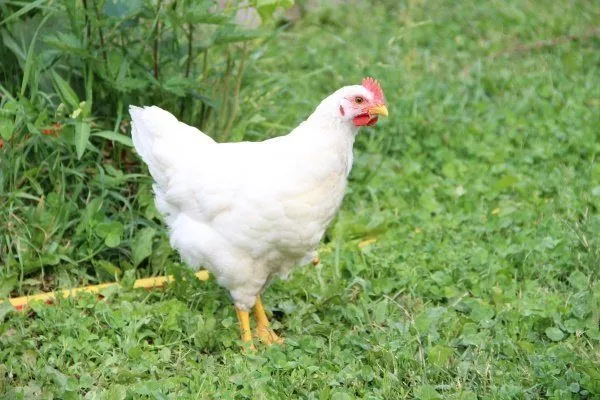
Appearance. The body is compact and muscular. The wings are small, lying close to the sides. The head is medium-sized. The comb is pea-shaped, straight or hanging to the side. The eyes are light green. Males have brownish-golden plumage. The wingtips may have white tips. Females have uniform brownish-red plumage.
Productivity. Egg production: 305-320 eggs per year. Egg weight: 70 g. The eggs are strong, with dark shells. Hens weigh up to 2.3 kg, roosters – 2.6 kg.
Other features. Egg production declines after 2-3 years. They have a balanced temperament, are not shy, are not prone to stress or panic, and are sociable. They are resistant to many diseases, but require vaccination, especially when kept in large numbers. Meat quality declines after 2-3 years, so the herd must be renewed annually.
Conditions of detention. They're easygoing, but don't handle cold very well. They should be kept in a bright, well-ventilated coop, free of drafts. In winter, the temperature in the coop shouldn't drop below 18-20°C, otherwise egg production will drop. In the cold, chickens lose their appetite, their joints become inflamed, and they may develop a sore throat.
Loman Brown
One of the most popular egg-laying breeds. Developed in Germany, it bears the name of its breeder.
Direction. Egg.
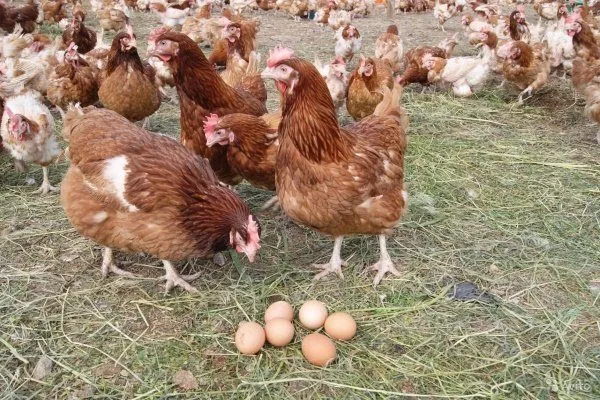
Appearance. The plumage is brown with black speckles. The body is strong and well-formed, with well-developed wings. The chest and belly are broad and convex. The head is small, with a neat, leaf-shaped comb with 6-9 teeth. The beak is gray-yellow and narrow. The feet are the same shade as the beak.
Productivity. Egg production is 300 eggs per year. Each egg weighs 65 g. The eggs have a dense, brownish shell. Hens weigh up to 2 kg, and roosters up to 3.5 kg.
Other features. They are distinguished by their early maturity. They lay eggs even in cold weather. They don't require much feed, are calm, and are not aggressive. They don't get fat. The downside is a decline in productivity after 10 months. After egg production declines, the hens are slaughtered.
Lohmann Brown hens lack the broodiness instinct. Therefore, to raise a flock, you'll need to look for other breeds of hens or use an incubator.
Conditions of detention. They are undemanding in terms of living conditions and quickly adapt to new conditions. Whole grains are not recommended; corn is preferred.
Fayoumi
This is a very ancient breed, developed by the ancient Egyptians. How chickens came to Egypt from Southeast Asia—where the ancestors of domestic chickens lived—is not exactly known.
Direction. Egg and meat. Decorative.
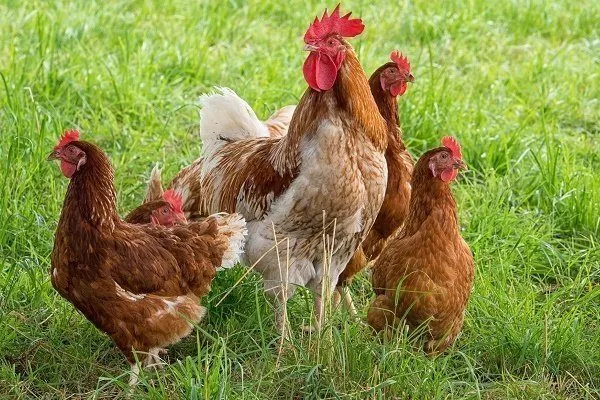
Appearance. The plumage is variegated, with various shades, but most often silvery. Greenish speckles are sometimes present. The breed is very decorative, and the hens look elegant. They have long legs and a high-set tail.
Productivity. Egg production is approximately 100 eggs per year. The eggs are small. Hens weigh up to 1.5 kg, roosters – up to 2 kg.
Other features. They begin laying eggs at 4 months. The brooding instinct is present, but it doesn't develop until 2 years of age. They run fast and move easily. They have a strong immune system and are very sociable with people.
They incubate their young themselves. They are omnivorous, finding food in any conditions. They are valiant defenders of their young, have a strong desire to build nests, and are resistant to many chicken diseases. They grow slowly, laying few eggs, and even then, they are small. They tend to climb to higher altitudes.
Conditions of detention. This breed is almost never found in Russia. However, since it tolerates hot and dry climates well, it can be bred in southern regions. They prefer spacious coops and runways. High fencing is necessary, as Fayoumi are good flyers, or their wings should be clipped. They do not tolerate cold well.
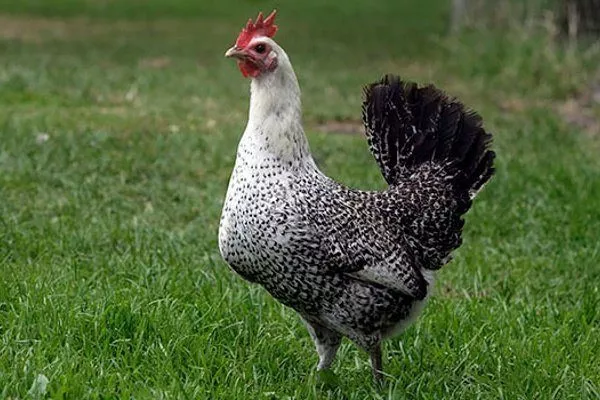
Ushanka
A rare, nearly extinct breed. Its origins are unknown.
Direction. Egg. But sometimes it's also called meat-and-egg. The owner decides which is more important—eggs or meat.
Appearance. The breed gets its name from the luxurious sideburns that cover the earlobes. The Ushanka has a beard beneath its beak. Its plumage is mostly brown and black, occasionally white. Its body is medium-sized, its legs are short and pink. It has a large, leaf-shaped comb. Its tail is luxurious, with rounded feathers.
Productivity. Egg production is approximately 170 eggs per year. Egg weight is 50 g. Hens weigh 2 kg, roosters – 2.8 kg.
Other features. Compared to other egg-laying breeds, Ushanka is a late-maturing breed – the hens begin laying eggs at 6 months, and not at 4-4.5 months, like other layers.
Conditions of detention. They are undemanding in terms of food and maintenance, and tolerate frost well. They can be bred in cold regions.
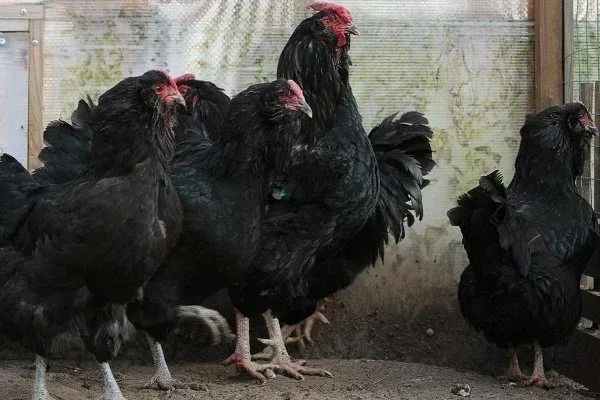
Andalusian
A rare Spanish breed, the Andalusian Blue attracts breeders with its unusual coloring. Everyone would love to have a few of these chickens on their farm. This breed is not commercially produced, but is intended for home breeding only. Its ancestors are Minorcas and blue gamecocks.
Direction. Egg. Decorative.
Appearance. They got their name from their unusual coloring. Their plumage is mottled or black. Their body is massive and proportionate. Their gray beak is curved. They have a large comb. Their eyes are yellow or brown. Their tail has long braids. Their wings are well developed.
Productivity. Egg production is approximately 160-180 eggs per year. Egg weight is 60 g. Hens weigh 2-2.6 kg, roosters 2.5-3.4 kg.
Other features. The brooding instinct is poorly developed. They are very active. The young have a good survival rate. The meat is very tasty and tender.
Conditions of detention. This breed is active and temperamental – they can clash with other birds and require ample exercise.
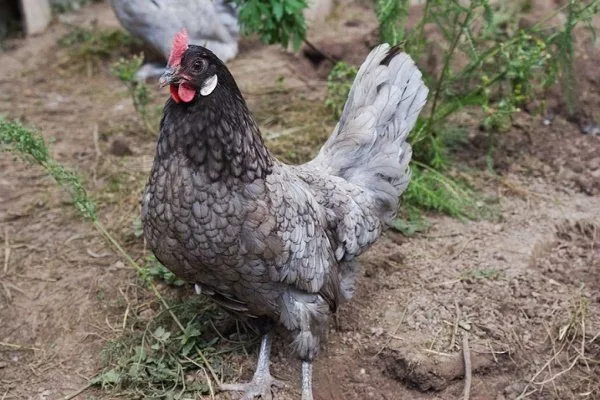
Araucana
A South American breed known to Native Americans for at least 500 years. It was first introduced to the world in 1920 at an exhibition in The Hague. These chickens are very beautiful, have an attractive body, and, most importantly, lay blue eggs.
Direction. Egg and meat.
Appearance. A small body. There is no tail or rump. There is a beard, sideburns, and a crest on the head. The comb is pea-shaped, and the wattles are small. The standard recognizes 12 colors: black, blue, wild, golden-maned, and others.
Productivity. Egg production is approximately 180 eggs per year. The eggs are bluish or greenish in color. Egg weight is 56-72 g. Hens weigh 1.6-2 kg, and roosters 2-2.5 kg.
Other features. Egg laying begins at 5.5-6 months – a bit late for egg-laying breeds.
Conditions of detention. They are kept in small families, separated from other breeds. They have a calm disposition, but roosters can become aggressive in the spring, even attacking their owners. They can be kept in cages and aviaries, but outdoor exercise is recommended.
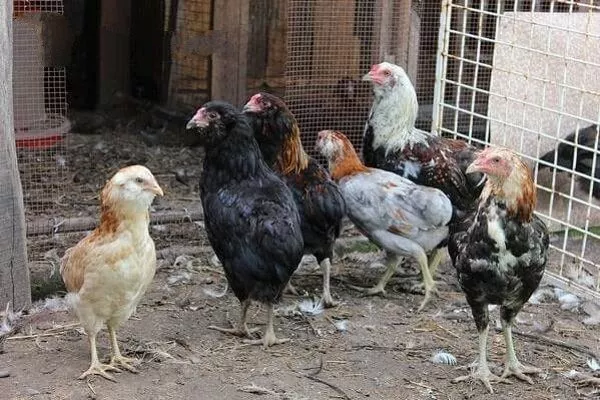
Tetra
The breed was developed by the Hungarian company Babolna TETRA. Selection took 40 years. This highly prolific breed is bred in 30 countries worldwide.
Direction. Egg and meat.
Appearance. The plumage is bright, reddish-brown. The head is small, the bill is white and yellow, and the comb is leaf-shaped. The body is rectangular, with a small neck and tail. The legs and wings are medium-sized. The eyes are orange.
Productivity. Egg production in the first year is 230-250 eggs, then about 300 eggs per year. Egg weight is 60 g. Hens weigh 2.5 kg, roosters 3-3.5 kg.
Other features. Males and females can be distinguished from each other on the first day of life: males are fawn-colored, while males are white. The meat has excellent flavor.
Conditions of detention. There are no special requirements for the Tetra breed. The bird is unpretentious and easily adapts to any circumstances. All they need is a spacious coop with perches 70-80 cm high.
Dominant
This breed was introduced by Czech breeders by crossing different egg-laying breeds – Sussex, Rhode Island, Leghorn, Cornish and Plymouth Rock.
Direction. Egg and meat.
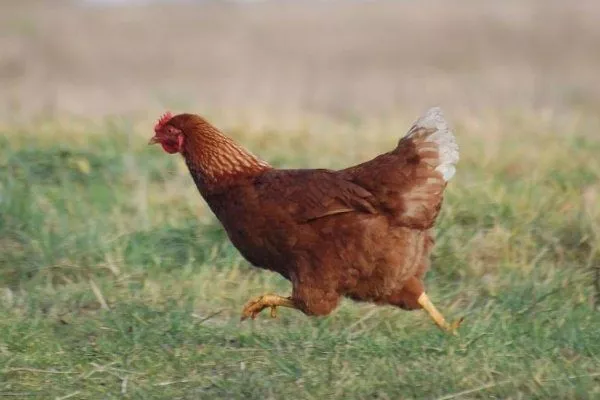
Appearance. The plumage can be red, black, brown, or speckled. The body is strong, with a slightly elongated shape. The head is small. The legs are light yellow, and the shins are fleshy. The eyes are orange.
Productivity. Egg production is 300-320 eggs per year. Egg weight is 65-70 g. Hens weigh 2.2 kg, roosters – 3 kg.
Other features. It's easy to distinguish the sexes by their coloring in the first days of life. Chicks have a good survival rate. They are calm and moderately active. They have no broody instinct. The meat is tasty and highly nutritious. They lay eggs from 5-6 months.
Layers Dominant breeds have a distinctive feature - they do not stop laying eggs during molting, which worsens the quality of the clutches.
Conditions of detention. They are undemanding and can withstand light frosts without affecting productivity. Insulation of the house is recommended. The temperature should not fall below 5°C. No more than 4-5 hens should be housed per square meter.
Minorcas
The breed's origin is the Mediterranean island of Menorca (Spain). It was developed by crossing local chicken breeds. The Minorca's main advantage is its large, tasty eggs. The breed was brought to Russia in 1885 as a gift from the Turkish Sultan. Since 1911, the breed has been officially standardized in Russia. It is not used for commercial breeding.
Direction. Egg and meat. Decorative.
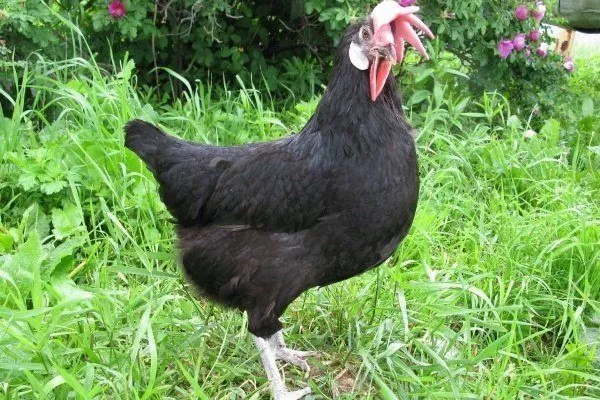
Appearance. The body is medium-sized. Their small head and elongated neck give them a graceful appearance. The comb is leaf-shaped, bright red, and serrated. In hens, it is tilted to one side. The beak and claws are dark. The plumage is black with a green sheen. Bright white earlobes and a rich red comb make the Minorca one of the most striking and beautiful breeds. White Minorcas are occasionally seen.
Productivity. Egg production is 200 eggs per year. Egg weight is up to 70 g. Shell color is white. Hens weigh 3 kg, roosters – 4 kg.
Other features. They start laying eggs at five months. They have no brooding instinct and are very shy.
Conditions of detention. Warm, heated poultry houses are required. They dislike dampness and drafts. Fencing and a spacious run are required.
Pushkin striped-motley
The breed was developed specifically for farms. Selection lasted from the mid-1970s to 2005 at the Experimental Farm of the Research Institute of Gastroenterology and Gastroenterology in Pushkin. The official name of the breed is Pushkinskaya Striped-Piestraya. There are two varieties of the breed—Moscow and St. Petersburg—which differ in their interior appearance and productivity.
Direction. The authors position the breed as an egg-laying one, but it could well be classified as an egg-meat breed, as they are much heavier than regular layers.
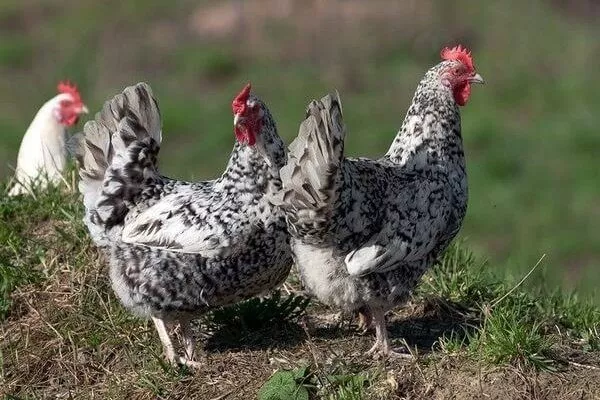
Appearance. Beautiful exterior. The plumage is black and white with a white undercoat. The hens appear dusted with snow. The roosters are light-colored with dark spots. The head is small and elongated. The beak is light and curved. The comb is rose-shaped and has large wattles. The tail is carried vertically. The wings are long and slightly drooping.
Productivity. Egg production is 220 eggs per year, although 250-270 eggs are also common. Egg weight is up to 58-60 g. Hens weigh 1.8-2.5 kg, and roosters 2.6-3 kg.
Pushkin chickens produce unusually large eggs – double-yolk, 110 g each.
Other features. The carcasses have a beautiful marketable appearance. The meat is tasty. They begin laying eggs at 5 months. They continue laying eggs for 3-4 years without declining fertility.
Conditions of detention. They are undemanding, hardy, and disease-resistant. They overwinter in unheated houses. Roosters with rose combs tolerate frost better, while leaf-shaped combs are susceptible to frostbite.
Hamburg
This breed not only produces good eggs but is also quite decorative. It is an ancient Dutch breed, whose ancestors appeared almost 300 years ago. The breed was obtained by crossbreeding. Cochinchins, Yorkshire chickens and other breeds.
Direction. Egg. Sports and decorative.
Appearance. The body is compact and elongated, the head is small and has a rose-shaped crest. The eyes are dark red. The beak is short and dark. The earlobes are bright white. The neck is elongated and beautifully arched. A mane of feathers covers the "shoulders." The plumage is variegated or solid, sometimes striped or spotted. The tail is fan-shaped.
Productivity. Egg production is 190-195 eggs per year. Maximum: 250 eggs per year. Egg weight: up to 60 g. Hens weigh 1.5-2 kg, roosters 2-2.5 kg.
Other features. The breed's main advantage is its high egg production under any conditions. They adapt well to any environment. They have no brooding instinct. They live in families, headed by a rooster.
Conditions of detention. In winter, daylight hours need to be increased to 13-14 hours, and they need daily exercise – a spacious enclosure is built for them.
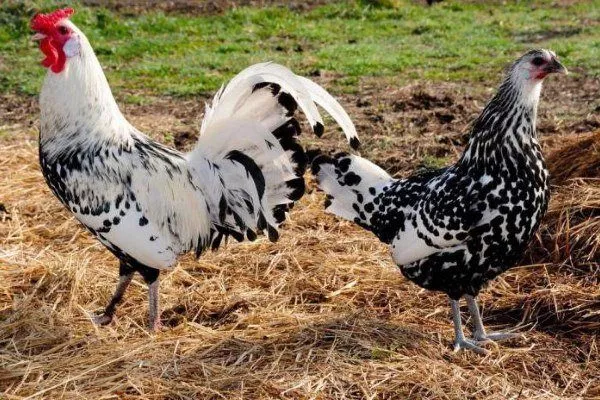
Moscow Black
A young but popular breed. Officially approved in 1980, it was developed specifically for harsh climates. The breed was developed jointly by the Moscow Agricultural Academy and the Bratsevskaya Poultry Farm (Moscow Region). The breeders based their development on the Yurlovsky, Golosistye, Partridge, and New Hampshire chickens.
Direction. Meat and eggs.
Appearance. An elongated body with powerful muscles. Dense black plumage. Copper or gold speckles are present on the shoulders, mane, and back. The head is broad, with a leaf-shaped crest. The black beak is curved. The eyes are orange. The earlobes are red or white. The tail is set low.
Productivity. Egg production is 220-280 eggs per year. Egg weight is 55-60 g. Hens weigh 2-2.5 kg, roosters – 3-3.5 kg.
Other features. Excellent disease immunity. High chick survival rate. They may peck snow instead of water in winter.
Conditions of detention. They are easy to care for and feed. They are highly frost-resistant and can overwinter in unheated rooms.
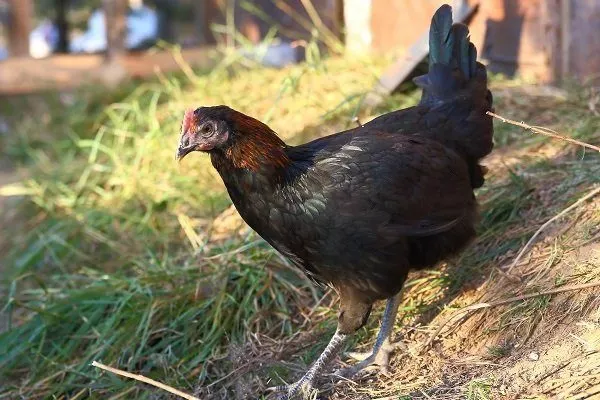
New Hampshire
This American breed first appeared in the states of Rhode Island and Massachusetts. It was registered in 1935. It was brought to the USSR in the 1940s.
Direction. Meat and eggs.
Appearance. The plumage is a rich red. Roosters have a bushy tail with a green sheen. The head is small with a bright red comb. The body is strong, elongated, and muscular. The legs are powerful. The chest is broad. The tail is short.
Productivity. Egg production is up to 200 eggs per year. Egg weight is 58-60 g. The eggs are yellow-brown or dark brown. Hens weigh 2.1-3 kg, roosters 3-3.7 kg.
Other features. They are curious and friendly, with a calm disposition. Roosters are not aggressive. Maternal instinct is very rare in laying hens.
Conditions of detention. Their main advantage is their undemanding living conditions. However, floor bedding is recommended. Perches are not necessary; nests are placed on the floor. Walking is essential, as the breed is very active.
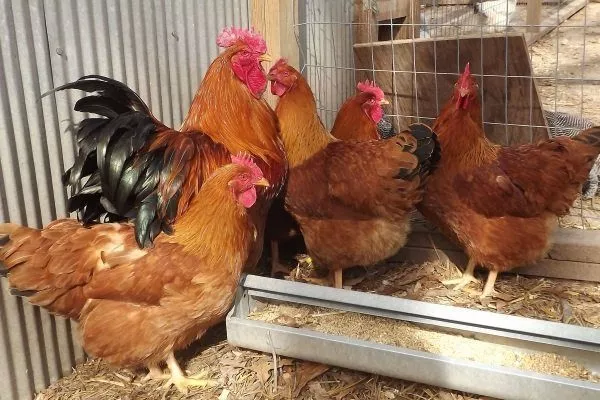
Kuchinskaya Anniversary
The breed was developed at the Kuchinsky Farm (Moscow Region) with the participation of specialists from the Timiryazev Moscow Agricultural Academy. Officially Kuchinskaya Yubileinaya breed registered in 1990
Direction. Meat and eggs.
Appearance. The plumage is golden-calico in various shades. The roosters are stately, mostly red. The mane and back are glossy. The breast and tail are black. The plumage of the hens is reddish in shades. The feathers are edged with black.
Productivity. Egg production is 160-200 eggs per year. Egg weight is 57-60 g. Hens weigh 2 kg, roosters – 2.4 kg.
Other features. Exceptionally tasty meat. High egg production. Calm temperament. The brooding instinct has not been completely lost.
Conditions of detention. They adapt to any conditions and feeding. They can be kept in cages.
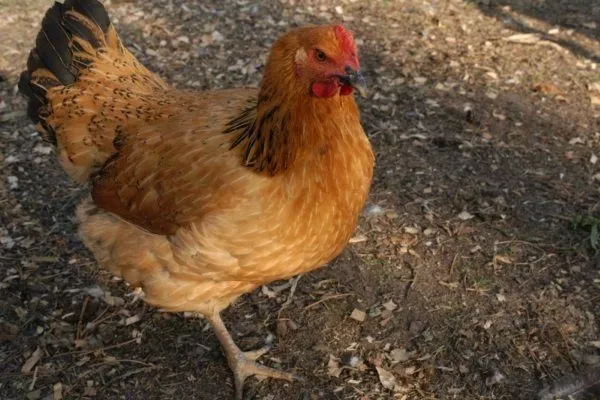
Plymouth Rock
Plymouth Rocks trace their history back to the 19th century. Their name comes from the American town of Plymouth. The breed was officially recognized in 1910. In the West, white Plymouth Rocks are prized more highly—their meat is considered more delicious and nutritious.
Direction. Meat and eggs.
Appearance. The plumage is white, gray, black, fawn, and partridge. The beak is yellow. The comb is leaf-shaped. If the body and chest form a rectangle, it is a good layer; if it forms a triangle, it is a poor layer.
Productivity. Egg production is 170-190 eggs per year. Egg weight is 60 g. Hens weigh up to 3.5 kg, roosters – 5 kg.
Other features. Calm and docile, roosters are not aggressive. Hens are reluctant to leave their run and do not fly over fences. They are disease-resistant.
Conditions of detention. No special requirements. Grass walking is recommended.
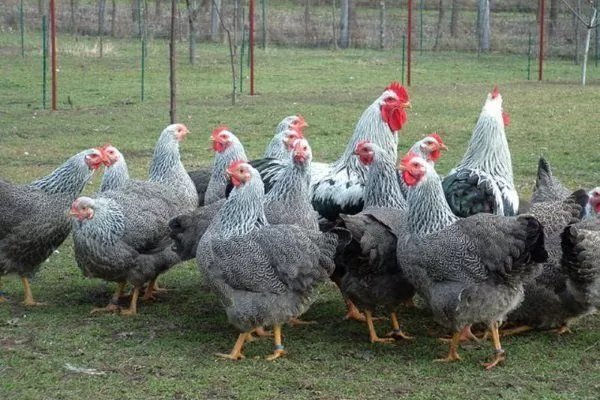
Barbezieux
An ancient French breed, this bird is very elegant and will brighten up any poultry yard.
Direction. Meat and eggs.
Appearance. The body is powerful, the legs are long and strong. The plumage is black with a greenish tint. The eyes are yellow-brown. The comb and beard are bright red. The earlobes are large and white.
Productivity. Egg production is 200-250 eggs per year. Egg weight is over 60 g. Hens weigh 3.5 kg, roosters – 4 kg. Adult roosters can reach 6 kg.
Other features. Egg-laying begins at 6-8 months. The meat is very tasty, similar to duck.
Barbezieux chickens have meat of an unusual red color. The French consider it a delicacy and usually braise it in wine.
Conditions of detention. Tolerates climate fluctuations well. Can overwinter in unheated rooms. Wings are clipped to prevent them from flying out of the enclosure.
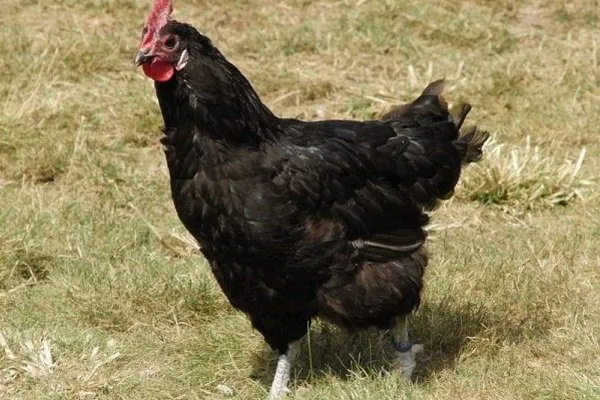
High Line
This is a hybrid breed of chicken, developed in the USA in 1936.
Direction. Egg.
Appearance. Small, slender body. Triangular body shape. Pink leaf-shaped comb. Equally pink wattles. Yellow eyes. Small head, yellow beak. White or brown plumage—there are brown and white crosses.
Productivity. Egg production is up to 250 eggs per year. Egg weight is 50-65 g. Hens weigh 1.5-1.8 kg, roosters – 1.8-2.3 kg.
Other features. Strong immunity, calm disposition. Short egg-laying period – up to 1.5 years.
Conditions of detention. Undemanding in care.
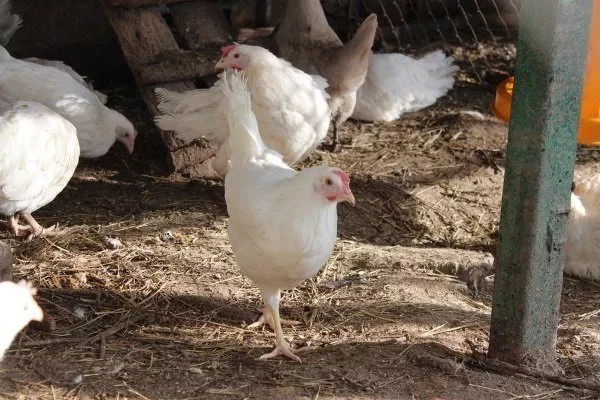
Breckel
A very ancient breed. For the past three hundred years, the Braekel has been the most popular chicken breed in Belgium. It is distinguished by its distinctive coloring.
Direction. Egg.
Appearance. The body is squat and stocky. The neck is short. The head is small. Two types of plumage are available: golden and silver. Silver plumage has a white head, back, and neck. In the golden plumage, black predominates, with red instead of white. The eyes are black. The beak is gray. The legs are thin and gray.
Productivity. Egg production is up to 220 eggs per year. Egg weight is 65 g. Hens weigh 1.8-2.2 kg, roosters – 2.5-2.7 kg.
Other features. The meat tastes like game—tender and juicy, like that of wild partridges. Egg-laying begins at 4 months. They are non-confrontational.
Conditions of detention. Because Brakels are very active, they require a large, fenced enclosure.
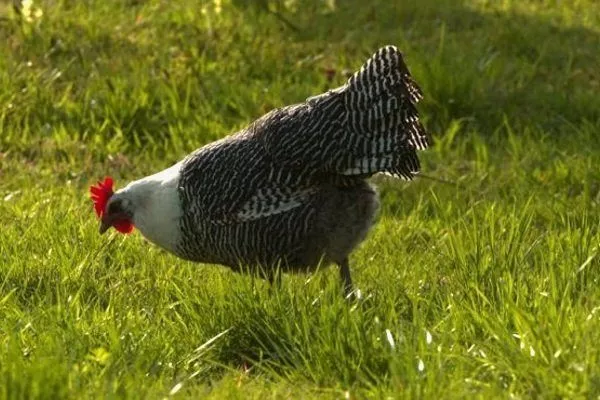
Italian Partridge
The breed originates from Italy. It is very ancient, appearing in the first century AD, or perhaps even earlier.
Direction. Egg.
Appearance. The plumage is most often brown. Blue, golden-maned, silver, and pearl-maned plumage are also found. The head is small, with a scalloped purple comb. In hens, the comb is tilted to the side. The eyes are red. The skeleton is light and well-developed. The body is trapezoidal. The legs are small, strong, and yellow or sand-colored. The tail is bushy.
Productivity. Egg production is up to 180 eggs per year. Egg weight is 58 g. Egg color is white. Hens weigh 2-2.5 kg, roosters 2.8-3 kg.
Other features. Very tasty meat. Maternal instinct is not developed.
Conditions of detention. They are sensitive to temperature fluctuations, dampness, drafts, cold, and heat, so they require a warm, well-ventilated coop. Walking is beneficial.
Shaver Brown
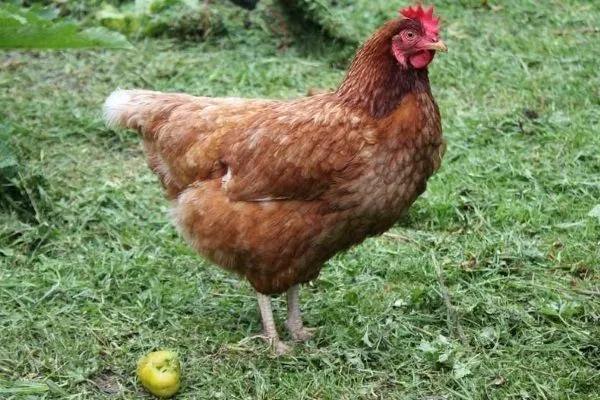
This is one of the best egg-laying crosses. It was developed in Europe. Besides the Brown, there are two other crosses with different plumage patterns: White and Black.
Direction. Egg.
Appearance. The plumage is brown. The down is white. The tail is slightly drooping. In roosters, the tail hangs down. The erect leaf-shaped comb is bright red. The earlobes are white. The body is compact.
Productivity. Egg production is up to 300 eggs per year. Egg weight is 58-63 g. Hens weigh 2 kg, roosters – 2.5 kg.
Other features. A rooster is not needed in the flock. Crossbreds do not pass on their traits. The meat is used for minced meat for animal feed.
Conditions of detention. Can be raised free range or in cages.
Comparative characteristics of egg breeds (table)
Comparative table of productivity of different chicken breeds for eggs and meat:
| Breed of chickens | Egg production, pieces/year | Egg weight | Average weight of a hen/rooster, kg |
| Leghorn | 220-250 | 55-58 | 2/2.6 |
| Russian white | 200-244 | 50-75 | 1.8/2.5 |
| Hisex Brown | 305-320 | 70 | 2.3/2.6 |
| Loman Brown | 300 | 65 | 2/3.5 |
| Fayoumi | 100 | 40-45 | 1.5/2 |
| Ushanka | 170 | 50 | 2/2.8 |
| Andalusian | 160-180 | 60 | 2.5/3.3 |
| Araucana | 180 | 56-72 | 1.8/2.4 |
| Tetra | 230-250 | 60 | 2.5/3.5 |
| Dominant | 300-320 | 65-70 | 2.2/3 |
| Minorcas | 200 | 70 | 3/4 |
| Pushkin striped-motley | 220-270 | 58-60 | 2.4/3 |
| Hamburg | 190-250 | 60 | 2/2.5 |
| Moscow Black | 220-280 | 55-60 | 2.5/3.5 |
| New Hampshire | 200 | 58-60 | 3/3.7 |
| Kuchinskaya Anniversary | 160-200 | 57-60 | 2/2.4 |
| Plymouth Rock | 170-190 | 60 | 3.4/4.5 |
| Barbezieux | 200-250 | 60 | 3.5/4 |
| High Line | 250 | 50-65 | 1.8/2.3 |
| Breckel | 220 | 65 | 2.2/2.7 |
| Italian Partridge | 180 | 58 | 2.5/3 |
| Shaver Brown | 300 | 58-63 | 2/2.5 |
Comparing the egg and meat productivity of different breeds, we can draw the following conclusions:
- The choice of breed, its type, and productivity depends on the goals. If the goal is to produce a large number of eggs quickly, it's advantageous to choose crossbreeds, such as Hisex Brown and Loman Brown. These hens produce 300-320 eggs per year, allowing for a good profit when raising hens for eggs.
- For backyard farming, breeds that provide their owners with eggs and, after a couple of years, produce good meat are beneficial. For example, Plymouth Rocks or Pushkin chickens. The latter are also extremely frost-resistant, which is important for domestic private farms.
- For commercial production aimed at producing egg mass, smaller layers are suitable, such as Leghorns and Russian Whites. For private owners, however, egg-and-meat and meat-and-egg breeds are more suitable, as they, in addition to high egg production, also have good meat production.
- ✓ The optimal temperature in the poultry house should be maintained at 12-16°C for maximum egg production.
- ✓ Indoor air humidity should not exceed 60-70% to prevent respiratory diseases.
- ✓ Lighting should be at least 14-16 hours a day to stimulate egg laying.
The egg-laying chicken is the ideal poultry, unrivaled in popularity by any other livestock. The secret of the chicken is simple: it provides its owners with two valuable products at once: delicious, nutritious eggs and excellent, lean meat. By choosing a breed based on productivity, you can plan ahead for egg and meat yield, and therefore, your income.