
Redbros are a popular breed that has already gained popularity among many breeders. These birds are distinguished by their attractive appearance, high productivity, and ability to adapt to any conditions. These qualities are prized by farmers who breed them for profit.
The Origin of Redbro
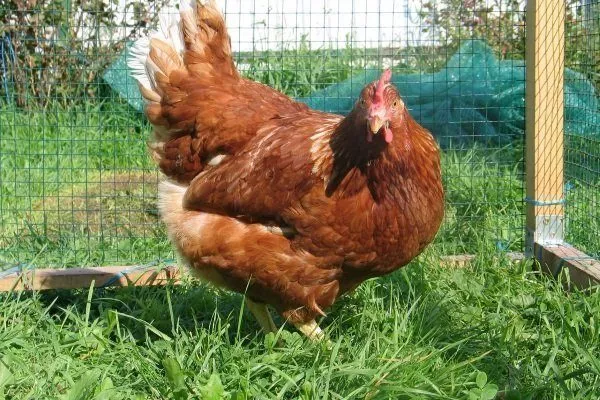
These birds have a centuries-old history. Their breeding began in the early 20th century. These birds are distinguished by their red plumage as adults, which is where they got their name. Scientists' goal was to produce birds with greater weight and excellent meat flavor. The attractiveness of these birds is just an added bonus of this selective breeding.
The birds were bred in England. The selection involved combining Malay and Cornish fighting birds. Specialists from Hubbard, a company renowned worldwide and with several branches in other countries, worked on the hybrid.
Today, this hybrid has become popular and sought after by many poultry farmers. Some poultry farms have chosen Redbro chickens for commercial production. Due to their productivity, this chicken is considered a meat-and-egg breed and is considered a versatile choice.
Appearance and characteristics
Large birds are characterized by a large head, topped by a pod-shaped or leaf-shaped crest of bright red. They have brightly colored earlobes. Their plump bodies rest on powerful legs. The chest is slightly protruding forward. The wings are small and lie close to the body. The neck is thin and long, sometimes resembling small ostriches.
Before their first molt, these animals are indistinguishable in appearance from ordinary chickens, a fact often exploited by unscrupulous sellers who sell them to buyers as young chickens. These birds have red plumage, sometimes shading to a reddish-brown hue.
A distinctive feature of these birds is their calm nature. They are peaceful and rarely get into conflicts. However, the breed is considered freedom-loving. They require spacious coops and a place to run. How to build a suitable chicken coop yourself – read here.
Their dense plumage allows them to tolerate cold well, but low temperatures in the coop are undesirable. They feel comfortable at 25 degrees Celsius. Otherwise, they are considered an easy-to-care-for animal, making them profitable and easy to breed.
Productivity
Redbros are often called colored broilers because they tend to gain weight quickly. At two months, they weigh around 2.5 kilograms. These chickens actually grow faster than typical meat and egg-producing birds. Adult females reach 3 kilograms, while males reach 4.5 kilograms.
The bird's egg production is particularly impressive: a female lays up to 300 medium-sized eggs per year. Each egg weighs 65-70 grams, and the shell color is white or cream. Laying begins at 5-6 months.
Content
Birds are kept in a standard poultry house, equipped with the required number of perches, feeders, and waterers. Helpful tips:
- The poultry house must have a container with ash and sand - chickens take dry baths in these components, which becomes an excellent protection for them from the appearance of parasites.
- Redbros are considered clean birds. For this reason, the coop requires regular cleaning—at least once a week.
- Timely vaccination of all livestock is essential. The farmer will also need to disinfect the premises.
- The ceilings and walls of the poultry house are whitewashed and left for 24 hours to air out. After this, the chickens are moved in.
The coop should be spacious and bright. It should be built so that the height is no more than 180 centimeters. No more than 20 birds per 10 square meters should be allowed. Perches about 7 centimeters thick should be installed on the back wall of the coop, otherwise the birds will be uncomfortable perching on them.
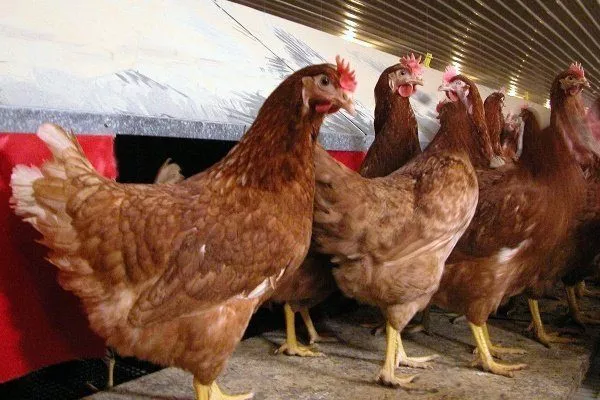
A mandatory requirement is the provision of nests for laying hens, clean and dry bedding, and an aviary for the birds – this is where they will walk and feed on the food they find.
| Object | Weight of an adult (kg) | Egg production (pieces/year) | Start of laying (months) |
|---|---|---|---|
| Redbro M | 3 | 300 | 5 |
| Redbro S | 4.5 | 250 | 6 |
Varieties
There are several different breeding variants with different appearances – M and C. Representatives of the C hybrid do not have feathers in the neck area, for this reason they can hardly be called attractive.
Bird molting
Like other broilers, red hens are prone to an annual molt, but theirs is quicker and less painful. This is the only time of year when hens retire, ceasing to lay eggs. The rest of the year, egg production remains virtually constant.
This hybrid boasts robust health and a high survival rate, but this can be challenging during molting. Farmers will need to provide the birds with the best possible conditions and excellent nutrition.
Regarding the lifespan of birds, it makes no sense to keep them for more than two or three years. Poultry farmers usually slaughter them when they reach two years of age—keeping them longer than that is not profitable.
Feeding and diet
Due to today's demand for free-ranging chicken meat, Hubbard began producing crossbreeds capable of living like farmyard birds. Redbro crossbreeds truly don't require a special diet.
The chicks are fed the same way as the chicks of a standard laying hen. In the first few days, they are introduced to a high-protein diet. After a few weeks, they are transitioned to an adult diet. The owner is free to decide what to feed the animals. Redbros can be fed with commercially prepared feeds, homemade grain mixtures, and wet mashes.
To satisfy a single Redbro, the feed amount is gradually increased depending on the bird's age. At two weeks, chicks are fed 100-150 grams of feed, and at three weeks, this amount is increased by 50 grams. At 30 days, chicks are given at least 200 grams of feed, and six-month-olds eat portions of approximately 300-350 grams.
- ✓ The ratio of proteins to carbohydrates in the diet should be 1:4 for optimal growth.
- ✓ Adding vitamin complexes to water improves immunity and productivity.
Free-ranging birds can forage for their own greens. During winter, they will need to be fed finely chopped vegetables and root vegetables.
Breeding and caring for chickens
Redbro chickens are excellent breeders. However, it's recommended to purchase day-old chicks from reputable poultry farmers, which cost around 50 rubles per chick. Incubator eggs are also acceptable. If the farmer doesn't want to use laying hens for rearing, it's better to place the eggs in an incubatorBut to achieve this, it's important to follow certain rules to ensure a high chick survival rate:
- Choose eggs that are uniform in size and free of any defects, including dirt. Wipe the eggs with a cloth soaked in potassium permanganate.
- It is advisable to place the eggs in the incubator in the evening to increase the likelihood of the babies being born during the day or in the evening rather than at night.
- The humidity level in the incubator should not be less than 75%, and the temperature +39 degrees - these are the indicators for keeping eggs in the first 11 days.
- For the next 7 days, the air temperature in the incubator should be +38.5 degrees, humidity – up to 50%.
- For the remaining three days, the eggs in the incubator remain at a temperature of up to 37.5 degrees.
At the final stage, be sure to open all ventilation ducts in the room to ensure good ventilation.
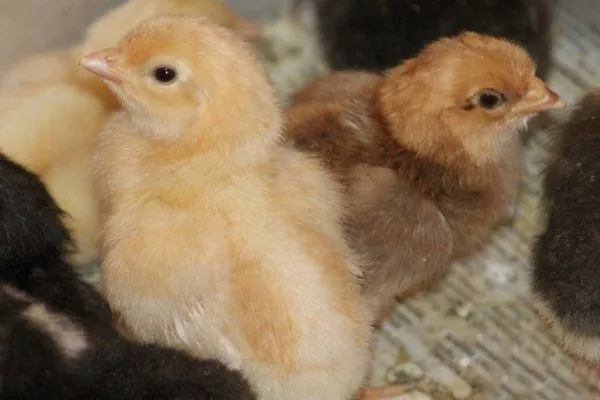
Newly hatched chicks are light brown in color and weigh about 40 grams. They gain weight quickly, adding about 1 kilogram in just one month. Newly hatched chicks are not yet very receptive to external conditions, so the farmer must create a comfortable environment for them. To help the birds grow stronger and adapt quickly, follow these recommendations:
- Initially, keep the chicks in a box with warm bedding on the bottom. On the first day, the temperature should be 30-32 degrees Celsius. Then, reduce it by 2 degrees weekly. By the 30th day, the chicks should be kept at a temperature of 18 degrees Celsius.
- 24-hour lighting is essential for the chicks during the first two days. After that, 13-14 hours of light will be sufficient.
- The babies are fed in the same way as broiler chicks.
It is not advisable to introduce solid food to chicks too quickly, as this may cause digestive problems.
Diseases, treatment and prevention
The breed's advantages include its strong immune system and increased resistance to various diseases. Among the most common are:
| Disease | Symptoms | Treatment/Prevention |
| Typhus | A dangerous disease that causes digestive upset in birds. Typically, chicks refuse to eat, develop loose stools, and develop a fever. They appear weak. If the sick bird is not promptly isolated, there is a risk of infecting other birds in the coop—this disease is spread through the air. | Antibiotics are used for treatment. |
| Coccidiosis | A disease transmitted by parasites through direct contact. The bird suffers from diarrhea, becomes lethargic, and develops a fever. | To combat parasites, special medications are used, prescribed by a veterinarian. The medication is given to birds along with food or water. |
| Pasteurellosis | Redbro chickens are very often susceptible to this disease. Farmers can recognize the bird's infection by a decrease in activity, an elevated body temperature, a change in the color of the comb and ears, and the appearance of mucus discharge from the sinuses. | Birds are treated with sulfonamide medications. The entire poultry house must be disinfected along with the treatment. |
| Salmonellosis | If vaccinations are not administered in a timely manner, the disease can kill the entire flock. Infected birds become weak, refuse food, stop growing, and develop loose stools and swelling around the eyes. | To combat the disease, a furazolidone solution is added to the water. The birds are given this water for 10 days. |
Pros and cons of Redbro
The Redbro breed has many advantages, which makes them especially appreciated by farmers choosing the breed for breeding.
The following qualities of animals are distinguished:
- Early maturity. Birds reach sexual maturity and begin actively working at just five months. They often produce up to 300 medium-sized eggs per year. However, some poultry farmers have noticed that white broiler chicks grow much faster than Redbros. However, red birds consume less feed.
- High adaptability to any conditions. Birds of this breed can acclimate anywhere. The only difference between a free-roaming chicken and a confined one is that its meat is much tastier than that of a bird kept in a confined space.
- They are unfussy eaters. These birds tolerate locally available food sources very well. For this reason, the breed is considered easy and simple to breed.
- Frost resistance. Birds can roam outdoors at temperatures as low as -5 degrees Celsius without any impact on their productivity.
- Rapid molting. The molting process in Redbros is faster and less painful than in other breeds.
- Hardy and healthy, Redbros rarely suffer from colds and don't require many vaccinations.
- Excellent temperament. Representatives of this breed have a calm temperament, which allows them to be kept with birds of other breeds. Individuals do not show aggression towards either other animals or their owners.
Reviews of the breed
Reviews of the Redbro breed are mixed online. Some are positive about the birds, while others complain that they aren't as easy to care for.
Redbro chickens are bred for their eggs and tasty, dietary meat. They are renowned for their low maintenance, ease of breeding, and calm temperament. Farmers value this breed for its rapid weight gain, which ensures higher profits.