
Broiler guinea fowl are popular birds, prized by backyard farmers. The breed is characterized by its low maintenance, minimal feed consumption, and enormous nutritional value. Breeding the birds not only brings profit from sales but also provides the opportunity to produce eggs and meat for personal consumption.
Origin and features of appearance
Broiler guinea fowl were developed in France. Breeders wanted to produce animals with high meat quality. They succeeded in producing birds that could reach a weight of up to 4 kilograms. The breed also boasts excellent egg production.
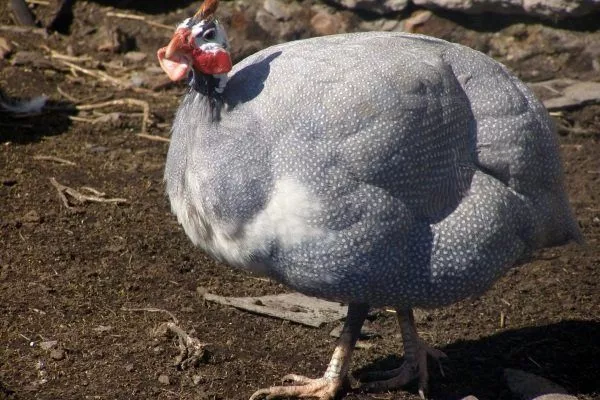
This animal is characterized by a large, massive, oval-shaped body. An adult stands approximately 50 cm tall. The broiler guinea fowl has an important, proud gait. It has a broad, convex chest and a small, downward-pointing tail. The sternal keel is weakly defined. The bird's gray legs are featherless. A small, rounded head with a dark bony growth and scarlet wattles rests on a thin, elongated neck.
The broiler guinea fowl has blue feathers on its neck. Its base color is gray-speckled or pearl. It has dense plumage. Individuals with darker shades of gray are also found.
Advantages and disadvantages
Positive characteristics of broiler guinea fowl:
- Breeding broiler birds is not as popular as raising chickens, which makes this business profitable due to the lack of competition.
- Broiler meat contains easily digestible protein and minimal amounts of water and fat. It is also cholesterol-free. The meat has excellent flavor, is a dietary product, and retains its flavor even when cooked.
- Because birds feed on worms, slugs and other harmful insects, vegetation will be protected from parasites.
- Guinea fowl eggs contain B vitamins, vitamin A, and vitamin D3. This is significantly higher than in regular chicken eggs. Broiler eggs do not cause allergic reactions, making them suitable for use in baby food.
- Broiler guinea fowl have increased resistance to many infectious diseases.
- Bird feathers are used to make various things, so it is no less profitable to breed broilers for the sale of this product.
- Guinea fowl are distinguished by their friendly nature. For this reason, they can be kept with other breeds.
- Broilers do not require special conditions of keeping and are not able to understand feed.
Although guinea fowl have many advantages, they have no fewer negative qualities:
- To maintain productivity, you will need to provide good lighting in the chicken coop.
- Because the birds are shy and have a restless temperament, they may make noise when they see potential danger.
- The birds are too timid, which has a negative impact on their egg production.
- Birds are not inclined to lay eggs in one place and incubate them. Because of this, eggs have to be brooded by hens or the chicks raised artificially using an incubator.
- Guinea fowl love to fly. High, stable fencing or wing clipping are essential.
Varieties
| Name | Weight of an adult, kg | Egg production, pcs/year | Disease resistance |
|---|---|---|---|
| Grey-speckled guinea fowl | 3.0-3.5 | 140 | High |
| Blue guinea fowl | 2.5 | 150 | Very high |
| Zagorsk broiler | 1.8-2.0 | 130 | Average |
| Siberian white guinea fowl | 2.0 | 150 | High |
| Cream guinea fowl | 1.7 | up to 100 | Low |
There are several varieties of broiler guinea fowl, bred by crossing different birds. Some of these species are particularly popular in Russia. Experts note the following common varieties of broiler guinea fowl:
- Grey-speckled guinea fowl. The name comes from its distinctive coloring. This variety is also known as the French variety.
- Blue breed. It is distinguished by its increased resistance to many diseases, including leukemia. This is due to the low vitality of the birds.
- Zagorsk broiler. This bird has a white breast. The birds were created by crossing them with chickens. They have fluffy, loose plumage.
- Siberian white guinea fowl. It is known for its hardiness. However, it is rarely bred due to its low productivity.
- Creamy. The rarest species of guinea fowl. The birds have a gray head, which distinguishes them significantly from other varieties. Of all the other species, these birds produce the fewest eggs per year. Furthermore, their small size makes breeding them unprofitable.
Each breed, in addition to their external characteristics, also has distinct characteristics. Some guinea fowl are prone to diseases such as leukemia, while others are resistant. Some species commonly develop infectious diseases, while others rarely encounter them and survive the illness without complications.
The smaller the bird, the more restless it tends to be. Many guinea fowl species are undemanding about the type of feed farmers feed them. The taste of their meat and eggs may vary depending on the variety.
French guinea fowl
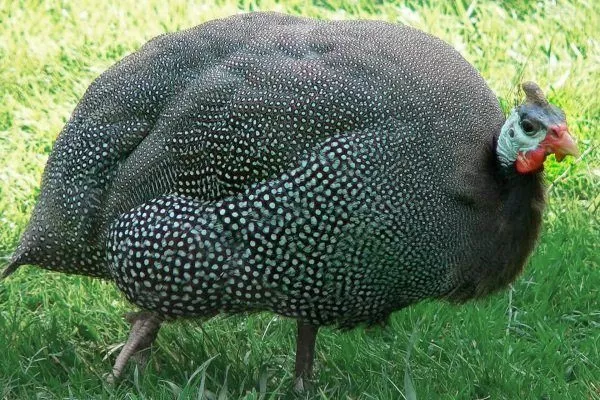
The most famous guinea fowl in Russia is the French (gray-speckled) broiler variety. It is easily recognized by its distinctive plumage. This bird is popular with chicken farmers. Its distinctive features include its large size, oval body, and elongated, featherless head.
French guinea fowl also have a bluish, horny structure near the beak. Their elongated neck gives them a turkey-like appearance. They possess excellent flight qualities, thanks to their heavily muscled wings. Their back is slightly inclined toward the tail, which hangs low to the ground.
The gray-speckled guinea fowl has gray feathers with white speckles randomly distributed over its body. The neck has a slightly bluish tint. Guinea fowl of this species are called "royal birds," a title given to their substantial body mass.
This bird is renowned not only for its excellent egg production but also for its good meat production. This is why farmers prefer to breed these chickens, which allows them to reap significant profits from the sale of eggs and meat.
Productivity indicators
Each variety of broiler guinea fowl has different productivity indicators:
| Variety | Weight of an adult (on average), kg | Number of eggs per year, in pieces |
| Grey-speckled (French) | 3.0-3.5 | 140 |
| Volzhskaya | 2.0 | 110 |
| Blue | 2.5 | 150 |
| Creamy | 1.7 | up to 100 |
| Siberian | 2.0 | 150 |
| Zagorskaya | 1.8-2.0 | 130 |
Guinea fowl eggs are characterized by their dietary properties and contain numerous beneficial elements. When cooked, the meat acquires a light color and has excellent taste.
Keeping broilers
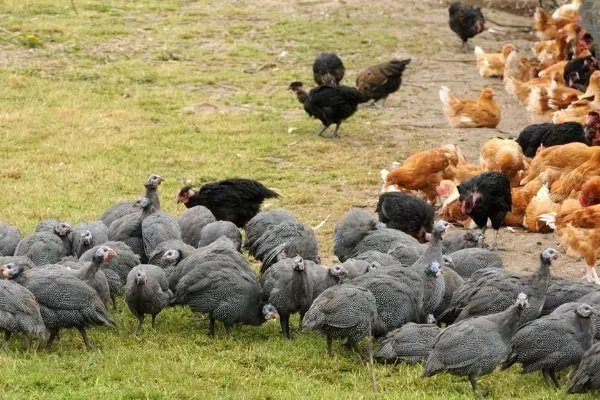
Guinea fowl are considered unfussy birds in terms of diet and care. They are capable of providing for themselves by foraging for food. Farmers must ensure they feed high-calorie, mineral-rich food. In the wild, these birds inhabit undergrowth and shrubs, consuming berries, insects, vegetation, and seeds.
Birds are not prone to damaging garden beds, as they don't dig up the soil in search of food; they are beneficial by collecting insect pests. A characteristic feature of the French cross is its aggressiveness toward strangers.
How to set up a poultry house?
Wild guinea fowl live mainly in Africa in a very hot climate, but can easily tolerate low temperatures.
The poultry house is set up in compliance with certain rules:
- Construction on the sunny side. The building must be protected from northern winds. Windows should be installed, but their area should not exceed 10% of the total wall area. Birds love the sun and bask in its rays. It's best to install the coop in a section with south-facing windows.
- Lighting. Birds tend to lay eggs during the day, which is why they need artificial lighting in winter.
- Insulation of the premises. Protecting the building from drafts will reduce the risk of bird illness. The air temperature in the poultry house should be no higher than 15 degrees Celsius. Adequate ventilation is also essential.
- Perches and nests. Perches are placed approximately 40-50 cm above the floor. There is one nest per 6-8 hens. Nest sizes are 40x30x30 cm. They are preferably placed in areas out of direct sunlight. Eggs are collected only when the hens are absent from the coop, but a few eggs are left behind.
- Feeders. There's one feeder per 5-6 hens. Fill it with feed so it doesn't spill. It's best to make oblong feeders so the birds don't get in each other's way.
- Bedding. It is made from straw, sand, peat, and sawdust. The thickness should be about 20 cm. Be sure to change the bedding at least once a month.
Be sure to glaze the windows and cover them with metal mesh - this will prevent the chickens from trying to fly out the window, which could lead to injury.
Bird care guidelines
Parasites, feces, helminths, and other pathogens often cause chicken diseases. Therefore, the following conditions are essential:
- clean the poultry house from droppings at least once every six months;
- disinfect the chicken coop from parasites once every 6 months;
- carry out a general cleaning (disinfection of perches, walls, etc.) at least once a year;
- wash drinking bowls and feeders once a week.
Nests and equipment should be cleaned and treated outdoors. Metal surfaces should be treated with a gas torch, and walls with lime mortar. Perches should be painted, and waterers and feeders should be disinfected with a solution of baking soda, calcium, and water. Comprehensive disinfection using modern means will help prevent fungal, viral, and infectious diseases.
Walking area
For free-range use, the birds are provided with a covered yard. Netting is stretched around the perimeter and covered with a roof. This area provides at least 2 square meters of space per bird. The floor is covered with bedding made of sawdust, straw, or hay. This allows the birds to be let out even in winter or during rain. The netting should be 2-2.5 meters high.
The area should be filled with shrubs and tall grass. Birds not only rest in shrubs but also build nests. They prefer a well-lit area.
Diet
The diet should include dry grain mixtures and food scraps. Birds are fed commercial compound feed, greens, and grain mash.
Dry grain mixtures may include barley, corn, oats, wheat, and millet. Each bird receives 200 grams of feed per day. When kept in cages, the diet must include animal protein, meat and bone meal, and grass meal. In these conditions, the birds are fed four times a day. Salt, chalk, and shells are also included to supplement the diet with minerals. Gravel is added to a separate feeder.
For adult broilers
Optimally, adult birds are fed a combination of different feeding methods. If the birds are not allowed to roam, they are fed four times a day. If kept in a roaming area, three times a day is sufficient. When roaming, when the grass is abundant and insects are present, the guinea fowl replenishes 50% of its daily ration.
The diet of adult birds should contain the following components:
- vitamins, chalk, fishmeal, yeast – 5%;
- sunflower cake – 5%;
- soybeans – 10%;
- peas – 10-15%;
- barley – 15%;
- wheat – 25-30%.
During the egg-laying period, it's essential to feed the birds fishmeal and grain—these ingredients help provide them with essential nutrients. Shells, grain, and chalk are also included in the diet. Wet mash should be prepared with whey, which helps enrich the diet with animal proteins.
For little chicks
Depending on their stage of development, chicks are fed according to a specific schedule:
- In the period up to 1 month, it is recommended to feed guinea fowl with industrial compound feed.
- Day-old chicks are fed boiled, finely chopped eggs and cottage cheese. The recommended daily feed intake is 10-12 grams, and the recommended daily water intake is 3 milliliters. During the first day, chicks require little, but high-calorie food.
- During the first week, the chicks are fed "Prestart" feed, which contains soy, fishmeal, corn, wheat, vitamins, and minerals—all essential for growth and weight gain. It also contains coccidiostatics and antibacterial antibiotics, which can protect the chicks from infectious diseases. Chicks are fed this feed until they are 10 days old, receiving 15-35 grams per day.
- From 10 to 20 days after birth, they are given "Start" feed—40-75 grams per day. This feed helps strengthen the chick's immune system and promote skeletal development. When feeding the chicks this feed, be sure to also give them boiled eggs, cottage cheese, and fresh herbs. Sprouted grains are also a good addition to their diet—10 grams per chick.
- ✓ Including sprouted grains in the diet to improve digestion and growth.
- ✓ It is essential to add shells or small gravel to improve stomach function.
Breeding Features
The broiler guinea fowl is considered a poor broody hen, due to its timidity and agitation. Its eggs are placed with other hens or incubated. It's best if the females are several months younger than the males. The female-to-male ratio is approximately 5 to 1.
Birds mate after a long period of outdoor play indoors, but this is extremely rare. Hens lay fertilized eggs within three weeks of mating. Eggs should be collected in the morning, placed pointed ends down, and stored for no more than two weeks before incubation. Eggs weighing 45 grams are suitable for incubation. They are checked for the presence of an embryo, and after four weeks, small chicks are hatched.
On the first day, the chicks eat poorly, sometimes even scattering their food. After a few days, they are fed a mixture of cereals (oat, barley, corn, wheat) with powdered milk. On the fifth day after birth, they are given shells or small gravel, and then they are transitioned to a wet mash with greens.
Incubation of eggs
If provided with optimal conditions, guinea fowl can lay eggs for six months a year. By maintaining a constant temperature and daylight hours, this period can be extended to nine months. To ensure fertilized eggs, colonies are kept with a ratio of one male to five females.
Selecting the material for incubation is an important step. Preparation involves intensive feeding of the females, beginning three weeks in advance. The birds' diet should consist of a mash containing cottage cheese, meat scraps, and finely chopped fish. The mash is mixed with whey or sour milk.
Egg selection
Select eggs with clean shells, a smooth surface, no defects or damage, and a regular shape for incubation. Dirty eggs are unsuitable for incubation, as dirt will cause the shell to break and clog the pores, preventing the chicks from breathing and developing properly.
Laying eggs
The incubator is placed in a room where the temperature does not exceed 18 degrees Celsius. The eggs are brought into this room a couple of hours beforehand to facilitate adaptation and warming. Experienced farmers recommend treating the shells with a potassium permanganate solution. The integrity of the shells is checked using an ovoscope.
The incubator is heated to 38 degrees Celsius and disinfected 48 hours before placement. It is also checked to ensure it is functioning properly.
Eggs are loaded into the incubator horizontally if using a manual incubator. If using an automatic incubator, eggs are loaded with the blunt end facing up.
Control and regime
Guinea fowl require a specific incubation regime. Embryos are considered quite demanding. To successfully hatch guinea fowl in an incubator, the following regime is recommended:
- Days 1-7 – temperature 38-38.2 degrees, humidity – 70%, turning – 4 times a day;
- Day 8-25 – temperature 37.8 degrees, humidity – 60%, turning – 4-6 times a day;
- Day 26-28 – temperature 37.5 degrees, humidity – 85-90%.
From days 15 to 25, eggs should be cooled for 15-20 minutes twice daily. If turning manually, eggs should be turned at least five times daily.
Caring for young animals
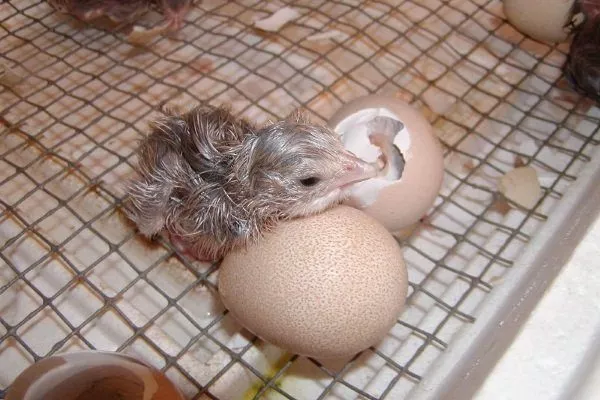
Young chicks need to be provided with adequate temperature control. If they are kept in a cold room, they will begin to gather in small groups, which can lead to suffocation. Fatalities can also occur if the coop is damp and wet. It's essential to ensure adequate drinking regimen—it's best to provide water to the chicks in limited quantities to prevent drowning.
Feed is served in containers. After 10 days of age, birds can be fed from shallow saucers or small plates. Subsequently, they can be fed the same food as regular chickens. Feeding birds with expired or stale feed is not recommended, as this can lead not only to poor health but also to death. Considering that birds tend to feed together, this often results in the death of most of them.
A variety of greens, which provide vitamins, are a must in the young birds' diet. While adults don't require such food, chicks absolutely need it for optimal growth. As they mature, guinea fowl can feed on small worms and even snails. As they grow larger, they collect Colorado potato beetles.
Reviews
Broiler guinea fowl receive positive reviews. Below are some testimonials from farmers who have decided to build a business raising these birds.
Broiler guinea fowl are profitable birds with many positive aspects. When breeding, it's advantageous to choose grey-speckled (French) guinea fowl, as they produce more eggs per year and also gain good weight.
Author, where have you seen 150 cm guinea fowl? That's 1.5 meters, mind you. A guinea fowl is 1.5 meters tall, but can you provide a photo?! If you put 5 males per female, as you stated in your article, she won't even last a season. When you write articles, at least proofread them.
Thank you for noticing and reporting the typos! The article has been corrected for the bird's size and breeding.