
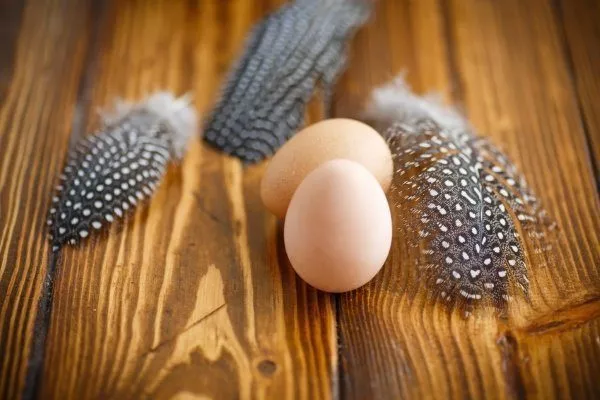
Guinea fowl eggs are unremarkable at first glance. They are pear-shaped, and the average egg weighs 40 grams. They are covered in a hard shell with brown speckles and are rough to the touch. The shell color can vary from pale yellow to tan, but light blue and even white eggs are also found.
Description and characteristics
Guinea fowl eggs are recommended for inclusion in the human diet because they are a real treasure trove of vitamins and minerals.
Product Features
The characteristic features of guinea fowl eggs include:
- the level of vitamin A is 2 times higher than in the chicken analogue;
- do not contain allergens, therefore they are not contraindicated for people with individual intolerance to eggs;
- can be eaten raw, since guinea fowl almost never get salmonellosis;
- The yolk is bright yellow, even orange, in color, which is due to the presence of carotenoids.
Compound
Guinea fowl eggs are a high-energy food. They are enriched with vitamins, minerals, and trace elements. They contain:
- vitamin A - has a beneficial effect on the condition of nails, skin, hair and vision, is an antioxidant;
- B vitamins — promote the production of energy from proteins, carbohydrates and fats, supporting the overall vital functions of the body;
- vitamin E - ensures normal functioning of the reproductive system;
- vitamin D - has a beneficial effect on the nervous, skeletal and immune systems;
- carotenoids - necessary for vision and maintaining healthy skin;
- amino acids — support the proper functioning of the body, promote better absorption of vitamins;
- zinc - strengthens the immune system, accelerates the process of cell renewal;
- manganese — participates in hematopoiesis, is necessary for the stable functioning of the central nervous system;
- potassium - ensures normal functioning of the heart, has a beneficial effect on intestinal peristalsis;
- phosphorus - essential for the growth and maintenance of healthy teeth and bones, helps improve mental activity;
- iron - ensures normal functioning of the brain, supports immunity.
Nutritional value
100 g of raw product contains:
| Squirrels | Fats | Carbohydrates | Ash | Water | Calories |
| 12.7 g | 0.6 g | 0.6 g | 1.0 g | 65.0 g | 45 kcal |
Guinea fowl eggs do not contain cholesterol!
Benefit
In addition to its rich vitamin and mineral content, the product's beneficial properties cannot be underestimated. Guinea fowl eggs:
- They are a preventative measure against cardiovascular diseases, as they contain a large amount of easily digestible protein, which strengthens the walls of blood vessels.
- They are useful for those suffering from constant stress and depressive disorders, as well as for mental work, as they contain vitamins and microelements that help strengthen the nervous system and activate brain function.
- Hypoallergenic. Thanks to their balanced composition, they do not cause allergic reactions, making them suitable for those with egg intolerance.
- They have a positive effect on the health of pregnant women. This is due to their vitamin and mineral content, which supports the pregnant woman's body during this difficult period. They are also recommended for nursing mothers.
- They replenish vitamin deficiencies. Therefore, they are recommended for people suffering from vitamin deficiency.
- Lowers blood cholesterol. Regular consumption of these eggs reduces bad cholesterol levels.
- They are indicated for patients in the postoperative period, as they help restore immunity and strengthen the body.
- Recommended to include in children's diet.
Harm
Guinea fowl eggs, despite their apparent health benefits, can also be harmful. Rare contraindications include:
- Liver and kidney diseases, whether acute or chronic. However, this refers to daily egg consumption; including eggs in the diet of such patients is permissible after consultation with a doctor.
- Post-vaccination period. It is not recommended to give eggs to children who have recently been vaccinated, as the product may cause adverse reactions in weakened immune systems.
Uses of guinea fowl eggs
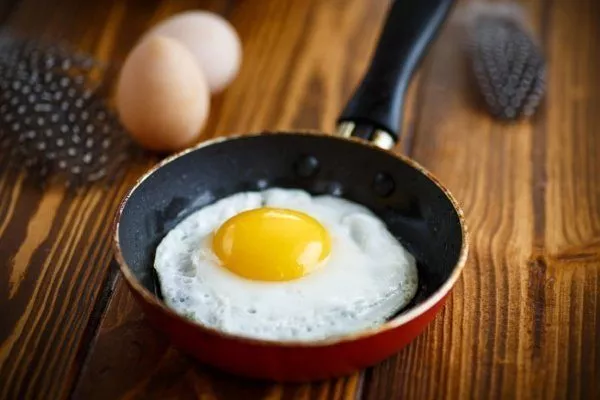
The product can be eaten at any time of day; the optimal daily dose, which will cover protein needs and support overall health, is considered to be two eggs. As mentioned above, guinea fowl eggs can be eaten raw, but they can also be boiled, fried, baked, used to make various sauces, and added to various dishes. Guinea fowl eggs are also used in cosmetology.
Culinary uses
Cooking guinea fowl eggs doesn't require any special knowledge. They take slightly longer to boil than chicken eggs due to the thickness of their shells. For example, a soft-boiled egg requires 6 minutes of boiling, while a hard-boiled egg requires 12 minutes.
Soft-boiled eggs are better absorbed by the body!
Guinea fowl eggs pair well with other foods, so they can be used as a complement to various dishes, added to salads and appetizers, omelets, baked goods, and also as a filling for sandwiches.
A simple and healthy sandwich with guinea fowl egg
Ingredients:
- baguette;
- lettuce leaves;
- celery stalks;
- guinea fowl egg;
- herbs to taste.
The amount of ingredients directly depends on the number of sandwiches!
Preparation:
- The baguette is cut into thin slices and browned in a frying pan without oil;
- Boil the guinea fowl egg for 10-12 minutes;
- Place a lettuce leaf, a celery stalk and a slice of egg on the bread;
- Decorate with greenery.
Application in cosmetology
The beneficial properties of guinea fowl eggs have made them a popular choice in cosmetology. This miracle product is used to create masks, creams, and shampoos that are hypoallergenic and have a healing effect.
A facial scrub made from guinea fowl eggshells is quite popular. The shells are ground into a powder and mixed with your favorite cleanser. This scrub will not only improve the condition of your skin but also transform its appearance.
This product is not recommended for use on the delicate skin around the eyes!
The product is also used as part of a hair mask. To make the mask, take two eggs and mix them with water. Apply to hair and leave for half an hour. Then rinse with cold water. The mask has a strengthening effect.
Where to buy and what is the price?
There are not many options where you can buy guinea fowl eggs:
- Large supermarkets. Not all stores carry this product, and even those that do can't always offer high-quality, fresh eggs. Because guinea fowl eggs aren't as common as their chicken counterparts, for example, they often sit on shelves for too long, losing all their nutritional value. Therefore, even if you see a guinea fowl egg on the supermarket shelf, don't rush to buy it.
- Specialized farms. On such farms, they treat the birds with great care. They feed the guinea fowl only selected feeds and they all comply poultry keeping standardsTherefore, the taste of eggs purchased from specialized farms is significantly different from store-bought eggs. However, such farms are rare in Russia.
Young animals are bred in the Mari El Republic, and there is also a farm in the Moscow region.
The price of a dozen guinea fowl eggs ranges from 200 to 300 rubles. This is due to the difficulty of breeding them.
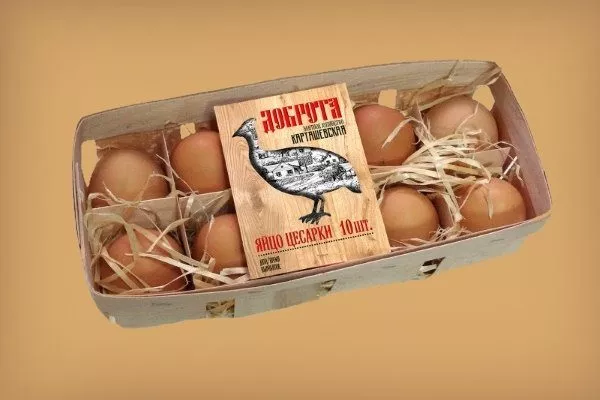
- ✓ Guinea fowl eggs have thicker shells than chicken eggs, making them more resistant to damage.
- ✓ The color of the shell can vary from pale yellow to brownish-brown, with characteristic specks.
How to choose?
When purchasing guinea fowl eggs, you should only consider their appearance; they should be free of damage or cracks. They can be stored for 3-6 months at temperatures between 0 and 10°C.
- ✓ Check the egg against the light: a fresh egg will have a small air sac and a uniform yolk without spots.
- ✓ Pay attention to the smell: fresh guinea fowl eggs do not have an unpleasant odor.
Using the shell
Not only is the inside of guinea fowl eggs beneficial, but the shells are also rich in nutrients and equally beneficial. They contain a whole host of essential elements:
- iron;
- sulfur;
- molybdenum;
- zinc;
- phosphorus;
- silicon.
The shell contains natural calcium, which is completely absorbable.
Guinea fowl eggshell powder is used to treat vitamin deficiency, calcium deficiency, and for general health support. Grind the shells in a coffee grinder and take 1 teaspoon once daily.
Interesting facts
Here are some interesting facts about guinea fowl eggs:
- Guinea fowl eggs can be thrown from a height of 2-3 m - the shell will remain intact.
- The thick outer shell, covered with a small number of pores, ensures minimal moisture evaporation and serves as a reliable barrier against infection.
- It is almost impossible to find two identical eggs; their size, color, and number of specks are unique.
- The guinea fowl is a rather capricious and picky bird, producing only about 120 eggs per year.
- Guinea fowl egg dessert is a popular and delicious dessert in America. It's made by whisking chilled eggs and granulated sugar.
So, guinea fowl eggs are a rare but highly beneficial food. Thanks to their unique vitamin and mineral profile, they have found application in cosmetology and are also widely used in cooking, dietary nutrition, and therapeutic nutrition.