
Ground bees got their name from their underground existence, building burrows deep in the earth, digging numerous passages and labyrinths. This article describes some interesting facts about insects and examines their different species.
Appearance and features
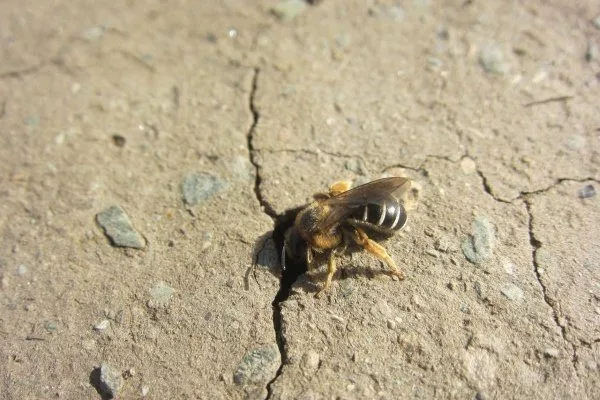
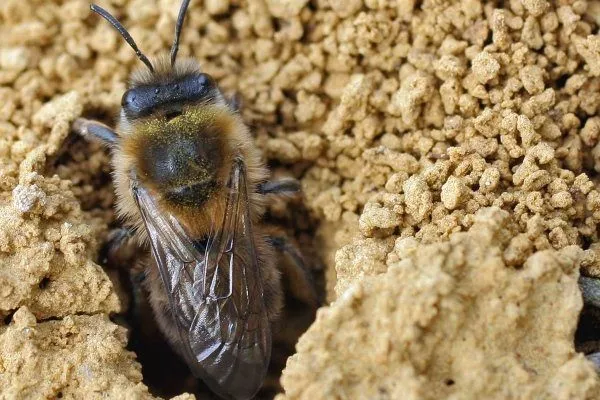
Ground bees have distinctive characteristics: a black body, a blackish-brown head, and dark purple wings. They can reach up to 19 mm in size. Males are almost identical to females, but their body size reaches a maximum of 15 mm. They have light vellus hairs on their abdomens, and yellow spots on their upper lip and jaws.
Ground bees have a dense, dark-gray or light-gray coat on their thorax and head. Their temples and head are covered with black, downy hairs. These insects prefer to dig burrows in sandy areas, forests, and fields.
Where do insects live?
Ground bees are distributed worldwide, with the exception of Oceania and South America. These insects live underground, preferring sandy soil or cover with little soil.
These insects are capable of settling on the edges of fields and in forests. Given their particular selectivity when choosing a habitat, bees of this species are considered wild.
What types are there?
Few people know that ground bees aren't rare, just less common. Their population size is small compared to that of domestic bees. Furthermore, people have become less active in the wild, which has meant that this bee species has gone unnoticed.
There are several varieties of ground bees – they differ in color, size, body structure and other features.
| Species name | Body size (mm) | Body color | Behavioral features |
|---|---|---|---|
| Andrena-clarkella | 8-17 | Black, blue, orange | Thick fluff on the head and back |
| Andrena Magna | 15-18 | Black, purple wings | Thick fluffy hairs |
| Halictus sphecodes | 5-15 | Reddish, greenish | Metallic shine |
| Long-horned bee | 10-15 | Grayish-red | Long antennae |
| Wool beaters | 5-10 | Brown with yellow spots | Aggressive males |
| Leafcutters (megachiles) | 8-15 | Black | Strong jaws |
| Nomad (cuckoo) | 10-15 | Black | Lack of hairs |
| Mellitids | 10-15 | Black and yellow | Nutrition with legumes |
| Carpenter | 15-20 | Blue with a purple tint | Loud buzzing |
Andrena-clarkella
A common insect known throughout the world. Body sizes range from 8 to 17 mm. Bees come in a variety of colors, including black, blue, and sometimes orange. They have downy hairs on their heads and upper backs.
Andrena Magna
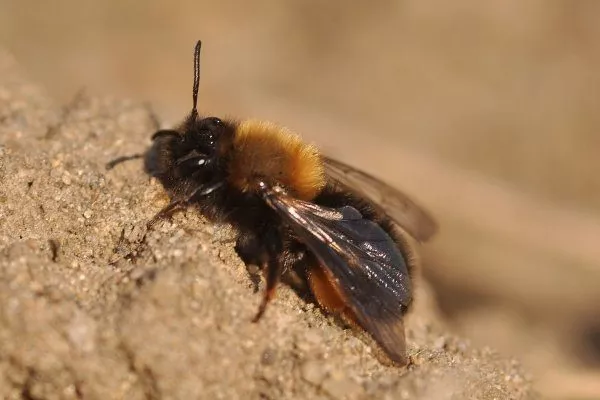
A less popular variety found exclusively on the Black Sea coast. This bee has a distinctive black body, purple wings, and a yellow upper back. Its body length reaches 15-18 mm. Its head and upper body are covered with dense, fluffy hairs.
Halictus sphecodes
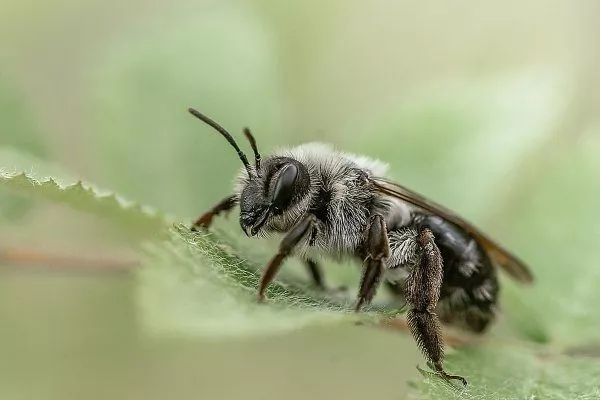
This is a medium-small ground bee, ranging in size from 5 to 15 mm. It is somewhat similar to a wasp. Its distinguishing characteristic is its body coloration—reddish, sometimes greenish, with a metallic sheen. These insects are distributed worldwide.
Long-horned bee
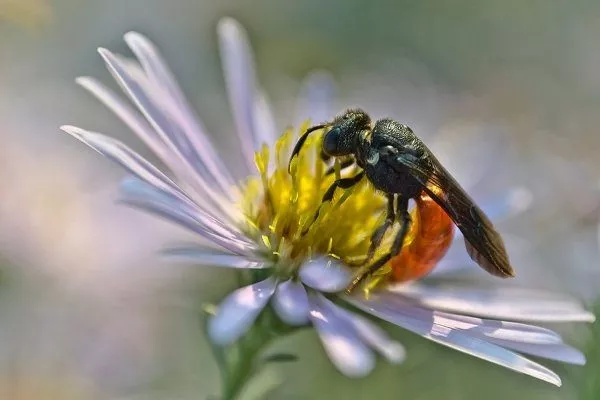
This species of wild bee is found from Europe to Kazakhstan. These insects have a grayish-red body color, thick, long antennae, and a small body size. Interestingly, two females can coexist in a single nest.
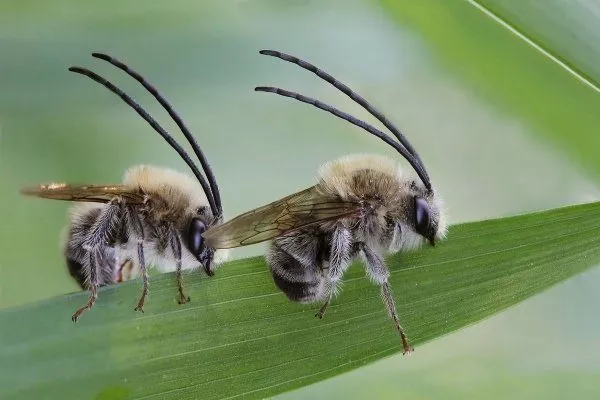
Wool beaters
A characteristic of this species is considered to be a certain "thievery." Wool-biters do not dig burrows themselves, but they successfully use the nests of others, lining their cells with plant fibers. A characteristic feature is the insect's small size and brown coloration with yellow spots on the back. The insects are slightly plump. Males are quite aggressive towards other insects.
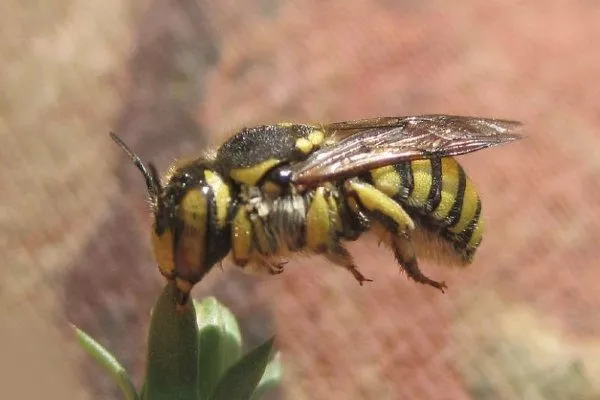
Leafcutters (megachiles)
Leaf cutters These are solitary bees. They have strong jaws, but they do not produce honey. They build their nests using pieces of plant leaves.
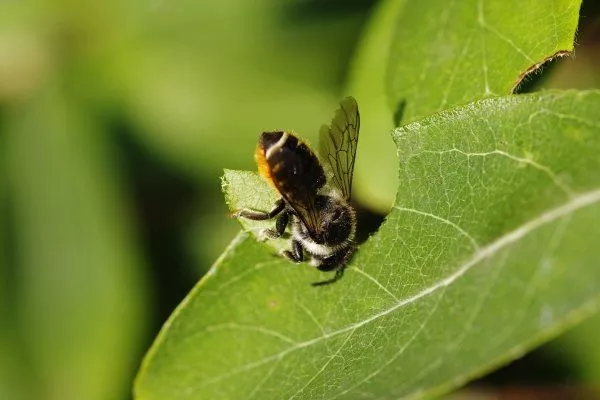
Nomad (cuckoo)
The nomad bee is similar in appearance to its domesticated relative, but the ground bee lacks a pollen-collecting apparatus. There are no hairs on the surface of the body. These bees do not build their own nests. They are called "cuckoo bees" because they lay their eggs in other bees' burrows, where the larvae later grow and feed on the nomads' stores.
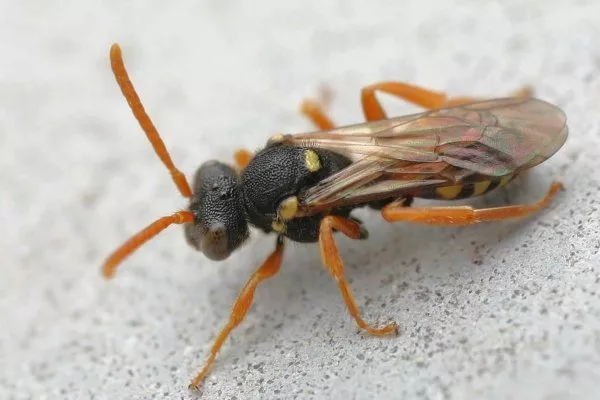
Mellitids
This species is similar in appearance to the domestic honeybee. Their distinctive feature is their feeding habits. Mellitids collect nectar exclusively from the flowers of legumes or Asteraceae plants.
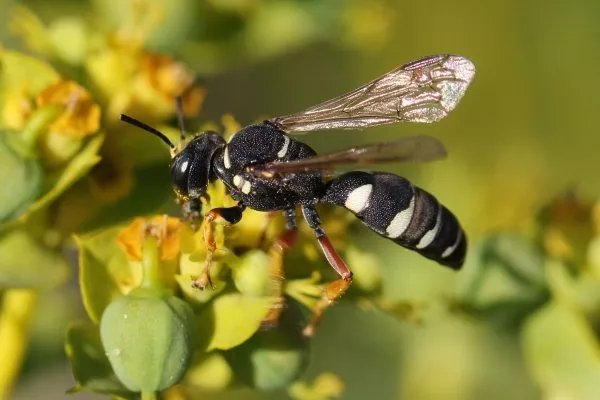
Carpenter
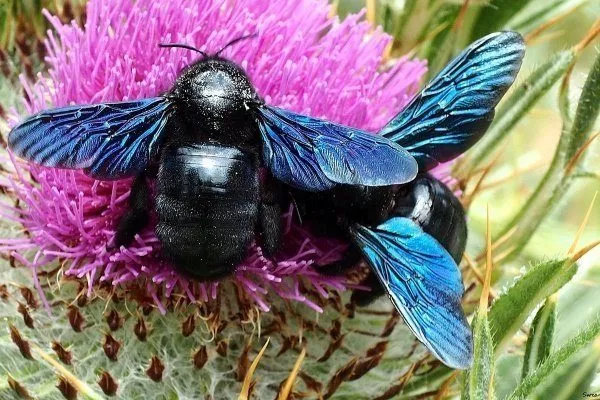
A bee distinguished by its loud buzzing sound. The carpenter bee is large, with dark blue or black eyes and a blue-violet wing and body. The carpenter bee is a solitary bee.
What kind of lifestyle do they lead?
Ground bees can live either alone or in groups, depending on the species. Most insects settle in colonies, and sometimes several families can live in a single burrow. When the offspring grow up, they don't stray far from their parent's nest but settle nearby, digging tunnels and thus expanding their bee kingdom.
There are also insects that prefer to live alone rather than in groups, such as carpenter bees and leafcutter bees. The female lives alone in the nest with her larvae until all the offspring mature.
What are the beneficial properties of honey?
Wild ground bees produce aromatic honey, characterized by a smoky aroma and a tart flavor. The honey has a thick consistency, is a rich brown color, and contains a large amount of bee bread and wax.
Regular consumption of honey produced by ground bees is believed to help with the following problems:
- cosmetic errors;
- ARI;
- inflammatory processes;
- angina;
- muscle pain;
- bronchitis;
- joint diseases;
- pneumonia.
This product has a wide range of uses. Thanks to its amazing beneficial properties, consuming honey guarantees a strengthened immune system. Wild bee honey matures slowly and retains its medicinal properties for a long time.
The forest honey harvest season is short, lasting only a few weeks in autumn. During this time, the bees manage to produce a sufficient quantity of honey. Today, collecting honey from bee hives is popular. Special hives are installed in the forest where the bee colony builds its nests. Honey is collected from the hives carefully, so as not to accidentally disturb the nest. The extracted honeycombs are opened by hand, preserving the valuable properties of the honey. Honey is collected only with wooden utensils. Honey is stored in wooden or clay containers.
- ✓ Use only wooden or earthenware dishes without an internal coating of varnish or paint.
- ✓ Make sure the container has a tight-fitting lid to protect it from moisture and odors.
Arrangement of the "dwelling"
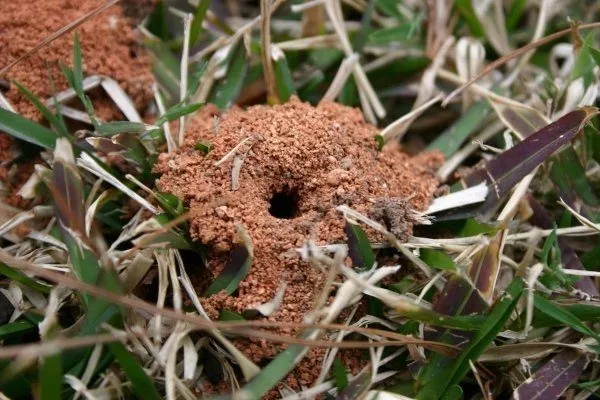
The burrows that insects dig are somewhat similar to deep tunnels. Numerous oval-shaped, dead-end depressions branch off from them in various directions. Bees store honey in some of these depressions. The advantage is that the nectar is stored in such a chamber, as if in a container, without losing its flavor or medicinal properties. This is due to the fact that ground bees tend to arrange their nests in a specific way. This is painstaking work for them.
First, the insects dig an oval tunnel, then create a cell within it, and mix the excavated soil with saliva. The bees spread this mixture in a circle, compacting it with their feet, and then treat the entire surface with a special substance—a secretion from their abdominal glands. Once the surface hardens, the nest is reliably protected from moisture and other weather conditions.
Offspring
Only after establishing her underground home will the queen move to the most remote location of the nest, where she will lay her eggs in wax cells. Periodically, before laying eggs, some species of ground bees place plant fibers or finely cut pieces of leaves in the cells.
As the larvae grow, the queen gradually begins to increase the size of the cells where the brood resides. Once the brood has matured, the queen dies. This happens to almost all varieties of ground bees. But only the female "Halictus sphecodes" can survive even the most severe frosts. The young bees, actively growing and developing, begin to do the same as their brood: harvest honey and nectar.
Benefits and harms
Thanks to the activity of these bees, many flowering plants are pollinated. Agricultural lands benefit from ground bees.
But ground bees can also cause harm, for example, by digging unsightly holes in the ground in large numbers. Today, when most roads are paved or contaminated with toxic fumes, ground bees seek refuge in villages and summer cottages. If there's a vegetable garden on the property, the bees will interfere with planting, and if there's an orchard, they'll simply ruin it. It would seem that they benefit from this, too—for example, it's easy to extract honey from the burrows. But this isn't the case. After all, the nest would have to be destroyed, and the danger to an inexperienced person is great: the bees can sting.
Stings are another problem. A bee sting is unpleasant enough, but a sting from a ground bee is dangerous, as it can cause a severe allergic reaction.
What to do if bitten?
Insect venom contains a large amount of histamine, which can cause an allergic reaction, manifested by inflammation and swelling at the bite site. Immediate removal of the stinger is essential to reduce potential complications. Tweezers are used to remove the stinger. If the stinger is not protruding above the skin surface, apply gentle pressure to the surrounding skin.
Alcohol or sweetened water will help neutralize the venom. Treat the wound with the liquid and apply a piece of ice wrapped in gauze. Because a ground bee sting can cause a severe allergic reaction, it's advisable to take an antihistamine or apply a special ointment to the sting site.
Be sure to drink plenty of fluids throughout the day and avoid alcohol, as it can increase the effects of the toxins contained in the venom of the ground bee. If a severe reaction occurs, seek immediate medical attention to avoid serious complications.
Fighting the buzzers
Unfortunately, no homeowner appreciates the presence of ground bees on their property. This can be explained by the insects' behavior. Ground-dwelling bees are known for their aggressive nature. While a worker bee stings a person, it will only do so in the event of real danger, a ground bee can attack its victim without provocation.
The insect causes no less harm to surrounding plants, nibbling their foliage. And building underground labyrinths won't do much good to young seedlings. It's precisely these negative effects that make every gardener want to get rid of these pests. There are many ways to control ground bees.
Boiling water will help the matter
A more popular and simpler way to combat bee burrowers is to pour boiling water into the bee tunnels. This method requires at least 15 liters of boiling water, although the volume can vary depending on the depth and length of the tunnels.
It's best to carry out this procedure in the evening, when all the inhabitants of the earthly kingdom are in their homes. If you go to fight during the day, it's possible that the bees will attack the offender and try to sting them.
Such manipulations will help prevent bees from leaving their shelters. However, using this method does not eliminate the risk of scalding the plant's root system.
Digging the soil
This control method is quite suitable if the tunnels of the underground inhabitants are shallow. The discovery of honey, which the insects tend to hide at the lowest point of their dwelling, will indicate that excavations are fruitless. Reaching underground inhabitants who have dug their labyrinths very deeply is impossible.
Furthermore, when digging, there's a risk of insect bites. To avoid this, always wear a protective suit and mesh mask before digging.
Covering the burrows of ground bees with sand or earth is useless and even dangerous, because the enraged bees that emerge to the surface will begin to sting everyone they encounter.
Setting traps
Another effective method for getting rid of ground bees is to use traps. To do this, place bottles filled with sweet syrup near the entrance to the bees' burrows. Once the insects are tempted to feast, they'll fall into the bottles and be unable to escape.
Pesticides will save you from pests
The most effective method of controlling wild bees is considered to be the use of toxic chemicals, as it's not only quick but also effective. Before using poison, experienced gardeners recommend treating the nests of ground bees with a smoke spray—this will significantly reduce insect activity.
Next, they begin using a toxic substance, not only spraying it but also pouring it into the bees' burrows. Subsequently, all the holes are covered with soil, preventing any remaining living bees from escaping. This method ensures 100% success.
To destroy ground bees, it is recommended to use the following preparations:
- Dichlorvos. This is a universal remedy used to eliminate various insects, both flying and crawling.
- Delta Zone. A product primarily designed to combat insects. Most experts claim it's one of the most effective. It's odorless and fast-acting. Gardeners can see excellent results the very next day.
- Get. An insecticide based on chlorpyrifos (5%). One package is sufficient to treat an area of 100 square meters.
Before attempting to control buzzing insects, children and animals must be evacuated, as the enraged insects can take revenge on anyone in their path. If a large number of ground bees has infested your property, it's best to seek the help of pest control professionals.
Ground bees are still considered wild (see wild bees), non-domesticated insects, although many believe they can be extremely beneficial to agriculture. However, underground bees also cause significant damage—they dig tunnels that significantly harm young seedlings and flowering plants, as they nibble at their foliage.