
Besides the well-known honey, beekeepers obtain many other useful products from their hives: wax, dead bees, royal jelly, propolis and bee venom. The latter is widely used in medical and cosmetic products. Let's look at what bee venom is, its benefits, and its dangers.
How is bee venom formed?
Bee venom is a colorless liquid with a honey-like odor. It is biologically active, so it dries instantly when exposed to air. In large quantities, it is extremely harmful and even dangerous to humans (the sting of 450 bees is considered fatal, while 180 or more causes severe poisoning). In small doses, bee venom is used in cosmetology and medicine.
Venom is produced in the stinging gland of bees. Both worker bees and queens have these glands, and they secrete the exact same venom. Each bee's sting contains between 0.2 and 0.8 milligrams of venom, which the insect injects when stinging. For worker bees, the venom serves as a means of defending the hive and the colony. The queen, however, uses her sting solely to eliminate rival bees.
A bee is unable to sting if its abdomen is filled with honey, and most often dies when stinging because it cannot remove its stinger.
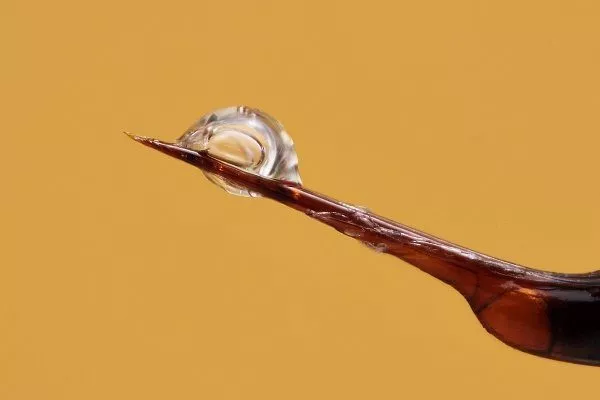
A bee's stinger is designed in such a way that once it's pierced, it can't be pulled out. Contrary to popular belief, not all bees die after stinging. If the insect carefully flies away from its victim, it will lose its stinger but survive. Death occurs not from the loss of the stinger, but from damage to internal organs when it is removed from the bee's body as the insect rushes to escape.
How bee venom is obtained
To collect a sufficient amount of bee venom, a large number of bees is required. This resource is collected at an apiary. There are three methods for obtaining the substance:
- manually using tweezers;
- using peach oil;
- using a poison collector.
| Method | Efficiency | Safety for bees | Collection speed |
|---|---|---|---|
| Manually using tweezers | Low | High | Low |
| Uses of peach oil | Average | Low | Average |
| Using a poison trap | High | High | High |
Manually extracting venom requires a significant amount of time, skill, and experience. When using tweezers, you must catch the insects one by one and gently press them so that the bee releases the venom, but not the stinger. When using oil, several bees are dropped into the jar at a time. This method is much simpler and faster, but most of the insects die in the process.
The use of an electric net, known as a poison collector, has made beekeepers' lives significantly easier. The device sends an electrical impulse and forces the bees to release venom without damaging their stingers. This allows the required amount of pure venom to be obtained without causing serious harm to the hive. The net with the poison collector is placed opposite the hive's window. The device is then turned on.
It is important to remember that injecting venom irritates the bees in itself, so approaching the hive after collecting the venom without special equipment is dangerous.
Composition and benefits
The venom consists of a number of substances, protein compounds, and amino acids. Its composition is complex and not fully understood. Scientists have been conducting research for decades, discovering new components and properties of this unique liquid. The venom is based on non-toxic proteins, the active components of which are protein groups that include melittin, phospholipase, and hyaluronidase. Additional active elements of the venom include:
- acid phosphatase;
- amino acids (18 of 20);
- phosphate, sulfuric and other inorganic acids;
- microelements.
The beneficial properties of bee venom have been known since ancient times. Bee stings were used primarily in Eastern medicine, including in ancient India, China, and Greece. Medical scientists became interested in the substance's properties in the 1930s. Currently, the component is widely used in medicine and cosmetology. The venom has a beneficial effect on blood vessels and joints, and serves as a warming agent, antibiotic, and nerve stimulant.
The human body's reaction to a bee sting
Bee venom can be both harmful and beneficial to the human body during a bee attack. After a sting, the body reacts negatively to the irritation. This process is accompanied by quite unpleasant sensations and pain. As the venom takes effect, swelling occurs.
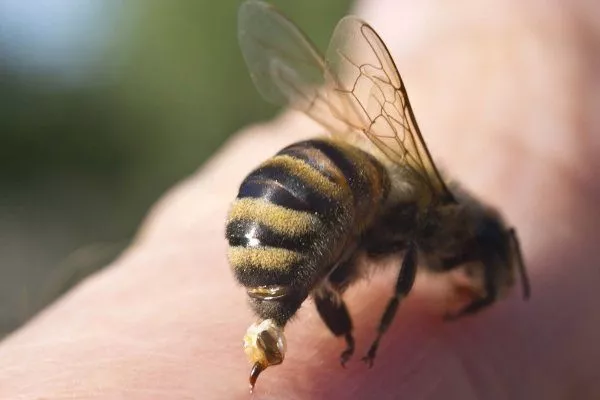
When a venom bites, the substance penetrates into cells, partially or completely destroying them. The active components act on red blood cells, accelerating blood circulation for faster venom transport. Furthermore, it increases vascular permeability for faster absorption.
After a bite, the immune system is activated, causing swelling. In large quantities, the venom provokes a strong adverse reaction, including weakness, nausea, and a slight fever.
Treatment with bee venom
Treatment with bee venom is called apitherapy. These methods are used to treat joint and blood vessel conditions, which are affected by the venom. Initially, this treatment method was popular in folk medicine. In the mid-20th century, it gained the attention of scientists. Currently, bee venom is also used in official medical practice. Many medications include bee venom or its components.
Doctors believe that bee venom is a unique immunostimulant, which has a particularly beneficial effect on joints.
Treatment methods
Several methods are used to treat illnesses with bee venom. Before starting a treatment course, doctors diagnose the illness, conduct necessary tests, and determine whether the patient has an allergic reaction to the venom components. The optimal treatment method is then selected.
- ✓ Presence of allergic reactions
- ✓ Type and stage of the disease
- ✓ Individual tolerance to the components of the poison
Apitherapy, or treatment with bee stings, is a traditional method. The course begins with a single bee sting, after which the venom dosage is gradually increased. Doctors carefully monitor the progress of the treatment and the patient's condition, so the treatment is harmless and virtually painless.
- Conducting an allergy test.
- Determination of the initial dose of poison.
- Gradually increase the dose under the supervision of a specialist.
- Monitoring the patient's condition throughout the course.
In addition to bee stings, there are the following treatments using bee venom:
- Rubbing in ointments – is usually used for local treatment or at specific points on the body – specifically targeting clusters of nerve cells. The method is quite effective and completely painless.
- Inhalations – inhalation of water vapor along with the volatile fraction of the poison.
- Electrophoresis – delivery of poison into the body using electric current.
- Intramuscular administration small doses of drugs. Usually used for local treatment, for example, of joints.
- Medicines in tablets or capsules – the simplest method, but ineffective, since the poison is partially neutralized by gastric juice.
Experts note that combined treatment with bee venom-based medications and honey consumption significantly increases the effectiveness of therapy, accelerates the action of the venom, and has a beneficial effect on the body as a whole..
To learn more about the methods and techniques for treating common and dangerous diseases with bee venom, watch this video:
For what diseases is bee venom used?
This unique substance has a diverse effect on the body across several areas, the main ones being the cardiovascular and nervous systems. Therefore, bee venom treatment is used for conditions such as:
- multiple sclerosis;
- hypertension;
- joint pain;
- skin diseases.
The venom significantly improves circulation, stimulating blood flow. It also has an anti-inflammatory effect. Treatments vary for different conditions.
Bee venom in cosmetology
The substance is widely used in medicine, but it is especially valuable for maintaining the beauty and youthfulness of skin. Cosmetologists add the poison to skin preservatives and rejuvenators, moisturizers, and restorative products.
The main active ingredient, which is valued in cosmetology, is apitoxin..
Experts note the similarity of the effect of apitoxin with Botox, despite the fact that the substance is natural and does not have any negative effects on the body.
The venom components actively affect the skin, stimulating the production of collagen and elastin. The cream gives the skin a healthy glow, smoothes fine lines, and makes larger wrinkles less noticeable. Bee venom is also an ingredient in some lipsticks, giving lips a vibrant hue and a more defined shape.
Pharmaceutical preparations containing bee venom
Bee venom-based products are available not only from cosmetologists but also in pharmacies. They are used to reduce inflammation, accelerate wound healing, and eliminate pustules on the skin.
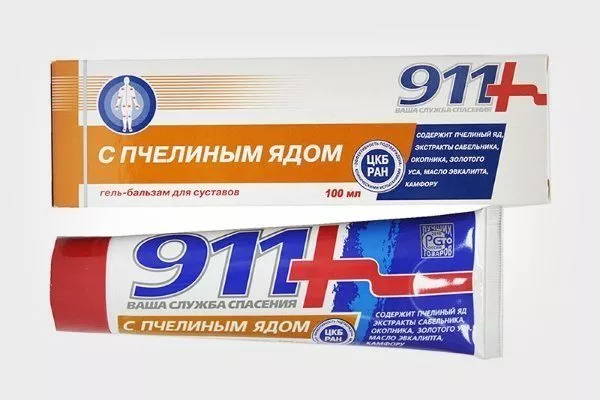
The most popular bee venom ointments in Russian pharmacies are "Sofia" and "Bee Venom 911." The cream is applied locally to the inflamed area for joint damage. It is also used for radiculitis, osteochondrosis, and other musculoskeletal conditions. These products have anti-inflammatory and warming properties, are reasonably priced, and are highly effective.
Contraindications and precautions
Despite its high effectiveness and indications, bee venom is not suitable for everyone. The body's response can be both positive and negative. Side effects include itching and local skin irritation. Using the medication may also increase body temperature by 2-3 degrees. To prevent side effects, strictly adhere to the dosage, avoid overexertion, and avoid alcohol during treatment.
The main contraindication to the use of bee venom and its products is allergy. Approximately 1% of the population suffers from an allergic reaction to bee venom; for these individuals, it is severely tolerated and can even be fatal.
Therefore, prior to treatment, a minimal amount of the drug is administered or a single bee sting is administered. If no adverse reactions to the venom are detected, a course of apitherapy can be administered as a therapeutic measure. Due to certain side effects, the venom is contraindicated in
- heart defect;
- tuberculosis;
- venereal diseases;
- malignant tumors;
- stomach ulcer.
During pregnancy, treatment of children or elderly people, the patient must be closely monitored and the substance must be used with extreme caution.
Treatment with bee venom should only be entrusted to specialists; self-medication should never be attempted.
Bee venom is one of the most valuable byproducts of bees. A defense mechanism and dangerous in large quantities, it has found widespread use in medicine, and some cosmetologists consider its components a panacea. When used correctly, the substance can significantly improve health and provide a lasting rejuvenating effect.