
Bees are unique honey-producing insects. But many are unfamiliar with the honey production process. This article explores all aspects of honey production, why bees do it, and how nectar is transformed into honey. This article will be especially interesting for beginning beekeepers who want to get into insect farming.
Why do bees make honey?
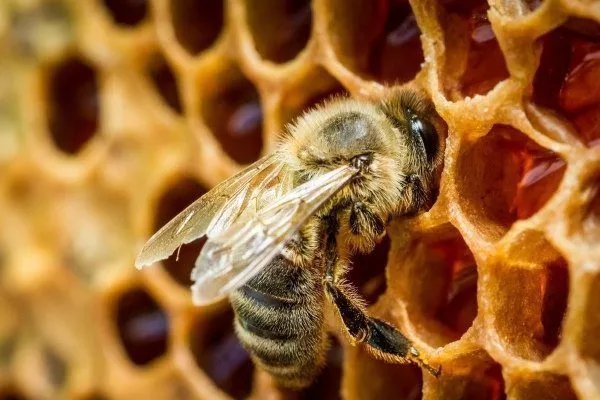
Honey is food for all limbs bee colonyInsects feed on it not only in winter but also in summer. When the cold season arrives, the hive inhabitants uncork their cells and feast on the calorie-rich honey, which provides them with the energy they need.
The insects then begin to actively flap their wings, which helps maintain an optimal climate in the nest. The expenditure of the energy gained on maintaining the required temperature requires the bees to recover quickly—the insects need food. In addition to honey, the workers need bee bread, called "bee bread" - it replaces protein.
A bee colony can contain over a couple thousand individuals, requiring substantial reserves for the winter. Because bees are thrifty and resourceful, much of their reserves are valuable food for humans. Experienced beekeepers, concerned about the well-being of their colonies, leave the required amount of honey in the hive over the winter to ensure the workers survive until spring without dying; the rest is taken.
Beekeepers, driven solely by profit, immediately gather all their supplies and feed the bees sugar. However, this product is not a complete food source for the insects, as it lacks essential vitamins, minerals, and enzymes. Because of this, bees fed on syrup become weak, and their stamina and productivity are significantly reduced. When warmer weather arrives, it is difficult for the insects to fully begin collecting honey.
The vitamins contained in honey not only help maintain the body's vital functions, but also ensure the proper functioning of the secretory glands that produce wax, the material used to build honeycombs.
How do bees make honey and turn it into nectar?
A chemical reaction converts nectar into viscous honey. After the bees return with a full stomach of nectar, the worker bees suck it from the field worker's mouth with their proboscises. The bees leave some of it to feed the larvae and young bees, but the bees chew the rest for some time. This is the chemical fermentation of nectar.
The nectar is exposed to various enzymes found in bee saliva, transforming it into a healthy sweetener. During processing, excess liquid evaporates, and sucrose, under the influence of a special enzyme (invertase), is broken down into fructose and glucose, which are easily absorbed by the body. The finished product contains only 5% sucrose. Furthermore, bee saliva has antibacterial properties, allowing the nectar to be stored for a long time.
To ensure moisture evaporates, the workers transfer the sweet liquid into the honeycombs, filling them two-thirds full. They then begin to actively work their porches to raise the temperature in the hive. The receivers place the processed product in special hexagonal cells and seal them tightly with wax lids, preventing the penetration of air and moisture, which could lead to fermentation. Further maturation of the honey occurs in the honeycombs.
- ✓ The air humidity in the hive should be no more than 60% for optimal evaporation of moisture from the nectar.
- ✓ The temperature in the hive during nectar processing should be maintained at 34-35°C.
After the moisture has separated, the nectar syrup becomes thick and acquires the consistency of honey.
The insects also place the bee bread in honeycombs. The distinctive characteristics of the storage units are their shades: honeycombs are predominantly dark yellow, almost brown, while bee bread is light yellow. Production lasts from 7 to 14 days. Product quality directly depends on the moisture content: the less water the honey contains, the better the quality.
In extreme heat, a sweet liquid secreted by aphids, called honeydew, is added to the nectar. This is why this low-grade honey is called "honeydew." A sweet plant sap, called honeydew, may also be added to the honey product. Honeydew and honeydew are dangerous for bees because they negatively impact their metabolism.
You can see how bees collect honey in this interesting video. It explains in detail how the insects collect honey, what they use to do it, and what happens next:
Stages of honey production
Honey collection is the primary activity of bees, so all their work is directed toward ensuring this process. To this end, all responsibilities are clearly divided among all members of the bee colony.
How it happens:
- The queen lays eggs, thus ensuring the continuation of the bee family. The scouts go in search of honey plants, and the worker bees build honeycombs and collect pollen and nectar. Even newborn bees are busy – they feed larvae, clean the home and maintain an optimal temperature in it.
- Bees collect nectar from the flowers of honey plants. They begin their work in the spring, when the plants begin to bloom. The scouts are the first to fly out on the hunt – their highly developed sense of smell allows them to quickly locate flowering plants, collect nectar from them, and return home.
- In their nests, bees inform their colony members of the location of a plant from which nectar can be collected. Bees communicate with a distinctive dance movement. Then, scouts and foragers head to the location they've found.
- The honey bees collect honey with their proboscis, which easily penetrates the flower. The insects easily detect the taste of the liquid using receptors located on their legs.
- A bee lands on a plant, sucks up nectar with its proboscis, and uses its hind legs, which are equipped with special brushes, to collect pollen, which it then forms into a ball. This ball is placed in a special basket located on the insect's tibia. One such ball can be obtained by collecting nectar from many plants.
Bees are insects with two stomachs. One is used for digestion, while the other serves as a nectar storage facility, holding approximately 70 mg of nectar. However, if a worker bee needs to fly long distances, she uses up about 25-30% of her reserves to replenish her energy. A worker bee can fly up to 8 km per day, but long flights can be dangerous. The optimal distance for collecting honey is considered to be 2-3 km.
In this case, the insect can cover approximately 12 hectares of the field. To fill its nectar reservoir, a bee must fly to approximately 1,500 plants, and to collect 1 kilogram of nectar, it must make 50,000 to 150,000 flights.
During honey collection, the bees become completely covered in pollen. After completing their flight, the bees transfer the pollen and pollinate the flowers, ensuring plant reproduction and promoting high yields. After filling their nectar collectors, the foragers return to the hive, where they distribute the nectar to the receiving bees. The bees carefully distribute the nectar: some is left to feed the larvae, while the rest is processed.
Production of honey by a bee
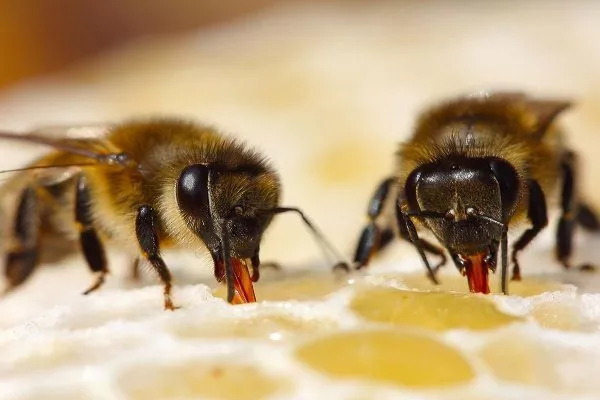
When nectar reaches the insect's mouth, the bee infuses it with its own secretion from its salivary gland. This secretion is rich in a variety of enzymes that transform the nectar into a healthy and delicious honey product.
Features of breeding and quantity of honey
The amount of honey collected can vary greatly depending on the region, the location of the apiary, the weather, the bee breed and care, and the honey plants growing nearby. If the previous winter was very cold and spring arrived late, the bee colony will collect much less honey than usual. Favorable conditions (warm and humid air) promote large honey collection.
The bee breed has a significant impact on honey yield. When choosing a breed, it's important to consider the region and climate. For some regions, Carpathian bees are best, while for others, Central Russian bees are better. The size and quality of the hive also influences the yield. Multi-hive hives are ideal. However, care must be taken to ensure that not all combs are filled with honey; there should always be some spare cells available.
It's important for a beekeeper to have experience in beekeeping and proper care of the insects. An experienced beekeeper is capable of maintaining only strong colonies and high-quality, prolific bees. queensHe ensures optimal conditions for their life, reproduction, and wintering, constantly monitors the hive body and its frames, installs additional combs, prevents swarming, and, if necessary, moves the apiary to another location, where there are honey-producing herbs, shrubs, or trees.
Typically, a single extraction from a hive yields 13-18 kilograms of this unique product. During extremely hot or rainy summers, this yield drops significantly, to 10 kilograms. Favorable conditions allow a single bee colony to harvest up to 200 kilograms of this beneficial honey.
Honey collection is the primary activity of bees. The insects devote their entire energies to collecting nectar and then processing the honey product. Each bee in a large colony performs specific functions, but they all share a common goal: collecting nectar and processing it into useful honey.
The word "apiary" has been in my head since childhood and I'm glad I grew up in an apiary. Everything described about bees and the healing properties of honey is true. Because an apiary isn't just honey, it's pure nature, forest, air, romance, mead. Yes, when I grew up, I rode a motorcycle with the girls. Those were the happiest moments of my youth.
I can say the following about the benefits of honey: I ate it like a horse, two glasses at a time, and I had the strength and health of a hero. I always won prizes at competitions, even though I was 6th or 7th in the classic category, and completely overtook the "dreadful" ones, for which they often tried to squeeze me and beat me up later ((, but I wasn't sad when I myself became a "dreadful" one, 9th and 10th grade, went to competitions, I'll say right away that I didn't train or prepare, but I always ate honey, as usual, and never got sick. And only years later did I understand where I got so much health and endurance from. It's a shame my dad got old and left the beekeeping business ((, now I only remember. ah...
Very informative information. We never really think about why bees make honey, and most importantly, how! I was so captivated, I couldn't put it down (and that's why my cutlets burned))). More interesting things like this!