
Slaughtering a pig isn't just unpleasant, it's also difficult, requiring specific knowledge, skills, and even physical strength. You can hire a specialist or use a slaughterhouse, but if you're raising pigs for meat and fat on a regular basis, it's more cost-effective to master the craft yourself. This requires taking several nuances into account and acquiring all the necessary equipment.
Weight of pig for slaughter
After just four months of fattening, the piglet is ready for slaughter. It has gained sufficient meat and fat, but weighs no more than 90-100 kg. The point of slaughtering a young animal is to ensure its soft and tender meat. It's also less fatty than that of older piglets.
If you keep a pig in good condition for a longer period, its weight will quickly increase to 120-150 kg. In this case, a pig whose weight gain has plateaued, meaning it hasn't gained any weight within 2-3 weeks, is slaughtered. The precocity of pigs depends on the breed and diet.
Of course, the larger the weight of the pig, the more fat and meat it will produce after cutting:
- yield at a weight of about 100 kg – 75%;
- yield for weight from 120 to 140 kg – 75-80%;
- choice for weight from 160 kg – up to 85%.
Optimal weight for slaughter by breed
| Breed | Minimum weight (kg) | Optimal weight (kg) | Maximum meat yield (%) |
|---|---|---|---|
| Vietnamese | 50-60 | 70-80 | 75-78 |
| Landrace | 90-100 | 110-120 | 80-82 |
| Duroc | 100-110 | 130-140 | 82-84 |
| Large white | 100-110 | 140-150 | 83-85 |
Recently, Vietnamese pigs have become increasingly popular; they are slaughtered at 4-6 months of age, as keeping them longer is unprofitable.
Suckling piglets (young pigs no older than 8 weeks) are slaughtered in rare cases, if the farm has surplus litter or culled piglets. The same is true for boars, as they are typically rare on farms. More often, castrated male boars are slaughtered.
Breeding sows are typically allowed to farrow up to 12 times before being slaughtered. As pigs age, their meat loses its tenderness and softness, so delaying slaughter is not recommended. Furthermore, it's possible that the meat will completely lose its flavor and become unfit for consumption.
Which animal cannot be slaughtered?
Regardless of the age of the animal, in some cases slaughter is prohibited.
A pig in heat
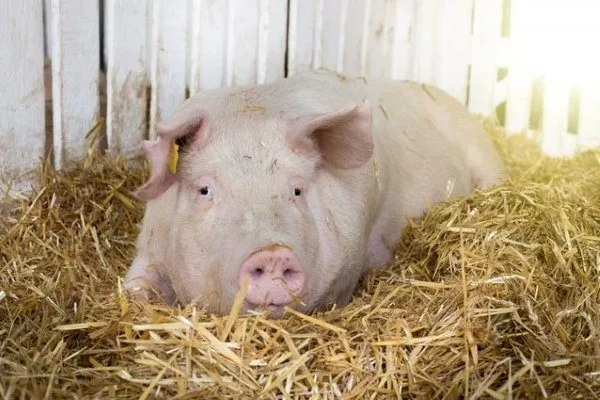
The meat of such an animal has an unpleasant taste and smell, and it's impossible to overcome it. This is because the animal's reproductive hormone levels increase during the heat period. Experienced pig breeders recommend waiting 5-7 days to 2 weeks after the end of the heat before slaughtering the pig. This time is necessary for the animal's hormonal levels to return to normal.
A "walking" individual can be identified by the following signs:
- refuses to eat;
- sometimes aggressive towards its relatives;
- shows anxiety;
- constantly grunts.
Critical errors in selection for slaughter
- Slaughter within 48 hours after transportation
- Slaughter of animals with a body temperature above 39.5°C
- Use of pigs with signs of helminthiasis without prior deworming
During the heat period, the sow's nipples and genitals swell and become red. Frequent urination is also observed.
A pig showing signs of illness
Sick animals are prohibited from being slaughtered. They are either treated or, in cases of severe infections, slaughtered, and the carcasses destroyed. Such meat should not be consumed. Sick pigs often lose their appetite, become inactive, and suffer from unusual discharge. If these symptoms occur, call a veterinarian immediately.
Read more about pig diseases here.
Pig after treatment or vaccination
It's important to wait 2-3 weeks after vaccination or treatment with antibiotics or anthelmintics. This should allow time for the harmful substances accumulated in the animal's meat to break down and be eliminated from the pig's body.
Slaughter dates
Slaughter is best scheduled for cooler times of year—fall or spring. On private farms, the procedure should be performed before winter, as this eliminates a number of problems for pig farmers, namely:
- meat is easier to store;
- food costs are reduced.
During the summer months, animals actively gain weight, so slaughtering at this time is not advisable. However, if necessary, slaughtering can be done in the summer. However, it's important to complete all work early in the morning, before the heat and flies become too intense.
Preparing the pig
Before slaughter, it is important to properly prepare the animal:
- Boars should be castrated two months before slaughter. Otherwise, the meat can be thrown away, as it will be very tough and smell unpleasant. Neither cooking nor soaking in vinegar will help with the smell.
- Do not feed the pig for 12 hours before slaughter, and do not provide water for 3 hours. This will allow the pig's intestines to empty and cleanse thoroughly, which will improve the quality of the meat. Furthermore, it will be easy to lure a hungry pig out of the pen by offering it something tasty.
- If a boar or pig lives in a cramped pen and is heavily soiled with manure and dirt, it's essential to thoroughly wash the animal with warm water. This will reduce the number of microorganisms on the skin and extend the shelf life of the carcass. If the animal is kept clean, this procedure is unnecessary.
- If the meat is intended for sale, take the pig to a veterinarian several days before slaughter, even if it is healthy, vaccinated, and kept in sterile conditions. If all is well, the veterinarian will issue a certificate, which is attached to the results of the post-slaughter sanitary and veterinary inspection and allows the meat to be sold. However, if the pig is being slaughtered for personal consumption, there is no need to take it to a veterinarian.
24-Hour Pre-Slaughter Preparation Checklist
- ✓ Conduct a visual inspection for skin damage
- ✓ Measure body temperature (normal: 38-39°C)
- ✓ Provide free access to clean water
- ✓ Prepare documents for veterinary control
After slaughter, you will need to visit a veterinary laboratory again, where a doctor will perform the necessary tests and issue a certificate of product safety.
The most important thing is that the animal is calm before slaughter. To avoid causing stress, avoid frightening it, yelling at it, kicking it, or showing any aggression. It's believed that boar meat quality deteriorates under stress, and this is not without reason, as stress, fear, or aggression increase the level of the hormone adrenaline in the blood. Experienced slaughterers slaughter pigs when they are calm. A bowl of tasty food and water is an excellent calming aid for a hungry animal.
Preparing the workplace and equipment
To slaughter a pig, you need to prepare a work area and equipment:
- a wooden pallet or other convenient area where it will be easy to cut up the carcass;
- lots of warm water;
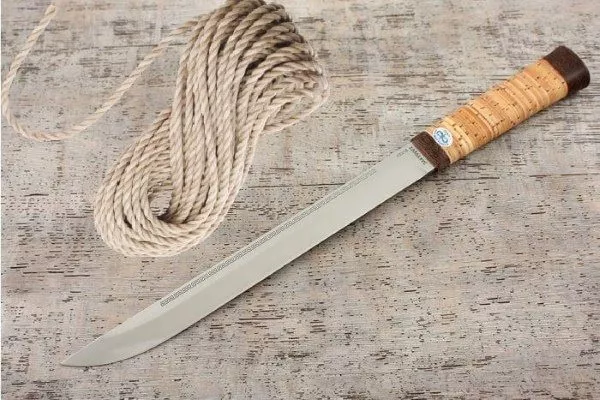
- a sharp long knife with a blunt end;
This blade will prevent increased bleeding after a wound. The optimal blade size is at least 20 cm long and 2 cm wide.
- containers for collecting blood, but galvanized buckets cannot be used;
- ropes for fixation;
- a gas burner or blowtorch for singeing the bristles, but if the smell of gas bothers you, then the carcass can be burned on straw;
- clean rags that absorb liquid well;
- hook - for hanging the carcass so that the blood drains faster;
- A sledgehammer is essential, first and foremost, for beginners, to stun the animal before slaughtering it.
Professional equipment recommendations
- Use knives made of stainless steel grade 40X13 or similar
- The optimal water temperature for washing the carcass is 60-65°C.
- To secure large specimens, use nylon slings with a lifting capacity of at least 200 kg.
It's best to sprinkle the slaughter area with sawdust. It should be dry and clean. All equipment should be disinfected beforehand.
Methods of slaughtering at home
There are several methods of slaughter. Some pig farmers prefer the old-fashioned way with a knife, while others use newer methods. Both have their place.
A blow to the heart
This method requires at least two people: one holds the animal down, while the other uses a knife, delivering a precise stab to the heart. The technique is as follows:
- The pig is placed on its left side and its legs are held firmly.
- Having felt the pulsation, quickly insert the blade between the 3rd and 4th ribs.
- Only after making sure that the animal is dead, the knife is carefully removed and the puncture is covered with a clean cloth.
- The skin is singed and the blood is allowed to drain completely. Complete bleeding usually takes 5-7 minutes.
Comparison of slaughter methods
| Method | Time of death (sec) | Blood loss (ml/kg body weight) | Complexity |
|---|---|---|---|
| A blow to the heart | 15-20 | 30-35 | High |
| A blow to the neck | 45-60 | 40-45 | Average |
| Electric shock | 60-90 | 25-30 | Low |
| CO₂ | 120-180 | 35-40 | Professional |
To facilitate the procedure, the animal can be stunned first using a sledgehammer, heavy hammer, or axe blow to the forehead. However, even an unconscious pig may begin to kick its legs reflexively, so don't relax after the blow. The carcass should be held, and the knife should be left in place until the movement completely stops.
The advantage of this method is that the pig dies instantly, without suffering. However, blood, albeit in small quantities, gets into the chest cavity and lungs, which is detrimental to the quality of the meat.
A blow to the neck
This method is more painful for the animal, as it doesn't die immediately, but the meat is of higher quality than heart puncture, as blood doesn't get inside. Two people can't handle this, so a team of at least three is needed. The procedure is as follows:
- While the boar eats, its hind legs are tied with a strong rope.
- They throw it over the crossbar and pull the animal sharply upward. If the butcher is right-handed, the animal's head should be placed on the right side.
- Once the pig calms down, quickly cut the throat with a knife near the carotid artery, from the left ear to the pharynx. It's important to make the puncture with firm pressure at a point 2-3 cm from the ear.
- Within seconds of the puncture, the pig goes into shock. During this time, it is placed on a special table and turned onto its side, with its right leg held and pressed against the surface. Blood will begin to spurt vigorously, and the animal will gradually fade.
This method is often used when slaughtering small pigs, for example, Vietnamese.
Use of firearms
The most inhumane and cruel method. Hitting an animal that senses danger the first time is extremely difficult. A wounded boar lets out heart-rending cries and begins to thrash around the pen, damaging structures. Moreover, it can injure other farm animals along the way. This has a negative impact on the quality of the meat, as the animal's adrenaline spikes to its maximum level. Therefore, firearms are unacceptable for killing pigs.
Stunning with electric shock
A modern method. It's considered less expensive and doesn't require assistants. The pig is stunned with a special electric shock device through the head or heart. Disadvantages of this method include the risk of hemorrhaging, bone fractures, and soft tissue lacerations. This method also requires quick action. After stunning, the carcass must be bled within 45 seconds. This requires an injection into the heart or neck, using the methods described previously.
Carbon dioxide stunning
This method is optimal if you need to slaughter several pigs at once. For this method, a sealed chamber is prepared, several pigs are placed in it, and carbon dioxide is introduced. The animals fall asleep within 2-3 minutes, and their reflex muscle contractions last longer than with previous methods. The disadvantage is that the pigs experience stress when placed in a small space, which adversely affects the quality of the meat.
This method requires additional equipment costs and is of greater interest to larger farms, as it can stun 6-8 animals at a time, and the animals can be of varying weights.
Of all the methods, pig breeders most often use the first two technologies - a blow to the heart or neck.
Features of slaughtering piglets and wild boars
A step-by-step plan for slaughtering a pig
- Fixing the animal in a lateral position
- Stun with a blow to the frontal part (if necessary)
- Carotid artery puncture at an angle of 45°
- Complete bleeding within 5-7 minutes
If the piglet is light, you can slaughter it yourself, but it's best to have an assistant hold the animal's hind legs. A blow to the neck is usually used for slaughter, as it's the most humane method—the animal will simply fall asleep and feel no pain. The piglet is slaughtered on a special high stool.
When slaughtering a large pig, at least three people are needed, as handling an animal weighing over 100 kg is very difficult alone. The owner lures the animal out of the pen, and the assistants deftly and quickly tie its front and hind legs. Once the pig is immobilized, slaughter begins using any of the methods described above. Be sure to drain all the blood, otherwise the fat will be red.
Slaughter in industrial slaughterhouses
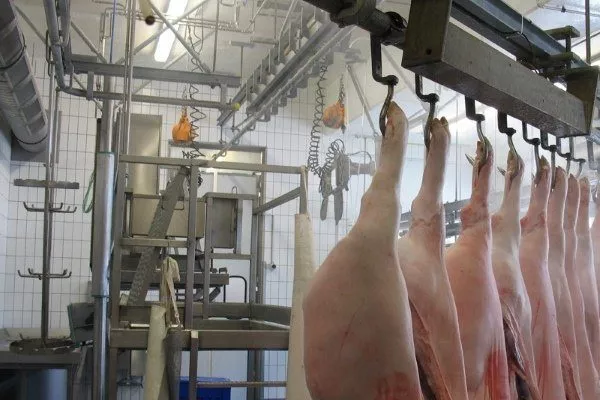
In modern slaughterhouses, almost the entire process is automated:
- The pigs are first washed and then sent to the workshop.
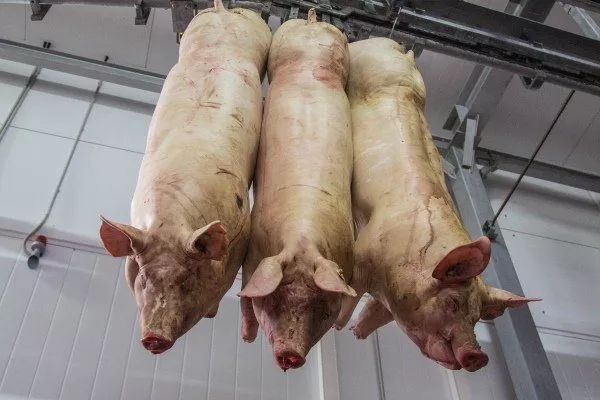
- The animals are suspended by their hind legs, head down, over a conveyor belt.
- The slaughterers use precise and swift blows to sever the blood vessels. Then they let the blood drain.
- The bloodless carcasses are sent to an oven where the bristles are removed.
After slaughter and bleeding, the carcasses are sent for cutting.
Helpful tips for beginners
For those new to pig slaughter, here are some helpful tips:
- A stab to the heart should be avoided, as this method is more suitable for experienced slaughterers. The point is that you need to know exactly where to insert the knife. For beginners, a stab to the neck is more appropriate.
- It is recommended to stun the pig before slaughter.
- For best bleeding, hang the carcass on a hook. Remember that blood spoils the meat, imparting an unpleasant flavor.
Typical mistakes of beginners
- The knife is not sharp enough (it should cut paper while hanging)
- Premature withdrawal of the knife after a blow
- Incomplete exsanguination due to haste
Before slaughtering a pig, it's essential to thoroughly prepare and consider all the nuances of the process. An injured or wounded animal not only suffers but also becomes very aggressive, and the image of a person running after a bloody creature evokes nothing but horror and disgust. Therefore, it's also important to consider the moral aspects of the procedure.