
Pigs are susceptible to various diseases. These can be contagious or non-contagious. The former are divided into infectious and parasitic diseases. Each pathology has its own characteristics, so treatment and prevention methods may vary.
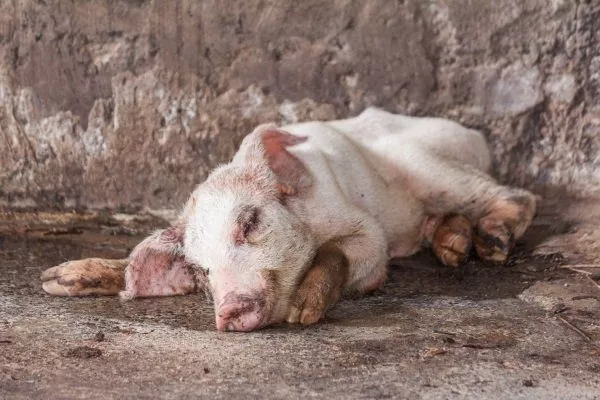
Infectious diseases
Such diseases are also called contagious, as infected animals can transmit them to healthy individuals. The causative agent can be a microbe, a virus, or mycoplasma. Animals that recover from the disease gain immunity.
Comparison of infectious diseases of pigs
| Disease | Incubation period | Mortality | Main symptoms | Prevention methods |
|---|---|---|---|---|
| Plague | 3-7 days | 90-100% | Fever, hemorrhages | Quarantine, disinfection |
| Mug | 3-4 days | 55-80% | Skin lesions, arthritis | Vaccination |
| Dysentery | 2-28 days | 30-50% | Bloody diarrhea | Antibiotic prophylaxis |
| Edema disease | 6-10 hours | 90-100% | Edema, nervous phenomena | Vitaminization |
| Aujeszky's disease | 3-21 days | 100% in piglets | Nervous symptoms | Vaccination, deratization |
Plague
This disease is viral. The virus enters the animal's bloodstream, penetrating all tissues and organs. It is highly infectious and relatively resistant to chemical and physical factors.
The virus can affect pigs of any breed and age. It originates from a sick animal. The virus is present in urine, feces, and secretions. The incubation period usually lasts no more than a week. The disease is accompanied by the following symptoms:
- increase in temperature to 42 degrees;
- loss of appetite;
- the appearance of thirst;
- unsteady gait;
- staying mostly in a lying position.
By the end of the week, the clinical picture is supplemented by pinpoint hemorrhages on the ears and abdomen. The animal usually dies within 1-1.5 weeks.
Anti-inflammatory and antiviral medications are used to treat plague, but these cases are rare. Sick animals are usually slaughtered due to the cost of treatment.
To prevent the spread of the disease, farms are fenced, sanitary checkpoints are installed, and disinfection barriers are installed. Disinfection, deratization, and pest control are regularly carried out. If a disease is detected, quarantine is imposed. After the sanitary slaughterhouse, technical disposal is carried out.
Learn more about African swine fever (ASF) – read here.
Mug
This disease is also known as erysipeloid, creeping erythema, naturalists' rubella, and Breaker's erythema. It is caused by the erysipelas bacterium. The disease typically affects pigs aged 3 to 12 months.
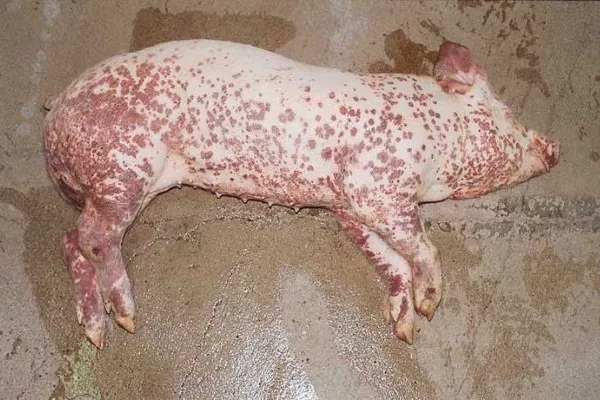
The source of infection is sick animals and carriers. It can be transmitted through food. The incubation period is 3-4 days. Acute symptoms include:
- an increase in temperature to 42 degrees;
- depressed state;
- weakness in the hind limbs;
- constipation;
- conjunctivitis;
- congestion in the lungs;
- cyanosis of the skin.
The subacute course of the disease is expressed by skin exanthema, and the chronic course is expressed by emaciation, endocarditis, arthritis, and skin necrosis.
Treatment involves anti-erysipelas serum and antibiotics (usually penicillin). Prevention involves active immunization with live and inactivated vaccines.
The disease can affect humans, so veterinary and sanitary control is important.
If the animal's internal organs and blood are affected, it must be disposed of.
Dysentery
The causative agent is an anaerobic spirochete, which is transmitted by sick and recovering animals.
The incubation period can last from 2 to 28 days. The course of the disease can be acute, subacute, or chronic.
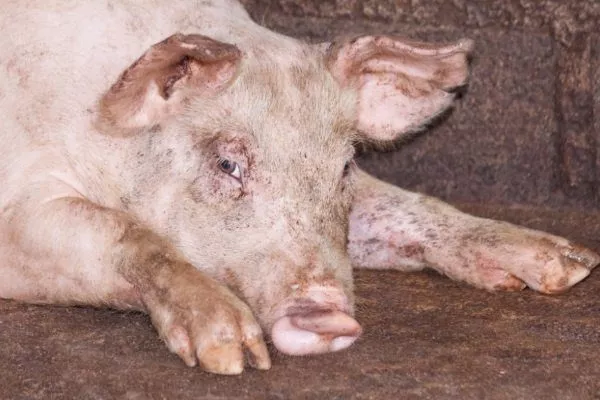
Initially, depression, loss of appetite, and fever are observed. The main symptom—diarrhea—appears between days 3 and 7, followed by temporary constipation. Stool may be reddish-brown or dark chestnut in color. Blood clots and purulent exudate may be present.
Treatment involves antibacterial therapy, including sulfonamides, Trichopolum, Tilan, Nifulin, and Osarsol. Similar measures are used for prevention.
If there are degenerative changes in the muscles, the carcass with internal organs is subject to disposal.
Edema disease of piglets
This phenomenon is also known as colienterotoxemia, colitoxemia, Escherichia coli, and paralytic toxicosis. The causative agent is hemolytic Escherichia coli.
The disease is characterized by an acute course. The clinical picture is characterized by the following symptoms:
- increased excitability;
- short-term convulsions at the initial stage;
- paresis and paralysis during the development of the disease;
- hyperemia and swelling of the eyelids;
- loss of appetite;
- short-term diarrhea;
- periodic vomiting;
- increased heart rate;
- cyanosis of the ears, snout, skin on the abdomen and distal parts of the limbs;
- difficulty breathing;
- hoarse, barking voice.
Treatment is carried out with antibiotics, diphenhydramine (intramuscularly), and calcium chloride and calcium gluconate solutions with novocaine. After antibacterial therapy, acidophilus solutions are used.
To prevent this, piglets are gradually weaned and given vitamin and mineral supplements. Slaughter products must be examined, as any altered organs require disposal.
Aujeszky's disease
This condition is known as pseudorabies, infectious meningoencephalitis, or infectious bulbar palsy. It is caused by a herpes virus, which is transmitted by carriers and infected animals. It is transmitted through food. Rodents are often the cause of the disease.
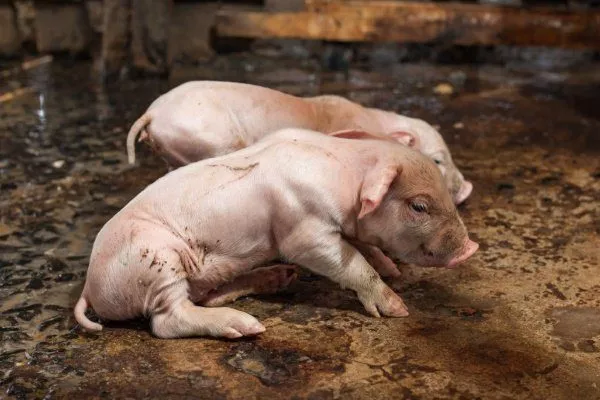
The incubation period can last about three weeks. Piglets show no specific symptoms, and death occurs within 12 hours. In adults, the disease manifests itself with profuse, foamy salivation and a fever of up to 42 degrees Celsius.
The epileptic form of the disease is characterized by sudden agitation, convulsions, a sitting dog posture, an inappropriate response to light, and paralysis of the muscles, ears, and eyes. The oglumoma-like form is characterized by depression, immobility lasting for hours, an unsteady gait, a crooked neck, an elevated pulse, and pulmonary edema. Death can occur within 1-2 days or up to 2 weeks.
There are no specific drug treatments. Protein therapy is used to strengthen the body's overall reactivity. Penicillin, streptomycin, biomycin, and vitamin and mineral supplements are used to reduce the risk of complications.
A month-long quarantine is enforced, and the animals are vaccinated. Recovered pigs are fattened for subsequent slaughter.
Enteroviral gastroenteritis
The disease is caused by an enterovirus. It is transmitted by sick, recovered, and latently infected animals. Suckling piglets typically have an incubation period of 1-2 days, while gilts have an incubation period of up to 6 days.
The disease is acute and typically accompanied by the following symptoms:
- oppression;
- lack of appetite;
- exhaustion;
- thirst;
- vomit;
- alternating profuse diarrhea and constipation.
Stools are watery, yellow or greenish-yellow in color, and may contain blood. In some cases, impaired coordination and muscle spasms may occur.
There is no specific treatment for the disease. Symptomatic therapy is administered, and easily digestible feed is provided. Antibiotics are also used to rule out secondary infections.
Parasitic diseases
Pigs often harbor multiple pathogens simultaneously. This is detrimental to the animals, so it's crucial to take effective and timely preventative measures.
Comparison of helminthiasis in pigs
| Disease | Localization | Diagnostics | Essential drugs | Timing of deworming |
|---|---|---|---|---|
| Ascariasis | Small intestine | Scatology | Piperazine | Every 3 months |
| Trichuriasis | Caecum | Scatology | Fenbendazole | Before the pasture |
| Physocephalosis | Stomach | Vomit analysis | Nilverm | 3 times with an interval of 30 days |
| Echinochiasis | Small intestine | Fecal examination | Bithionol | After grazing on the estuaries |
Echinochiasis
The causative agent is a trematode that parasitizes the small intestine. It most often affects young animals between six months and a year old. Pigs are usually infected in estuaries when the water level recedes. Fish are the source of the helminths.
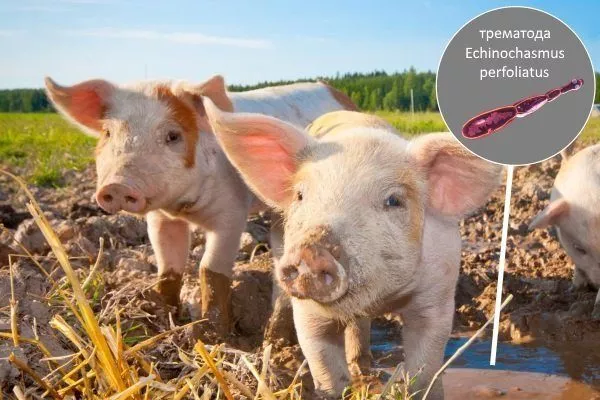
The disease is characterized by vomiting, weight loss, growth retardation, curvature of the spine, enlarged lymph nodes, and intermittent fever.
There is no specific treatment. Prevention involves avoiding grazing in estuaries and testing fish for this pathogen before feeding them to pigs.
Ascariasis
The causative agent is a nematode parasitizing the small intestine. The source of infection is sick animals, and earthworms act as carriers of the infestation.
Ascariasis most often affects weaned piglets and gilts under 4 months of age. Early weaning and inadequate feeding pose a risk of mass infection.
Larval migration is accompanied by bronchitis, bronchopneumonia, and pneumonia in animals. This condition is characterized by the following symptoms:
- cough;
- difficulty breathing;
- wheezing;
- unsteadiness of gait;
- loss of appetite;
- elevated temperature;
- vomit;
- developmental delay.
When adult roundworms infest the intestines, clinical signs are usually not observed. However, with severe infestations, there is a risk of intestinal obstruction and rupture.
Treatment consists of deworming with piperazine. This is administered one month before farrowing, and if infection is detected, a repeat treatment is administered 1.5 weeks later. Piglets are dewormed at 2.5-3 months, with a repeat treatment 1.5 weeks later for infected individuals.
Prevention involves properly organizing animal housing, cleaning pigpens and paddocks in the spring and fall, disinfestation, and biothermal manure treatment. Preventive deworming of piglets is mandatory—this is performed three times during the first four months.
Physocephalosis
The causative agent is a nematode that parasitizes the gastric mucosa. It is transmitted by sick animals and dung beetles. Insects ingest the nematode eggs along with infected feces. During the infestation, the larvae enter water and food.
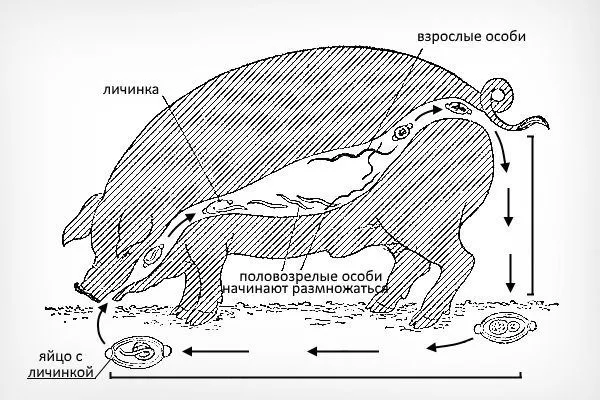
Developmental diagram of the nematode Trichocephalus suis
The disease has no specific symptoms. Animals become emaciated and their digestive processes are disrupted.
There is no effective treatment. Deworming is necessary for prevention. This is administered three times, at monthly intervals.
Ollulanosis (ollulanosis)
The causative agent is a nematode parasitizing the stomach. The source is sick animals with vomit containing the nematodes themselves or their larvae.
The disease is widespread and affects piglets as young as one month old. There are no symptoms.
Deworming is used for treatment and prevention. Nilverm and Fenbendazole are used for this purpose. Deworming is administered in several doses: first before mating, then one month before farrowing. Piglets are treated at one month of age, then again after one to two months.
If sows exhibit poor body condition and frequent vomiting, they are subject to culling. If an infected animal is detected, the entire batch is rejected from the farm.
Trichuriasis
The causative agent is nematodes, which primarily infest the cecum. Infection occurs through feed, water, and sucking on contaminated udders. Young piglets and gilts are most susceptible.
Trichuriasis is characterized by progressive weight loss in animals. Acute cases often include seizures and bloody diarrhea. Chronic cases include loss of appetite, exhaustion, abdominal pain, and diarrhea.
As a treatment, deworming is carried out with Fenbendazole, Febantel, and Morantel Tantrate is used.
Prevention involves deworming before moving the animals to the summer camp and keeping them in stalls. The premises must be maintained in proper veterinary and sanitary conditions and treated monthly with boiling water or ash lye.
Non-communicable diseases
This group of diseases is also called non-contagious. They are usually caused by improper animal husbandry and feeding.
Obesity
Weight Loss Plan
- Dietary analysis for energy and protein content
- Gradually reduce calorie intake by 15-20%
- Introducing fiber into the diet (bran, grass meal)
- Organization of daily exercise (2-3 hours)
- Weight control every 10 days
This disease is characterized by excessive accumulation of fat tissue in the body, exceeding body weight by at least 20%. More common is alimentary obesity, which occurs as a result of prolonged overfeeding. Risk factors often include a genetic predisposition to this condition, confinement, and physical inactivity.
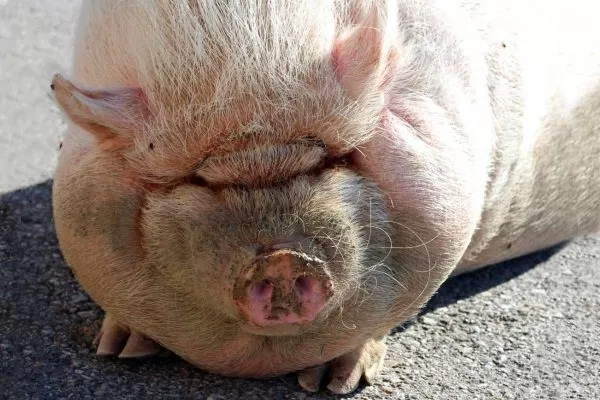
Hypothalamic-pituitary obesity is observed against the background of organ damage, and secondary symptomatic endocrine disease is a consequence of hypothyroidism, hypogonadism, and hypercorticism.
Obesity causes changes in the animal's physiological shape, including an enlarged abdomen. Sexual activity and response to external stimuli decrease, and motor functions slow down. Cardiopulmonary failure and pericardial obesity are possible.
Proper feeding and exercise are essential for treatment and prevention. Medication is administered based on the animal's condition. Hypoglycemic agents, cardiac glycosides, and hepatoprotectors are most commonly used.
Gallstone disease
In this case, stones form in the gallbladder and hepatic ducts, blocking the flow of bile into the intestines. The cause of the disease is metabolic disorders, altered organ motor function, mechanical factors, infections, and infestations.
If bile flow is not impaired, there are no symptoms of the disease. If bile flow is impaired, the animal's condition is characterized by:
- loss of appetite;
- intestinal and rumen flatulence;
- diarrhea;
- anemia of the visible mucous membranes, alternating with jaundice;
- elevated temperature during an attack;
- painfulness of the organ.
Treatment involves painkillers, vasodilators, and laxatives. Sulfonamides and urotropin are also used. Prevention involves maintaining good hygiene and feeding regimens.
Pneumonia
Antibiotic therapy regimens
| Preparation | Dosage | Well | Route of administration | Restrictions |
|---|---|---|---|---|
| Amoxicillin | 15 mg/kg | 5-7 days | i/m | Do not mix with tetracyclines |
| Tylosin | 10 mg/kg | 3-5 days | i/m | Do not use with macrolides. |
| Florfenicol | 30 mg/kg | 3 days | i/m | Do not use in case of liver failure. |
The disease can be serous, fibrinous, hemorrhagic, purulent, catarrhal, putrefactive, or mixed. The type is determined by the nature of the exudate. The pathological process is localized in various ways, so alveolitis, acinous, lobular, confluent, segmental, lobar, and total pneumonia are distinguished.
All animal species are susceptible to catarrhal pneumonia. It is characterized by an acute course accompanied by:
- moderate fever;
- temperatures up to 41 degrees;
- depressed state;
- decreased appetite;
- cough;
- mild shortness of breath.
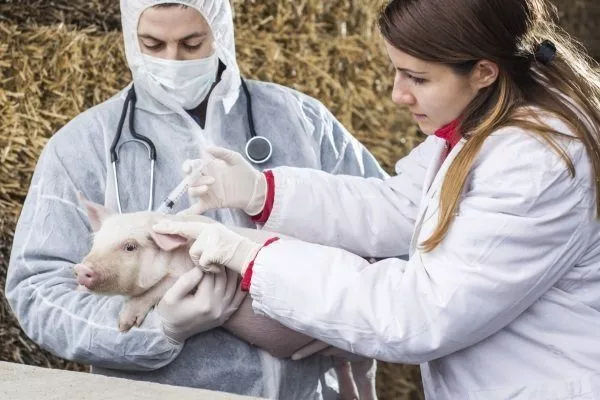
Sick animals need to be well-fed and properly cared for. Medication is administered with antimicrobial agents. Intoxication and oxygen deficiency must be addressed, and the acid-base and water-salt balance must be normalized.
To prevent this, it is necessary to create optimal feeding and living conditions for animals.
Cannibalism
This disease is characterized by increased aggressiveness. Pigs bite their fellow pigs or themselves. The causes are improper feeding and housing conditions.
The disease manifests itself as increased excitability. Ear and tail biting is observed, and sows may eat their piglets.
Treatment involves isolating sick animals. For prevention, it's important to maintain proper feeding and housing conditions. Regulators of excitation and inhibition processes are periodically included in the diet.
Cystitis
This disease is an inflammation of the bladder. The cause is usually infection, less commonly trauma or microbial contamination.
Cystitis is characterized by frequent urination, pain in the palpable bladder, cloudy urine containing protein and mucus.
Treatment involves eliminating irritating foods and ensuring the dog has plenty of fluids. Medications include urotropin, salol, sulfonamides, and antibiotics. If a purulent process has begun, the bladder is flushed.
There are other non-contagious diseases of pigs. Most of them can also affect humans. If you notice any alarming symptoms, consult a specialist to identify and address the problem.
The main cause of most pig diseases is improper care and feeding. Properly managed animal management can help avoid many problems. One important factor is periodic deworming, especially during periods of increased risk of infection.