
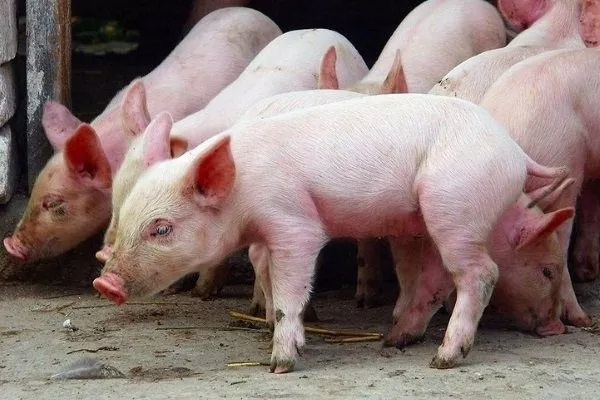
Escherichia coli (colibacillosis) is a dangerous disease widespread on farms. It primarily affects young piglets, and the rapid spread of the disease and high mortality rates among newborn piglets cause significant economic losses. This article explains how this disease manifests itself and how to protect your herd.
Causes and pathogens
Colibacillosis is caused by the pathogenic gram-negative motile bacterium Escherichia coli. Currently, approximately 9,000 serological variations of Escherichia coli are known, which determine their type. However, only a few species infect animals. Enterotoxigenic (antibiotic-resistant) and enteroinvasive strains of Escherichia coli are widespread.
The bacteria are quite resilient in the environment, remaining viable for up to 60-80 days in soil and water, and up to 30 days in feces. Boiling kills them immediately, while heating to 80 degrees Celsius kills them within 15 minutes.
The source of coli infection is sick and recovering sows. Outbreaks are often caused by sows carrying the pathogenic strain of Escherichia coli, shedding the bacteria in their feces, urine, and colostrum. This occurs immediately after farrowing—susceptible young pigs are exposed to the infection within the first few days after birth.
The pathogen can also be transmitted through water, shared household items, and contaminated food. In this case, infection occurs after the animal begins to feed independently.
Rodents can cause the development of colibacillosis in farms because they are carriers of pathogenic strains.
The following can be identified as provoking factors:
- unbalanced diet;
- lack of micronutrients;
- lack of exercise and ultraviolet radiation.
Forms of the disease
Like any infection, this pathology, depending on the state of the immune system and the degree of pathogenicity of the harmful agent, can proceed:
- sharp;
- super sharp;
- subacute;
- chronically.
Unformed stool in newborns often indicates infection and is accompanied by the following general symptoms:
- cyanosis of the skin;
- mucous secretion is detected in the nasal passages;
- Edema is found in the following areas: eyelids, neck, submandibular space, and occiput. Edema in the back of the body is observed in rare cases.
The symptoms of colibacillosis also vary depending on the clinical form and course of the disease:
1Septic form
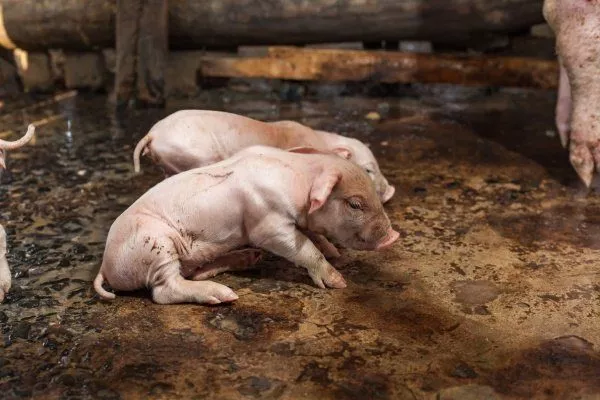
It occurs in newborn and suckling piglets. The disease progresses acutely to hyperacutely. Mortality is rapid and high (within 24-48 hours). Development is caused by the penetration of bacteria into the bloodstream and subsequent proliferation. External manifestations include:
- refusal to eat;
- general oppression;
- high persistent temperature, followed by impaired coordination;
- respiratory failure (cyanosis of the mucous membranes), and as a consequence, disruption of the heart;
- conjunctivitis;
- severe diarrhea or dehydration and absence of diarrhea (the stool first becomes liquefied, becomes gray-white, with streaks of blood, and then becomes watery and foamy);
- convulsions;
- septicemia.
2Enterotoxemic form
It occurs in the post-weaning period, is acute, and manifests itself within 3 to 12 hours. Fatalities occur in almost 50% of cases. It is characterized by the penetration of coli into the small intestine and manifests with toxic and neurotoxic symptoms:
- loss of appetite;
- CNS damage – increased excitability, acute reaction to touch, head twitching and transient spasms of the lower jaw, walking in circles;
- diarrhea;
- collapse.
3Enteritic form
A chronic and subacute infection characterized by a low mortality rate. Symptoms include:
- lethargy, apathy;
- lack of appetite;
- severe diarrhea;
- dehydration.
Diagnostics
Infectious colibacillosis can be diagnosed after assessing and analyzing clinical symptoms, pathological changes, and the epidemiological situation. Bacteriological analysis of material obtained from dead piglets is also important.
When mass diarrhea occurs, without wasting any time, the following materials taken from the affected farm are sent to the laboratory:
- pig carcasses;
- pathological materials: a lobe of the liver and part of the gallbladder, brain, blood vessels, lymph nodes, tubular bone, fragment of the small intestine;
- For bacteriological analysis, it is necessary to take fresh feces from less than five piglets (1-2 g from each head).
To establish an accurate bacteriological diagnosis, materials from sick animals that have not been treated with antibiotics are used.
The diagnosis of colibacillosis in piglets is considered established in the case of:
- Isolation of bacterial cultures from the spleen, bone marrow and brain.
- The following changes were revealed during pathological examination of piglets after death:
- in the pericardial region there is a certain amount of serous-fibrinous effusion with inclusions;
- respiratory system - the lungs are filled with fluid mixed with blood;
- under the pleural area, small amounts of punctate inclusions are found;
- the intestines are hyperemic, there are hemorrhages, fibrin threads are found among the loops;
- the lymph nodes are swollen when cut, there is hemorrhage, and their size is increased;
- parenchymal organs (liver, kidneys) are flabby;
- congestion is observed in the brain and blood vessels;
- skeletal muscles are emaciated and pale.
And also after exclusion in suckling piglets:
- rotavirus enteritis;
- dysentery;
- viral gastroenteritis;
- faces;
- plague;
- Aujeszky's disease.
In older individuals the following is excluded:
- streptococcosis;
- salmonellosis;
- pasteurellosis;
- coronavirus infection;
- adenovirus infection.
Treatment
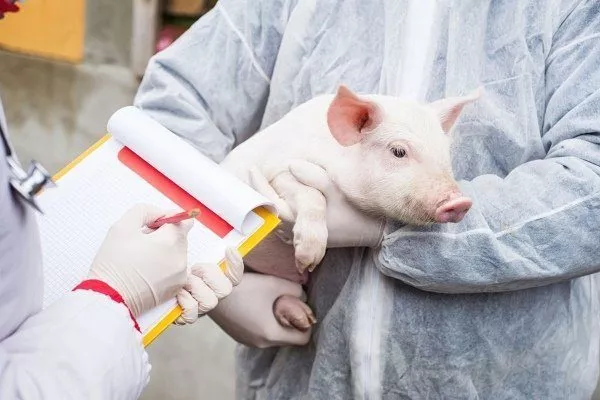
Because the disease is complex and spreads rapidly, treatment begins as early as possible. A veterinarian will prescribe the treatment regimen and dosage based on each individual animal's condition, weight, and age.
Treatment of escherichiosis is symptomatic and based on:
- restoration of water-salt balance – 0.9% sodium chloride solution, Ringer's solution;
- normalization of the gastrointestinal tract – the use of probiotics (Emprobio), Biovit 40-80-120, as well as enveloping drugs to relieve inflammation of the mucous membrane;
- stabilization of heart function and elimination of oxygen starvation – caffeine benzoate;
- elimination of toxicity – adsorbents (activated carbon, Enterosgel, Carbitox);
- Boosting immunity – involves the use of specific antibodies against the colibacillosis pathogen (polyvalent serum in a therapeutic dose of 15-20 ml for five-day-old piglets, serum from animals to be slaughtered, and serum from sows vaccinated against E. coli). Increased amounts of vitamin C, which piglets receive from their diet, also boost natural resistance;
- restoration of appetite;
- Infection suppression is achieved exclusively with medications to which the bacteria are sensitive. These include long-acting antibiotics (Amoxicillin, Cobactan), as well as Nitox, Neopen, and Gentavet for enteritis.
Sick piglets must be kept separate from healthy piglets during treatment.
A key factor in treating intestinal pathologies is a fasting diet lasting up to 12 hours. This is prescribed from the first day of illness. Colostrum is replaced with a warm sodium chloride solution (this will reduce dehydration). Subsequently, up to 50% of the daily colostrum intake can be added to the solution. Piglets are fed every 6 hours.
- ✓ Maintaining the room temperature at least 24°C to reduce stress in sick animals.
- ✓ Provide access to clean water in unlimited quantities to prevent dehydration.
During this period, the piglets are given exercise and their feed is fortified with minerals and vitamins. Fermented milk products and succulent feeds are preferred.
Prevention
Colibacillosis is often the scourge of poorly maintained farms with unsanitary conditions. During an outbreak, it is crucial to improve sanitary conditions in pig barns to prevent the spread of infection within the farm.
To achieve the most favorable outcome of the disease, or to prevent it, the preventive strategy is based on a comprehensive approach that impacts:
- the source of infection development is sick young animals and pregnant sows immediately before giving birth;
- routes of infection transmission – animal premises, equipment, presence of rodents;
- Susceptible individuals are newborn piglets and weaned piglets.
Vaccination
It's crucial that piglets acquire passive immunity through colostrum. To achieve this, pregnant sows are administered a polyvalent GOA vaccine containing nine strains of different serogroups of the bacteria.
Subsequence:
- 5 ml of solution is administered to the sow twice 4-6 weeks before farrowing, intramuscularly, with a 2-week interval between vaccinations;
- active immunity in suckling piglets is developed at one week of age;
- The same vaccine is administered to piglets at a dose of 2 ml 2-3 weeks before weaning.
The disadvantages of this procedure include the fact that biofactory vaccines only have O-serogroups, and their effectiveness is considered low.
If animals are infected with an E. coli serotype not included in the vaccine, it is more effective to replace the brand-name vaccine with an autoimmune vaccine. To improve effectiveness in this case, it is recommended to monitor the E. coli serogroups circulating on the farm.
For five-day-old piglets, polyvalent serum against E. coli is administered intramuscularly at a prophylactic dose of 8-10 ml (10-15 ml for piglets older than five days). For treatment, the same serum is administered at doses of 15-20 ml and 20-30 ml, respectively, depending on the piglet's age.
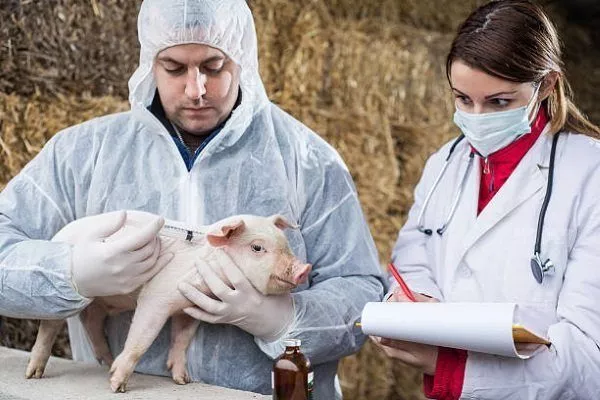
Proper feeding and timely vaccination are the key to strong immunity and animal health.
Disinfection
In the room with piglets, it is important to control the temperature (up to 34 degrees) and monitor the cleanliness of the water.
It is also recommended to clean floors, dishes, and equipment regularly. For this purpose, use:
- For floor coverings and the lower portion of walls, apply a hot solution of sodium hydroxide as a spray at a rate of 0.5 liters per square meter of surface. Leave the solution for 30 minutes and then rinse with high-pressure water.
- For disinfecting rooms, 2% chloramine or hypochlorite solutions are effective. The contact time in this case is 60 minutes. The liquid consumption is the same. Afterwards, the surface is rinsed with water and the room is ventilated.
- Sows preparing for farrowing are transferred to pre-prepared and disinfected farrowing pens (separate for each pig).
- Before driving, each uterus is cleaned of dirt, and its limbs are washed with a solution of 0.5% lysol or 5% formalin.
- At the beginning of farrowing, the back of the sow’s body is washed with a solution of potassium permanganate or furacilin.
- Personnel handling newborn piglets must wear clean uniforms and thoroughly disinfect their hands.
- After the end of labor, the sow is washed, her nipples are treated with a clean cloth with a disinfectant solution, and only then are the piglets brought in.
- During weaning, the young animals are kept separately; after the premises have been completely treated (removing manure, cleaning surfaces), they are transferred to older animals.
In pig farming, it's especially important to adhere to infectious disease prevention recommendations and sanitary standards. Only in this way will the risk of E. coli infection on the farm be minimized and the farm protected from economic losses.