
Erysipelas in pigs is a common disease, with outbreaks typically occurring during the warmer months. This condition is dangerous not only for pigs but also for humans. It spreads rapidly and can cause the death of an entire herd. The pathogen is resistant to environmental conditions.
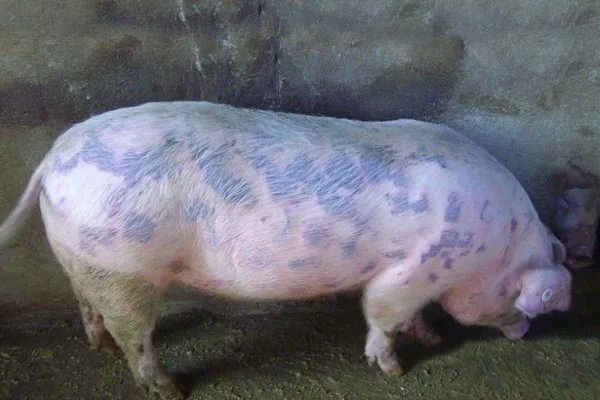
The causative agent of erysipelas
Erysipelas belongs to a group of infectious natural focal diseases. It can be acute or chronic. This disease typically affects animals between 3 and 12 months of age.
Erysipelas is caused by the bacterium Erysipelothrix insidiosum. This pathogen is found everywhere, adapts to any environment, and is characterized by increased resistance.
The pathogen remains active in pig feces for up to 40 days, and in slurry for up to 290 days. In animal carcasses buried in the ground, the bacteria remain active for up to 10-12 months.
Processing infected pork, such as smoking and salting, does not kill the pathogen. It is killed only at high temperatures (70 degrees Celsius or higher). Low temperatures, ranging from -7 to -15 degrees Celsius, do not disinfect the pathogen.
Erysipelothrix insidiosum is sensitive to disinfectants. For disinfection, use a 10% bleach solution, 2-3% sodium hydroxide solution, and 20% slaked lime.
Sources of infection
The pathogenic bacteria that causes erysipelas in pigs is transmitted by sick animals, which excrete it into the environment through feces and urine. It survives for long periods in soil, manure, and pig carcasses.
Infection also occurs through feed, water, and items used for caring for pigs and cleaning the premises in which they are kept.
The main route of transmission of the erysipelas bacteria is alimentary (fecal-oral).
In a small community or within a pig farm, flies that feed on the blood of animals with erysipelas can act as carriers of the bacteria. Mice also act as carriers.
Piglets nursed by a sow are resistant to this disease, as they receive colostral immunity through colostrum.
Clinical picture of pathology
Erysipelas in pigs occurs mainly in the spring and summer, when humidity levels are high.
The incubation period for this infectious disease lasts from 1 to 8 days. Symptoms depend on the specific form of erysipelas.
Lightning-fast erysipelas in pigs This is a rare occurrence and results in the inevitable death of infected individuals. In this case, the following symptoms are observed:
- increase in body temperature to 41 degrees;
- general depressed state;
- heart rhythm disturbance;
- refusal to eat.
Treatment in this case is useless: approximately 12 hours after the first symptoms of erysipelas appear, the animal dies.
Acute form of the disease is expressed in the following signs:
- increase in body temperature to 42-43 degrees;
- refusal to eat;
- difficulty breathing;
- constant thirst;
- general weakness;
- difficulty breathing;
- conjunctivitis;
- disruption of the heart muscle;
- constipation alternating with diarrhea.
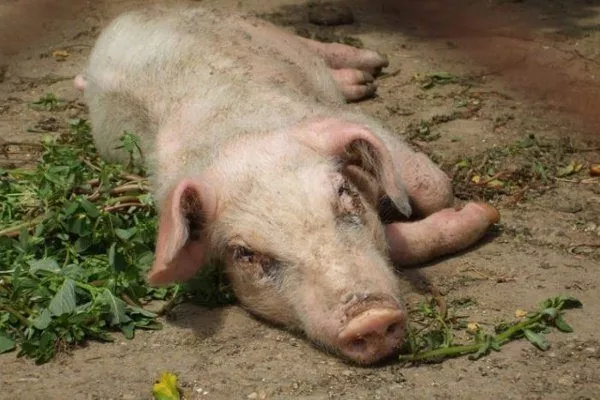
In pigs suffering from acute erysipelas, the skin on the neck and chest turns blue, and pale pink erythematous spots develop on the flanks. The animals move with difficulty and often lie in one place.
The acute form of erysipelas in pigs lasts 2-4 days and in most cases ends in the death of the animals.
Subacute course of erysipelas is characterized by the following features:
- increase in temperature to 41 degrees;
- general weakness;
- severe thirst;
- constipation;
- conjunctivitis;
- refusal to eat;
- The formation of inflammatory swellings that appear on the neck, head, sides, and back. This usually occurs on the second day of illness; the swellings have a characteristic shape—rectangular, square, or diamond-shaped. When these swellings appear on the skin, the sick animal's condition improves somewhat.
Subacute erysipelas in pigs lasts for a week, in some cases up to 12 days. With prompt treatment, the disease ultimately results in recovery.
Chronic erysipelas in pigs Observed when no assistance is provided to a sick individual at the initial stage of the pathological process. With chronic infection, animals exhibit the following symptoms:
- rapid heartbeat;
- exhaustion;
- developmental delay;
- deformation of joints, their swelling and pain;
- skin necrosis;
- atrophy of the limb muscles;
- lameness, difficulty in moving.
Chronic erysipelas infection in pigs is rare. It can remain asymptomatic for extended periods. The disease has two resolution options: death or recovery.
Diagnostics
Erysipelas in pigs is diagnosed based on the following manipulations:
- bacteriological examination, which includes microscopy of smears, bioassay, and isolation of a pure culture of the pathogen causing the development of erysipelas from the collected material;
- agglutination reaction;
- identification of pathological changes.
The diagnosis is considered established if the causative agent of erysipelas is detected by microscopy, cultures with properties characteristic of the causative agent of erysipelas are isolated from the pathological material, and also if cultures of the pathogen are isolated from the organs of dead animals.
Once the diagnosis is confirmed, treatment begins as soon as possible.
Treatment of erysipelas in pigs
During a disease outbreak, restrictive measures are mandatory. In this case:
- It is prohibited to export animals, as well as meat from feed, from a location where an outbreak of an infectious disease has been registered;
- sick animals are isolated and treatment begins;
- Conditionally healthy pigs without clinical symptoms of the disease are vaccinated and monitored for ten days.
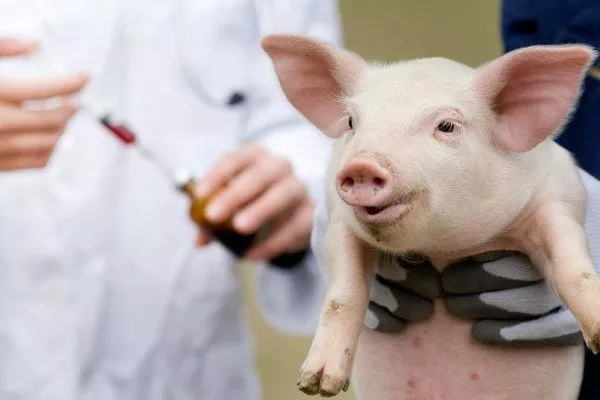
Restrictions are lifted only 2 weeks after all animals have fully recovered.
Treatment of pigs with erysipelas is carried out in the following ways:
- Vaccination. All animals suspected of having erysipelas are given the anti-erysipelas vaccine. The serum is administered intramuscularly. The dosage depends on the pig's weight. A booster dose is administered 12 hours after the initial dose, and then once daily for a week.
- Antibiotic administration. The serum's action is reinforced by penicillin-type antibacterial drugs. Sick pigs are given intramuscular injections of Bicillin-3 and Bicillin-5. Penicillin potassium salt is also indicated for erysipelas in pigs. The drugs are diluted in saline and administered every 12 hours.
- Medications are used to relieve the symptoms of the disease. Sick animals are given cardiac medications and laxatives. If pigs experience persistent vomiting, they are given metoclopramide. For high fevers, papaverine or analgin are administered.
- If skin swelling or spots appear, compresses are recommended. The simplest yet most effective way to suppress symptoms is a vinegar compress. Dilute 1 liter of 9% vinegar in 10 liters of water, soak a cloth in the solution, and wrap the affected animal in it.
- For severe tumors, it is recommended to sprinkle the affected area with powdered chalk, place a layer of thick cloth on top, and bandage it.
- ✓ Maintaining cleanliness in the premises to prevent secondary infections.
- ✓ Providing sick animals with sufficient water to prevent dehydration.
The duration of treatment for erysipelas in pigs is 5-7 days.
Forecast
The prognosis for erysipelas in pigs depends on the form it takes.
The most favorable outcome can be expected in the subacute form of the disease, if treatment was started in a timely manner.
Delayed or inadequate treatment of this infection leads to its development into a chronic form. If this occurs, systemic joint damage occurs, affecting the animals' mobility.
The chronic form is not treatable: an animal suffering from a disease with such characteristics becomes unfit for further breeding and fattening.
Prevention
To prevent the possibility of developing an infectious process among pigs, it is necessary to observe the following preventive measures:
- It is essential to carry out universal vaccination of piglets;
- comply with the vaccination regimen;
- purchase only healthy animals from reputable livestock farms;
- Newly arrived animals must be kept in quarantine for at least a month;
- when caring for animals and during the feeding process, observe all sanitary, hygienic and technological requirements;
- regularly clean the premises where pigs are kept;
- organize the animals' diet in such a way that the food is balanced and contains all the necessary microelements and nutrients;
- strictly observe the rules for slaughtering pigs and disposing of waste thereafter;
- disinfect food and slaughter waste that is used as additives in pig feed;
- carry out timely measures aimed at destroying microbes, insects and rodents that are carriers of dangerous diseases.
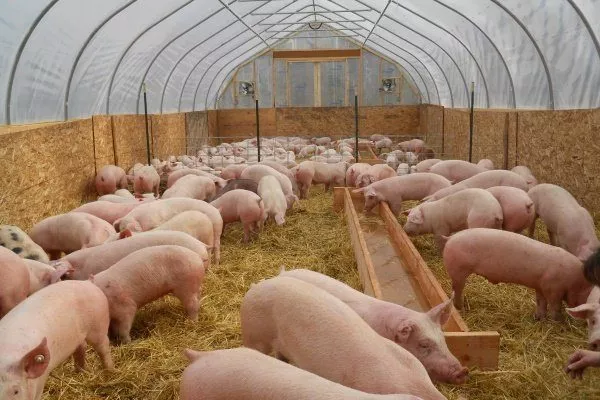
Animals must be provided with adequate living conditions: optimal temperature conditions, humidity levels, cleanliness in the room, sterility of drinking bowls and food containers.
Features of vaccination
Vaccination of pigs against erysipelas is a mandatory condition for preventing the development of an infectious process among livestock.
According to the vaccination schedule, piglets are vaccinated against erysipelas at 60-70 days of age. A booster dose is administered at 72-84 days of age, and then at 100-115 days. Adult pigs require booster vaccinations every 5 months.
The following drugs are used against this infectious disease: Deposited vaccine against swine erysipelas or vaccine against swine erysipelas from the BP-2 strain.
The injection technique depends on the age of the animals:
- For small piglets that are being nursed, the injection is administered subcutaneously into the triangle behind the ear; the drug can also be administered subcutaneously into the inner thigh;
- piglets after weaning can be injected with the vaccine intramuscularly, in the neck behind the ear;
- For older animals, the vaccine is administered intramuscularly into the thigh.
This video explains the available vaccines against swine erysipelas and how to properly administer them:
Swine erysipelas is an infectious disease that poses a danger not only to animals but also to humans. The pathogen is resistant to environmental conditions and can survive in the bodies of dead pigs. The best way to prevent this disease is timely vaccination.