
Compared to other horses, draft horses aren't as agile, energetic, or fast, but they certainly have an edge in endurance and strength. They were bred specifically to haul heavy loads, and they've been performing this task admirably for centuries. Below are detailed descriptions of all draft horse breeds.
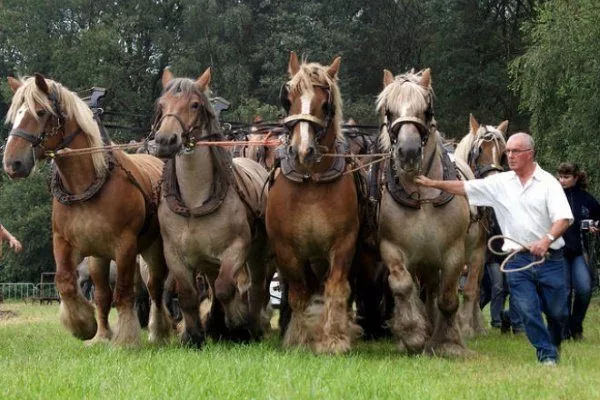
What are the differences between heavy draft horse breeds?
Draft horses possess a powerful build, impressive strength, and a calm disposition. Today, they are not as in demand for freight transport as they were a century ago, but in some remote areas, such helpers are still essential. They are in demand in private households, in logging, on kumys farms, and are also bred for meat production. Purebred draft horses are often used to improve the quality of local livestock.
- ✓ Consider the climatic conditions of your region when choosing a breed.
- ✓ Pay attention to the availability of feed and its cost for the selected breed.
- ✓ Consider the purpose of using the horse (working needs, breeding, meat or dairy production).
The appearance of heavy draft horse breeds is not as attractive as that of other racehorses. Their bodies are massive and muscular, and they are significantly taller and heavier than other breeds—some individuals can reach over 2 meters in height and weigh up to 1 ton.
Draft horses are renowned for their smooth gait. They can alternate between a walk, a gallop, and a trot almost seamlessly—there's no jolting sensation in the saddle. These horses are ideal for beginner riders. Furthermore, their calm and even temperament, kindness, and affection for their riders make them loyal companions and lifelong companions.
The prospects for breeding heavy draft horses are promising. Breeders strive to preserve their gene pool and improve existing breeds in every way possible. Developing optimally beneficial horse traits, such as resistance to various diseases, ease of maintenance, tolerance to a wide range of feeds, and so on, is a goal of modern breeding, which is advancing at an impressive pace.
| Breed | Milk productivity (l/year) | Weight gain (kg/month) |
|---|---|---|
| Russian heavy draft horse | 2500-3000 | 30-40 |
| Soviet | 2000-2500 | 25-35 |
| Vladimirskaya | 1800-2200 | 20-30 |
For a more complete understanding of heavy draft horse breeds, it is worth considering the most common and well-known of them in more detail.
Bedrocks
These breeds are the oldest and are the ancestors of many modern horse breeds. Heavy draft horses were used in ancient times and have retained their characteristics even in modern times.
| Name | Height at withers (m) | Weight (kg) | Suit |
|---|---|---|---|
| Belgian (Brabancon) | 1.7 | 1200 | Bay, chestnut |
| Scottish (Clydesdale) | 1.7 | 900 | Roan, black, red, bay |
| Percheron | 1.8 | 800 | Gray |
| Shire | 1.8 | 1100 | Bay, black, red |
| Bityug | 1.6 | 700 | Brown |
| Australian | 1.7 | 900 | Bay, black, red |
| Vladimirskaya | 1.7 | 800 | Bay, black, red |
| Soviet | 1.7 | 1000 | Red, bay |
| Russian heavy draft horse | 1.5 | 700 | Red, roan, bay, black |
| Boulogne breed | 1.65 | 900 | Gray, grey |
| Irish | 1.45 | 700 | Piebald |
| Suffolk | 1.7 | 1000 | Red-chestnut |
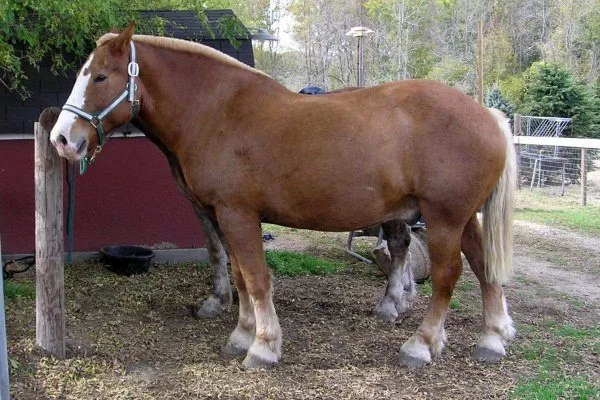
Belgian (Brabancon)
A heavy draft horse breed native to Belgium is called the Brabancon. These horses have been known for several decades, making them the ancestors of many breeds. Modern specimens are virtually indistinguishable from their medieval descendants, while many other similar horse breeds have been enriched by crossbreeding with riding stallionsThe authenticity of the Brabancon is highly valued, emphasizing its proportionate and harmonious exterior.
Belgian Heavy Draft Horses rarely exceed 1.7 meters in height and weigh 1.2 tons. Bay and chestnut colors predominate in the breed. These horses quickly reach sexual maturity and acclimate well to new conditions. Their low feeding requirements, good performance, and calm, docile nature have long been known to many horse breeders.
Scottish (Clydesdale)
Today, the Clydesdale draft horse breed can rightfully be called one of Scotland's national treasures, although just a few decades ago these horses were in danger of extinction.
Clydesdales were developed around three centuries ago; their ancestors are English and Belgian draft horses, crossed with local stock. The result of painstaking selection was a hardy, strong breed, more akin to a riding horse than a draft horse.
During the development of agriculture, Scottish heavy draft horses were in demand for farm work, but technological advances eventually diminished their popularity, nearly leading to the extinction of the breed. However, since the 1980s, active efforts have been underway to restore the Clydesdale population, and today there are several thousand of them.
In appearance, Scottish heavy draft horses are similar to Shires, only slightly smaller in weight and size. These horses have strong legs with massive hooves, large, hooked heads, long ears, and a short neck with a well-defined crest. Their coat colors are typically roan, black, chestnut, and bay, with markings on their legs, belly, and head.
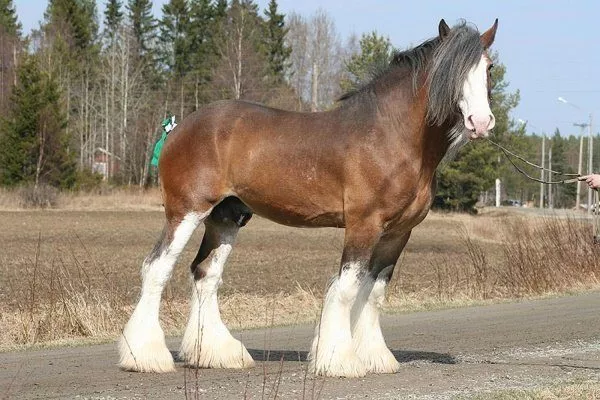
Nowadays, Clydesdales are bred not only for field work but also frequently appear at various horse shows in Scotland, the UK, and the US. Their calm disposition and excellent agility make this breed ideal for ecotourism, further increasing its popularity among farmers and horse breeders.
Percheron
Opinions among horse experts differ regarding the development of the Percheron heavy draft horse breed. Some believe it dates back centuries, while others believe it's only half a century old. However, experts agree on one thing: during its development, not only massive heavy draft horses but also purebred Arabian trotters were used.
Modern Percherons, originally from France, display their Eastern roots in their head shape, graceful movements, and gray coat. The average weight is 800 kg, and the height at the withers reaches 1.8 m. The Percheron's neck, with its distinctive curve, features a prominent crest. The breed has a broad chest, a short back, and wide hooves on dry, strong legs.
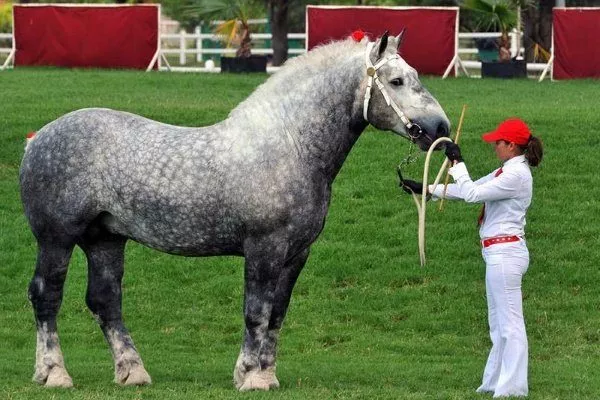
This heavy draft horse breed is extremely hardy, harmoniously built, has a good disposition, and a calm, smooth gait. Thanks to these qualities, Percherons are now very popular among horse lovers. In France, the breed's promotion is being promoted at the government level, with financial support provided to farmers who use Percherons on their farms.
Shire
Shires, also known as English draft horses, are considered to be an ancient breed, having been used by humans since the Roman Empire's military campaigns. English draft horses are also distinguished by their height and are considered by many horse breeders to be the tallest horses in the world.
Shire horses, the descendants of English mares crossed with Dutch stallions, have become particularly popular recently. These horses come in a wide range of sizes and are suitable for a variety of purposes, from walking to pulling a carriage. Modern Shire horses were developed about a couple of centuries ago.
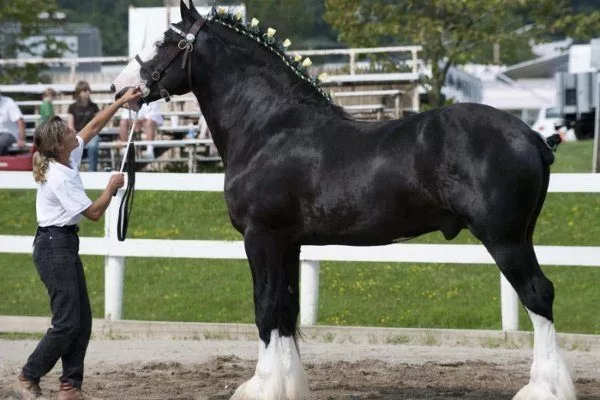
Shires are arguably the largest and most powerful of the equine species. Their height at the withers can reach over 180 cm and their weight can exceed 1.1 tons. The breed is bred in many countries worldwide. This presents particular challenges, as these horses require three times more feed, forcing breeders to seek out larger pastures to store hay for the winter.
Bityug
The Bityug is a heavy draft horse breed, bred specifically for draft and agricultural purposes. The breed is now considered extinct.
Bityugs became known as a distinct breed in the 18th century. There are several theories about their origins, the most popular of which is that the breed was established at the initiative of Peter the Great. Bityugs averaged 1.6 meters tall, had a strong, well-developed back, a long body, and well-furred legs, and were predominantly brown in color. The breed was credited with a calm disposition, increased endurance, and an unpretentious diet, which made it so popular at the time.
Bityugs were used in agricultural work, but these horses were most often seen driving cabs. Russian literature of the time frequently describes this breed, largely because they constituted the overwhelming majority of horses employed in industrial haulage.
Breeds from different countries
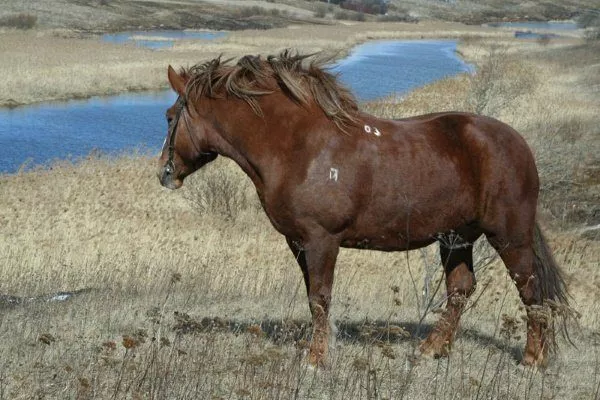
Draft horses were used in many countries. Over time, they were refined and adapted to living conditions and climate.
Australian
Today, there is a strict standard for the Australian breed, enforced by the Australian Draught Horse Stud Book Society, founded in 1979. Before that, the breed was not known for its purity. Its first representatives were created in the early nineteenth century by crossing breeds bred in Australia at the time—predominantly Percherons, Shires, Clydesdales, Suffolks, and Brabancons—with horses imported during colonization.
The Australian breed is distinguished by a medium-sized head, a broad forehead, a medium-length neck, a smooth back line, a wide croup and chest, and a well-developed fat ridge in stallions.
These horses compete in various competitions throughout Australia. They are also often used in logging operations to transport logs in areas where machinery is unable to do so. Farmers also use this breed for agricultural work.
Vladimirskaya
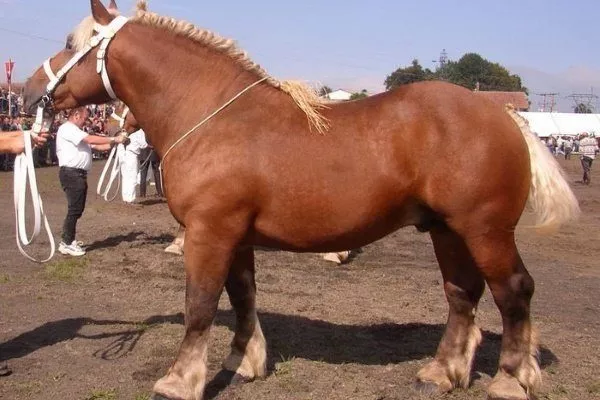
The Vladimir heavy draft horses originate from the Gavrilovo-Posad stud farm. These energetic, strong, and attractive horses were created in 1886 by crossing local, hardy and undemanding females with Clydesdales from England. The famous English Shire horses also played a role in the development of the breed. The breed was officially recognized only in the mid-twentieth century.
Vladimir heavy draft horses They have a large build, reaching no more than 1.7 meters at the withers. The most common coat color is bay, though black and chestnut are less common.
The following are some of the external characteristics of Vladimir heavy draft horses:
- powerful long neck;
- large head with a convex profile;
- moderately lowered croup;
- obliquely placed long shoulder blade;
- strong legs covered with fur;
- thick mane and tail.
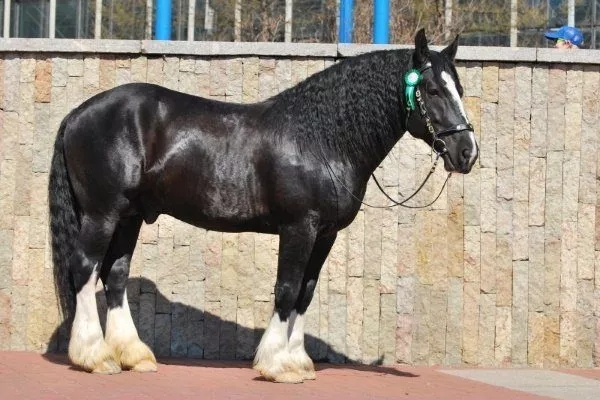
Horses of this breed were once harnessed to plows, carts, or carts. Today, they are actively used in equestrian tourism and sport hunting.
Soviet
Soviet horses were created by crossing local draft breeds with a wide variety of origins with Brabancons. The resulting horses, compared to their Belgian relatives, are somewhat smaller in size, have a harmonious build, and are very agile. The Soviet breed was officially registered in 1952.
From the horse's characteristics:
- weight – up to 1 t;
- height at withers – up to 1.7 m;
- The main colors are red and bay.
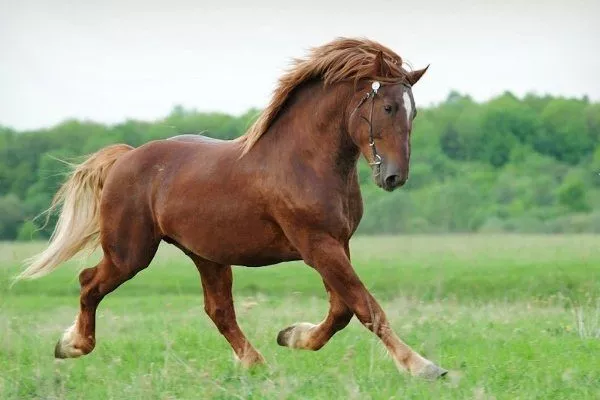
In appearance, Soviet heavy draft horses are little different from standard horses of their type: a medium-sized head, a medium-muscled neck, a broad back and withers, a forked, drooping croup, and strong, medium-length legs. Mares of this breed are characterized by high milk yields.
Russian heavy draft horse
This horse breed was developed over a long period of time and was officially registered in 1952, like the Soviet Heavy Draft Horse, but the two should not be confused. The breed's stock is based on heavy draft horses originally from Belgium. The horses are large and well-suited to local conditions.
Their main characteristics include:
- weight – up to 700 kg;
- the height of stallions at the withers is up to 1.5 m;
- colors - red, roan, bay, black.
Russian Heavy Draft horses have a light, dry head with a broad forehead, wide withers, a long, broad back, a muscular neck, a wide, forked croup, and medium-length, slightly furred legs. This breed is considered a small heavy draft horse. It is well suited for agricultural work and has excellent meat and milk production.
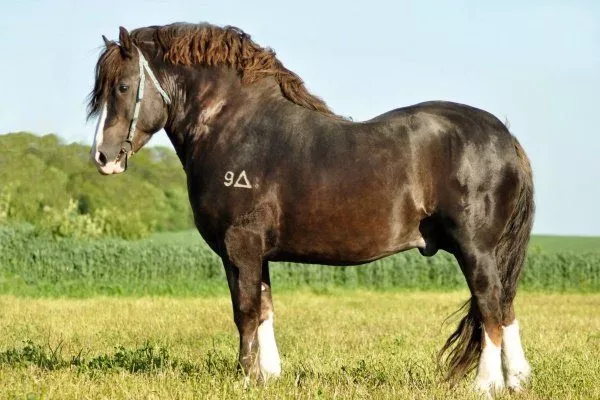
Recently, many farms have been breeding Russian heavy draft horses. Many of these farms specialize in kumiss production.
Boulogne breed
Many horse experts consider the Boulogne breed of heavy draft horse to be the most popular among French draft horses. These horses have been known since ancient times. The Boulogne breed originated in what is now northwest France through the crossing of Arabian horses imported from conquered countries with local stock. Subsequently, the need for more robust horses arose, so the Boulogne and Mecklenburg breeds were crossed. This resulted in exceptionally strong horses, and in the 17th century, the breed received official recognition.
Boulogne horses stand on average 1.65 meters at the withers and can weigh up to 900 kg. They have a muscular body, a large, slender, and short head with a broad forehead, an arched neck with a short mane, a straight and broad back, strong short legs, a rounded croup, and a high-set, bushy tail. The most common colors are gray and grey.
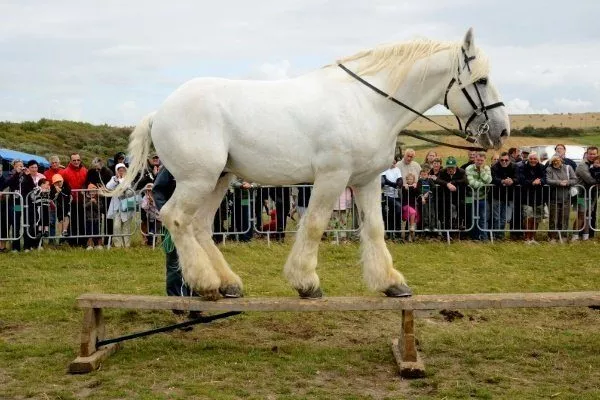
Today, the Boulogne breed is widely used on farms. It is also highly prized by breeders for its excellent genetics, allowing these horses to be crossed with other breeds to improve their quality.
Irish
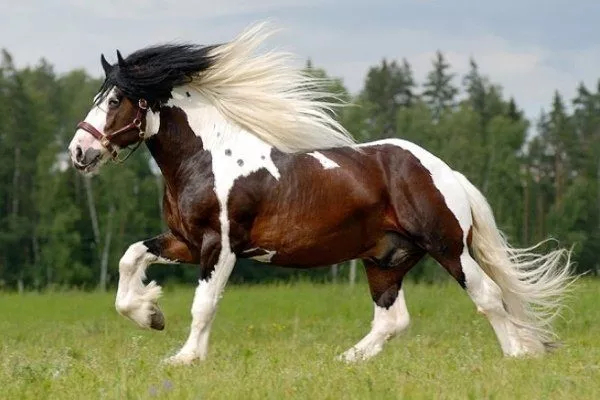
The Irish Cob, which goes by many other names, is a well-known breed of heavy draft horse. Today, this breed is popular worldwide, although not long ago, few had heard of it.
Irish Heavy Draft Horses are small in stature—averaging 1.45 m—and weigh up to 700 kg. Their coat is most often piebald, with white spots on the coat being a distinctive feature. They have a massive head, long ears, a short, strong neck, a straight back, and a powerful croup. Their body is quite broad for their small size.
Irish Cobs are versatile in their uses. This breed is often referred to as the Gypsy Draft Horse, which speaks volumes about its qualities and uses. Cobs are also excellent for saddle riding, and farmers value these horses as agricultural helpers and for their excellent milk production.
Suffolk
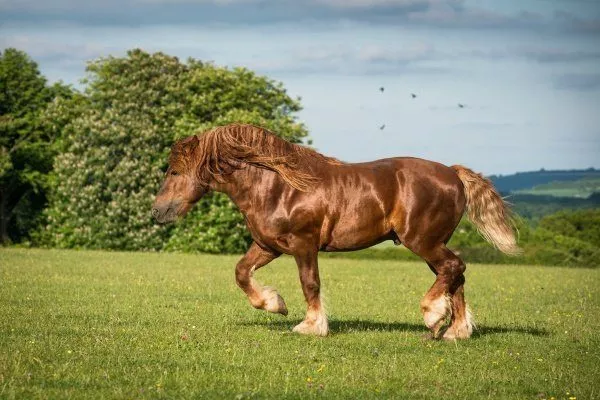
The Suffolk is a heavy draft horse breed native to England. It was named after the county where it was first bred. These horses are excellent for heavy agricultural work involving the clay soils that abound in eastern Britain.
The Suffolk's ancestors are believed to be local and Norman breeds, which ultimately gave them a coat with an excellent chestnut hue and a massive, heavy body on short legs. These horses are prized for their ease of maintenance and low feed consumption, a fact confirmed by numerous hippological studies.
Suffolk horses rarely exceed 1.7 meters at the withers, and a mature stallion can weigh up to a ton. These horses are always distinguished by their vibrant red-chestnut coat, which comes in a variety of shades. The breed is known for its friendly disposition.
The strongest heavy draft horses in history
History is replete with examples of horses hauling enormous loads, some of which are particularly memorable and documented. These horses are a source of pride for their breeders and a testament to the immense capabilities of draft breeds.
Among them, we can recall a pair of Shires from Michigan, USA, who in 1893 pulled a sled with a total load of just over 42 tons. Also in the 1960s, the Soviet stallion Force distinguished himself by pulling a trailer carrying a load weighing almost 23 tons for 35 meters. But the most notable achievement, listed in the Guinness Book of World Records, belongs to a Shire named Vulcan, who in 1924 single-handedly pulled a 47-ton load at a British show.
Draft horses were originally bred for farm work and freight transportation. Breed development and refinement have been and continue to be carried out in many countries. A large number of breeds have been developed to date, but the majority of them are descended from the Shires and Clydesdales of England, the Percherons of France, and the Brabancons of Belgium.