
Today, there are a huge number of riding horse breeds. They differ significantly in appearance, use, and other characteristics. This article examines horse breeds used for riding.
| Object | Height at withers (cm) | Weight (kg) | Suit |
|---|---|---|---|
| American Saddlebred | 150-170 | 450-540 | Diverse |
| English racehorse | 165-175 | 450-600 | Black, bay, brown, red, gray |
| Arabian purebred | 140-156 | 400-600 | Gray, bay, red |
| Minor horse | 154-165 | Not specified | Black |
| Akhal-Teke | 155-163 | Not specified | Black, dun, bay |
| Budyonnovskaya | 160-180 | Not specified | Redhead |
| Hanoverian | 160-168 | Not specified | Bay, red, black, gray |
| Holstein | 165-175 | Not specified | Bay, gray, black, red |
| Donskaya | Up to 170 | Not specified | Redhead |
| Iberian | 150-162 | Not specified | Gray, bay |
| Kabardian | Up to 156 | Not specified | Bay, black, roan, gray |
| Karabakh | 142-150 | Not specified | Diverse |
| Kiger Mustang | 132-160 | Not specified | Gray-brown |
| Marwari | Not specified | Not specified | Red, bay, piebald, gray |
| Russian riding horse | Not specified | Not specified | Black, bay, chestnut |
| Terskaya | Up to 153 | Not specified | Silver-gray, bay, red |
| Trakehner | 160-169 | Not specified | Black, red, raven, bay, grey |
| Lipizzan | Up to 158 | Not specified | Light gray, black, bay |
| Ukrainian riding horse | 160-162 | Not specified | Bay, black, gray, palomino |
| Chilean | Not specified | About 300 | Various, except white |
| Swiss Warmblood | 155-165 | Not specified | Homogeneous |
American Saddlebred
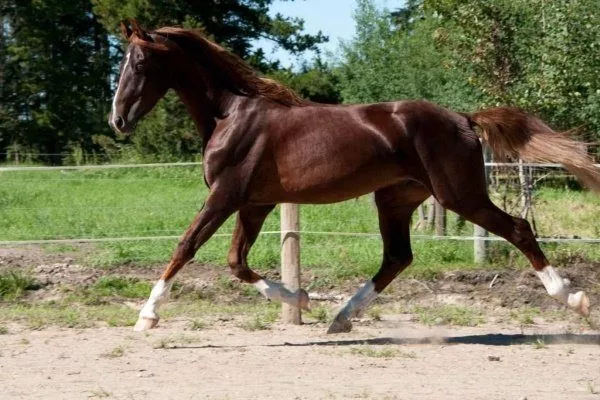
The American Saddlebred is distinguished by its striking appearance. It is a striking animal, a favorite among equestrian enthusiasts. Its powerful build ensures that riding it conveys confidence, not fear.
American Saddlebreds are very agile and intelligent, kind and gentle. They have a calm disposition. The breed was developed by American planters in the 19th century. The goal was to create a horse suitable for long rides. The American Saddlebred has a comfortable and smooth gait. It moves smoothly, without any sudden movements. This is its most valuable asset.
The animal has a lean, narrow head with a well-defined outline. The head is set on a thin, long, beautifully arched neck. The withers are high. The back is strong and short. The horse's weight ranges from 450 to 540 kilograms. The height at the withers is 1.5 to 1.7 meters.
- ✓ Consider the horse's temperament, especially if you are a beginner rider.
- ✓ Pay attention to the breed's endurance if you plan long trips.
- ✓ Check the breed's adaptability to the climatic conditions of your region.
English racehorse
English horses gained popularity due to their speed. These animals are not only highly desirable but also expensive. The breed is specialized and not suitable for beginners. It is considered one of the best riding horses. These horses are used in English hunting.
Appearance features:
- height – from 165 to 175 cm;
- weight – 450-600 kg;
- long muscular body, high withers;
- short, straight hair,
- elongated face with a straight profile;
- small ears, expressive eyes.
American horses come in black, bay, brown, red, and gray.
The breed was developed in the early 18th century, when Arabian stallions were brought to England for crossbreeding with the best local mares. Even then, horse racing had become popular in the country. Speed and endurance were the main criteria considered in developing the new breed. The horse became ideal for riding.
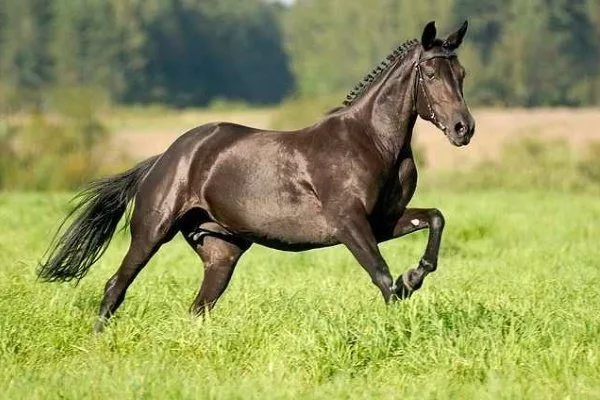
The only drawback of English horses is their spirited nature, uncontrollability, and excitability. They are capricious and hot-tempered.
Arabian purebred
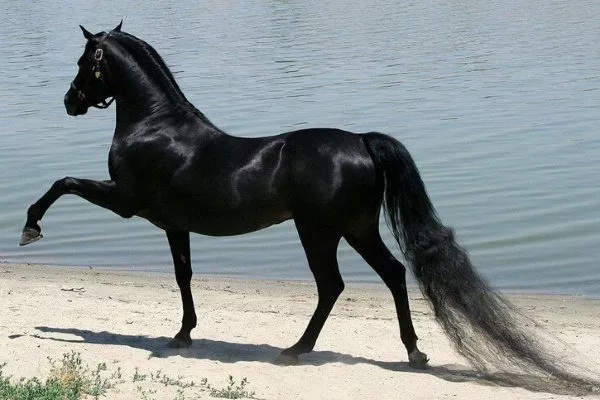
This breed is considered both ancient and noble. It was developed by Bedouins in the BC era. The Arabian horse is characterized by a lean head with a concave profile. The animal has expressive eyes, a lively temperament, and a smooth gait. For these reasons, the breed is considered one of the most graceful animals.
The horse stands 140-156 cm at the withers. It is small and has a proportional body. The head is not large, with a wide forehead and thin lips. The legs are strong and slender. Its lifespan is 25-30 years. Its weight ranges from 400 to 600 kilograms. It has a massive, straight back, a broad chest, and a tucked-up belly. Its legs are thin and slender, and its eyes are expressive. Its speed is 50-60 kilometers per hour.
The most common color of the breed is gray and its shades. Bay and chestnut colored specimens are also common. Arabian horses come in black, piebald, silver bay, and black colors.
Minor horse
The Minorca horse is characterized by a strong character, endurance, and courage. The animal is easily trained. It is often used for square dancing, which requires synchronized performances—horses rearing on their hind legs, spinning, and demonstrating their skills.
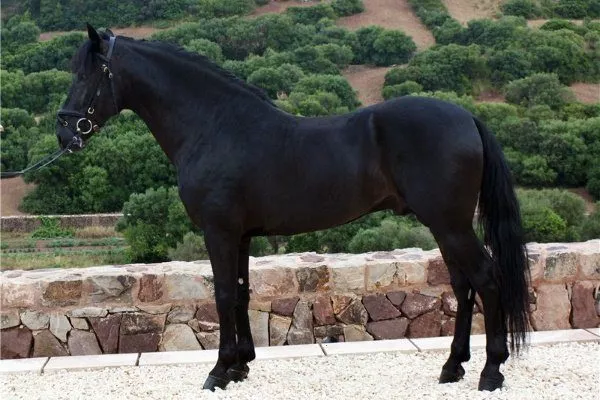
The Minorca horse is believed to have originated on the island of Minorca in the Mediterranean Sea. This breed has recently gained popularity. The Minorca horse's appearance is similar to the Spanish Andalusian, but it has some distinctive features. Its height ranges from 154-160 centimeters for mares and 162-165 centimeters for males.
The horse is considered lanky. It has long, lean legs, a lush, elongated tail and mane, and a small head with neat ears. Menoran horses are exclusively black. The island hosts an annual festival where the horses are dressed in traditional costumes, and the animals delight residents with their spectacular performances.
Akhal-Teke
The Akhal-Teke horse is an oriental breed used for riding. It originated in the Akhal oasis in Central Asia as early as the third millennium BC. These animals are characterized by a lean, tall frame, reaching heights of 155 to 163 centimeters.
Horses have long legs and backs, with a slightly sloping croup. Their heads are small, their eyes almond-shaped, and their ears long. Distinguishing features include a sparse mane and tail, thin skin, and a satin-like sheen to their coat. Horses have a fiery temperament—they are easily touched, independent, and proud. They tend to become attached to one person, but rarely tolerate a change of owner.
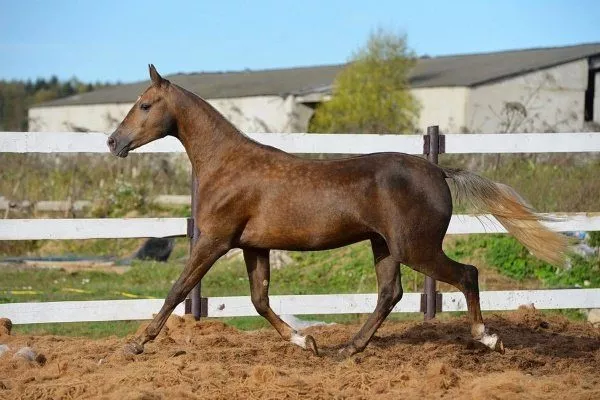
The most common Akhalta horse colors are black, dun, and bay. Less common are isabella and silver. These horses are used for riding, competitions, and hunting. They tolerate heat well.
Budyonnovskaya
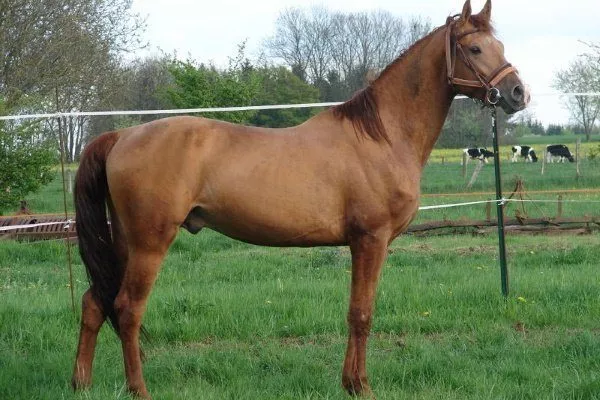
The official birthdate of the Budyonnovskaya horse is November 15, 1948. Breeding began in the 1920s. Don mares and thoroughbred stallions were crossbred. These horses are noted for their excellent racing qualities and are used in horse racing, show jumping, and other sporting events.
Horses range in height from 160 to 180 centimeters. There are individuals with different builds:
- Massive. Strong constitution, developed muscles and skeleton.
- Characteristic. Massiveness and dryness, agility of animals.
- Eastern. Their constitution is dry, their shapes more rounded. These animals are hardy, but also capricious and demanding.
Budyonny horses are predominantly chestnut in color. The breed has a lean head and a straight profile. The back is long and powerful. These horses are efficient, strong, resilient, and attractive.
Hanoverian
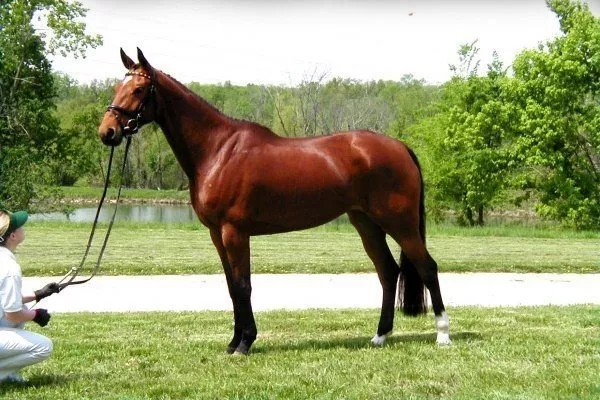
Today, Hanoverian horses are considered among the most popular in Europe. They were bred in 1735 in the city of Celle, then part of the Duchy of Hanover. Local horses were crossbred with Arabian, Danish, and Andalusian stallions, and later with Thoroughbreds. Hanoverian horses arrived in Russia after the Great Patriotic War.
The animal's height and length range from 160 to 168 centimeters. It has a large, massive build. Its small head rests on a graceful, long neck. The withers are high and well-developed. Distinguishing characteristics include a strong, powerful body and sturdy, short legs.
Hanoverian horses are usually solid-colored. Bay and chestnut colored animals are most common. Black and gray horses are less common. They are very agile and agile, light and graceful. They have a docile nature. Hanoverians are popular in show jumping and dressage.
Holstein
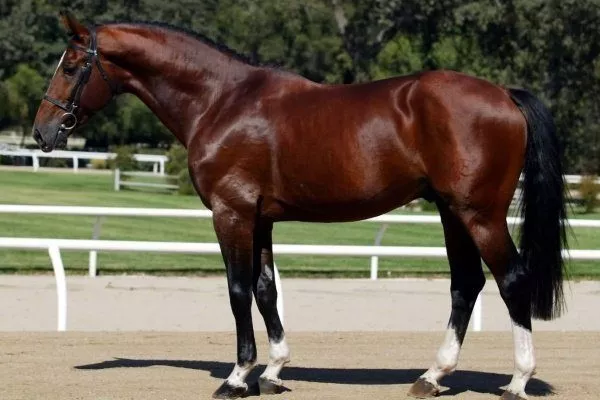
Holstein horses have a large head with a straight profile and expressive eyes. They have a long, powerful neck, wide ganaches, and strong legs with large hooves. Their height ranges from 165 to 175 centimeters. Holsteins come in bay, gray, black, or chestnut colors.
The dun Holsteiner is extremely rare. In the early 20th century, the breed was crossed with the Thoroughbred (Thoroughbred) to lighten the frame. One of these was the dun stallion Marlon 10.
The breed is especially suitable for beginning riders. These horses get along well with people, are stress-resistant, and peaceful. A key advantage of these animals is their jumping ability. Holsteiners are used for hunting show jumping and driving.
Donskaya
The Don breed was developed by local Cossacks in the Don region during the 18th and 19th centuries. These horses were considered ideal for both agricultural and military use. Karabakh, Arabian, and Persian horses were used in the selection process.
The Don horse isn't as agile as other breeds, but it's hardy and easy to maintain. Its body is massive and powerful, reaching up to 170 centimeters in height. Its head is small, set on a long neck. It has a strong, broad chest, strong, elongated legs with wide hooves. These horses are known for their calm nature and chestnut color.
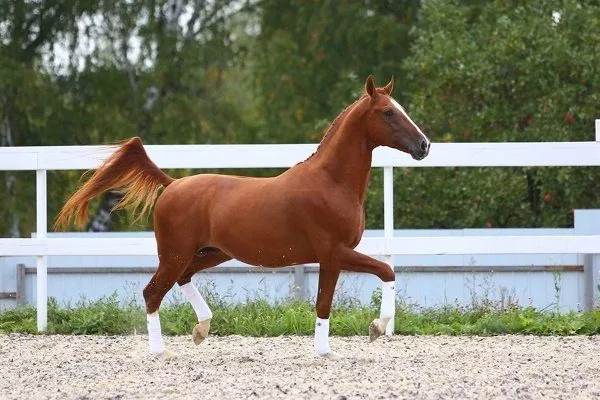
Today, the animals are popular for use in agriculture, sporting competitions, and riding training.
Iberian
Iberian horses are considered ancient and noble, lithe yet elegant. Since ancient times, these animals have been the primary means of transport for brave knights and warriors. It is this breed of horse that Homer refers to in his works as the "sons of the wind."
The horses received this name due to their place of origin – graceful racehorses appeared on the Iberian Peninsula in the territory of modern Spain and Portugal, populated by Iberians.
Today the breed is divided into several subtypes:
- Andalusian. Originates from the territory of Spain.
- Lusitano. Originated from the territory of Portugal.
- Alter real. It is located in an intermediate position and geographically belongs to the Portuguese subtype, but its characteristics are closer to the Andalusian.
Horse coloring can vary depending on the subspecies. For example, Andalusians are more often gray, while those of the Portuguese line are gray and rich bay. Alter Real horses often have bay and dark bay coats. Height ranges from 150 to 162 centimeters.
These horses have a short, powerful body with a rounded croup, powerful legs, and an elongated neck. Iberians have long, wavy hair on their tail and mane. They have a large forehead, almond-shaped eyes, and a smooth or aquiline nose.
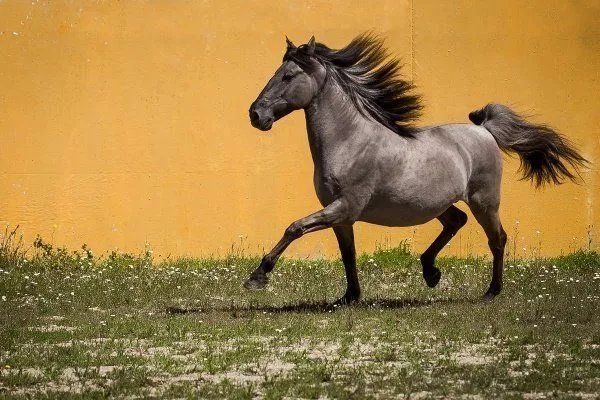
Iberian horses are somewhat similar in appearance to eastern Arabian horses, but Iberians have better physical performance and a much more powerful braking torque.
Horses quickly form bonds with their owners and interact easily with their riders while riding. These animals are intelligent, courageous, kind, and even-tempered. Today, they are used in applications that require flexibility, elegance, and grace: harness racing, show jumping, bullfighting, and higher education.
Kabardian
Kabardian horses are considered valuable and ancient breeds, included in world equestrian catalogues. The main goal of modern breeding is to produce racehorses suitable for riding and harness riding. Breeding stallions and breeding stock are highly valued beyond their native region. The breed's name itself suggests that these horses originated in a region of the North Caucasus.
Kabardian horses are highly intelligent and very affectionate towards their owners. Kabardians begin to show their temperament at a young age and are particularly difficult to break in. This process is very dangerous for riders and often results in failure and injury. Once broken in, the horse becomes affectionate and obedient.
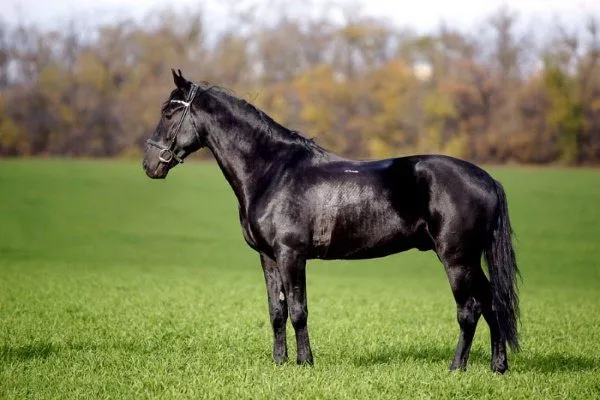
The animal's height at the withers reaches up to 156 centimeters, and its body length is up to 158 centimeters. These are the largest horses in the Caucasus. Their distinctive features include a strong constitution, a long body, lean limbs, and strong hooves. The horse has a lean head and a humped nose, a low-set neck, and a thick mane and tail. Horses can be bay, black, brown, or, less commonly, gray.
Karabakh
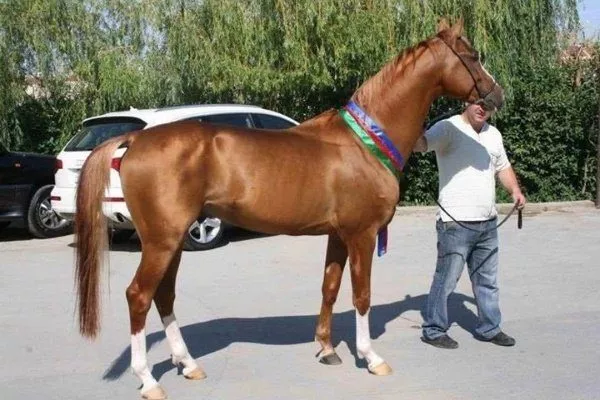
These medium-sized horses have a well-proportioned build, a short neck, and a small head. Their chests are shallow, and their manes and tails are silky. Their height ranges from 142 to 150 centimeters.
The Karabakh horse breed was developed on the mountain plateau of today's Karabakh, specifically in the area between the Araks and Kura rivers. This horse has a courageous and docile nature. It is capable of overcoming obstacles and barriers and is used for riding in mountain plains and uplands.
Karabakh horses are very energetic, hardworking, loyal, optimistic, and playful. They are warm and kind to people and are friendly. They enjoy competing with their own kind in show jumping and jumping, and they excel in sports.
Kiger Mustang
The Kiger Mustang is a breed closely related to the horses brought to the Americas by conquistadors around 1600. Kiger Mustangs were first discovered in 1977 in Oregon. Their height ranges from 132 to 160 centimeters. They perform well under saddle and are less efficient in harness, but are excellent for farm work.
The animals have a gray-brown coat with a reddish tint. They usually have a black or dark brown mane. They may have predominantly zebra-like stripes on their backs or legs. Kiger Mustangs are characterized by their lively and intelligent nature, making them ideal for riding.
The breed's weakness is its mistrust of people. However, they are hardy and adaptable to harsh living conditions. They can be domesticated, but it's a very difficult process.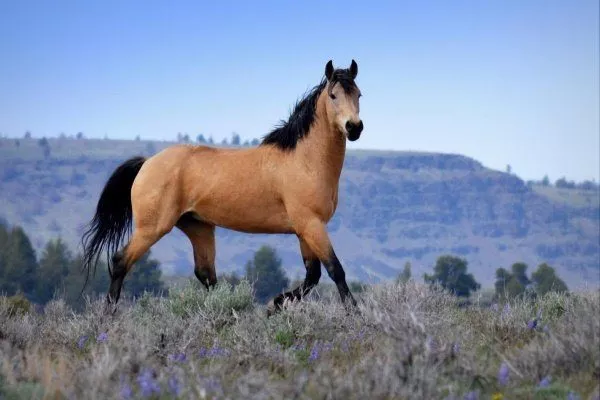
Marwari
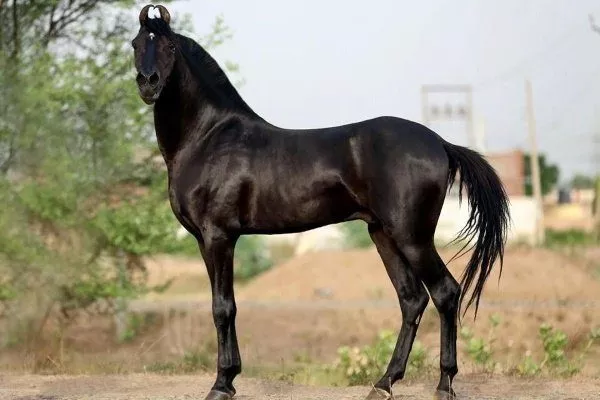
The main characteristic of the breed's appearance is its unique ear shape—unmatched by any other horse in the world. The ears fold inward, touching at the tips. They can reach up to 15 centimeters in length and rotate 180 degrees.
Marwari horses possess unique characteristics: a neck proportionate to the body, graceful and long legs, and prominent withers. The animal has a large head and a straight profile. The horse's skeleton is formed so that the shoulder joints are positioned at a smaller angle to the legs than in other breeds. This characteristic prevents the animal from getting stuck in sand and maintains speed when moving over heavy ground. The structure of the shoulders allows the animal to move smoothly and softly—a characteristic prized by riders.
Marwaris are brave, beautiful, energetic, and hardy horses. They have excellent hearing, allowing them to quickly detect impending danger. The most common colors are chestnut and bay. Piebald and gray horses are the most prized.
Russian riding horse
The Russian Saddle Horse is another well-known domestic breed. These racehorses are renowned not only for their striking appearance but also for their excellent physical characteristics. Since ancient times, horseback hunting has been popular in Russia, with frisky, calm, and obedient steeds chosen for high-ranking riders. Russian Saddle Horses are considered to be just such horses.
Today, these animals are successfully used in equestrian sports, including eventing. They are also suitable for show jumping. The breed was developed from the Russian horse, crossed with English Thoroughbreds and German breeds.
Russian riding horses are similar to the Friesian and Akhal-Teke breeds. Russian horses are well-built, with a square body shape. They are strong, powerful, and tall animals with stern, piercing eyes.
The Russian Saddlebred horse has a beautiful, smooth body, a prominent nape, and a low withers. The animal has well-developed muscles throughout its body, and its back is straight and level. The most popular colors of this breed are black, bay, and chestnut.
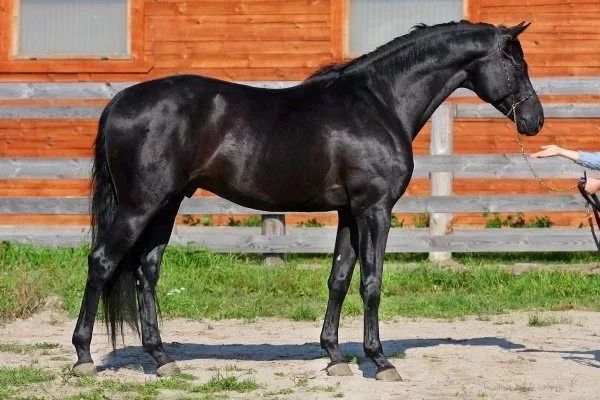
A key distinguishing feature is their friendly and calm disposition. However, these animals are not known for their ability to approach newcomers—they can only reach their full potential under an experienced rider. These horses are highly trainable, which is why they are often used in competitions and shows.
Terskaya
Before this breed emerged, Streletsky horses, bred in the 19th century in the Luhansk region, were popular. However, the Civil War destroyed many horses, preventing the breed from being restored. In 1925, breeding work began using surviving Streletsky horses, Don, Kabardian, and Arabian males. In 1948, the Tersk breeding station recorded the emergence of a new breed, the Tersky horse.
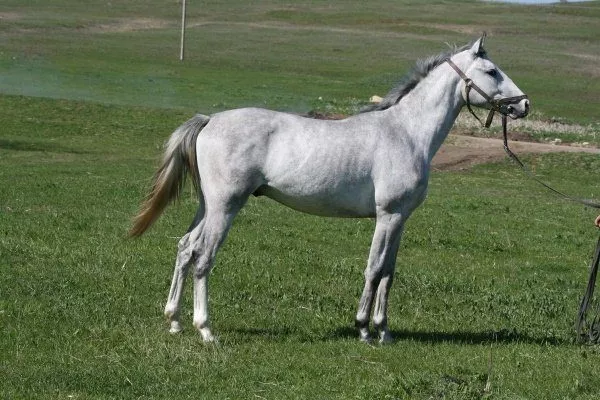
Terek horses reach a height of no more than 153 centimeters. They have a muscular, lean build, a broad back, and strong legs. The concave profile of their lean heads and prominent ears make the breed instantly recognizable.
The animals have thick, soft manes. There are three types of Terek horses: distinctive, light, and thick.
Horses have a calm, balanced, and peaceful disposition. They are easy to train and have strong immune systems. The predominant colors are silver-gray, bay, and chestnut.
Trakehner
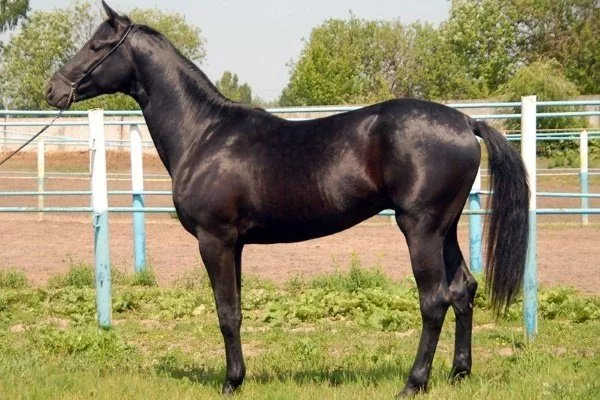
The Trakehner horse breed was developed in the second half of the 18th century in East Prussia. The breed is little different from the Thoroughbred. Trakehner horses have been used in equestrian sports for over 30 years.
Horses stand 160-169 centimeters tall. Their coat colors include chestnut, red, black, bay, and sometimes gray. They have large, prominent eyes, a slender, aristocratic neck, an elongated torso, and a broad chest. Their heads are lean and perfect. Their distinctive features include graceful movements and a light, smooth gait. Their gait lends a certain charm. They have muscular, straight legs with large hooves.
The breed is primarily used for equestrian sports. Previously, they were sought after for agricultural purposes due to their exceptional hardiness. The elegant appearance of these horses makes them suitable for dressage.
Lipizzan
Lipizzaners are a riding breed. These horses possess excellent conformation and high working qualities. Despite these qualities, the breed failed to gain popularity among horse breeders. Only the Spanish Riding School appreciated the breed's positive qualities.
The horse's name derives from the location of the stud farm where these horses were first bred. The farm was originally located in Lipica. At the time, the city was considered an administrative unit of the Austro-Hungarian Empire. Today, these areas are part of Slovenia.
Lipizzaner horses are small in size, with an average height of no more than 158 centimeters at the withers. In appearance, the breed is similar to Arabian horses:
- long body;
- small head with small ears;
- rounded croup;
- short neck with a characteristic bend;
- fluffy, low-set tail;
- dry limbs.
Lipizzans appear white in appearance, but experienced breeders refer to this color as light gray. This is because white horses are born with light skin and a matching coat. Gray horses have dark skin and eyes. As they mature, their skin lightens and becomes gray. Black and bay horses are occasionally seen.
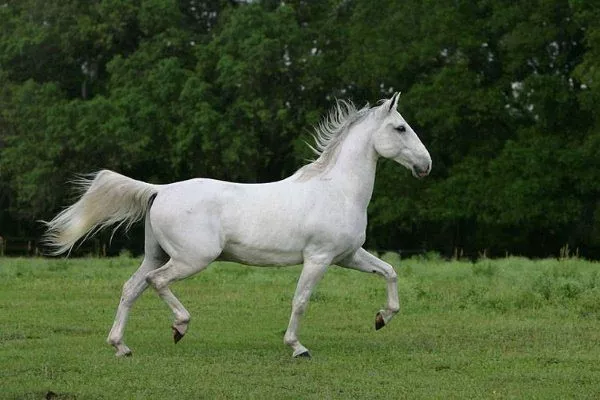
Through constant training, we were able to develop the horse's gait—the horse's walk and run, and its speed. Galloping is difficult for these horses, as the breed wasn't bred for speed.
The advantages of the breed are its innate rhythm, trainability, intelligence, natural balance, longevity, disposition towards people, late maturation, and intelligence.
Ukrainian riding horse
The Ukrainian Saddlebred horse was developed through extensive crossbreeding, using European and Eastern breeds. The animal is tall, with a straight back, a deep and broad chest, and strong, well-positioned limbs with well-developed joints. The head is well-shaped, with high withers and a long neck. The body is massive and well-developed. Bay, black, and gray horses are found, with palominos being a rare occurrence.
There are three types of the breed:
- Characteristic. The height of horses of this type is 162 cm. The animals have a well-developed body and skeleton, a dry and strong constitution, and a pronounced riding build.
- Easy. In appearance, the horses are similar to individuals of the characteristic type, but they are shorter – 160 cm. Their body and skeleton are less developed.
- Thick. These horses are 161 cm tall. The horses have a massive body and a “raw” constitution.
The advantages of Ukrainian horses include a calm temperament and friendliness, agility and agility, endurance, trainability, intelligence and quick wit, and efficient movement at all gaits.
Chilean
The Chilean horse originates from South America. It is a relatively ancient breed, having arrived in Chile as early as 1536 with Diego Almagro (a Spanish conquistador). This is how the Chilean horse breed was born.
The first breeder of the breed is recognized as the priest Rodrigo González de Marmolejo in 1544. The best horses were exported to America and even further.
Because the country is relatively isolated from the outside world by deserts, oceans, glaciers, and mountains, the breed developed in a pure form, which contributed to the absence of admixture of other genes. The horse's original purpose was military, but it was also bred for domestic use, usually for working livestock. This served as a preservative against advancing technological progress and the replacement of everything else.
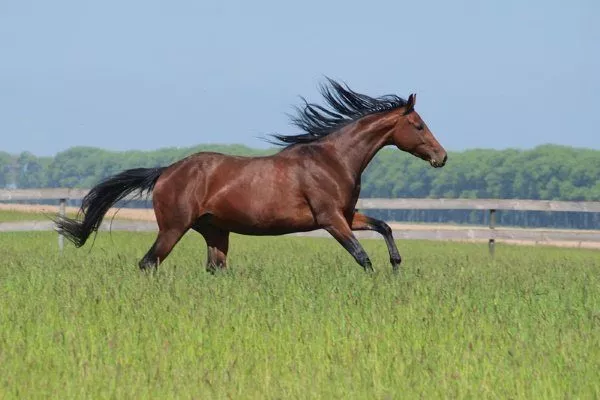
The horse is small in size, weighing approximately 300 kg. The Chilean horse has a thick coat, mane, and tail. It has well-developed muscles and a strong frame. Horses come in a variety of colors, with the exception of white. These horses are characterized by a calm disposition, increased resistance to disease, and a quick recovery from injuries or illnesses.
Swiss Warmblood
The Swiss Warmblood horse breed (Einsedler) was developed as far back as the 10th century. The origins of the breed began in the monastery in the town of Einsedler. At that time, the breed was known as "Cavalli della Madonna."
The monks' main goal was to create a hard-working breed that could perform various tasks. Local horses were used for crossbreeding, but this helped the monks achieve the ideal horse, named after the city of its birth.
Pure horses were often crossed with Turkish, Spanish, and Friesian horses, but this did not produce positive results. These attempts were abandoned in 1784 and resumed thanks to the monk Isidore Moser, who restored the stud book.
The monk continued to crossbreed the Swiss horse with other breeds, including Yorkshire, Irish, German, Swedish, English, and French horses, which contributed to the improvement of the current breed. In the 19th century, the horse was actively used in cavalry.
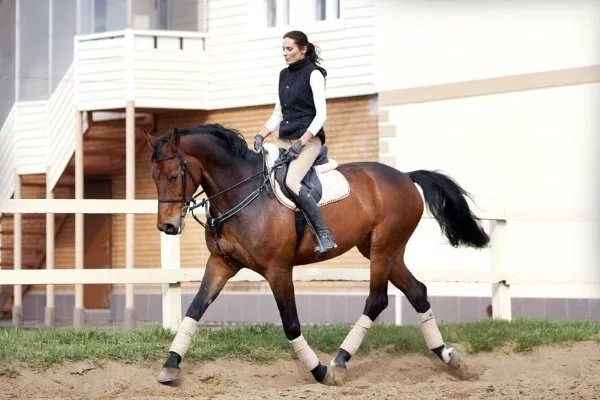
Swiss horses are characterized by a peaceful, calm disposition and are used in sports competitions, for driving carriages, and also for helping around the house.
The Swiss Horse has a long neck, muscular chest, straight back, and slender legs. The animal has a graceful and elegant appearance. Its height ranges from 155 to 165 centimeters. It comes in all uniform colors.
Horse breeders have long known which breeds are profitable to breed, depending on their purpose. Some horses are used exclusively for riding training, while others are used to assist with farming or to compete in competitions.