
Breeding beef bulls has its advantages: simplicity and a good return on investment. It's important to know how to properly run this business, which bulls to purchase, how to feed them, and other important aspects. Even if beef calves are raised for personal consumption, a farmer should understand the basics of cattle care, housing, and fattening.
Purchase of calves
| Object | Newborn weight (kg) | Weight at 12 months (kg) | Average daily weight gain (g) |
|---|---|---|---|
| Russian hornless | 25-30 | 300-350 | 800-1000 |
| Devonian | 20-25 | 250-300 | 700-900 |
| Shorthorn | 22-27 | 280-330 | 750-950 |
| Galloway | 23-28 | 290-340 | 780-980 |
| Aberdeen Angus | 24-29 | 310-360 | 850-1050 |
First, you need to decide for what purposes the bulls will be bred; there may be many options:
- for yourself;
- for continuous implementation;
- for delivery to cafes and restaurants;
- distribution among acquaintances.
Once the goal has been determined, it's time to start purchasing calves. It's best to contact a specialized farm that specializes in raising bulls. the best meat breeds The following breeds of bulls are noted:
- Russian hornless;
- Devonian;
- Shorthorn;
- Galloway;
- Aberdeen Angus.
When purchasing calves, consider their body weight to ensure it corresponds to the expected weight. The animal's overall health, any illnesses, and the productivity of the parents are also important. It's best to purchase bull calves weighing around 100 kg.
You can save on purchasing costs by buying a dairy calf, which must be fed cow's milk until it is three months old.
It is best to buy calves in late spring, so that you can receive a cash reward in the fall.
This video explains how to select bulls, how to care for them, and whether it's profitable to raise them for meat:
- ✓ Check the calf's activity: A healthy calf should be active and curious.
- ✓ Inspect the coat: it should be smooth and shiny, without bald spots.
- ✓ Check your eyes: they should be clear and free of discharge.
- ✓ Assess appetite: a healthy calf eats and drinks willingly.
Normal weight
The weight of a newborn calf depends on its breed, and the weight of a grown bull will depend on how it was fed and cared for. Approximate weight standards are provided in the table:
| Age in months | Weight in kilograms |
| Newborn | 20-30 |
| 1 | 50-60 |
| 2 | 70-80 |
| 3 | 90-100 |
| 4 | 100-120 |
| 5 | 120-130 |
| 6 | 130-170 |
| 10 | 200-240 |
| 12 | 250-400 |
A bull's weight directly depends on the quality and quantity of feed, grazing methods, and housing. Weight also depends on the breed of the bull; some breeds aren't known for their large size, while others, on the contrary, boast impressive gains.
Conditions of care and maintenance
If you decide to breed bulls, you must not only provide them with a balanced and proper diet, but also ensure proper care and maintenance. The animals should not be exposed to cold in winter, and should not be kept in a stuffy, poorly ventilated area in summer.
You should also follow these recommendations:
- It's important to choose the right leash; animals will quickly break it if they're placed on a thin rope. A metal chain made of rings is best. To protect the neck from the metal, place a soft cloth under the collar.
- During maintenance, the animal's temperament is monitored; aggressive or restless animals should be culled. This can be dangerous for both the other bulls and the owner.
- For safety and convenience, it is recommended to insert a nose ring at one year of age.
Young animals should be kept separate from adults, and a small barn is best for calves. Bulls and cows can be kept together, as this makes them more mellow.
During the summer, bulls can be kept outdoors without a roof, but the pen should then be equipped with plastic kennels. The pen should be cleaned three times a day after feeding.
The area where bulls are grazed must be fenced with sturdy material, and they can only be taken out to pasture with a stick and leash. It is not recommended to graze cows and bulls together, or young cattle with them.
Preparing the premises
To build the barn, you'll need an empty area where the bull-keeping structure will be built. It can be built in a yard, a summer house, or a mini-farm. You should also leave some space for the animals to walk outside the pen.
In the summer, bulls gain weight well and need constant exercise, as in a stall they will become sick, become more aggressive, and lose weight.
The area should be calculated at 10 square meters per head, including space for feed storage. The facade can be made of either brick or slab wood. Renting a barn for livestock is an option.
Bulls and cows are clean animals, so the floor should be designed to be easy and quick to clean. The floor should also always be dry, otherwise the animal may develop infectious hoof diseases.
The main characteristics of the barn are:
- temperature not lower than 8 degrees;
- ventilation;
- possibility of frequent ventilation.
The main thing is to prevent drafts, as they are a direct source of disease. If there are more than 10 birds, it's best to install a feeder and waterer with an automatic feeder. It's not recommended to place the feeder and waterer on the floor; the optimal height is 8 cm from the floor, but they should always be accessible.
Straw is best used indoors, as it absorbs gases and ammonia. It can be used both on paths and in boxes.
Animal health
When raising bulls for meat, it's important to monitor their health to ensure the meat is tasty and safe for human consumption. To prevent a bull from becoming ill and infecting others, follow these steps:
- carry out vaccinations and monthly preventive examinations on time;
- Regular veterinary monitoring will allow for timely detection of infectious diseases, which will save the bull from serious complications or even death;
- The bull can be grazed only after the morning dew has melted;
- It is important that the barn always has dry bedding, good lighting, no drafts, and the air temperature is not below 10 degrees;
- It is better to graze bulls without tethering them.
Cold storage of bulls
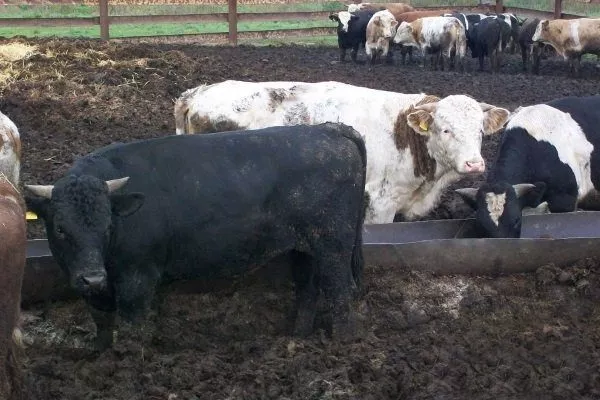
The best and most effective way to house bulls for meat is cold housing. A day-old bull is placed in a house with an outdoor pen and kept outdoors. These houses are not insulated, so it's important to provide warm bedding. Experts say cold housing has many advantages:
- The livestock receives a large amount of vitamin D.
- With the cold growing method, all reserves are spent on their growth.
- Infectious diseases are eliminated.
- The body develops properly, animals quickly gain weight and grow.
In addition to the positive aspects, there are also negative ones:
- Funds are spent on the construction of individual boxes.
- In cold weather, calves drink 25% more milk.
You can move calves to cold housing at any time of year, as many farms do. It's important to ensure they are healthy before moving them to their stalls. Plastic is best for the stalls, and the stalls should be moved periodically to prevent bacteria from growing in their original location.
Castration: pros and cons
Castrating a bull disrupts its sexual function, which is accompanied by hormonal imbalances. This disrupts its metabolism, increases fat accumulation, and inhibits muscle growth. Therefore, the meat quality of intact animals is much better than that of castrated ones.
If a bull is uncastrated, its meat will be tough and lean, while castrated bulls have tender, fatty meat, which is superior in flavor. If the latter meat option seems preferable, castration should be performed at two months of age. This procedure should be performed exclusively by a veterinarian. The procedure should be performed before the grazing period, if the bull's age allows it.
Castrated bulls have a higher appetite than intact bulls. However, castrated bulls have less muscle mass. Therefore, it's important to understand that increased feed consumption will be required after the surgery.
The fattening process
Proper feeding of calves and mature bulls is crucial. This determines both rapid weight gain and the taste of the meat. The following foods should be included in their daily diet:
- corn silage;
- wheat straw;
- meadow hay;
- salt;
- pulp;
- meal;
- bone and fish meal.
- ✓ The ratio of roughage to succulent feed should be 60:40.
- ✓ Mandatory presence of mineral and vitamin supplements.
- ✓ Access to clean water must be constant.
It is best to consult a specialist who will write out a daily menu for raising bulls for meat.
Fattening calves
Calves feed on their mother's milk for up to 20 days after birth. After that, the farmer must monitor the quality of their diet. During this time, their digestive system strengthens and can process regular food. Feeding only roughage can lead to poor digestion, so enzymes should be given alongside it.
If it's not possible to feed a calf with its mother's milk, it must be done artificially. Mix a liter of boiled water with 2 teaspoons of salt and two eggs to replace colostrum.
Enzymes will not only ensure proper digestion, but also accelerate weight gain and soften stools, preventing constipation. To facilitate a smooth transition from breast milk to hay, grass, and grains, starting at 3 months of age, you can introduce high-protein foods.
Leftover feed should be discarded, as it can go sour and be harmful to the gastrointestinal tract. In addition to the above, calves are recommended to be fed oatmeal jelly. To prepare it, mix 1 kg of oatmeal with 2.5 liters of boiled water and mix thoroughly. Let it steep for 45 minutes, then strain, add a little salt, and heat until warm.
More information about feeding calves has been written. here.
The table shows how much feed a calf should consume from 2 to 14 months:
| Age of the calf in months | Hay in kg | Straw in kg | Root vegetables in kg | Silage in kg |
| 2 | 1 | — | — | — |
| 3 | 1.5 | — | — | — |
| 4-5 | 3 | — | 1 | 1 |
| 6 | 4 | — | 3 | 3 |
| 7-10 | 4.5 | 0.8 | 5 | 4 |
| 11-14 | 6 | 2.5 | 8 | 6 |
Fattening of bulls
The diet changes depending on the season. In summer, there are more opportunities to feed the bulls fresh grass, while in winter, more concentrates and hay are added to the diet.
The table shows a list of food products for bulls in different seasons.
| Summer | Winter |
| 2 kg of concentrates | 21 kg of succulent feed |
| 35 kg of green juicy grass | 5 kg of hay |
| 1 kg of compound feed | 4 kg of straw |
| 3 kg of compound feed | |
| 50 g of salt |
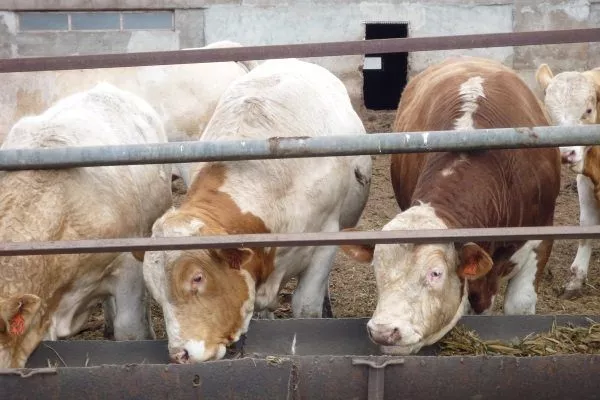
If necessary, animals can be given supplements to replenish their body with nutrients. Water should always be clean and accessible.
In addition to the main food, it is important to give animals the following products:
- fodder beet;
- carrots with potatoes;
- corn;
- food waste.
When the bull's live weight reaches 300 kg, rearing ends and fattening begins. While the daily weight gain was previously 800 grams, during the fattening period it reaches 1,300 kg.
Meat sales and customer search
There are many options for selling veal. To start, you should search online, visit stores, and ask friends about the price of veal. After that, you'll know what price you can sell it for. For example, a restaurant will charge more than the market, but they'll also have the meat checked by a veterinarian for diseases and other pathologies.
If meat is sold to large outlets, such as stores, restaurants, etc., then business registration is required.
You can also make arrangements with a store to regularly supply veal there, or you can go to the market yourself and sell the meat. It's a good idea to find a specific location to ensure all the meat is sold and you'll be able to pay for the entire product at once.
The meat business is certainly profitable, but it's highly competitive, so the challenge is to find innovative approaches, come up with unusual ideas, and, most importantly, ensure the meat is fresh. It's important to keep prices low, so you'll attract more customers than your competitors. It's important to remember that meat sales decline during Lent.
If you decide to sell veal yourself, you need to choose a location where there are no nearby butcher shops or stalls. Residential areas are ideal if there's no nearby butcher shop. Locations near metro stations or bus stops, where there's a constant flow of people, are also good.
Is this a profitable business?
Of course, you won't get rich right away. To earn a good profit, you need to invest in the business. If you have a private property where you can build a barn, that's great; otherwise, you'll have to buy a small plot of land and build a barn for the bulls.
Next, you should carry out the following manipulations:
| Tasks | Cost |
| Set up a cowshed | Feeders, drinkers, covering. |
| Buy young bulls or calves | The cost of one bull ranges from 5,000 to 20,000 rubles, depending on the breed. Ten calves will cost approximately 100,000 rubles. |
| Buy some food for the first time | The cost will be about 50 thousand rubles for 6 months in advance. |
| Set up a pen and stalls | 50,000 rubles |
| Purchase of necessary equipment | 80,000 rubles |
The total cost will be approximately 280,000 rubles, possibly more, possibly less. Let's also consider the time costs:
| Expenses | Sum |
| Wages for hired workers 2-3 | 40,000 rubles in 30 days |
| Periodic calls to veterinarians | 20,000 rubles in 30 days |
| Land plot for rent | 10,000 rubles in 30 days |
Bulls are ready for slaughter when they reach a live weight of approximately 500-600 kg, a weight they reach by 20 months. It is at this age that bulls reach their desired live weight. The meat yield per animal ranges from 60 to 70%.
For example, a 450 kg (not very large) bull will yield 270 kg of meat. A kilogram of veal costs an average of 300 rubles. This means that one medium-sized bull will fetch 81,000 rubles. Multiplying this figure by the size of the herd yields a very impressive sum for the meat. Other body parts can also be sold:
- head;
- hooves;
- internal organs;
- tail.
This will still generate a small profit. Therefore, the business will fully pay for itself within a year. And after three years, the business will be gaining momentum. If the meat is supplied to large retail outlets, business registration and quality control of the meat products will be required.
The video below discusses feeding bulls at home and the costs involved in fattening bulls for meat:
Problems that may arise in a farmer's life
Farming may seem easy at first glance, but in reality, it's hard work and a significant financial investment. While there are positive aspects, there are also some challenges that can arise:
- It is possible to purchase an underdeveloped or sick calf due to inexperience.
- When selling veal, competition may arise, and then you will have to look for another place to sell it.
- Particular attention is paid to the sanitary maintenance of bulls and veterinary control.
- The seller (owner of the livestock) must be registered as an individual entrepreneur, otherwise the sale of meat will be illegal.
Advantages and disadvantages of business
Every business has its merits, and raising bulls for meat is no exception, with its pros and cons. Among the advantages are the following:
- a large selection of meat products for sale;
- If you have equipment and already have a building for keeping bulls, then the costs at the initial stages are small;
- you can control animals yourself;
- there is quite a large selection of products for sale;
- quick payback.
Now about the disadvantages:
- large investment of physical force or hiring of workers;
- It is important to find a point of sale so that there are no leftover meat;
- Competition in the meat market is possible.
Breeding bulls for meat is a very profitable business, but it's important to understand that this is a highly competitive industry. To ensure demand for veal, bulls must be properly cared for, fed, and kept clean from birth. Vaccinations are also important, as without them, the animals can become ill, and the quality of the meat can suffer.