
When choosing a cow, it's important to determine the desired breed. If the cattle are needed for meat production, then a suitable beef breed should be selected. Beef cow breeds vary in the characteristics of both the animals themselves and the meat they produce. When choosing, it's important to consider several key factors.
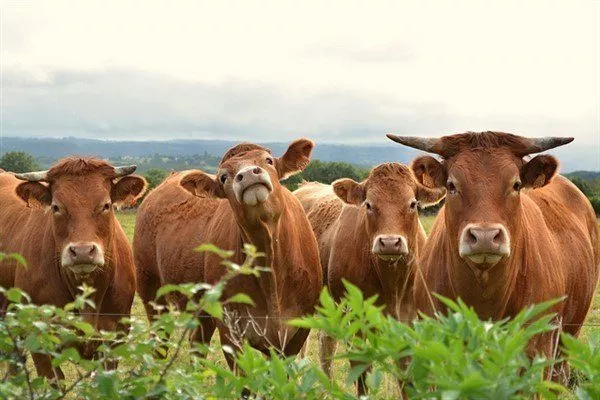
Criteria for selecting beef cows
When choosing a beef cow, it's important to pay attention to its health. This requires not only checking the available information but also inspecting the animal itself.
A cow's general condition can be judged by its behavior. The animal should be alert and energetic, with clear eyes. They should be examined for signs of inflammation.
Beef cows have a less elongated body than dairy cattle. They must have well-developed muscle tissue and a layer of subcutaneous tissue. Due to their well-developed muscles, the animal's outline becomes square, as opposed to the triangular shape of dairy breeds.
Every cow needs a healthy heart and lungs. A broad and deep chest indicates the development of these organs. The animal's rump should also be wide.
A beef cow should have a massive, fleshy head on a thick, short neck. This breed is distinguished by a prominent chest and a well-developed dewlap.
It's important to pay attention to the animal's legs. In meat breeds, they should be short and set wide apart.
The cow's udder should also be examined. This is a beef breed, so it doesn't require a well-developed udder, but it should be sufficiently large.
| Breed | Slaughter yield, % | Weight of an adult cow, kg | Weight of an adult bull, kg | Features of meat | Milk productivity, kg/year |
|---|---|---|---|---|---|
| Angus | 60 | 800 | 1200 | Marble | 3000 |
| Shorthorn | 70 | 750 | 950 | Marbled, juicy, tender | 3000 |
| Charolais | 70 | 1000 | 1400 | Lean, juicy, tender | — |
| Santa Gertrudis | 65-70 | 600-700 | 1000 | High taste qualities | 350 |
| Hereford | 65-70 | 650 | 1000 | Marbled, tender, juicy | — |
| Limousine | 65 | 600 | 1000 | Tender, low cholesterol | — |
List of beef cow breeds and their characteristics
Beef cows develop quickly, and under good feeding conditions, they mature quite early. When choosing a breed, it's important to consider its characteristics and the characteristics of the resulting meat.
Angus cows
This breed was developed by Scots in the early 19th century, improving local black polled cattle. These cows thrive in the Russian climate.
Angus cows are a single color—black or red. They are distinguished by their light heads and short, unobtrusive necks. They are congenitally polled (they lack horns).
These cows are attractive for their fine bone structure, which makes up no more than 18% of their body weight. Their bodies are short and their topline is straight. This breed is distinguished by strong legs and hooves, and full, voluminous thighs.
Angus calves are born weighing 33 kg. Yearling heifers and bulls can weigh up to half a ton. A mature cow can weigh up to 800 kg, and a breeding bull can weigh up to 1,200 kg.
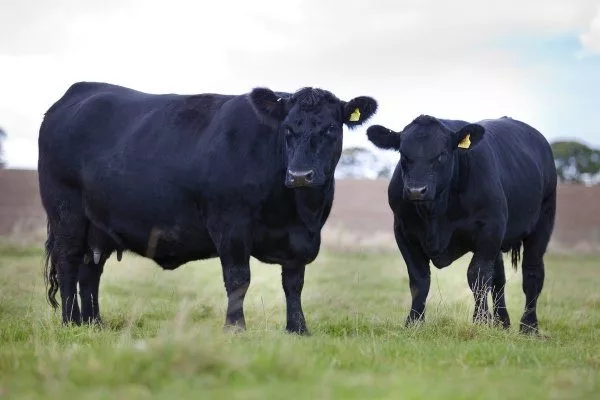
The slaughter yield is 60%. The breed also produces high milk yields, reaching 3,000 kg per year. This breed's meat is highly sought after due to its marbled texture.
Shorthorn breed
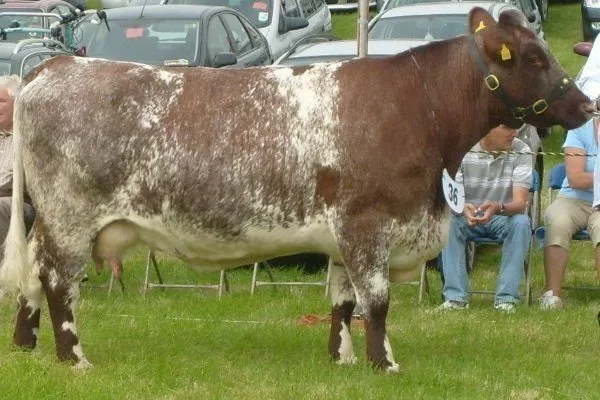
This variety is distinguished by its red coat in various shades, sometimes including white and roan animals. These cattle are small in size, with a delicate and flabby constitution.
Shorthorn cattle are distinguished by their light, broad heads, small size, and broad forehead, as well as a short, thick neck. Their horns are short and curved inward.
Calves weigh an average of 30 kg at birth, reaching 500-600 kg by the age of one and a half years. An adult cow can weigh up to 750 kg, and a breeding bull can weigh up to 950 kg.
The Shorthorn breed's slaughter yield is up to 70%, with 80% being meat and only 8% being fat. The meat of this breed is attractive for its marbling with layers of fat, juiciness, and tenderness.
Shorthorn cows also show decent milk productivity, which can exceed 3000 kg with a fat content of up to 3.9%.
Charolais breed
This variety was developed by the French in the 18th century. They selected and refined local motley cattle. It wasn't until the late 20th century that this breed arrived in Russia.
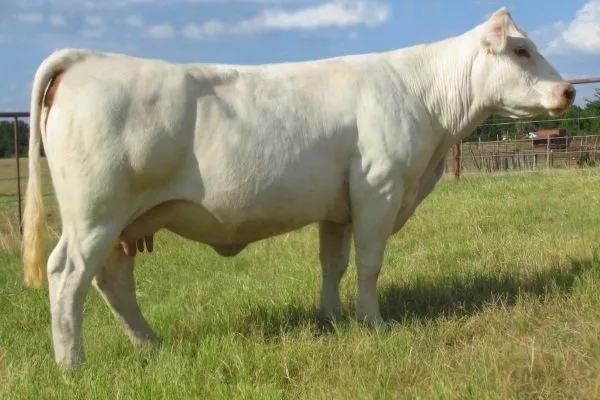
Charolais cows can be white, light fawn, or creamy white. They have a yellowish tint and are free of spots. They are fairly large, with a strong constitution and a harmonious build.
The Charolais breed is characterized by coarse bone structure, a long, deep body, and a straight, broad, but slightly sloping back. The head is short and wide, small, and has a short, fleshy neck. The horns are long and rounded.
Calves are born weighing up to 50 kg, and by the age of one and a half years, they reach 400-450 kg. Mature cows can weigh up to a ton, and breeding bulls up to 1,400 kg. The breed is known for its large fecundity. Twin calvings are common.
The Charolais breed produces up to 70% of the slaughter yield. The meat yield is approximately 80%. The product is noted for its high quality and low fat content. The meat is lean and juicy, with a tender texture.
The breed is attractive for its endurance, calm nature, and easy acclimation. Animals can be used for a long time – up to fifteen years.
Santa Gertrudis
This breed got its name from the Texas farm where it was developed. This happened in the 20th century. The breed was quickly brought to Russia for raising on steppe farms.
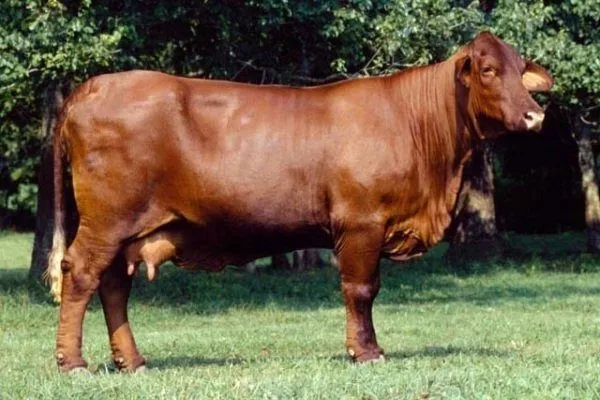
Santa Gertrudis cows are cherry red, sometimes with white markings on the lower abdomen. These cattle are large in size, with a broad body, deep chest, and long haunches. The dewlap is well developed, with a hump at the junction with the withers. The legs are strong and lean.
Cattle have thin, elastic skin and folds on their necks. Cows often have drooping ears and short, shiny hair.
Newborn calves typically weigh 30 kg, and by the age of one and a half years, their weight increases to 400-500 kg. An adult cow can weigh up to 600-700 kg, and a bull can weigh up to a ton.
The Santa Gertrudis breed achieves slaughter yields of 65-70%. The meat boasts excellent flavor. Santa Gertrudis also demonstrate good milk production, reaching 350 kg per year with a fat content of 4%.
The breed is attractive for its adaptability to dry, hot climates, as well as low temperatures. The Santa Gertrudis' advantages include physical endurance, undemanding housing, and rapid growth of young animals.
Hereford breed
Among meat breeds, this variety occupies a leading position and is second in numbers. It was developed by the English (in Hereford County) in the late 18th century.
Hereford breed It has a dark red coat with a white head, dewlap, withers, lower legs, and tail. The breed is distinguished by its barrel-shaped, wide, squat, and deep body, with a prominent dewlap.
Calves are born weighing 28 kg, reaching 400 kg by the age of one year. Adult cows weigh up to 650 kg, and breeding bulls up to a ton.
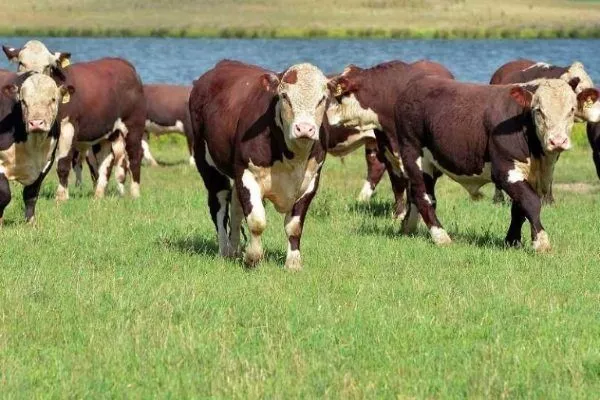
The slaughter yield is 65-70%, with a pulp density of up to 84%. The meat is characterized by its marbling, tenderness, and juiciness. The product is high in calories.
Limousin cows
This breed was developed by the French (Limousin province) in the early 19th century. It was brought to Russia in the middle of the same century. This breed is often crossed with dairy breeds, and new varieties of beef cattle are also created.
Limousin cattle are red, golden-red, or reddish-brown in color, with a lighter underbelly. These cows are attractive for their harmonious bodies, fine bone structure, and well-developed muscles. The breed has a short head with a wide forehead and light-colored horns. Limousin cows are distinguished by a deep chest and a wide rump.
Calves are born weighing 35-40 kg, reaching 300 kg by six months of age. Mature cows weigh up to 600 kg, and breeding bulls weigh over a ton.
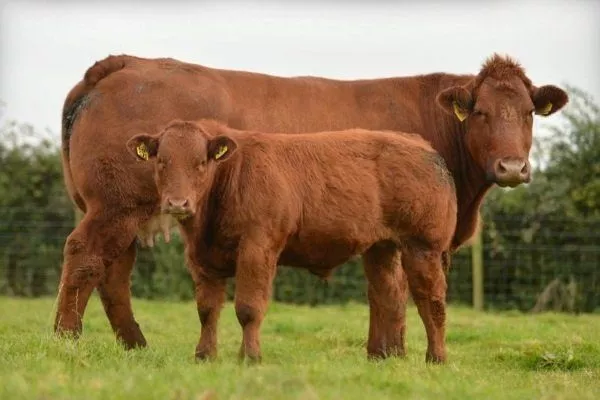
The slaughter yield reaches 65%. A single carcass contains up to 85 kg of meat. It is attractive for its tenderness, low cholesterol content, excellent taste, and fine fiber. The meat contains up to 6 kg of pulp per 1 kg of bone and no more than 10% fat. Marbling is evident even at one year of age.
The Limousin breed is attractive due to its undemanding nature regarding feed and housing conditions, fertility, easy calving, and long lifespan.
There are many beef cattle breeds, but certain varieties are particularly attractive. Besides meat, these cattle can also produce decent milk, even when that's not the primary purpose of breeding. When choosing a cow, it's important to consider a number of criteria and study the characteristics of different breeds.