
Mushrooms growing on trees and stumps are either edible or inedible. They use wood as a nutrient substrate. Some species of these fungi are parasitic, disrupting the integrity of living tissue; others metabolize dead wood, becoming food for birds and animals. Some species of wood-dwelling fungi are used to prepare medicinal preparations.
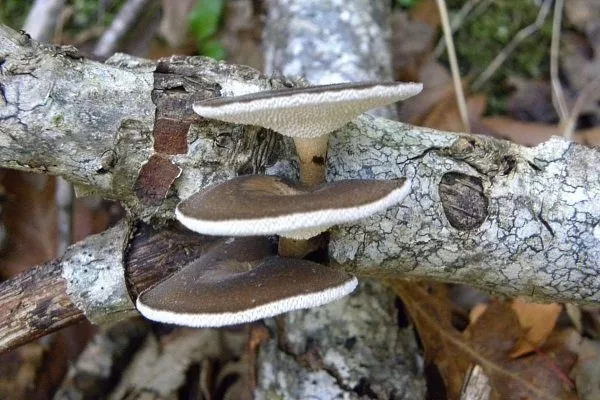
Edible tree mushrooms
A variety of edible mushrooms can be seen on stumps and trees. These include:
- Wild oyster mushroomsThey are further subdivided into species such as the lung mushroom, orange mushroom, and horn mushroom. They grow in deciduous forests. Wild oyster mushrooms can be found on rowan and oak stumps from May to September.
- Winter honey fungusThese mushrooms have a convex brown cap and hairy stems. They can be seen on damaged deciduous trees. The winter honey fungus often inhabits dead poplars and willows. It bears fruit from autumn to spring and can even overwinter under a layer of snow.
- LiverwortThis tree mushroom got its name from its blood-red color and dense, fleshy pulp: its cut resembles raw liver. Its shape resembles a tinder fungus. The liverwort cap is reddish-brown. This mushroom grows on living trees, primarily chestnuts, oaks, and less commonly other deciduous trees. Liverworts should only be eaten when they are still young.
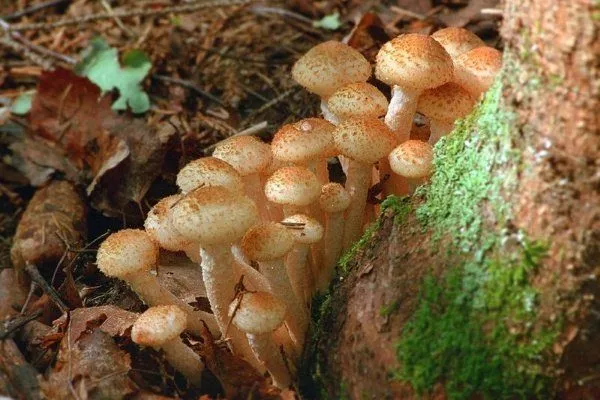
- Real (or autumn) honey mushroomsThese mushrooms vary in color: light brown, brownish, and reddish. They grow on acacia and poplar stumps. Their thin stems always have a light, membranous ring. This is the distinguishing feature of the edible honey fungus.
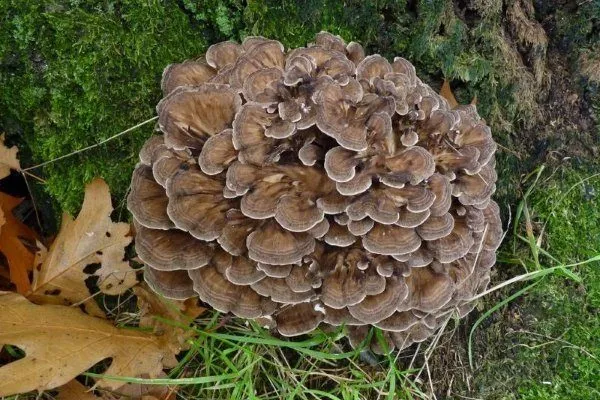
- Curly-headed griffola (or ram's mushroom)The fruiting body of this mushroom is branched and has multiple caps. The mushroom "bush" can reach a diameter of 80 cm and weigh up to 10 kg. The ram's tongue mushroom is the largest variety of mushroom growing on trees. Its color is gray, brown, or yellowish-brown. Curly grifola is collected in August and September in forests with broadleaf trees. They are found at the bases of maple and old oak trees, beeches, and chestnuts.
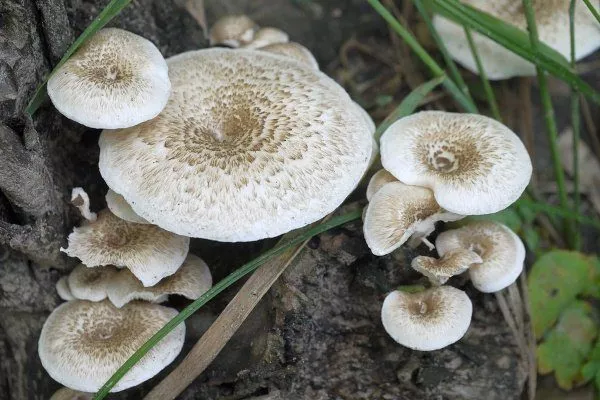
- Tiger saw-leafThis wood-boring mushroom is white or slightly yellowish in color. Its surface is covered with black and dark brown scales. The flesh is tough. The saw-leaf mushroom contains a large amount of protein. It is harvested from midsummer to October.
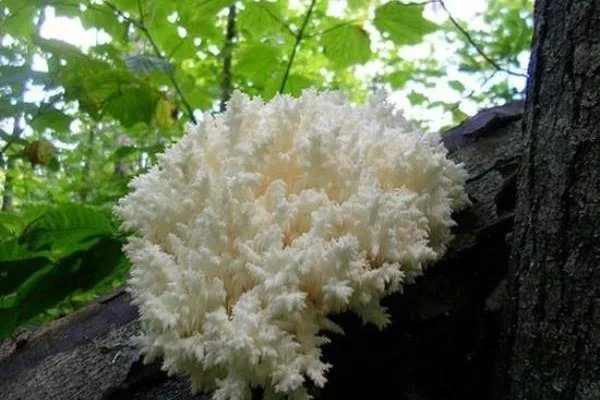
- Coral-leaved herringThis mushroom has a distinctive appearance: it has a large, well-developed above-ground portion. Its fruiting body resembles a bush of sea coral, with many short tentacles. The color of the blackberry varies from snow-white to cream with a slightly yellowish tint. This mushroom grows on fallen trees and in old hollows. Preferred trees are elm, oak, linden, and beech. This mushroom can be added to various dishes, and it can also be used to prepare medicinal remedies.
- Edible tinder fungiThey grow both on living trees and on the stumps of coniferous or deciduous trees. Sometimes, tinder fungi grow in gardens and on fruit trees. The most common type of edible tinder fungus is the variegated, or tree, mushroom. The sulfur-yellow mushroom is also found. They grow from May to September. In appearance, they resemble large, flat, overripe mushrooms. chanterellesThe cap diameter varies from 10 to 40 cm.
| Type of mushroom | Harvest season | Host trees | Peculiarities |
|---|---|---|---|
| Wild oyster mushrooms | May-September | Rowan, oak | 3 subspecies: pulmonary, orange, horn-shaped |
| Winter honey fungus | October-April | Poplar, willow | Overwinters under the snow |
| Liverwort | July-October | Oak, chestnut | Only young specimens |
| Grifola crispa | August-September | Oak, maple, beech | Weight up to 10 kg |
| Tiger saw-leaf | July-October | Deciduous trees | High protein content |
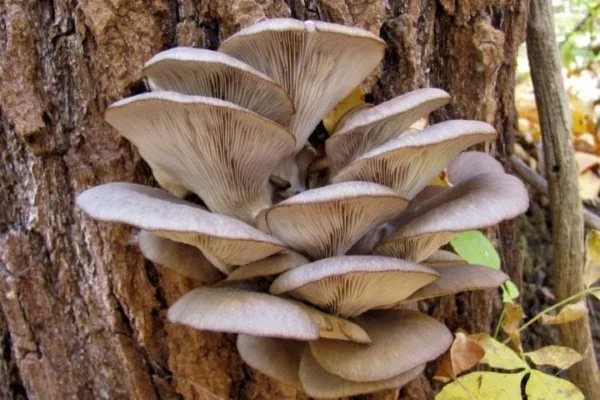
Wild oyster mushrooms
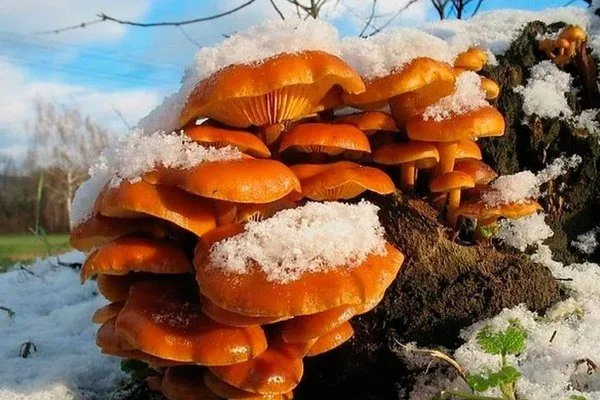
Winter honey fungus
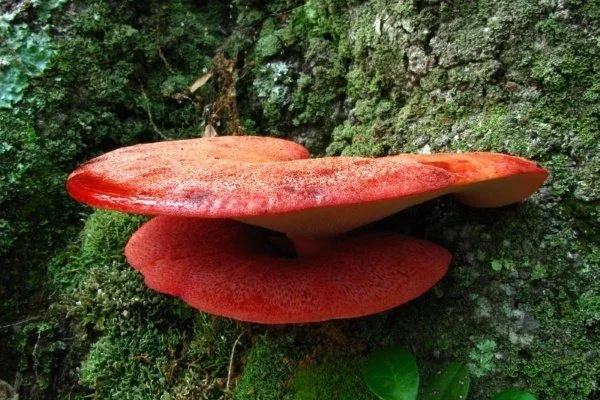
Liverwort
Real or autumn honey mushrooms
Curly-headed griffola or ram mushroom
Tiger saw-leaf
Coral-leaved herring
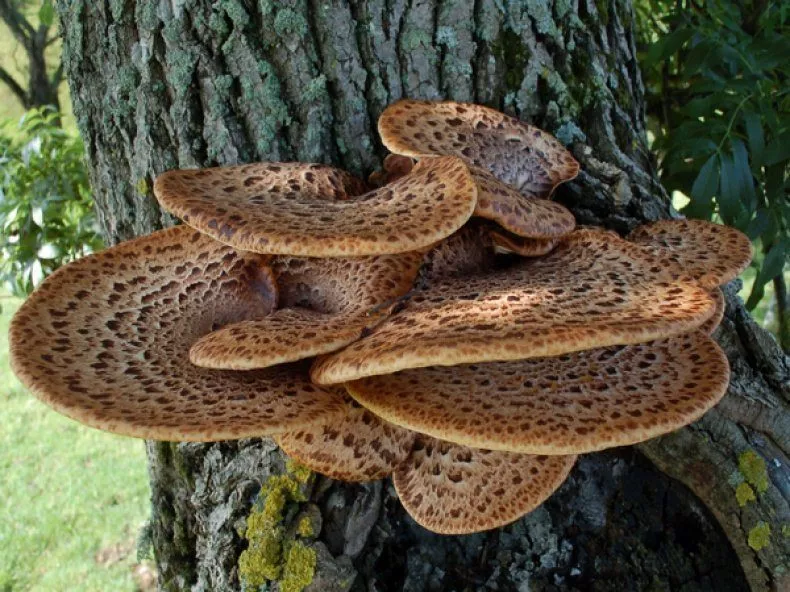
Edible mulberries
Mushrooms picked from trees must be thoroughly cooked. They can be used to prepare a variety of dishes, as well as to treat certain ailments. Before using tree mushrooms, it's important to check their edibility with experienced mushroom pickers.
Medicinal tree mushrooms
The following tree mushrooms have special properties that allow them to be used for medicinal purposes:
- Reishi mushroom (varnished tinder fungus)Its composition provides a pronounced antitumor effect. Various tinctures are prepared from it, stimulating metabolism, boosting immunity, and replenishing the body's energy reserves.
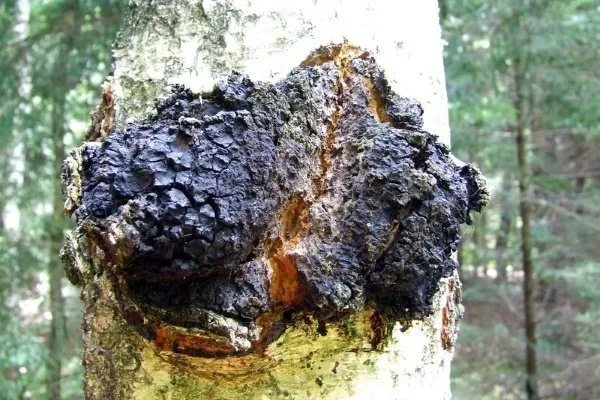
- Birch chagaThis fungus is parasitic and can grow on wood for decades. It is used to treat ulcers, gastritis, and cancerous tumors. Birch chaga also improves the functioning of the circulatory and cardiovascular systems. A medicinal tea is made from it to improve the health of internal organs.
- Larch spongeThis mushroom improves sleep and has a hemostatic effect. The sponge also reduces sweating.
- Beveled tinder fungusThis variety destroys pathogenic microorganisms and accelerates the process of cell and tissue regeneration.
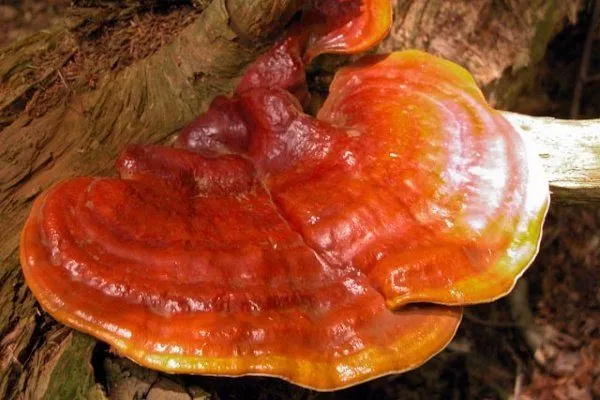
Reishi mushroom (varnished tinder fungus)
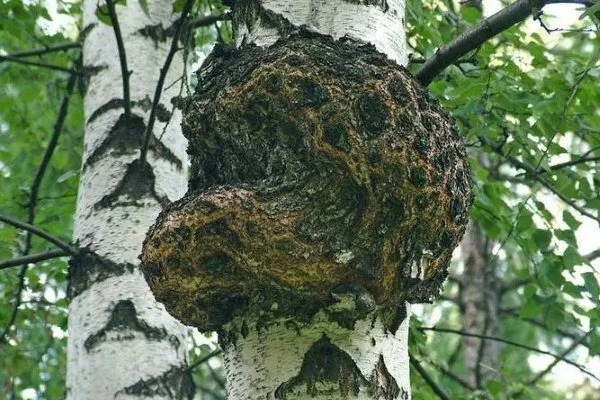
Birch chaga
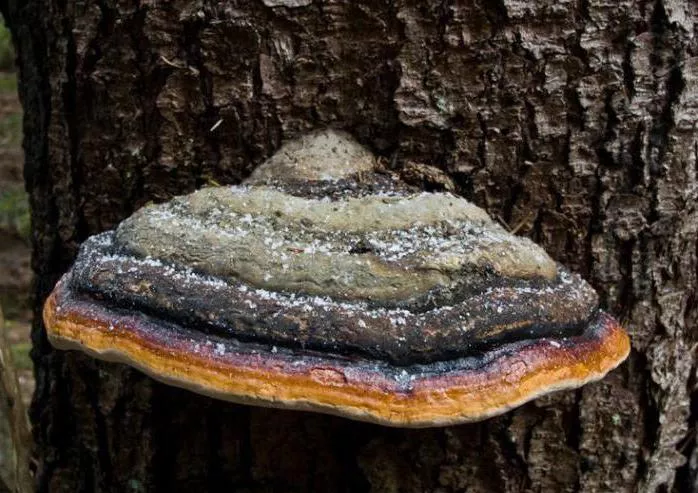
Larch sponge
Beveled tinder fungus
Wood mushrooms are beneficial for those suffering from diabetes, obesity, anemia, and high blood pressure. They also protect the body from harmful substances and eliminate waste and toxins.
Medicinal tree mushrooms are used to prepare compositions that improve the patient's condition. The following recipes are well-known:
- Lacquered Polypore TeaTo prepare it, dry the mushroom and grind it into a powder. Add 2 tablespoons of the resulting powder to 400 ml of cold water. Bring the mixture to a boil for 5 minutes, then pour it into a thermos and let it steep for 10-12 hours. Take the prepared decoction 2 tablespoons 3 times a day, 40 minutes before meals. The treatment course is 3 weeks, followed by a week-long break. After this, the treatment can be repeated.
- Birch chaga infusionTake a large chaga mushroom, soak it in cold water, and let it sit for 5 hours. Then, puree it and add hot water (ratio: 1 part chaga infusion to 5 parts water). Place the infusion in a dark place and let it sit for 2 days. Drink 3 glasses of the infusion daily.
Preparations based on these wood mushrooms have a beneficial effect on blood vessels and the heart muscle, eliminate the symptoms of cardiac ischemia, normalize blood circulation in the cerebral vessels, and also improve memory.
Inedible poisonous mushrooms growing on trees and stumps
Inedible parasitic mushrooms may also grow in these areas. They are not suitable for human consumption and can cause severe poisoning. Some are non-poisonous but should not be consumed.
These mushrooms include the following species:
- Ganoderma australisIt grows from wood. This mushroom has virtually no stem, and the cap is flat. The wide part of the Ganoderma grows attached to the wood or ground. The flesh is dark, soft, and tender.
- Turkey TailThis inedible wood-dwelling mushroom has a gray surface and leathery flesh. It often grows on coniferous trees, including birch trees. It typically occurs on tree stumps.
- Pyptoporus oakThe mushroom has a large fruiting body. The cap is 10-15 cm in diameter, with a velvety surface. Its color ranges from white-yellow to brown. Piptoporus most often grows on oak bark.
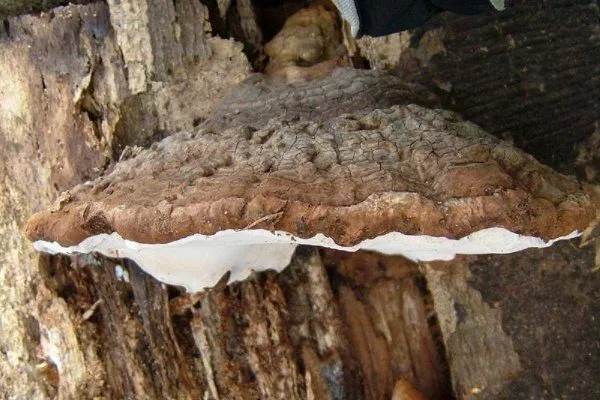
Ganoderma australis
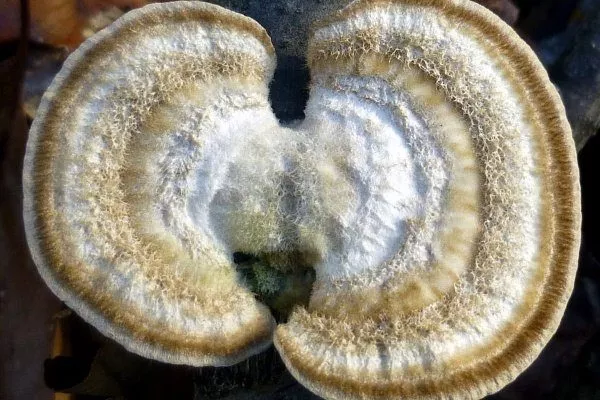
Turkey Tail
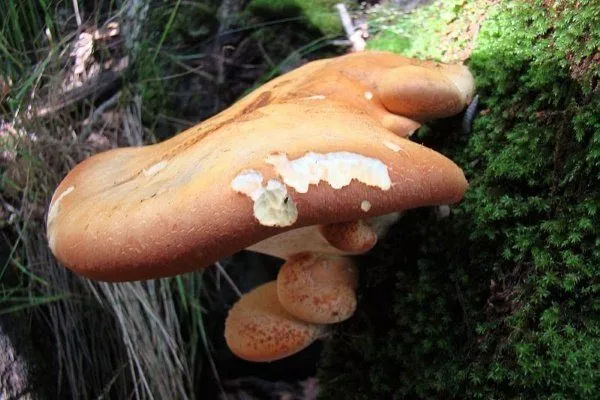
Pyptoporus oak
These mushroom species should not be eaten, even after thorough cooking. If the mushroom is unknown, it's best to leave it on the tree.
Peculiarities of growing mushrooms on stumps
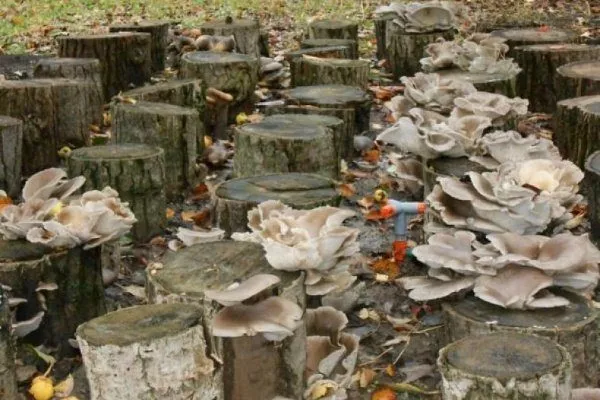
Mushrooms that grow on tree stumps can be cultivated at home, creating conditions as close to natural as possible. The best option is to grow tree mushrooms in your garden.
For stumps, you need to use wood cuts from deciduous trees or use real stumps left over from recently cut down trees.
Oyster mushrooms are most often grown in the garden. To ensure their growth and normal development, use poplar, birch, and maple wood. Conifers should be avoided, as they contain large amounts of caustic resins that can destroy the mycelium.
If you're using fresh wood, there's no need to soak or wet it beforehand. If the stumps are old, soak them in a container of cold water for a few days.
Once the logs are ready, you can add the mycelium of your chosen wood-boring fungus. To do this, you can make staggered holes in the stump. The holes should be no more than 6 cm deep and 1 cm in diameter.
These holes should be filled with mycelium. Afterwards, they should be covered with moss or sealed with duct tape.
The logs containing the mycelium should be placed in the basement. They should be stacked in a pyramid shape and covered with burlap.
The stumps should remain indoors until the mycelium has germinated. After that, they can be placed in the ground. This is recommended in May, when normal temperatures have returned.
To plant the stumps, choose a shaded location. Dig a hole no more than 15 cm deep and line the bottom with damp leaves or sawdust. Place the stump in the hole. Leave at least 35 cm between each stump. Water the stumps as needed.
Another method is to grow wood mushrooms in a trench. Here's how:
- Dig a trench up to 15 cm deep.
- Pour dry pearl barley onto the bottom, which will provide the mycelium with good nutrition.
- Place disinfected mycelium on top. Each stump should receive 300 g of seed material.
- Place the moistened stumps on the mycelium and lightly sprinkle with soil.
After planting tree mushrooms, water the soil. Do this carefully, as excess moisture is detrimental to growing mushrooms. A spray bottle is best. Watering should be done during dry periods.
For the winter, the mushroom garden should be covered with a layer of straw or leaves. Stumps should be covered with the material to prevent the mushrooms from freezing.
The first harvest, if everything was done correctly, can be collected within a month after planting the mycelium.
Can you eat tree mushrooms?
Mushrooms that grow on trees and are considered conditionally edible can be eaten, but only under one condition: they must be young. Furthermore, they must undergo the required heat treatment.
You can make soup with Grifola crispa (ram's tongue mushroom). This mushroom has positive health benefits: it stimulates the body's detoxification process and helps relieve headaches, even migraines.
To prepare the first course from wood mushroom you will need:
- 300 g of ram's mushroom;
- 7 potatoes;
- one onion and one carrot;
- a glass of wheat flour;
- 2 chicken eggs;
- salt;
- black peppercorns;
- dill and parsley to taste.
Vegetables need to be washed and peeled.
Make homemade soup noodles from flour and water. Add 0.5 teaspoon of salt to 0.5 cups of flour and beat in two eggs. Rub the dough with your hands, creating crumbs. Gradually add the remaining flour to the flour mixture. Let the noodles dry.
Wash and slice the mushrooms, then place them in salted water, which should boil. Cook for at least an hour.
Peel and finely chop the potatoes and carrots. Peel and finely chop the onion.
Add black pepper and chopped vegetables to the cooked mushrooms. You can also add 2-3 bay leaves. Simmer everything for another half hour. Add the homemade noodles, simmer for 10 minutes, and turn off the heat. Finally, add finely chopped herbs.
It's good to add sour cream to any mushroom soup.
Stages of preparation for use
- Thorough cleaning of wood particles
- Soak in cold water for 2-3 hours
- Primary boiling (30-40 minutes)
- Change the water and cook again (20 minutes)
- Final preparation according to the recipe
It must be placed separately on each plate.
When preparing edible wood-boring mushrooms, keep in mind that they don't have a distinctive flavor. Some, while perfectly edible, emit an unpleasant odor when cooked.
Mushrooms growing on trees and stumps can be both edible and inedible. They can be grown in your own garden. They can be used to prepare dishes, but tree mushrooms are more often used to prepare medicinal mixtures.