
Sturgeon are not only rare but also large, significantly larger than other marine, river, and lake species. This article examines the fish's appearance, habitat, and potential benefits and risks. Recommendations for breeding and raising sturgeon are also provided.
Description, structure and characteristics
Sturgeon are large fish. Large species can reach approximately 6 meters in length. The maximum weight is 816 kilograms. This is the body weight of the world's largest white sturgeon. However, the average commercial fish weighs 12-16 kilograms.
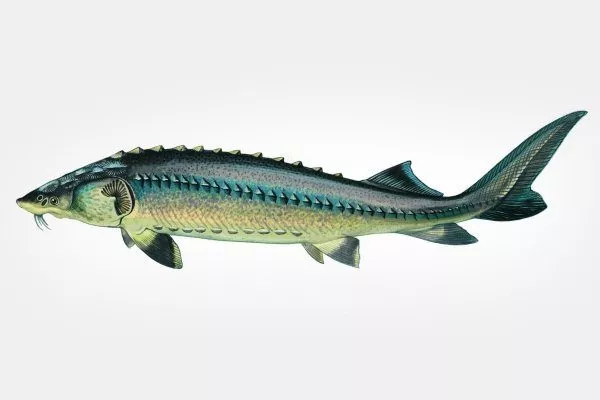
The fish has a small head and an elongated snout, either spatulate or cone-shaped. The mouth is retractable, with four barbels at the tip of the snout. The lips are fleshy, the lower lip is torn, and there are no teeth. Small teeth develop in juveniles, but they disappear over time. Sturgeon gill openings are similar to those of sharks, with regular gill rakers located on the inner surface.
The sturgeon's skeleton is composed of cartilage, it has no vertebrae, and its notochord is retained throughout its life. The body is spindle-shaped and highly elongated. The fish lacks scales, but its body is covered with five rows of specialized scutes—diamond-shaped bony scales. Each sturgeon species has a specific number of bony scutes.
The sturgeon has a rigid pectoral fin, its anterior ray, resembling a spine, being particularly thick and pointed. The fish's age is typically determined by a cross-section of the anterior ray. The dorsal fin has 27 to 51 rays. The anal fin can contain 18 to 33 sharp rays.
Sturgeon are most often gray. Their backs can be light gray, light brown, grayish-black, with yellow or green tints. Their fins are typically dark gray, their sides are brownish, and their bellies are white, gray with a bluish tint, or grayish with a yellow tint.
Sturgeon are among the longest-lived fish species. On average, they live 40-60 years, with some reaching 100 years.
Population and status of the species
In the 21st century, the sturgeon is particularly threatened with extinction, the reasons for this being human activity: environmental degradation, over-exploitation, which continued until the 20th century, and poaching.
The decline in sturgeon numbers became evident as early as the 19th century, but only in recent decades have proactive measures been taken: combating poaching, raising young fish on fish farms, and eventually releasing them into the wild. Today, fishing for almost all sturgeon species is strictly prohibited in Russia.
Types of sturgeon
In Russia, sturgeons inhabit areas from the White Sea to the Caspian Sea. They are found in the basins of Siberian rivers, in the Pacific Ocean in the east, and sometimes in the Baltic Sea in the west.
| View | Maximum length (m) | Maximum weight (kg) | Habitat | Status |
|---|---|---|---|---|
| Amur | 3 | 190 | Amur River basin | Endangered |
| Kaluga | 4 | 1000 | Amur River basin | — |
| Atlantic | 6 | 400 | Black Sea, Bay of Biscay | Endangered |
| Stellate sturgeon | 2.2 | 80 | Black, Azov, Caspian Seas | — |
| Sterlet | 1.25 | 16 | Rivers of the Baltic, Black, and Azov Sea basins | Vulnerable |
| Thorn | 2 | — | Black, Caspian, Azov, Aral Seas | Red Book |
| Lake | 2.74 | 125 | The Great Lakes system, the Saskatchewan and Mississippi rivers | — |
| Russian | 2.36 | 115 | Caspian, Azov, Black Seas | Endangered |
| Persian | 2.42 | 70 | Caspian Sea, Black Sea coast | On the verge of extinction |
| Beluga | 4 | 1500 | Black, Azov, Caspian Seas | — |
| Sakhalin | 2 | 60 | Sea of Japan, Sea of Okhotsk, Strait of Tartary | Rare |
Amur
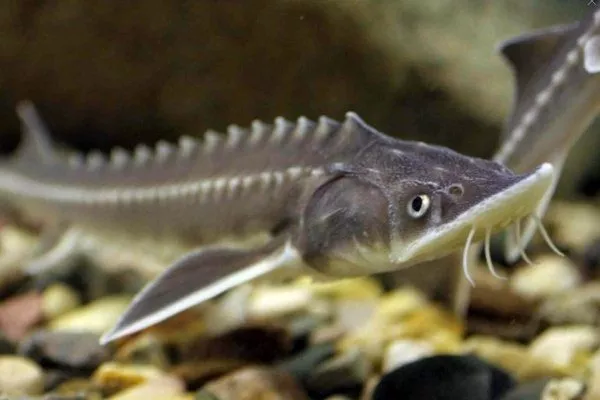
Found in the Amur River basin, including the floodplain lakes of Kizi, Boloni, and Orel-Chle. The Amur sturgeon is distinguished by its smooth gill rakers with a single apex. It is an endangered species. Amur sturgeon reach 3 meters in length and weigh approximately 190 kilograms, with an average weight of 56-80 kilograms.
Sturgeons are distinguished by their pointed, elongated snouts. They feed on mayfly, caddisfly, and lamprey larvae, various crustaceans, and small fish. During spawning season, schools of sturgeon migrate upriver to the Nikolaevsk-on-Amur area.
Kaluga
A fish belonging to the genus Beluga. It is a large fish, reaching over 4 meters in length and weighing up to 1,000 kilograms. Kaluga sturgeon are considered long-lived, as they can live up to 50 years, weighing around 600 kilograms. Their diet includes pink salmon, silver carp, carp, and chum salmon. Smaller specimens feed on minnows and lampreys. Sexual maturity occurs late, at 18-20 years.
It inhabits the entire Amur River basin. It is found in Lake Orel and the Ussuri River. It does not enter the Sea of Okhotsk.
Atlantic (Baltic)
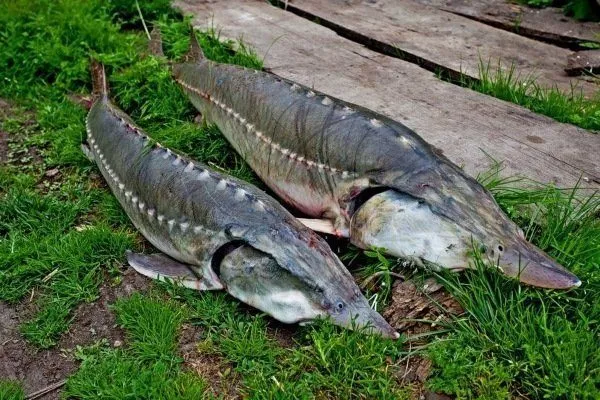
A large fish, it can reach 6 meters in length. The maximum recorded weight is 400 kilograms. The Atlantic sturgeon has large scutes, and its tail has three pairs of large, fused scutes. The Atlantic sturgeon's back is a grayish-olive color, its sides are lighter, and its belly is white.
The species' native range is the Black Sea and the Bay of Biscay, where no more than 300 individuals are found. A small number of fish are found only in France, in the Garonne River.
The Atlantic sturgeon prefers to feed on small fish (sand, capelin, anchovies), worms, crustaceans and mollusks.
Stellate sturgeon
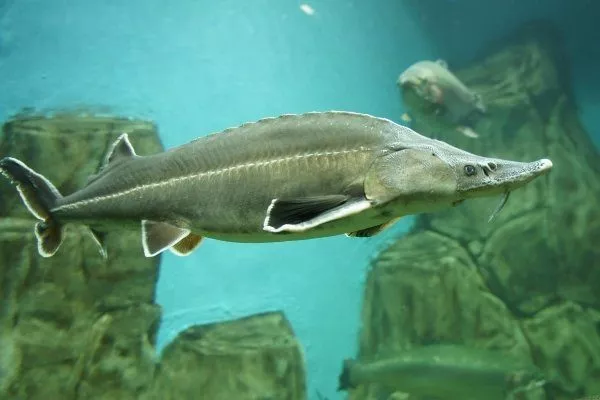
A large fish, reaching 2.2 meters in length and weighing around 80 kilograms, it is characterized by an elongated, narrow, slightly flattened snout. The sturgeon's back is blackish-brown, its belly is white, and its sides are lighter than its back.
The stellate sturgeon prefers to feed on mysids, crustaceans, various worms, and small fish. It inhabits the basins of the Black, Azov, and Caspian Seas. During spawning season, the fish migrate to the Kodori, Volga, Inguri, Ural, Southern Bug, Kura, Dnieper, Kuban, and Don rivers.
Sterlet
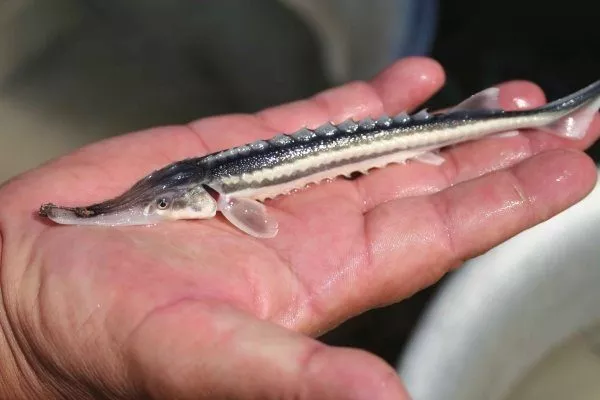
The sterlet's natural habitat is the rivers of the Baltic, Black, and Azov Sea basins. It is found in the following rivers: the Ural, Dnieper, Sura, upper and middle Kama, Yenisei, Irtysh, Ob, Volga, and Don. Sterlet was previously found in Lakes Onega and Ladoga. The fish is considered a vulnerable species.
The sterlet is a medium-sized fish. Sexual maturity occurs early: males are ready to spawn at 4-5 years of age, while females are ready at 7-8 years of age. Another distinguishing feature of the sterlet from other sturgeons is the presence of fringed barbels and a large number of lateral scutes: more than 50.
The sterlet is a freshwater fish, but there are a few semi-anadromous forms. The maximum length of this species of sturgeon reaches 1.25 meters and weighs 16 kilograms. The average size of the sterlet is 40-60 centimeters. The snout is pointed or blunt, and the color ranges from brownish-gray to brown. The belly is white with a yellowish tint.
Sterlet feed on insect larvae, leeches, other benthic organisms, and small fish in small quantities. A valuable hybrid of sterlet and beluga is the bester.
About breeding sterlet at home – read here.
Thorn
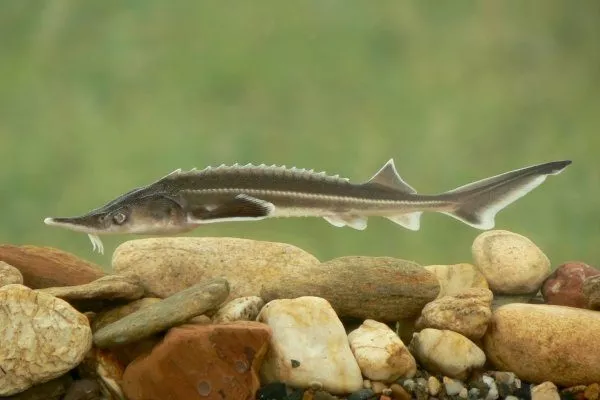
The advantage of the sturgeon is that it thrives equally well in both fresh and salt water, allowing its habitat to extend for many kilometers. Representatives of this species are found in the Black, Caspian, Azov, and Aral Seas, as well as in the river basins adjacent to these bodies of water. Many individuals inhabit the Sefidrude, Ural, and Kura rivers.
Adult sturgeons can reach over 2 meters in length, but many members of this species are smaller. The sturgeon is characterized by an elongated body with conical spines on its back. Unlike other sturgeons, the sturgeon has fringed barbels located near the lower lip.
The color of the barb varies from light gray to greenish, with a lighter belly. Its surface is covered with star-shaped scales. The barb is listed in the Red Data Book of Russia.
Lake
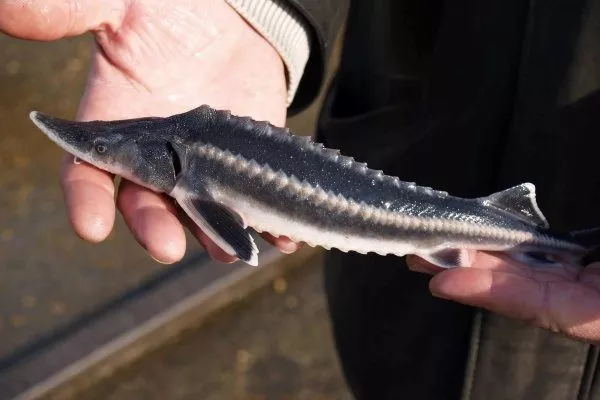
The lake sturgeon is a large fish with a blunt snout. The maximum officially recorded size is 2.74 meters with a weight of 125 kilograms. The sturgeon's body color can be greenish-brown, black with a gray tint. The belly is white or slightly yellowish.
Lake sturgeon feed on a variety of benthic microorganisms, though they rarely consume fish. They inhabit the Great Lakes system, Lake Winnipeg, and the Saskatchewan, Mississippi, and St. Lawrence river basins.
Russian (Caspian-Black Sea)
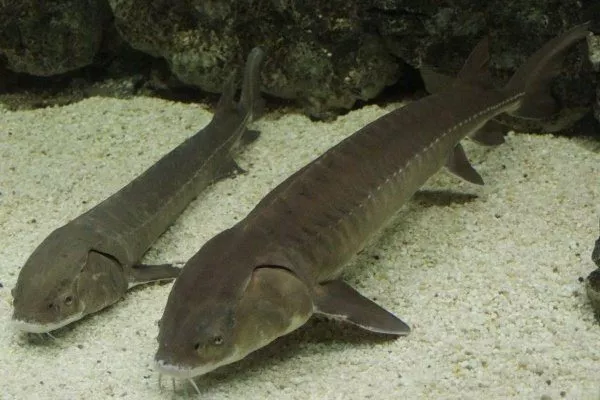
A prized species of sturgeon, popular for the exceptional culinary qualities of its meat and caviar. An endangered species, the fish has a short, blunt snout and barbels growing toward the end of the snout. The maximum length of an adult reaches approximately 2.36 meters and a weight of 115 kilograms. However, Russian sturgeon typically weigh 12-24 kilograms, with an average length of 1.45 meters. The back is grayish-brown, the sides have a yellowish tint, and the belly is white.
The Russian sturgeon inhabits all major waterways in Russia. It is found in the Caspian, Azov, and Black Sea basins. During the spawning season, the fish migrate to the Mzymta, Psou, Volga, Rioni, Terek, Danube, Don, Dnieper, Kuban, Samur, and other rivers.
Depending on their habitat, their diet consists of worms, mysids, and amphipods. Russian sturgeon prefer fish such as shemaya, mullet, herring, and sprat. In the wild, sturgeon produce hybrid offspring with barbel sturgeon, stellate sturgeon, sterlet, and beluga.
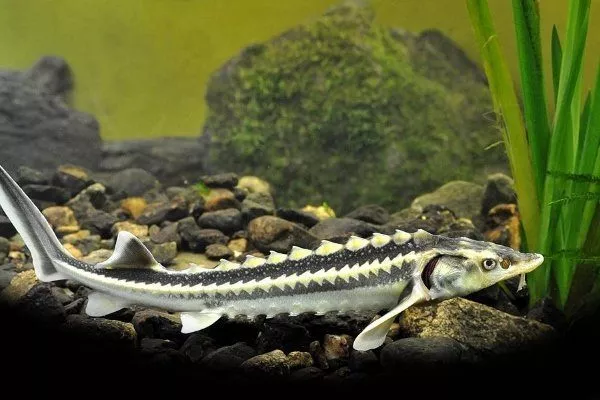
Persian (South Caspian)
The Persian sturgeon is an anadromous species closely related to the Russian sturgeon. Conservation status: Critically Endangered. The maximum length of the sturgeon is 2.42 meters and a weight of 70 kilograms. These sturgeons are characterized by a large, long, slightly downturned snout, a gray-blue back, and metallic blue sides.
The fish's diet consists of benthos and small fish. Sturgeon are found in the central and southern regions of the Caspian Sea, the Caspian Sea region, and the Black Sea coast. During spawning season, they migrate to the Rioni, Volga, Inguri, Ural, and Kura rivers.
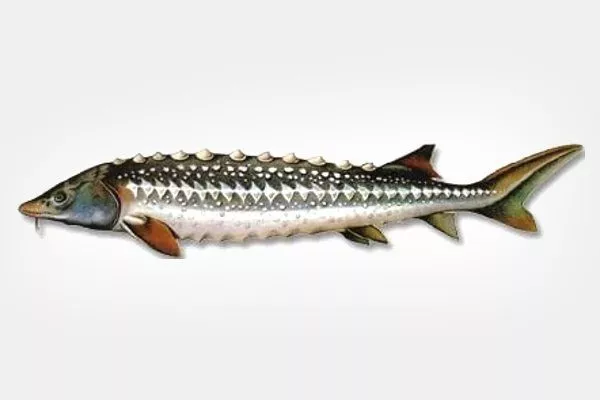
Beluga
A large fish, it can weigh up to 1,500 kilograms and reach over 4 meters in length. Its snout resembles that of a pig. The mouth is large and sickle-shaped, with thick lips. The eyes are small and weakly visible. The body is covered with large scales. The back is grayish-brown, and the belly is light, almost white.
Beluga sturgeon inhabit the Black, Azov, and Caspian Seas. They are rarely found in the Adriatic Sea. They migrate to the Dniester, Volga, Dnieper, Don, and Danube rivers for spawning. They are also less common in the Terek, Ural, and Kura rivers.
Beluga fry feed on river plankton, caddisfly and mayfly larvae, and the eggs and fry of other fish. As they mature, they consume young sturgeon and stellate sturgeon, crustaceans, mollusks, gobies, sprats, carp, and herring.
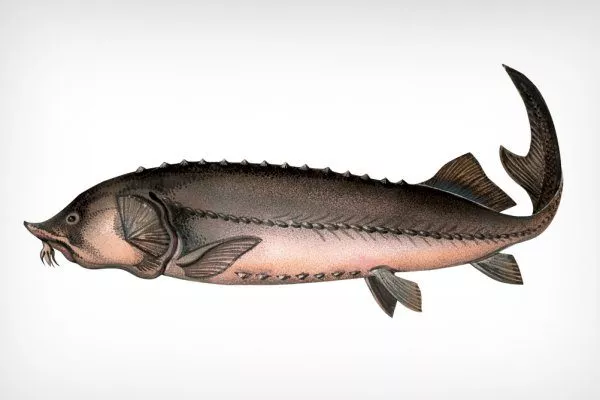
Sakhalin
A rare species of sturgeon. Adults average 1.5-1.7 meters in length and weigh 35-45 kilograms. The largest specimens can reach up to 2 meters and weigh around 60 kilograms. Adult Sakhalin sturgeons have a large, blunt snout and a greenish-olive color.
Sturgeons feed on various bottom dwellers: snails, insect larvae, small shrimp, mollusks, crustaceans, and small fish.
Their habitat includes the cold waters of the Sea of Japan, the Sea of Okhotsk, and the Strait of Tartary. Sturgeon migrate to the Tumnin River in Khabarovsk Krai to spawn.
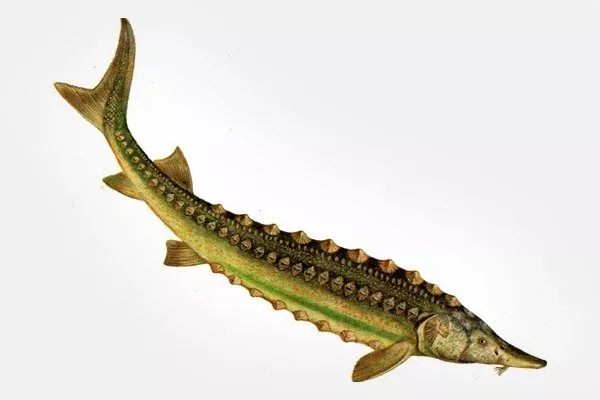
Habitat, migration and distribution
Sturgeons are classified as freshwater, anadromous, or semi-anadromous. Anadromous fish are those that live in the sea and then in rivers. During spawning, they migrate from the sea to rivers or vice versa, which is much less common. Semi-anadromous fish are a group of fish that live in coastal areas of seas or in sea-lakes. During spawning, they migrate to the lower reaches of rivers.
The sturgeon's natural habitat includes waters in the northern temperate zone of Europe, northern Asia, and North America. Over millions of years of evolutionary development, sturgeon have adapted well to temperate climates; they tolerate low water temperatures well and can fast for long periods.
Sturgeon are bottom-dwelling fish, swimming at depths ranging from 2 to 100 meters. Anadromous sturgeon species inhabit coastal waters of seas and oceans, but they spawn in fresh river water, where they enter by swimming against the current, covering considerable distances. After spawning, the schools of fish return to the sea.
Semi-anadromous sturgeon species inhabit the salty coastal waters of seas and oceans, spawning in river estuaries without migrating upstream. Many freshwater sturgeon species do not undergo long migrations, preferring to lead a sedentary lifestyle in rivers and lakes, where they feed and reproduce.
All sturgeons spawn in the spring and summer, but migrate to their spawning grounds at different times. For this reason, sturgeons are divided into seasonal races—winter and spring. Spring sturgeons migrate to their spawning grounds before spawning, in the spring. Winter sturgeons migrate in the fall, before the eggs have matured.
Spawning
Sturgeon reach sexual maturity between the ages of 5 and 21. Females spawn approximately every three years, several times throughout their lives, while males spawn more frequently. Spawning for various sturgeon species can occur between March and November. Peak spawning occurs in mid-summer.
Fresh water and a strong current are essential for successful reproduction and subsequent maturation of the offspring. Sturgeons will not reproduce in stagnant or salt water. Water temperature is also important: the warmer the water, the less favorable the egg maturation process. Embryos will not survive temperatures below 22 degrees Celsius.
During a single spawning, female sturgeon can lay up to several million eggs, which range from 2 to 3 millimeters in diameter and weigh up to 10 mg. Females deposit the eggs in crevices in the river bottom, in cracks in large boulders, and between rocks. The sticky eggs adhere firmly to the substrate, preventing them from being carried away by the river current. Embryos develop in 2 to 10 days.
What does sturgeon eat?
Sturgeon prefer to feast on various bottom-dwelling organisms and fish. The composition of their diet depends directly on the fish's age and habitat:
- Sturgeon fry They prefer zooplankton (daphnia, bosminamia, cyclops), but can feed on very small crustaceans and worms.
- Young individuals They feast on insect larvae, small shrimp, snails, and crustaceans. The stomachs of the fry often contain inedible particles, most likely sucked up from the muddy bottom.
- Adult Sturgeons feed on 85% protein. They become especially voracious before spawning: they eat almost anything they can find on the bottom, including various crustaceans (most often amphipods) and members of the cladoceran order. They enjoy feeding on insect larvae, caddis flies, and mosquitoes. They also enjoy mollusks, mussels, leeches, shrimp, and worms.
When protein is limited, sturgeons feed on algae. Their diet consists of sand lance, herring, sprat, gobies, anchovies, sprat, pike perch, white bream, mullet, and other small and medium-sized fish.
During the spawning season and after the breeding process, sturgeon stop feeding and switch to eating vegetation. Within a month, the fish recovers, its appetite returns, and then it again sets out to find food for its continued survival.
Sturgeon caviar
Sturgeon caviar is one of the most prestigious and expensive delicacies in the world. The price of 1 kilogram of the product often reaches up to $6,000. The high price of the fish is due to the annual decline of their population. Considering that industrial fishing is banned in many countries, the main suppliers of the product are artificial "breeding" farms.
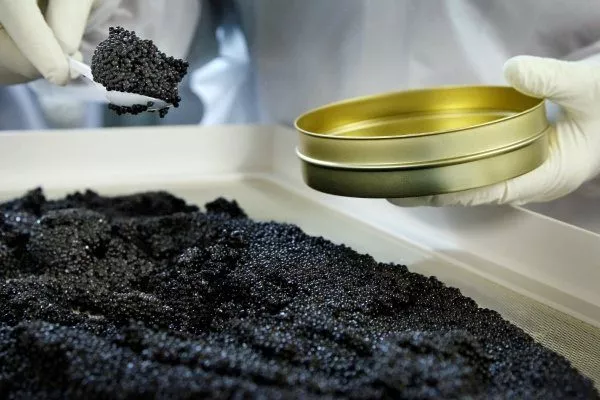
Real black caviar has a refined, slightly salty flavor with a subtle seaweed aroma. Its color ranges from light gray to dark brown. Due to its high cost and distinctive color, it has been nicknamed "black gold."
This delicacy is used as a cold appetizer with sparkling wine, vodka, and dry champagne. It's served neat in crystal vases or in a turtle shell with small silver spoons. Many prefer to make sandwiches with butter and caviar. It's also paired with onions, hard cheese, vegetables, eggs, and herbs.
To preserve the caviar's unique flavor and attractive appearance, serve it 15 minutes before consumption. Until then, store the caviar in the refrigerator. In addition to its excellent culinary qualities, sturgeon caviar is particularly prized in natural medicine. It contains at least 30% easily digestible proteins, 12% fatty acids, and 6% vitamins and minerals.
It is useful to consume caviar for the following problems:
- atherosclerosis;
- iron deficiency anemia;
- disorders of the nervous system;
- chronic fatigue;
- osteoporosis.
Sturgeon caviar is beneficial for pregnant and breastfeeding women due to its vitamin E and choline content. It is also recommended for consumption during the post-surgery recovery period, as it has a general strengthening effect.
To get the maximum benefit from the product, consume only high-quality caviar.
Breeding and cultivation
In nature, many sturgeon species readily crossbreed, leading to the artificial breeding of a sterlet-beluga hybrid—the bester—for commercial farming. Today, many people are increasingly turning to home-breeding sturgeon. By following all stages of the technological process, it's possible to obtain products that are as good as those caught in natural waters.
- ✓ Disease resistance
- ✓ Temperature requirements
- ✓ Growth rate
- ✓ Water quality requirements
- ✓ Availability of feed
Features of cultivation (subject to state permission):
- To raise sturgeon, you'll need a plot of land at least 30 square meters in size. It's recommended to choose a location away from roads, as sturgeon are shy fish. Providing heating during the winter is crucial.
- Professional sturgeon farming on a large scale requires approximately 5-7 tanks to hold the adult fish. However, beginning breeders can use a single small tank, 2-3 meters in diameter and at least 1 meter deep. Such a tank will produce approximately 1 ton of fish.
- To ensure proper fish growth, filters, pumps, compressors, and piping are installed in the pool. It is advisable to purchase an automatic feeder and incandescent light bulbs. When using a water supply, the fish farmer must ensure that no residual chlorine enters the pool. A carbon filter can eliminate volatile compounds.
- Fish are cared for regularly. The pool is kept clean: 10% of the water is changed daily, silt is removed from the walls, and the temperature and equipment are monitored. The optimal water temperature in cold weather should be at least 17-18 degrees Celsius, and in summer, 20-24 degrees Celsius.
- It's difficult to predict the future growth rate of the fry, so the fish are sorted into different tanks weekly. Strong specimens are cultured for no more than six months, medium-sized specimens for seven months, and strong specimens for up to nine months.
Successful sturgeon breeding depends directly on the fish's nutrition. They are fed nutritious, high-calorie feed containing the following components:
- protein – not less than 45%;
- crude fats – 25%;
- dietary fiber – 2%;
- phosphorus and lysine – 1%.
When choosing food for sturgeon, it's recommended to choose water-resistant foods that swell and sink in water. Fry should be fed 5-6 times a day, and adults 4 times a day. It's important to maintain regular intervals between feedings, otherwise the fish may refuse to eat.
More information about sturgeon farming – read here.
The benefits and harms of sturgeon
Sturgeon is rich in easily digestible proteins, making it quickly digestible and often recommended by nutritionists for various diets. Sturgeon meat is rich in rare beneficial acids, including glutamic acid, as well as vitamins A, C, PP, and B. Sturgeon meat is a delicacy, containing beneficial macro- and microelements: potassium, fluorine, phosphorus, iodine, calcium, nickel, magnesium, molybdenum, sodium, chromium, iron, and chlorine. Sturgeon contains 160 calories per 100 grams.
The calorie content of 100 grams of sturgeon caviar is approximately 200 calories. It is rich in beneficial proteins and lipids. Caviar is beneficial for those with weakened health following a serious illness and those who have undergone aggressive treatment.
Regular consumption of sturgeon, which contains beneficial fatty acids, strengthens blood vessels and the heart muscle, which helps lower blood cholesterol levels and reduce the risk of myocardial infarction. Caviar has a beneficial effect on bone growth and strengthening, and improves skin regeneration.
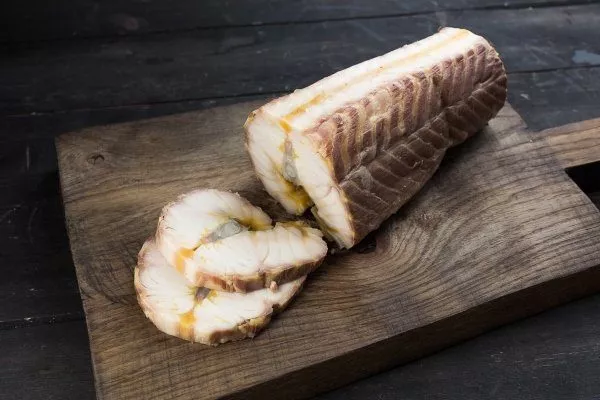
Consumption of sturgeon caviar and fish meat has a beneficial effect on human health and well-being:
- Sturgeon fat helps improve brain function and strengthen the cardiovascular systems.
- When consumed, fish fights stress and depression.
The most valuable caviar comes from stellate sturgeon, beluga sturgeon, and Russian sturgeon. These caviars vary in color and size.
Sturgeon caviar and meat itself can be contaminated with botulism pathogens, posing a danger to humans. Therefore, the fish is purchased only from reputable suppliers. A thorough visual inspection is performed upon purchase.
People suffering from diabetes and obesity should consume fish with caution to avoid the risk of deteriorating health.
Sturgeon fishing is illegal.
According to paragraph 1 of Article 258.1 of the Criminal Code of the Russian Federation, fishing for sturgeon, which is listed in the Red Book, is prohibited. Sturgeon species not listed as endangered are prohibited from being fished during spawning season (this applies to recreational fishing). However, news reports are increasingly appearing that sturgeon fishing (regardless of species) is prohibited almost everywhere. This indicates a critical decline in sturgeon populations worldwide.
Species of sturgeon listed in the Red Book
There are nineteen species of fish classified as sturgeon, and most of them are found in Russia. Sturgeon are most commonly found in the Caspian, Azov, and Black Seas, as well as in rivers in northern Russia and the cold waters of the Sea of Japan and the Sea of Okhotsk.
So, the sturgeon is listed in the Red Book of the Russian Federation:
- Amur;
- Atlantic;
- Sakhalin;
- Siberian;
- Russian.
Specimens of the sturgeon family such as sterlet, stellate sturgeon, ship sturgeon, kaluga, and beluga are also listed in the Red Data Book of Russia.
The International Union for Conservation of Nature (IUCN) also lists sturgeon as endangered fish:
- Blunt-nosed;
- Korean;
- Adriatic;
- Persian;
- Chinese;
- White.
What are the penalties for violators?
Only those sturgeon species listed in the Red Book fall under Article 258.1 of the Criminal Code. Catching these species is punishable throughout the year, not just during conservation measures such as spawning or migration.
If convicted, the sentence is up to two years of correctional labor, forced labor, or imprisonment for up to four years, and a fine of up to 1 million rubles.
For posting evidence of their catch of a sturgeon listed in the Red Book online, the offender is given up to 6 years in prison and a fine of up to 2 million rubles.
If the crime is committed by a group of persons, the fine will be up to 2 million rubles and imprisonment for 5-8 years.
Interesting facts
Sturgeon is one of the oldest and most popular fish on earth. Archaeological finds dating back to 3,000 BC indicate that even then, canned sturgeon caviar was successfully used by sailors. In Alexander the Great's army, sturgeon caviar served as fodder for soldiers.
In the 20th century, a French woman noticed that women processing sturgeon caviar, despite the hard labor, had beautiful, smooth skin on their hands. After this, the miraculous properties of black caviar were studied and a line of cosmetics was launched, which enjoyed incredible success. Today, such cosmetics are no longer produced due to the lack of profitability.
In the mid-20th century, an Atlantic sturgeon weighing 213 kilograms was caught in the Neva River, from which 80 kilograms of caviar were obtained.
Sturgeon is a unique fish, popular for its large size, elongated body, and striking appearance. All sturgeon species are highly sought after, as their nutritious meat is incredibly valuable. Enormous fortunes can be made not only from selling sturgeon meat, but also from selling sturgeon caviar.