
Many gardeners grow pumpkins in their gardens and harvest them in late summer. Some of the fruit can be eaten immediately, while others are stored. To enjoy the vitamin-rich fruits even during the winter, it's crucial to maintain proper storage conditions, regardless of whether the pumpkin is stored in a cellar or in an apartment. Let's explore these conditions further.
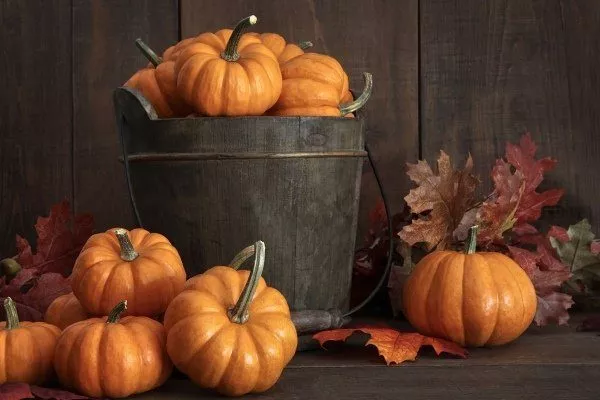
Which varieties are suitable for storage?
Not all pumpkin varieties can be stored over winter, so consider this when purchasing seeds. Mid-season and late-season varieties store best, especially if you plan to store them in a cellar or basement. Varieties with excellent shelf life include:
- KhersonA mid-season, drought-resistant, and heat-loving variety, this pumpkin has a dense gray skin and a slightly flattened shape. The skin has small spots and stripes. The flesh is orange, plump, and sweet.
- SlavutaIt's a late-ripening variety, so harvesting occurs in mid- to late September, depending on the weather. This pumpkin variety has a grayish-green skin, sweet flesh, and strong disease resistance.
- YaninaA mid-season variety with an oval shape, orange skin with small green spots, and a pleasant sweet flavor. It is resistant to powdery mildew.
- HyleaA mid-season muscat variety with a thin skin and yellowish-orange flesh with a pleasant taste.
- PolyaninA mid-season table variety. The fruits ripen into a cylindrical shape, with brown skin and sweet flesh, which is used in baby food.
- VitaminThis late-ripening butternut squash variety matures in 130 days and is best planted in warm summer conditions. The fruits are oval-shaped, with a yellow rind with green stripes and sweet orange flesh. They can weigh between 4 and 7 kg.
- Winter sweetThis mid-season variety has a gray, spotted rind. The fruit is round and slightly flattened. The flesh is orange, sweet, and pleasantly fragrant. It is immune to various fungal diseases and stores well. Fruits weigh from 6 to 12 kg.
- PearlA mid-late variety of butternut squash. Shaped like a pear, the flesh is even eaten fresh. Fruits grow to a weight of up to 5 kg.
- InterceptionA late-ripening variety that produces small fruits weighing up to 3 kg. Their shape can be elongated or shortened. They are excellent for baking and juicing.
- ZhdannaThis variety is considered mid-season. The fruit ripens to a large size, with bright orange flesh and a sweet taste. Fruits can weigh up to 8 kg. It has strong disease resistance and a long shelf life.
- Arabatskaya. A butternut squash with a growing season of 118-127 days. The fruits are cylindrical and resemble zucchini in appearance. They weigh between 9 and 20 kg. The rind is bright yellow, and the flesh is orange and sweet. This variety stores well in the cellar.
- GymnospermsA mid-early pumpkin variety that grows from 5 to 15 kg. It has a firm rind and yellow flesh. Stores well under optimal conditions.
- ✓ The sugar content of the pulp must be at least 8% to ensure natural preservation.
- ✓ The peel thickness should exceed 0.5 cm to protect against mechanical damage and diseases.
Experienced gardeners recommend choosing for winter storage varieties of butternut squash, as under optimal conditions they have a long shelf life—about 6 months. Popular varieties include Vitaminnaya, Zhemchuzhina, Perekhvatka, Vita, and Butternut.
Optimal storage conditions
Regardless of storage location, experienced gardeners identify universal conditions that allow pumpkins to remain fresh for as long as possible. These are as follows:
- lack of light (it is necessary to prevent the fruits from being exposed to direct sunlight);
- constant access to fresh air (the room must have good ventilation);
- comfortable temperature – +3…15°C (at low temperatures the fruits will freeze and their shelf life will be reduced by 3-4 months);
- moderate air humidity levels - no more than 75-80% (if the humidity is higher, cobwebs, mold, spots and other signs of damage will appear on the fruit peel, so they will have to be removed and the storage location changed).
The best place for storage is considered to be a cellar, but with the right approach, fruits can also be kept in a pantry, refrigerator, insulated balcony or garage.
Preparation for storage
First and foremost, it involves harvesting the pumpkins correctly. It's recommended to harvest the pumpkins in early September, before frost sets in. By this time, they should be firm and slightly dry. Harvesting should be done on a dry day, cutting the pumpkins off the stems.
It's recommended to clean the harvested fruit with a dry towel to remove any dirt and leave it in the sun for a few days to thoroughly dry the stems. This is crucial, as if the stems are damaged, the fruit will quickly spoil.
The dried fruits must then be sorted to select the best specimens for storage. They must be fully ripe, healthy, and intact, with stems attached. If the pumpkin has any damage, dark spots, or mold, it is not suitable for storage, even if the unsuitable parts are cut off, as even then the risk of contamination throughout the fruit is extremely high.
Pumpkins with a natural protective layer should be stored, as this repellent layer repels pathogens. Therefore, harvested pumpkins should not be washed or wiped with a damp cloth.
Where and how to store pumpkin?
In the cellar
The most reliable way to store pumpkins is to place them in a cellar, as this location typically maintains a constant temperature of around 5°C and moderate humidity of 75%. Of course, before storing the vegetable, the cellar will need to be prepared:
- completely get rid of last year’s harvest (you can only leave closed jars of pickled cucumbers and tomatoes);
- ventilate the room well;
- wipe the shelves;
- dry the floor;
- disinfect the area from parasites and mold (for this purpose, it is recommended to coat the walls and shelves with lime before placing vegetables in).
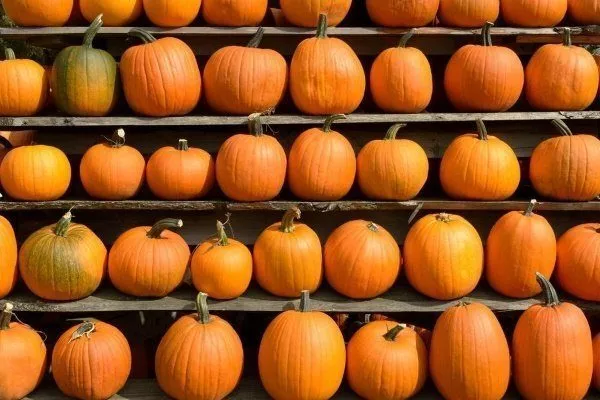
After preparing the room, you can begin planting the pumpkin, observing the following rules:
- place the fruits on shelves, since the temperature there is higher than on the floor;
- place dry paper or straw under the fruits;
- do not place fruits close to walls;
- be sure to point the stems of the fruits upwards;
- keep a distance of about 10 cm between the fruits, that is, do not place them close to each other;
- Place straw between the pumpkins.
After storing, it's important to regularly inspect the condition of the fruit. If any fruit is found to be spoiling, it should be removed from the cellar immediately.
- Inspect fruit every 2 weeks for signs of spoilage.
- If you notice condensation on the surface of the fruit, immediately increase ventilation in the room.
- Isolate fruits with initial signs of rot from the main mass to prevent spread.
If condensation appears on the pumpkin, it should be thoroughly wiped with a dry cloth, then the cellar should be ventilated and the ventilation system checked. Condensation usually occurs due to high humidity. If the water droplets are not dried, dark spots will form on the pumpkin, which will eventually lead to rot. As a preventative measure, quicklime can be placed in the cellar, as it absorbs excess moisture well.
In the apartment
Preserving pumpkins in an apartment during the winter is much more challenging, as it requires a lot of space, temperature control, and darkness. The task is significantly easier if you have a pantry. In this case, pumpkins can be stored according to the following guidelines:
- For best preservation, store the fruit in containers such as a cardboard box, wooden crate, box, or plastic container. Avoid using plastic or cellophane bags, as they will collect condensation, creating a breeding ground for harmful fungi.
- Place parchment paper or a thin layer of dry straw under and between the fruits. Change the bedding if it becomes damp.
- Place containers with vegetables on pantry shelves.
- Ventilate the room regularly and maintain an optimal temperature (up to 10-15°C).
- Inspect pumpkins from time to time to promptly remove fruits that are starting to spoil.
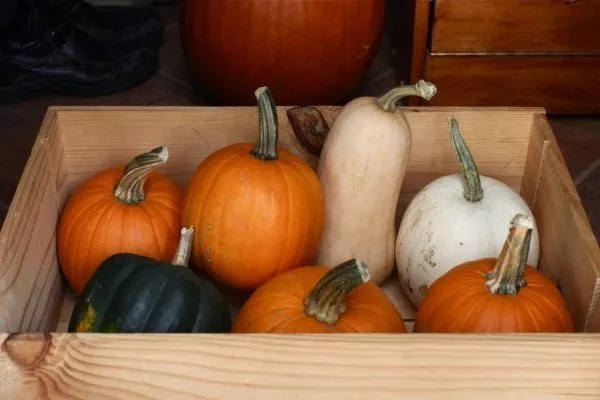
Even if the pumpkin is stored indoors, it should not be washed, as the peel should retain its natural coating, which acts as a kind of protection against spoilage.
If there is no pantry in the apartment, then you can allocate another space for storing pumpkin:
- A cool place near the windowsillPlace cardboard or a thick layer of paper under and between the pumpkins, with the stems facing up. During the day, the pumpkin will be exposed to direct sunlight, causing it to spoil quickly. To prevent this, cover the pumpkin with a breathable material, such as linen or cotton.
- Glazed balcony or loggiaCover the uninsulated floor with an old blanket and arrange the pumpkins on it, stem-side up, 10 cm apart. Cover them with a cloth to protect them from the sun. When temperatures drop, it's best to wrap the pumpkins in a cotton blanket. You can also build shelves or racks on the balcony, but be sure to paint them and whitewash them to prevent fungus. Afterward, you can store the pumpkins on these shelves.
- Under the bed in a cool roomAs a last resort, pumpkins can be stored under the bed. They shouldn't be placed on linoleum or cement, so it's best to place them on a piece of plywood. The pumpkins should still not touch each other. As with other storage methods, they should be placed stem-side up.
In the refrigerator
If the pumpkin has grown to a large size, it will need to be divided into 2-3 pieces. However, this will significantly reduce its shelf life at room temperature—to 3-4 days. You'll also need to dry the cut surface with a napkin and wrap the pumpkin in a cloth to protect it from sunlight.
Cut pumpkin will keep in the refrigerator for about 7 days if it's cut into pieces and carefully placed in clean plastic bags. To extend the shelf life to a month, you can wrap the pumpkin in foil, but in this case, you'll need to change the wrapping regularly and brush the pumpkin pieces with vegetable oil to prevent them from drying out.
The longest shelf life for cut pumpkin is in the freezer, but to prevent spoilage, it must be frozen first. Of course, much depends on the quality of the freezing process. This is done as follows:
- Wash the fruits, remove the peel and seeds, and then cut into small pieces.
- Place the chopped pumpkin in the refrigerator for 8 hours or overnight.
- Keep the cooled pumpkin at room temperature for about 1.5 hours.
- Dry the pumpkin in the oven for about 2 hours at a temperature of 50-60°C, and then cool.
- Place the pieces in special containers or freezer bags, removing excess air. To avoid having to defrost the entire pumpkin later, divide it into small portions (300-500 g each) per freezer container.
- Place the blanks in the freezer.
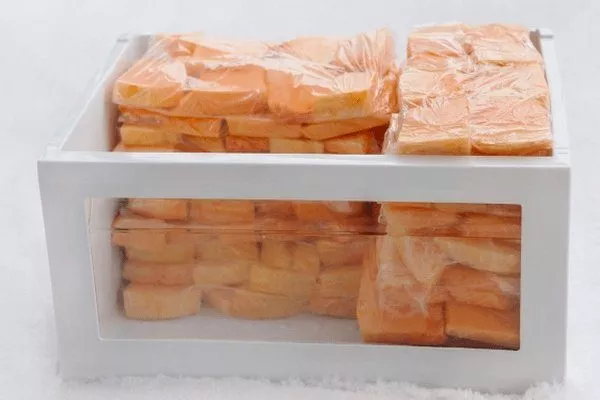
In this form, the pumpkin can be stored until the next season.
To enjoy the delicious flavor of this vitamin-rich vegetable, it needs to be defrosted properly. To minimize juice loss, remove the pumpkin from the freezer and place it on a shelf in the refrigerator. Complete defrosting will take about 10 hours. If you need to defrost the pumpkin faster, you can simply place it in the sink and eat it after 5 hours, but this will result in a drier pumpkin.
For the fastest possible defrosting, you can microwave the pumpkin using the "Defrost" setting. If you don't have a microwave, you can simply drop the bag of pumpkin into a bowl of hot water. However, be aware that such methods can damage the flesh.
How to store?
In dried form
To simplify pumpkin storage, you can dry it. This will take up less space and prevent it from spoiling. Drying can be done in a regular oven or a special electric dehydrator. This process involves several steps:
- Wash the pumpkin skin, then separate the pulp and remove the seeds.
- Cut the pumpkin into small pieces, about 1 cm thick.
- Line a baking sheet with parchment paper and spread the pumpkin pieces in a thin layer on it.
- Preheat the oven to 60°C and dry the pumpkin for 5 hours. Turn the oven off periodically. The temperature should not exceed 80°C. This procedure is not necessary if you are using an electric oven, which maintains a constant temperature.
- Remove well-dried pieces and leave to cool.
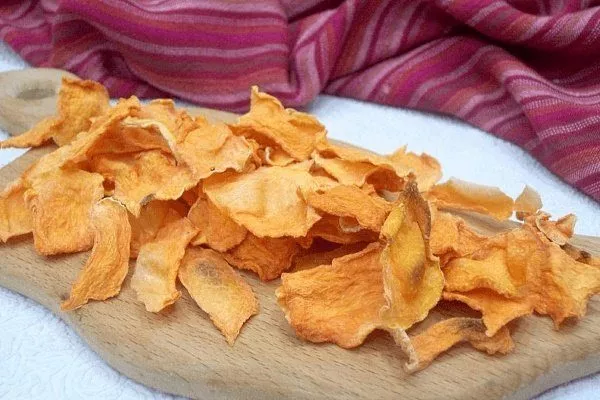
Dried pumpkin must be stored in air-tight containers.
In brine
This method will allow you to preserve pumpkin until spring, so you can enjoy your favorite vegetable all winter long. Here's how to prepare pickled pumpkin:
- Wash the rind, then cut the fruit into slices and remove the seeds.
- Place the pieces into sterilized jars.
- Prepare the brine: dissolve 3 tablespoons of salt in 1.5 liters of cooled boiled water.
- Pour the brine into the jars with pumpkin, filling them to the very edges of the container, and cover with a plastic lid.
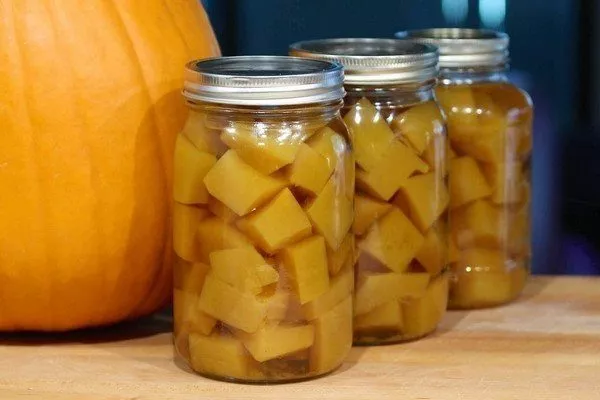
It is recommended to store jars of pumpkin in a cellar or refrigerator.
Pickled
Pickled pumpkin tastes like canned pineapple. This method of preserving allows you to enjoy your favorite vegetable all year long and beyond. It can be served as a side dish with meat or as a standalone dish.
For marinating you will need the following ingredients:
- pumpkin – 1 pc.;
- water – 1.5 l;
- citric acid – 1 heaped teaspoon;
- sugar – 150 g;
- salt – 1 tbsp;
- lemongrass – 7 leaves;
- Rhodiola rosea – 7 g.
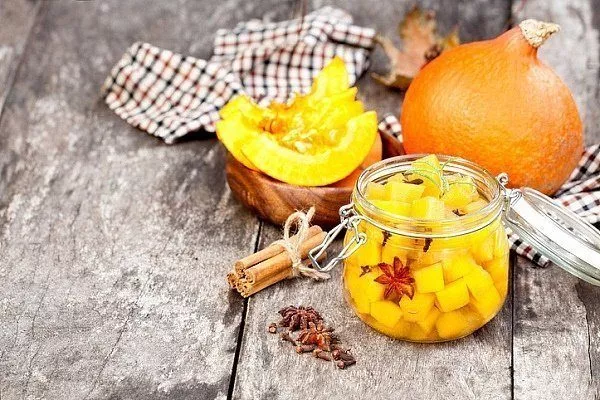
To prepare the pickled product, you will also need a pre-sterilized glass jar.
Pumpkin is marinated as follows:
- Wash a medium-sized pumpkin, scoop out the pulp, and remove the seeds. Cut the pulp into small cubes.
- Boil the pumpkin for about 5 minutes, and then throw the boiled pieces into a sterilized jar.
- Prepare the dressing by boiling water with the addition of sugar, salt, citric acid, lemongrass leaves and Rhodiola rosea powder.
- Pour the filling into the jar with the pumpkin.
- Roll up the jar with a metal lid and turn it upside down for a while.
Store pickled pumpkin in a cool place, preferably in a cellar.
How long can you store pumpkin?
Pumpkin can be stored for different periods of time, depending on the conditions and processing methods:
- Fresh pumpkin, cut into pieces, can be stored in the refrigerator for 7 to 30 days;
- in an apartment, the storage period is about 4-6 months, but there are pumpkin varieties and individual specimens that can be stored for up to 12 months;
- If you place the vegetable on shelves in the cellar, you can keep it in this form until spring;
- Frozen and canned pumpkin can be stored for 1 year;
- Dried pumpkin can be stored in a well-sealed container for 1.5 to 2 years.
Storage errors
Many gardeners who grow their own pumpkins make a number of mistakes that shorten their shelf life. These include:
- harvesting unripe vegetables, which quickly become moldy and begin to rot;
- watering the pumpkin a week before harvesting (if the fruit is damp, it will start to spoil quickly);
- sending fruits for storage in a cellar without first drying them in the sun and in a dry place;
- storing pumpkins in a cellar on shelves with damp wood or on a cement floor;
- storing pumpkins in the same cellar with apples, which produce ethylene.
Video: How to properly store pumpkin?
The following video explains how to store pumpkins to prevent them from becoming moldy or rotting:
How can you preserve pumpkins so they last practically until the next harvest? The answer can be found in the video below:
Pumpkin is a healthy dietary product that can be preserved for the winter, both fresh and processed. To preserve all the beneficial properties of fresh pumpkin, it's best to store it no longer than 6 months. However, it's important to note that the optimal shelf life for pumpkin is considered to be 2-3 months.