
There are a wide variety of pumpkins, but all edible fruits are roughly divided into three groups: hard-skinned, large-fruited, and butternut. Butternut squash is considered to have the most delicious flesh, characterized by a mild nutmeg flavor, thin skin, and a record-breaking sugar content (up to 15%). Let's find out which varieties are classified as butternut squash and how to grow them.
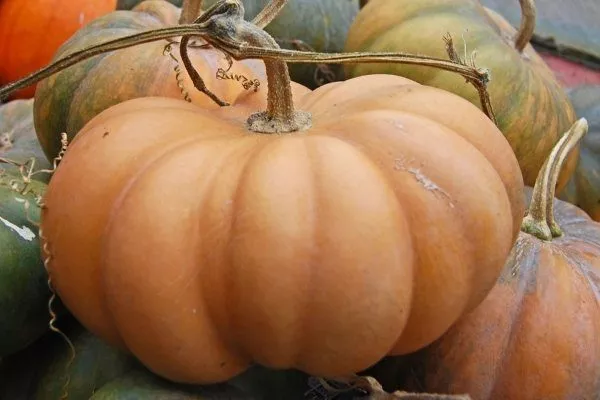
What kind of pumpkin is this?
Butternut squash, or moschata, is a member of the Cucurbitaceae family, native to the Americas. It differs from other squash species in the following ways:
- It belongs to late-ripening varieties, therefore, due to a lack of heat when grown in the middle zone, it may not produce any fruits or even ovaries;
- fruits can reach enormous sizes, up to 100 kg;
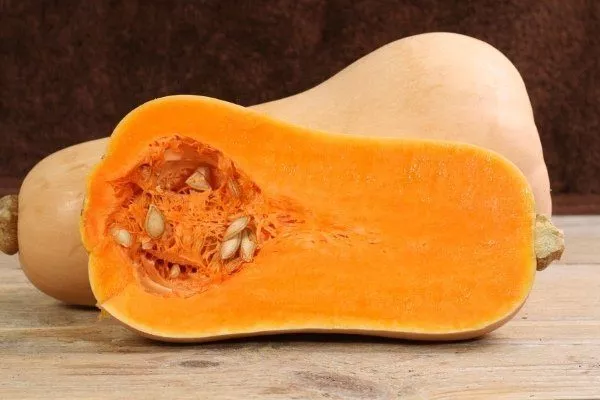
- the shape of the fruit is usually not round, but oblong, and resembles a zucchini, which is somewhat narrowed in the middle and thickened at the flowering site;
- The skin of the fruit can be smooth or ribbed, has a bright orange or yellowish-brown color and green longitudinal stripes, but is very thin, so it can be easily removed even with an ordinary knife;
- The fruits have a relatively small family nest, but contain a lot of juicy, fibrous, orange-colored pulp, which has a sweet taste and a slight muscat aroma.
In terms of taste, butternut squash occupies a leading position in its family.
Energy value and composition
Butternut squash is a versatile dietary product that's easily digestible. 100 grams of pulp contains up to 45 kcal, with the following energy value:
- proteins – 1 g;
- fats – 0.1 g;
- carbohydrates – 9.69 g;
- dietary fiber – 2 g;
- water – 86.41 g.
It is important to note that the fruits contain only polyunsaturated fats, meaning they do not contain cholesterol.
Pumpkin is also valued for its high content of vitamins, mineral salts, pectin and carotene, which is 2-3 times more than in carrots.
The exact vitamins found in the fruits of this heat-loving plant can be seen in the table:
| Vitamin | Content |
| B1 (thiamine) | 0.1 mg |
| B2 (riboflavin) | 0.02 mg |
| B3 (niacin equivalent, vitamin PP) | 1.2 mg |
| B5 (pantothenic acid) | 0.4 mg |
| B6 (pyridoxine) | 0.15 mg |
| B9 (folic acid) | 27 mcg |
| C (ascorbic acid) | 21 mg |
| K (phylloquinone) | 1.1 mcg |
| E (alpha-tocopherol) | 1.44 mg |
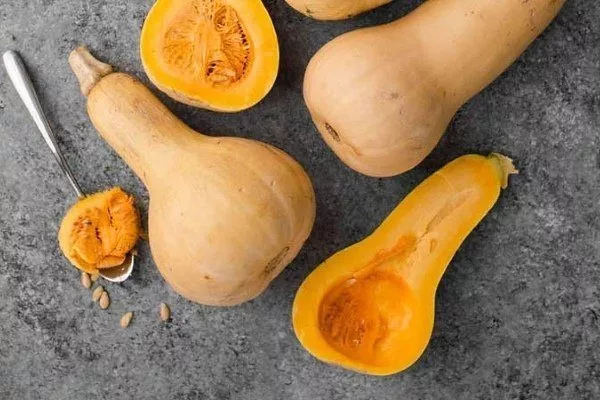
Pumpkin contains no less amount of minerals, the list of which is presented in the following table:
| Mineral substance | Content |
| Iron | 0.7 mg |
| Potassium | 352 mg |
| Calcium | 48 mg |
| Magnesium | 34 mg |
| Manganese | 0.2 mg |
| Copper | 0.07 mcg |
| Sodium | 4 mg |
| Selenium | 0.5 mcg |
| Phosphorus | 33 mg |
| Zinc | 0.15 mg |
Beneficial properties
Thanks to its rich composition, regular consumption of butternut squash has a positive effect on the human body:
- cleanses the body of toxins, cholesterol and waste products, helps in getting rid of fat deposits (for this reason, pumpkin can be safely included in the diet when fighting obesity);
- normalizes metabolism and supports the functioning of the gastrointestinal tract;
- strengthens the immune system, saturating the body with vitamins and nutrients;
- has a choleretic and diuretic effect, helping to remove heavy metal salts (in this regard, pumpkin is recommended for use in liver and kidney diseases);
- improves the condition in diseases of the urinary system, including promoting the dissolution of stones in the bladder;
- improves visual acuity due to the high content of carotene;
- slows down the aging process when consumed regularly, as it saturates the body with vitamin K;
- prevents cardiovascular diseases and has a beneficial effect on the condition of blood vessels and blood, since it contains potassium (for this reason, pumpkin helps get rid of anemia);
- relieves inflammation in the liver and prostate gland.
To reap the benefits of pumpkin, you can eat it stewed, baked, boiled, or even raw. For medicinal purposes, it is recommended to drink 1/3 cup of pumpkin juice or a decoction made from the plant's shoots several times a day.
There is only one case where butternut squash should not be included in the diet: in case of individual intolerance.
The best varieties of butternut squash
The butternut squash group includes many varieties, which can differ in shape, size, ripening time, and many other characteristics. The most popular varieties include the following:
| Name | Growing period (days) | Fruit shape | Fruit weight (kg) |
|---|---|---|---|
| Vitamin | 130 | Wide oval or cylindrical | 4.5-6.8 |
| Prikubanskaya | 91-136 | Pear-shaped | 2.3-4.6 |
| New product | 110-115 | Elongated-cylindrical or pear-shaped | 5-6 |
| A blade of grass | 115-120 | Not specified | 4-4.8 |
| Pearl | 115-130 | Round-cylindrical | 2.6-5.6 |
| Muscat de Provence | 110-115 | Rounded and slightly flattened | 4-8 |
| Guitar | 110-120 | Elongated, guitar-like | 2-4 |
| Trombone | 110 | Twisted | 6-8 |
| Chudo-Yudo | 120 | Oval | 6-8 |
| Barbara F1 | 50-60 | Cylindrical with a thickening at one end | 2-6 |
| Peanut butter | 85 | Pear-shaped | 4 |
| Butternut butter | 125-130 | Pear-shaped | 0.5-0.7 |
Vitamin
The growing season is approximately 130 days, making it considered a late-ripening crop. The long vine produces fruits that are wide, oval, or cylindrical, weighing between 4.5 and 6.8 kg. The skin is thin, and the edible, bright orange portion reaches 10 cm in thickness. It has a characteristic brown color and is covered with small flecks of yellow and green. The flesh has a sweet flavor and a crisp yet tender texture.
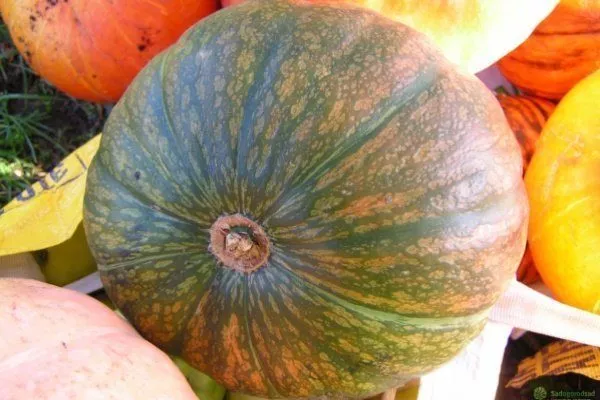
Prikubanskaya
The growing season ranges from 91 to 136 days. The fruit is pear-shaped and weighs on average 2.3 to 4.6 kg. The flesh is approximately 4 cm thick, with a thin skin and a creamy tint when cut. The flesh is red-orange, tender, and sweet, but closer to the stem, it becomes firm and dense. The pumpkin can be stored for up to three months after harvest. This variety was developed at the All-Russian Rice Research Institute in Krasnodar.
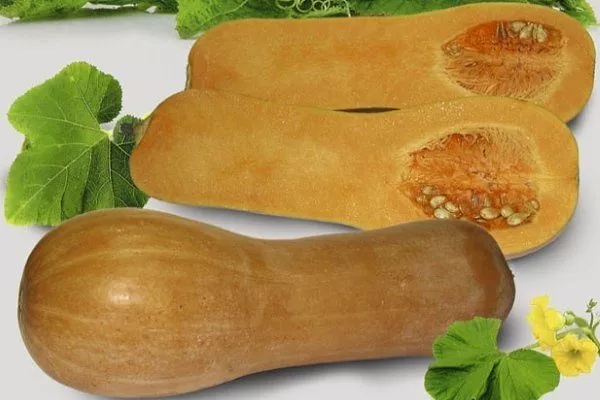
New product
The growing season is approximately 110-115 days. The fruits are elongated-cylindrical or pear-shaped, slightly widening near the flower head. They can weigh up to 5-6 kg. The skin is thin, orange, and covered with dark orange spots and stripes. The flesh is medium-firm, sweet, and juicy. The average yield of this variety is 50-70 tons per hectare. This new variety has a long shelf life of 6-8 months.
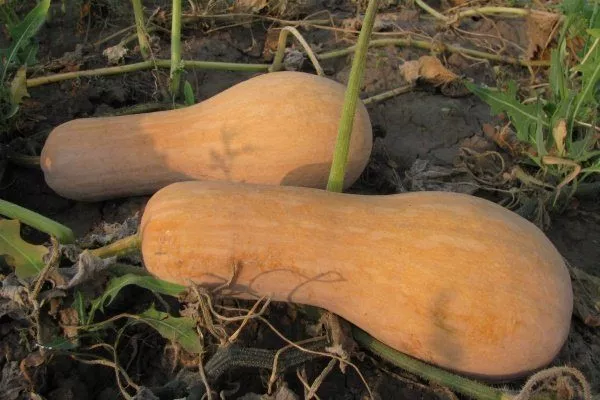
A blade of grass
The growing season is 115-120 days. The average fruit weighs 4-4.8 kg. The yield is 25 tons per hectare. Unlike many of its peers, Bylinka has a thick skin ranging from light to dark gray (which adjusts during full ripening). The flesh is traditionally bright orange, thick, firm, sweet, and juicy, but without the characteristic pumpkin flavor. This pumpkin has a long shelf life—right up until the following season. This variety was developed by the Kherson breeder Yuzhnaya GSOS.
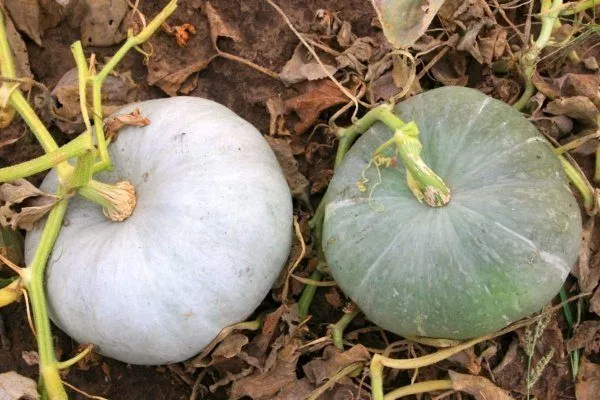
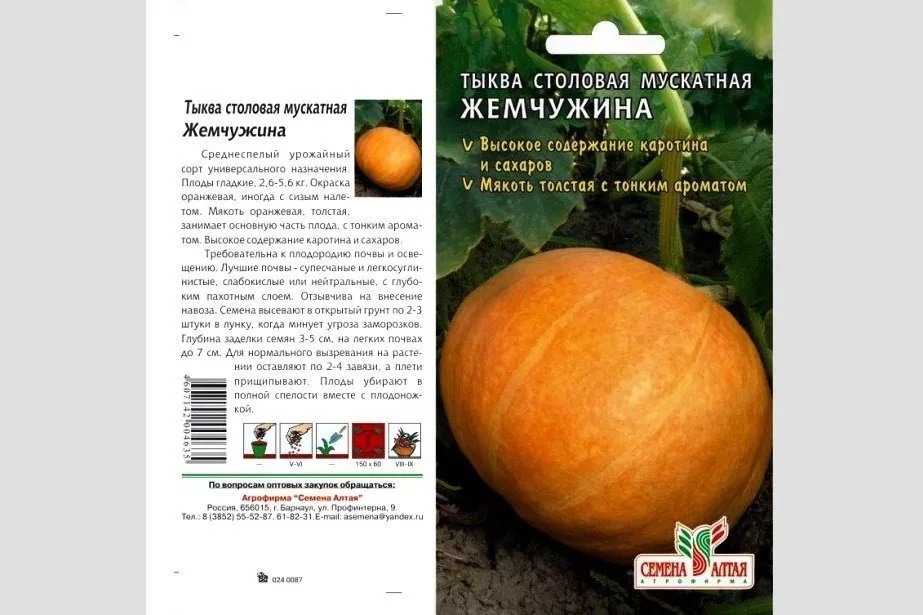
Pearl
The growing season averages 115-130 days. The fruits weigh approximately 2.6-5.6 kg and reach 50 cm in length. Their shape is round-cylindrical, but round or oval pumpkins with a distinct ribbed texture are also found. The skin is thin and bright orange, but during ripening, the hue can change from gray-green to greenish-orange. The flesh is thick and juicy, with a characteristic orange-yellow hue. The plant itself is quite vigorous, producing 4-7 lateral shoots.
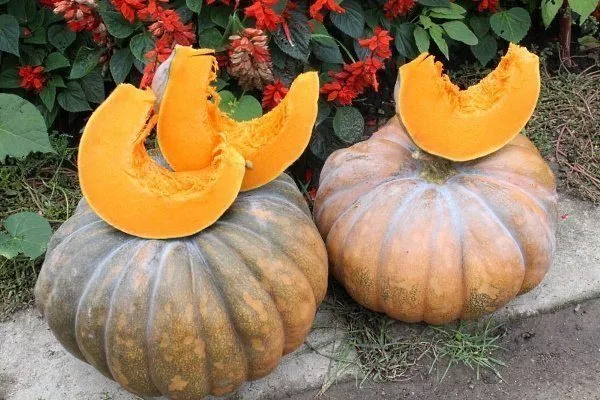
Muscat de Provence
The growing season is 110-115 days, making this a mid-season variety. Fruits average 4 kg in weight, but can reach up to 8 kg if the seeds are sown widely and the soil is properly fertilized. The fruits are round and slightly flattened. The skin is orange-brown, thin, and ribbed. The flesh is sweet and aromatic, rich in sugar and carotene. This French variety has a shelf life of 4 months, as it is resistant to many diseases.
Guitar
The growing season lasts from 110 to 120 days. The fruits are distinguished by their elongated shape, reminiscent of a guitar. They average 2-4 kg in weight, but can sometimes reach 8 kg. Each pumpkin is approximately 70-80 cm long, but in fertile soil it can reach up to 1 m. The skin is thin and smooth, and when ripe, it turns a bright orange. The flesh accounts for approximately 90-95% of the fruit, making this variety stand out from other varieties.
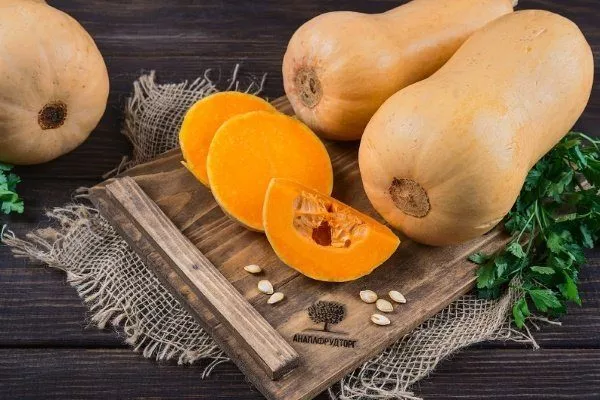
Trombone
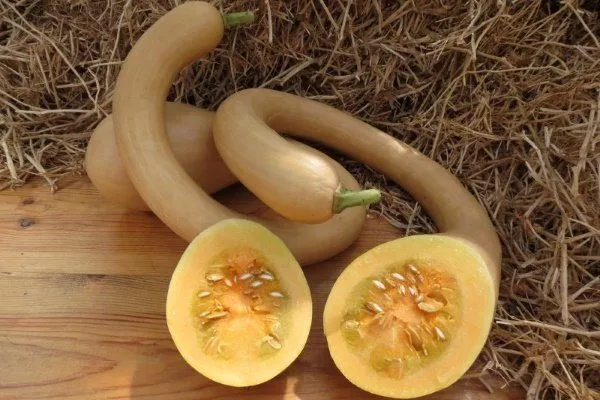
The growing season is approximately 110 days. The fruits have a unique twisted shape and grow up to 50 cm in length, making them often used to decorate country houses. They average 6-8 kg in weight, but can reach 18 kg in favorable soil. The skin is thick and orange or green. By the time it's fully ripe, the flesh turns bright orange and is very aromatic. This pumpkin can be stored for over a year. This variety was developed by Italian breeders and has several names, including "Albenga Trumpet" (Albenga is a city in Italy), "Tromboncino" (little trumpet), and "Zucchetta."
Chudo-Yudo
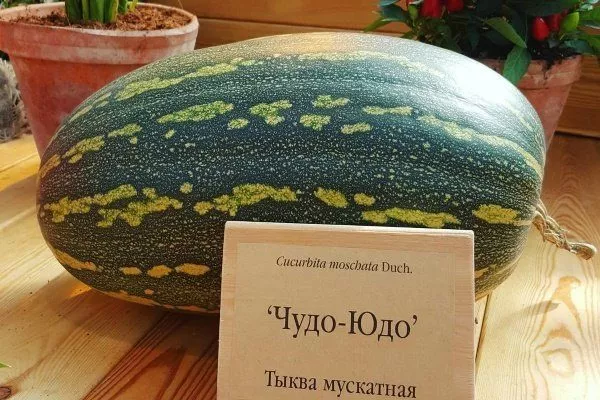
The growing season lasts up to 120 days. The fruits are oval and weigh up to 6-8 kg. The skin is orange, with characteristic mesh patterns and a gray bloom. The flesh is bright orange with red veins and can be eaten fresh, as it is very tasty, containing high levels of carotene (25.5%) and sugar (4.25%).
Barbara F1
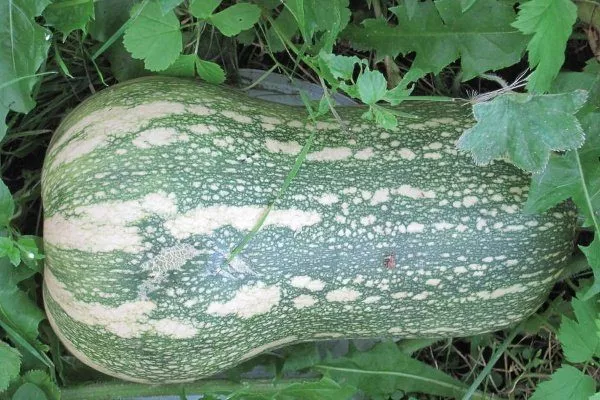
The growing season is 50-60 days, making it an early-ripening, versatile hybrid suitable for growing in a variety of regions. If the pumpkin is to be stored, it's best to harvest it 85-90 days after germination. The fruits weigh approximately 2-6 kg, but in fertile soil this figure can reach 15 kg. They are cylindrical, thickened at one end. The skin is orange, but covered with dark green longitudinal stripes. The flesh is sweet and tasty, medium thick, and light in color.
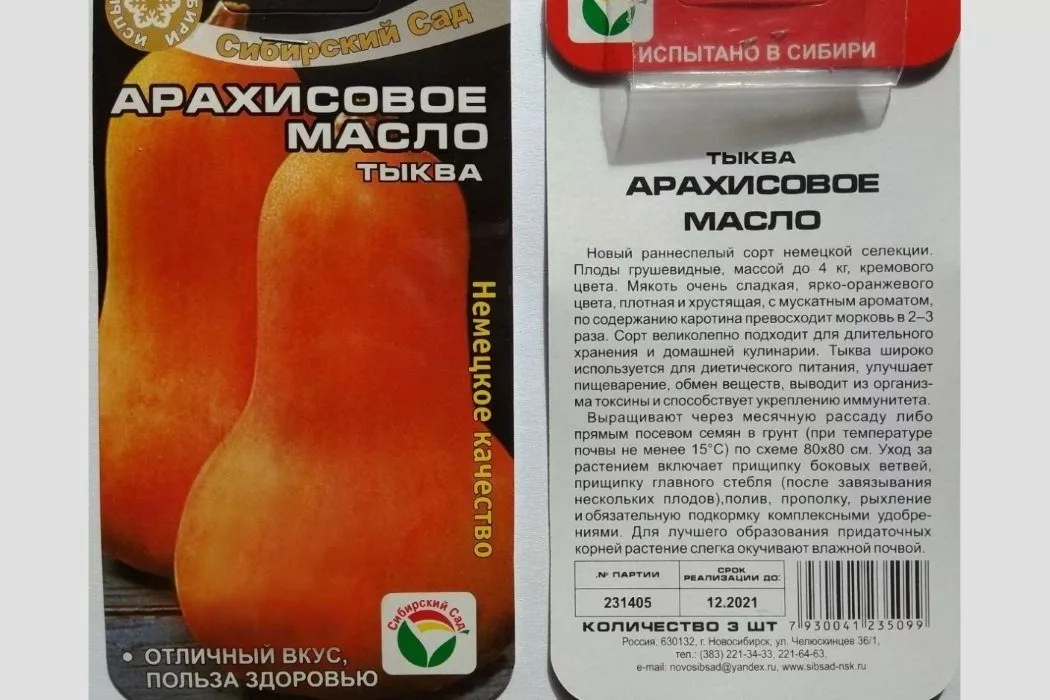
Peanut butter
The growing season is approximately 85 days, making it an early-ripening variety developed in Germany. The fruits are pear-shaped and weigh up to 4 kg. The skin is a pleasant creamy color, and the flesh is bright orange. It tastes sweet and crisp with a pleasant nutmeg-peanut aroma. The fruit can be stored for 6-12 months.
Butternut butter
The growing season lasts 125-130 days, making this variety considered mid-early. This pumpkin is a versatile fruit, weighing 500-700 grams, with up to 30 fruits growing on a single plant. This variety is unique in that a piece can be cut off and used as needed during growth, while the rest of the pumpkin will not rot, but will develop a new skin and continue growing. The pumpkin is pear-shaped and creamy beige. The flesh is bright orange, dense, buttery, and has a rich, nutty flavor. This variety was bred by the Massachusetts Agricultural Experiment Station by crossing wild African and butternut squash.
Many varieties of butternut squash are heat-loving, but you can also choose universal specimens that are adapted to colder climates, for example, the early-ripening hybrid Barbara F1.
Planting methods
Butternut squash is primarily planted using seedlings, which is especially useful in cool temperate climates. If the plant is grown in tropical, subtropical, or subequatorial climates, it can be planted directly into the ground. Each method should be considered separately.
- ✓ The minimum soil temperature for planting seeds or seedlings should be at least +18°C.
- ✓ The distance between plants should be 60-100 cm to ensure sufficient space for growth.
Planting through seedlings
Experienced farmers prefer to grow pumpkins from seedlings, regardless of the region's temperature. The first few days are crucial for developing the flavor of the future fruits, so it's crucial to avoid exposure to adverse weather conditions. Furthermore, growing pumpkins from seedlings can speed up the fruiting process.
Seedlings should be prepared according to standard agricultural practices 20 days before transplanting into open ground, that is, in April or May. Follow these steps:
- Seed preparationSoak the seeds for 3-4 hours in hot water (about 45°C), then wrap them in a damp cloth and keep them at room temperature until they sprout (usually 2-3 days). This preparation will speed up germination and protect them from pests. When growing butternut squash, experienced gardeners also recommend hardening the seeds to increase their cold resistance. For example, already sprouted pumpkin seeds should be kept in the same damp cloth on the bottom shelves of the refrigerator for 3-5 days. Before sprouting, the seeds can be sprinkled with ash as a micronutrient fertilizer.
- Selecting a containerPumpkin seedlings don't transplant well, so it's recommended to plant the seeds in individual peat pots no smaller than 6x6 cm. Some gardeners grow seedlings in homemade paper pots. These can be easily cut without damaging the plant's root system. In a pinch, regular wooden boxes can be used.
- Substrate preparationTo prepare a soil mixture for seedlings, mix 2 parts peat, 1 part each of rotted sawdust and humus. Add 1 teaspoon of nitrophoska per 1 kg of substrate as fertilizer. Mix the mixture thoroughly. It's worth noting that gardeners can also purchase ready-made soil from the store—general vegetable soil or soil recommended for cucumbers.
- Sowing seedsFill the pots with the substrate, then water them generously and prepare small holes in which to plant the seeds. The optimal planting depth is 4-6 cm. If the seedlings are grown in boxes, sprinkle a 3-4 cm layer of sawdust on the bottom of the container before adding soil.
The seedling containers should be moved to a well-lit windowsill, preferably a south-facing one. This way, you can grow strong seedlings without additional lighting. Proper care for pumpkin seedlings is equally important, which includes the following:
- Before the emergence of seedlings, cover the surface of the containers with seedlings with glass or film to create a greenhouse effect with a daytime temperature of +18…+25°C and a nighttime temperature of +15…+18°C;
- after the emergence of seedlings, which occurs approximately on the 6-7th day, reduce the daytime temperature to +15…+18°C and the nighttime temperature to +12…+13°C, and after 5-7 days raise it again, but not as intensely as at first;
- Water the seedlings regularly but moderately to prevent them from drying out or becoming over-watered;
- On the 7th to 10th day of emergence, apply fertilizer - nitrophoska (15 g per 10 l of water) or a mullein solution (pour hot water over the mullein in a ratio of 1:10, leave for 3-4 hours, dilute again in a ratio of 1:5 and water the young plants);
- A week before planting in open ground, harden the plants by gradually reducing the daytime temperature to +15…+16°C and the nighttime temperature to +13…+14°C.
The seedlings can be transplanted into open ground after 2-3 true, bright green leaves appear. By this time, the seedlings will have grown to 15-20 cm. For their cultivation, choose sites where the following crops were previously grown:
- potato;
- legumes;
- tomatoes;
- any types of cabbage;
- onion.
Pumpkins should not be transplanted into soil previously occupied by other plants such as zucchini, cucumbers, and melons. Furthermore, the site should be well-drained, dry, warm, and protected from wind.
The transplant itself is carried out according to the following rules:
- In the fall, dig up the beds and fertilize them: add 3-5 kg of humus, 200 g of lime, and 30-40 g of complex mineral fertilizers per 1 square meter.
- In late May or early June, when the soil has warmed to at least 18°C, prepare planting holes at least 5 cm deep in cloudy weather or in the evening. The distance between holes should be 60-100 cm.
- If the seedlings were grown in peat pots, carefully break up their thick outer walls. If the seeds were sown in containers, the resulting seedlings should be removed with a lump of soil to avoid damaging the delicate roots.
- Plant young plants in prepared holes and water generously.
- Cover the seedlings with plastic to protect them from frost. Once temperatures return to normal, the cover can be removed and then used only during cold nights.
A properly planted pumpkin produces large and heavy fruits, with 2-3 ovaries ripening on each plant.
Sowing in open ground
In warm southern regions, seeds can be sown directly into open ground. This should be done in the first ten days of May under plastic cover. The optimal temperature for growing the crop is between 20 and 25°C.
Planting should be done in a well-lit area protected from shade and wind. Keep in mind that soil rich in groundwater is unsuitable for growing melons, as their root system extends deep underground and can simply die from excess moisture.
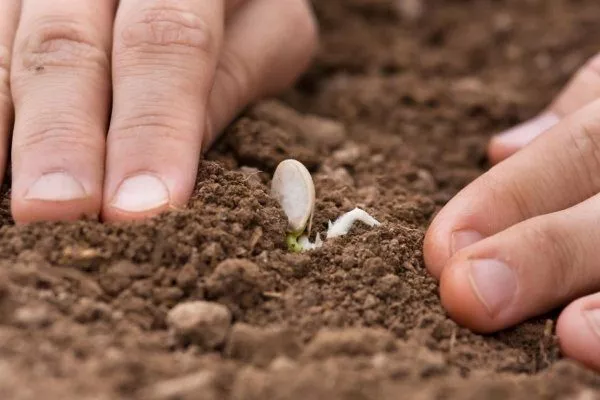
The seeds prepared in the manner described above should be sown along the bed at a depth of 5-6 cm and at a distance of 80-90 cm. Place two seeds in each hole, and when the seedlings emerge, remove the weaker plant by the roots.
Caring for butternut squash
Regardless of the planting method, the plant requires proper care, which involves the following measures:
- Watering and looseningPumpkins should be watered generously with warm water (around 20°C), with the optimal amount being 5-6 liters per plant or 15-20 liters per square meter of planting area. This is enough to provide the pumpkin with nourishing moisture while preventing the fruit from cracking. Until fruit set, water once a week, and then every two weeks. After each watering, be sure to loosen the soil around the plants.
- Top dressingHelps increase the variety's yield and improve fruit quality. The first nitrophoska application is administered after the fifth true leaf has formed. The second application, with a mullein solution, is administered during the vine formation phase. Additionally, during flowering, pumpkins can be watered with warm water supplemented with wood ash.
- Weeding and pinchingBefore vines form, it's crucial to remove weeds promptly. Once the vines have formed, this will no longer be necessary. However, it's not recommended to move any nodes or vines that have formed, especially during flowering, as this can damage the flowers and delay fruit development. It's equally important to remember to pinch out the ovaries.
- Protection from pests and diseasesAs a preventative measure, the plant should be treated with biofungicides or growth promoters, including Immunocytophyte, Krezacin, Silk, and Epin. Additionally, the bushes can be sprayed with Acrobat or Kurzat.
Despite preventative measures, pumpkin can be affected by various diseases and pests:
- Powdery mildewThis disease is triggered by sudden changes in day and night temperatures. Spots appear on the fruit, and the leaves turn yellow, dry out, and fall off. To prevent powdery mildew, cover the plant with plastic at night. Watering the plant thoroughly and regularly is equally important.
- AnthracnoseThis disease most often affects pumpkins grown indoors or in greenhouses. It is less common in open-ground plants. Anthracnose manifests itself as a symmetrical attack on the leaves, followed by the stems and fruit. Pink-stained ulcers form on the surface. The plant dies completely when the disease attacks the roots. Anthracnose develops in conditions of excessive humidity. It can also appear during hot summer periods when the fruit is overwatered.
- AscochytosisIt attacks above-ground plant parts when the soil is excessively wet or when frost occurs. Black spots appear on leaves, stems, and fruits. To prevent the disease from spreading, seedlings should be covered with plastic film.
- Melon aphidThese are insects that suck the vital juices out of the plant, causing the leaves to dry out due to a lack of moisture and nutrients. To combat aphids, you can use specialized products or folk remedies such as chamomile or wormwood infusions. Aphids can be discouraged from pumpkins by using potato or tomato tops or ash.
- SlugsThese pests can ruin the harvest, as they lay eggs in the soil and then feed on the plant at night, making holes in the fruit. To combat slugs, it's worth fencing the area with burlap and even planting burdock there. During the day, slugs will gather under the burlap, and in the evening, they should be exterminated using ashes.
By following all the recommendations for caring for butternut squash, you can get an excellent harvest of aromatic fruits from mid-August to the end of September.
Harvesting and storage
The harvest can be completed in mid-August or before the autumn cold sets in. To do this, carefully cut the fruit from the stem, without damaging the bark and leaving a stalk up to 5 cm long.
- ✓ The fruit acquires a bright orange color and a characteristic muscat aroma.
- ✓ The skin becomes thin and easily separates from the pulp.
The harvested fruits should be dried in a warm place for 14 days and then stored in a dry place. If the pumpkin is to be consumed immediately after harvesting, it should be given a few days to fully ripen, develop its distinctive flavor, and develop an orange color.
Butternut squash is a dietary food that's easily digestible, helps strengthen the immune system, and alleviates kidney and liver conditions through its choleretic properties. Furthermore, butternut squash has a distinctive flavor, making it ideal for eating fresh or using in savory dishes.