
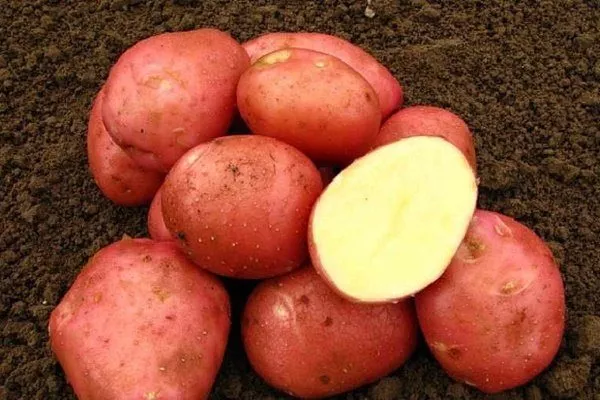
The "Vishenka" potato is a remarkable variety, captivating with its smooth tubers and pinkish skin. Its official name is Bellarosa. Gardeners appreciate it for its low maintenance, ease of growing, and ease of care. This article provides helpful tips on planting and harvesting potatoes.
"Vishenka" originated in Germany, where the potato was grown specifically for a breeders' exhibition. After achieving good results, producing a disease-resistant and early-ripening plant, many research institutes began describing the variety, publishing articles in scientific journals. Thus, the variety became very popular. In 2006, it was added to the State Register of Potatoes of the Russian Federation.
Description and characteristics of "Cherry"
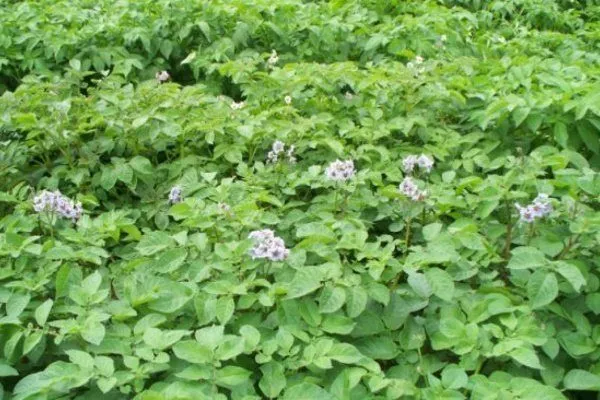
A distinctive feature of the "Cherry" potato is its height—the upright bush reaches up to 75 cm. It has large, dark green leaves with wavy edges. The tubers are round or oval, with a smooth, sometimes slightly rough, surface. When in bloom, the flowers have a reddish-purple hue.
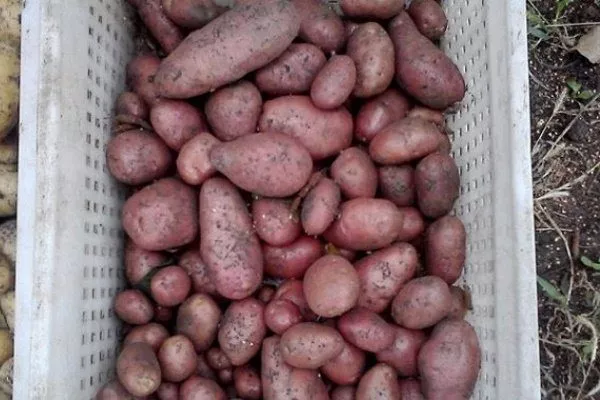
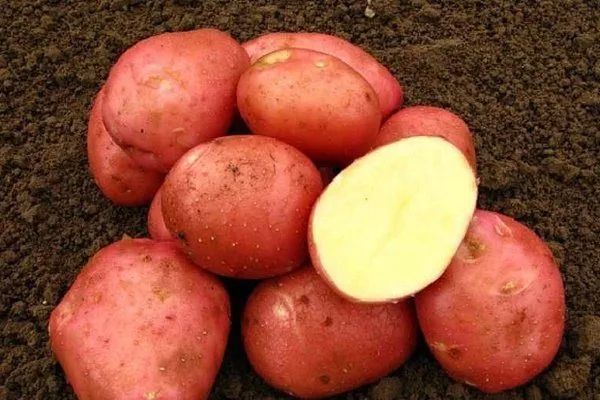
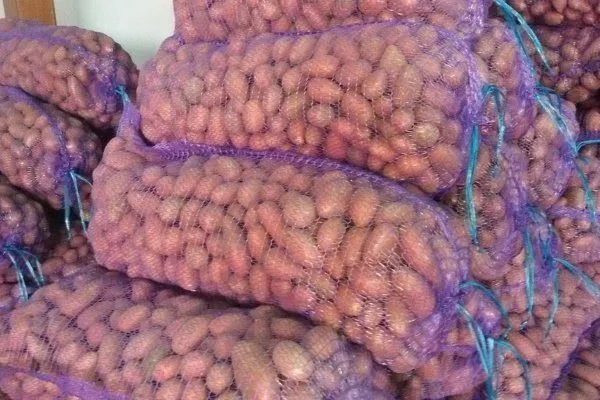
The weight of a single tuber varies from 115 to 210 g, occasionally reaching 800 g. Gardeners can harvest up to 10 potatoes from a single plant. The flesh of the root is firm, creamy or yellowish, and the skin is pink. When cooked, the potatoes lose their shape and become overcooked, but do not darken. They contain 12-16% starch and have a sweet taste.
This variety is considered early maturing, as the potatoes are dug up within 60 days of planting. Gradually, the potatoes can be dug up after just 45 days. Growing "Vishenka" in southern regions provides vegetable growers with a double harvest per season. The first harvest takes place in early July. As soon as the bed is cleared, the potatoes are planted again. The second harvest takes place in early September.
"Vishenka" is a variety known for its high yield. Gardeners harvest approximately 400 centners of potatoes per hectare. The potato is also drought-resistant, making it suitable for growing over large areas. There's no need for specific soil conditions—potatoes grow in virtually any soil, except for heavy clay soil.
Despite being an early-ripening variety, the "Vishenka" variety is noted for its excellent and long-lasting shelf life. It has a shelf life of 93%. The potato is resistant to mechanical damage. At harvest, the yield is 99%.
| Detailed characteristics of the variety | |
| Name | Cherry (Bellarose) |
| Ripening period | 50-60 days |
| General characteristics | an early table variety with excellent taste |
| Productivity | up to 400 c/ha |
| Number of tubers in a bush | 8-10 |
| Weight of commercial tubers | 120-200 g |
| Starch content | 12-16% |
| Shelf life | 93% |
| Pulp color | light yellow |
| Peel color | pink |
| Disease resistance | has increased resistance to many diseases |
| Preferred growing regions | Suitable for all types of soil, recommended for the Central Black Earth region |
This potato variety typically lacks flowering, but not always. Many gardeners, upon noticing this, worry, as with other varieties it's considered a sign of disease or reduced yield. But in this case, the reason is the early maturity. The tubers grow very quickly and, accordingly, ripen very quickly.
Features of cultivation
To get a good harvest, it is important to follow certain recommendations, know how to properly prepare the site, treat the tubers before planting, and care for the grown plants.
| Condition | Recommendation |
|---|---|
| Soil temperature at planting | Not below +8°C |
| Planting depth | 10 cm |
| Distance between plants | 30-40 cm |
| Distance between rows | 70-90 cm |
| Lighting | Full sun |
Preparing soil and seeds
Preparation begins with site selection. A sunny location with low wind resistance is preferred. In the fall, the site is loosened and the soil is fertilized with humus or compost at a rate of 5 kilograms per square meter. In the spring, the site is re-dug and fertilized.
The key is not to overdo it with fertilizing. Although plants respond well to fertilizer, they will either grow and develop faster, or the tubers will rot.
Potatoes deplete the soil, so crop rotation is important. It's best to plant potatoes in areas previously grown by the following crops:
- onion;
- garlic;
- beet;
- cucumbers;
- legumes;
- pumpkin;
- cabbage.
- ✓ No damage or signs of disease
- ✓ Tuber size is medium (50-80 g)
- ✓ Presence of healthy sprouts
Preparation of planting material begins several weeks before planting. For this, tubers are placed in wooden boxes or left loose on the floor. Providing sunlight and maintaining the correct temperature of 15 degrees Celsius are essential. The tubers are then left in these conditions to germinate. Before planting, select even, healthy tubers without any damage.
Landing
The bushes are vigorous and the roots are large, so it's recommended to plant them at a distance of 30-40 cm between each other, with 70-90 cm between rows.
For planting, dig holes 10 cm deep. Add 1 teaspoon of potassium and phosphorus fertilizer to each hole. You can also add 15 g of nitrophoska or a mixture of 700 g of humus and 100 g of ash. Next, place the potatoes in the holes and cover with soil.
Care Features
The "Vishenka" potato variety requires regular care, as this affects its yield and flavor. It's important to follow all the requirements to ensure healthy, uniform, and edible fruits:
| Weeding and loosening | Watering | Top dressing | Hilling |
| Weeding is carried out three times per season:
| The "Cherry" tree receives all the moisture it needs from the soil and rain and does not require additional watering. | Fertilizing is done three times. When young shoots emerge, add chicken manure or poultry manure. Before flowering, I fertilize the plants with urea, wood ash (100 g), or potassium sulfate (10 g). When the potatoes begin to flower, add a mixture of 200 g of mullein and 40 g of superphosphate per 10 liters of water. This is necessary to stimulate tuber growth. All fertilizing is done after rain. | Conducted twice in the following order:
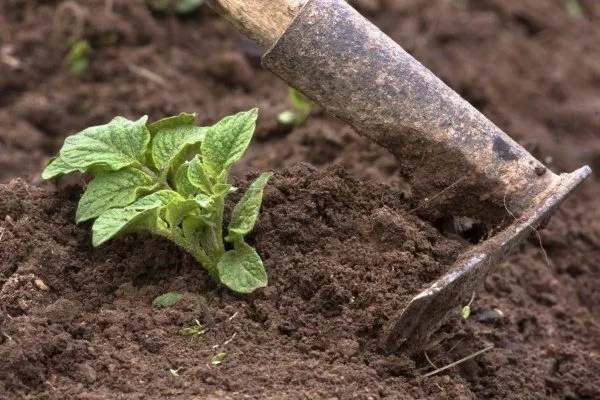
Next potato bushes are hilled as needed. |
Pests and diseases
"Vishenka" is highly resistant to almost all diseases: common scab, golden nematode, spotting, potato wart, late blight, and bacterial rot. However, during prolonged rainfall, potatoes can still be affected by late blight.
The following points are taken into account:
- The "Vishenka" plant can be attacked by Colorado potato beetles. Numerous chemicals can help protect against them. However, it's best to collect the larvae, egg masses, and beetles by hand.
- Potato tubers can be damaged by wireworms, which eat numerous passages through them. A folk remedy is recommended for controlling the pest: impale potato pieces on stakes and bury the "bait" 10 cm deep. After 24 hours, dig up the traps and destroy them. Only then can you begin planting.
- The variety ripens early, which means it's generally not susceptible to late blight. However, in regions with prolonged summer rains, preventative measures are recommended. Potassium-phosphorus fertilizers are an effective method. When the plant reaches 30 cm in height, apply copper sulfate several times, 10 days apart. Apply 2 grams of copper sulfate per 10 liters of water. Fungicides and Bordeaux mixture are also used.
Read more about pests and methods of controlling them in this article.
Harvesting and storage
The harvest is 60 days after planting. Yellowing tops indicate full maturity. A week before digging, the tops are cut to 15 cm above the ground. During this time, the tubers mature, and the skin becomes rougher, preventing damage during harvesting and transportation.
After digging, the tubers are left to dry in the open air for 7 days, after removing any diseased or damaged tubers. The seeds are selected for next year's planting and stored. The "Vishenka" variety can be stored for 7-8 months in a ventilated area at 4°C (4°F).
Advantages and disadvantages
This variety has gained widespread popularity due to its many advantages and minimal drawbacks. Gardeners value "Vishenka" most for the following qualities:
- Early maturity. After just 1.5 months, the first crop is dug up, harvesting young potatoes. This allows Bellarosa to be grown twice per season. After harvesting the potatoes in July, the planting is repeated, and the harvest begins in early autumn.
- Excellent marketability. The tubers are uniform in shape, and the harvest is generally attractive.
- Stable yield. The variety is resistant to all climate and weather conditions. This allows for a yield of approximately 400 centners of potatoes per hectare.
- Strong immunity. The "Vishenka" potato is resistant to common scab, rhizoctonia, blackleg, potato cancer, bacterial rot, and golden nematode.
- Drought resistance. This variety tolerates heat well and can grow in dry soil.
- Long-term storage. Root vegetables store well for a long time.
- Undemanding soil conditions. This variety thrives in all soil types, except heavy clay soils.
- Excellent flavor. The potato's slightly sweet flavor is a characteristic of this variety. It cooks well and is recommended for mashed potatoes.
Farmers' reviews
Reviews of the "Vishenka" potato range are both positive and negative. However, most farmers prefer this variety.
The "Vishenka" potato is a variety that many have come to truly appreciate and love. Those who have tried growing it in their gardens prefer it exclusively, as it doesn't require regular watering, and it's also resistant to many diseases.