
The Ilyinsky potato variety has gained widespread popularity due to its high yield. The fruits are characterized by a smooth, round shape and a unique flavor. However, to obtain a high-quality harvest, it is important to grow and care for the potatoes properly. This article covers these important aspects.
Origin, description and characteristics
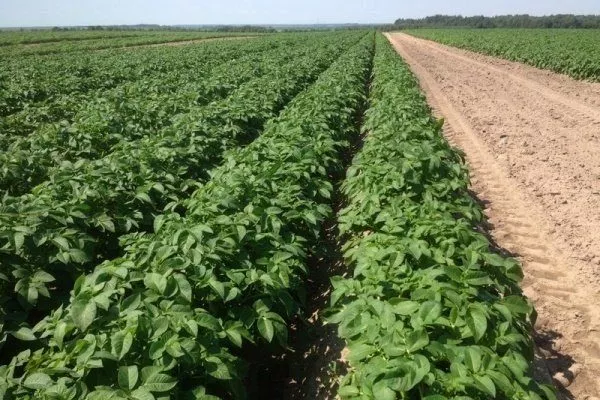
The Ilyinsky potato variety first appeared in the Moscow region, where it was developed by local breeders. Its description is similar to other potato varieties, but it has certain distinct advantages.
The Ilyinsky potato is a mid-early variety with a short growing season. The first harvest can be collected within 70-90 days after planting. It is characterized by a medium yield—under favorable conditions, 200-300 centners of potatoes can be obtained per hectare. Thus, gardeners can obtain up to 5 kilograms of potatoes per square meter.
This variety stores well compared to mid-early varieties, which don't store very well. The shelf life of Ilyinsky potatoes is 93%. It has increased resistance to potato cancer, scab, and some viral diseases. However, it is quite susceptible to golden nematode and late blight of stems. The tubers, however, are more resistant to late blight.
Ilyinsky potatoes tolerate extreme heat quite well and are considered a drought-resistant variety.
Characteristics of potato tubers:
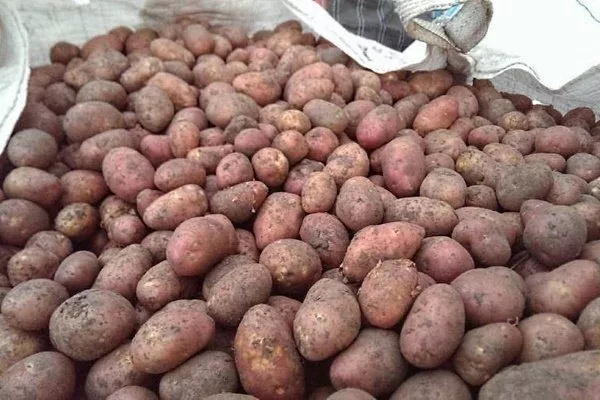
- round shape, sometimes round-oblong, uneven;
- excellent taste;
- small mass of tubers – 60-150 grams;
- average starch content – 15.8-18% (cooks well, but generally retains its shape after heat treatment);
- the skin is red-pink, the flesh is white;
- The eyes are red, small, of medium depth.
The potato flesh does not darken when cut raw or after cooking. This variety boasts a high marketability, significantly surpassing other potato varieties—88-99%. This indicator indicates the proportion of tubers suitable for sale or consumption relative to the total harvested crop.
The table below provides detailed characteristics of the variety:
| Criterion | Characteristic |
| Potato variety | Ilyinsky |
| General characteristics | mid-early variety, characterized by high marketability |
| Productivity | 180-350 c/ha |
| Ripening period | 70-90 days |
| Weight of tubers | 60-150 g |
| How many tubers are there in one bush? | 8-13 |
| Peel color | red |
| Pulp color | white |
| Starch content | 15.8-18% |
| Shelf life | 93% |
| Consumer qualities | excellent taste, used for various types of cooking |
| Disease resistance | susceptible to blight of the above-ground parts of plants and golden cyst nematode |
| Preferred growing regions | Central Black Earth, Middle Volga |
Advantages and disadvantages
The Ilyinsky potato has its own characteristics and some drawbacks. Gardeners need to take these into account to ensure proper care and avoid some problems when growing potatoes.
| Advantages | Flaws |
Potatoes are reliably protected from potato cancer, which manifests itself as white growths on the tubers and green growths on the stems – over time, they begin to rot. | The Ilyinsky potato often suffers from late blight of the stems. It is also frequently attacked by Colorado potato beetles and golden cyst nematodes.
Occasionally, mole crickets and wireworms feed on the fruits, leaving traces of their presence. The wireworm leaves small holes, while the mole cricket spoils the appearance of the tubers, sometimes leaving only the skin. |
Preparing for landing
Growing the Ilyinsky potato variety is a simple process if you first select the right planting site, prepare the seed, and have the strength and patience to wait for a good harvest.
Soil
Soil for planting potatoes begins to be prepared in the fall. Choose a site where nightshade crops haven't been grown for at least three years. Apply rotted manure to the soil surface at a rate of 250 kg per 100 square meters. It is recommended to also sprinkle a complex mineral fertilizer consisting of 1.5 kg of nitroammophoska, 1.5 kg of potassium salt, and 2 kg of ammonium nitrate.
If the area previously had lush vegetation, the soil will have sufficient nitrogen, so the percentage of ammonium nitrate in the fertilizer should be reduced. After applying the fertilizer, the soil is dug deeply or plowed with small mechanical equipment. In the spring, the soil is leveled and the beds prepared.
Vegetables can be grown in raised beds on loamy soils, while in other soils, they can be grown in simple rows. Rows should be spaced approximately 60 cm apart and arranged perpendicular to each other. The distance between planting holes should be at least 30 cm. This arrangement of rows allows for better sunlight exposure for the plants.
Preparation of seed material
Before planting, the tubers are pre-greened and germinated at a temperature of at least 16 degrees Celsius, exposed to light. Germination takes up to 30 days.
Potatoes are planted only after the soil warms to 10 degrees Celsius and the sprouts are about 4 cm tall. The tubers are treated with Prestige, which protects the plants almost until they flower. Seeds are placed in holes up to 12 cm deep.
Growing and caring for potatoes
The Ilyinsky potato variety is planted in May. Leave at least 50 cm between plants. Choose well-lit areas with loose, fertile soil for cultivation. Organic fertilizer is added to the bed beforehand.
Place several small potatoes in each hole. Larger potatoes can be cut into several pieces. It's not recommended to sow potatoes that are too small, as they lack sufficient nutrients and will result in a poor harvest.
Plants require standard care. Regular loosening of the soil and removal of weeds is required. Don't forget about mulchingDon't water potatoes until they emerge, as the spring soil is sufficiently moist for the tubers. Watering during this period can be dangerous, as the plants are just beginning to develop their root system. Over-watering will cause the roots to become too close to the surface, which will reduce yield. Water the plants once a week during bud formation.
Diseases, pests and prevention
Potatoes often suffer from attacks by the Colorado potato beetle. Folk remedies and chemicals can help combat this pest.
The variety's developers claim that potatoes often suffer from late blight. This is an incurable disease. However, there is a way to stop it and trim off the affected plants. Spray the shoots with a solution of potassium permanganate or Bordeaux mixture. Experienced gardeners also recommend using effective products:
- Ridomil MC;
- Oxychom;
- Ridomil Gold MC.
Ilyinsky potatoes can also be affected by the golden nematode. The following products can help combat it: Medvettox, Gromoboy, and Gromoboy-1.
This potato variety is ideal for beginning gardeners and farmers. The Ilyinsky variety is easy to grow and has excellent shelf life, maintaining its flavor until the next harvest.
Harvesting and storage
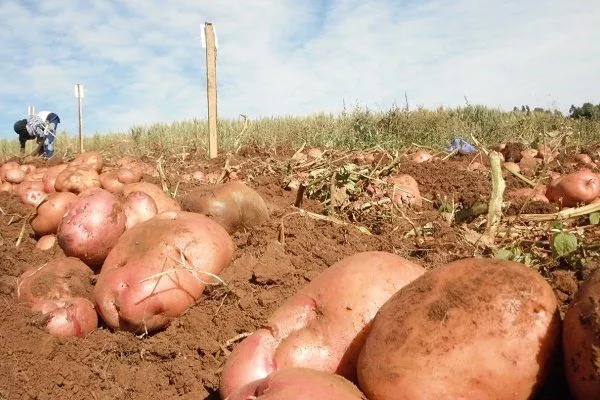
The harvest is in late August-early September. Young tubers for consumption are dug up much earlier. For storage, potatoes are left to lie in the ground first. Dry and yellowed tops indicate commercial maturity.
| Parameter | Meaning |
|---|---|
| Temperature | +2…+4°C |
| Humidity | 85-90% |
| Lighting | Absent |
| Ventilation | Moderate |
It's best to store the harvested crop in a cool, dark place with moderate humidity. Under these conditions, the tubers are preserved with minimal loss of marketability, and any surplus can be used as planting material in the spring.
Comparison with other varieties
The Ilyinsky potato variety is an excellent mid-season variety, renowned for its good yield, ease of care, and lack of need for regular watering. For comparison with other varieties, a table of characteristics is provided:
| Name of the variety | Ilyinsky | Adretta | Bimonda | Breeze | Valentina | Elizabeth | Condor |
| Productivity | 180-350 c/ha | up to 450 c/ha | 280-450 c/ha | 395 c/ha | 280-320 c/ha | up to 400 c/ha | 330-360 c/ha |
| Ripening time | 70-90 days | 70-105 days | 70-75 days | 60-80 days | 70-80 days | 65-80 days | 70-90 days |
| Shelf life | 93% | 98% | 9;% | 97% | 95% | 93% | 94% |
| Starch | 15.8-18% | 13-18% | 10-13% | 10-16% | 14.5-19% | 13-14% | 9-14% |
| Peel | Red | Yellow | Red | Yellow | Yellow | White | Red |
| Pulp | White | yellow | Light yellow | Yellow | Light yellow | White | Yellow |
| Advantages | Resistance to potato cancer. High yield. Keeping quality. | Develops rapidly in the initial period. Relative resistance to viral diseases. | Responsive to agricultural practices. High yield. | Good taste. Early tuber formation. | Excellent taste. Long shelf life. Resistant to potato cancer. | Beautiful and tasty tubers. Good storage quality. Resistant to potato cancer. | Increased resistance to common scab. Excellent taste and appearance. |
| Flaws | Low immunity to golden cyst nematode. Suffering from attacks by the Colorado potato beetle. | Low resistance to late blight. | Susceptibility to late blight. Average resistance to viruses. | Susceptible to golden cyst nematode. Low resistance to late blight and scab. | Susceptibility to golden cyst nematode. | Average resistance to late blight. | Susceptibility to late blight. |
Reviews
Today, many gardeners are writing reviews about the Ilyinsky potato variety. Some speak positively of it, while others highlight its shortcomings. But overall, most praise it for its high yield.
The Ilyinsky potato variety delights with its delicious flavor and consistently abundant yield. It's very easy to grow, requiring minimal care. Once planted, gardeners are eager to try other varieties. With the right approach, you can reap a harvest every year and have a large supply of potatoes for the winter.