
Today, there are a huge number of effective and high-quality fertilizers that can significantly increase potato yields, improve their appearance, and accelerate growth. With such a wide selection, it's not always easy to find the best solution even after trying popular products. Below, we'll review only the best fertilizers among the popular varieties.
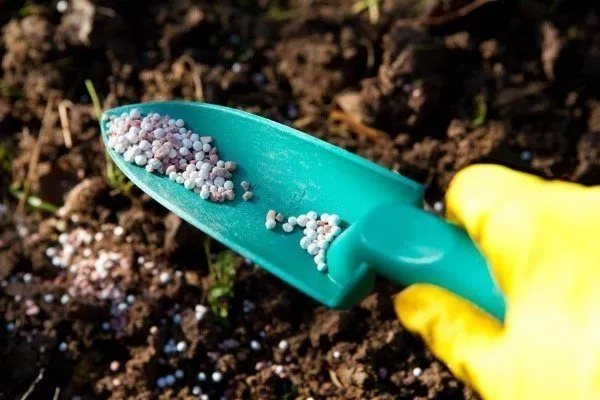
Why do you need to fertilize potatoes?
Most gardeners are accustomed to the fact that it's impossible to grow potatoes without fertilizer. Potatoes are very nutrient-intensive due to their weakened root system and large tubers. During the autumn harvest, most of the beneficial fertilizer is removed from the soil. Therefore, it's crucial to replenish lost nutrients when planting the following season. Otherwise, the yield will decrease each year.
- ✓ The pH level should be between 5.5-6.5 for potatoes.
- ✓ The soil must be well drained to avoid water stagnation.
A few weeks before planting potatoes, it is advisable to sow green manure (plants that improve the composition and structure of the soil).
Organic fertilizers
Many years ago, our ancestors used organic fertilizers when growing potatoes. There are many undeniable advantages to using organic fertilizers:
- Organic fertilizers are ideal for all soil types and have a beneficial effect on microorganisms that enrich the soil with humus. Organic matter gradually releases nutrients, preventing the soil from becoming oversaturated.
- Organic fertilizers contain many microelements, which helps ensure the balanced nutrition that the crop needs.
- Organic matter quickly improves the health of the soil. After that, the gardener only needs to maintain it without much effort.
- Such fertilizers are absolutely safe and beneficial for any crops.
- The use of organic fertilizers provides potatoes with additional substances that strengthen the plant's immune system, helping it resist diseases.
- Fertilizers are good because they prevent the plant from growing excessively and uncontrollably.
But organic fertilizers also have several disadvantages that need to be taken into account:
- In some regions, organic fertilizers are very difficult to obtain. Therefore, their cost is significantly higher than that of mineral fertilizers.
- Organic matter will only work if the soil contains microorganisms that can break down organic matter into useful elements.
- During the cold season, organic fertilizers do not release nutrients into the soil.
The best organic fertilizers are considered to be the following:
- Ash. It contains many beneficial components: phosphorus, potassium, calcium, and other micronutrients. This fertilizer significantly reduces soil acidity, which is especially important for potatoes, as highly acidic soil is unsuitable for them.
- Compost. It has beneficial properties. It can be easily prepared at home using plant residues. Adding peat to the compost pile will increase the beneficial properties of the fertilizer.
- Manure. This fertilizer consists of animal excrement. Horse and cow manure, as well as chicken manure, are most commonly used. Manure is rich in nitrogen, potassium, calcium, and phosphorus. It is considered one of the best fertilizers for potatoes.
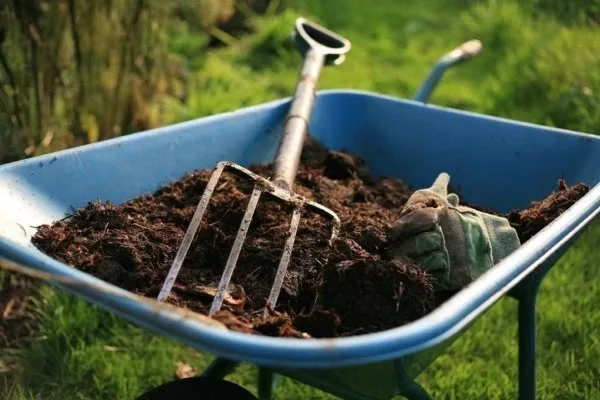
Organomineral
These fertilizers contain organic matter and associated mineral compounds. They are considered the most effective because they contain all the necessary elements for plant and soil nutrition. Organomineral additives help increase fertility and yield. They are quite affordable and widely used by gardeners. Organomineral fertilizers include liquid, humic, and complex additives. The best of these are discussed below.
| Object | Ripening period | Productivity | Disease resistance |
|---|---|---|---|
| Joy Seedling Fertilizer | Early | High | High |
| Fertika organo-mineral mixture | Average | Average | High |
| Gumi-Omi | Early | High | High |
| Buiskie fertilizers OMU "Potato" | Late | High | High |
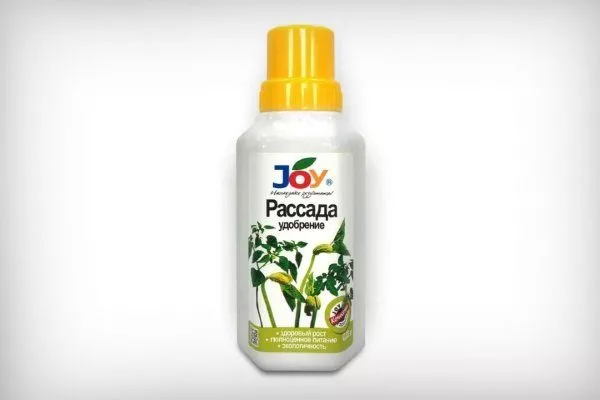
Joy Seedling Fertilizer
A fertilizer containing high amounts of potassium is used for fertilizing potatoes and other crops. Suitable for both standard application and seed soaking, this fertilizer provides excellent nutrition and accelerates seed germination several times over. It also contains nitrogen, sulfur, magnesium, phosphorus, silicon, molybdenum, and other minerals. Humic substances also contain salts, accounting for 2.7%. Before use, dilute the product with water.
The supplement is sold in liquid form in a 330 ml bottle. Gardeners report that using Joy Lignohumate "Seedling" effectively accelerates seed germination and promotes healthy plant development. This fertilizer improves seed quality and accelerates growth. It increases yields with minimal consumption. The average cost of the fertilizer is 140-160 rubles.
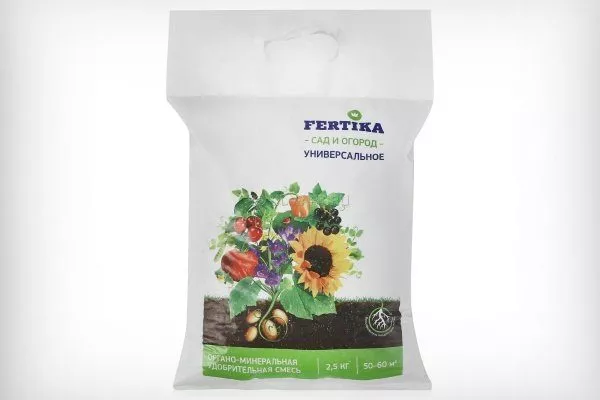
Fertika organo-mineral mixture
The fertilizer contains 18% humate and numerous beneficial microelements necessary for complete plant nutrition. Fertika fertilizer is sold in granules, each containing a full range of nutrients that ensure active potato growth.
The supplement is used as a primary fertilizer—10-15 g per hole, with about 30 g per liter of water used during irrigation. For top dressing, 20-40 g per square meter is used several times a season. In southern regions, the fertilizer is used in February, while in temperate climates, it's used from early spring.
Gardeners can choose between 900g and 2.5kg packages. The fertilizer is designed for both open and protected soil. According to reviews, one small package is enough to fertilize 40 square meters of area. The fertilizer immediately affects the root system and soil.
The advantages include intensive stimulation of plant growth, improved soil quality, minimal waste, efficiency, and high-quality nutrition. The average cost of the fertilizer is 290-300 rubles.
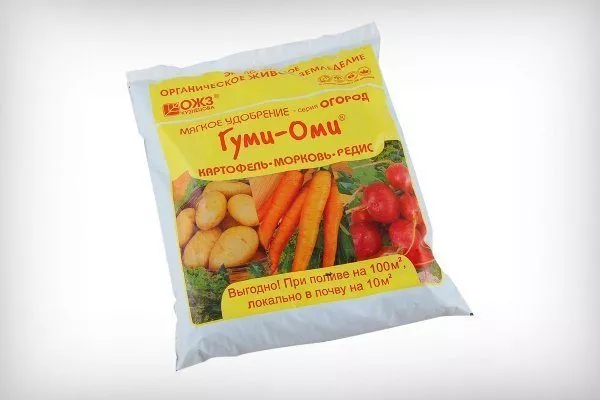
Gumi-Omi
This organomineral fertilizer was developed specifically for potatoes. It is also used for carrots and radishes. It increases yields, nourishes plant roots, saturates them with beneficial elements, and stimulates vigorous growth. It significantly improves soil quality.
Gumi-Omi has protective properties. Its main component is chicken manure, which combines perfectly with beneficial microelements: boron, copper, and gummi. One packet contains 700 grams of the supplement—enough to fertilize 10 square meters.
The fertilizer is applied in the spring before planting, placing 20-40 grams in each hole. It also serves as a top dressing every two weeks until the bulbs begin to set. The fertilizer has a shelf life of 4 years.
The main advantages include the following points:
- has a natural composition;
- Suitable for universal use;
- gardeners speak positively about it;
- ideal for potatoes;
- is distinguished by its low cost - 60-80 rubles.
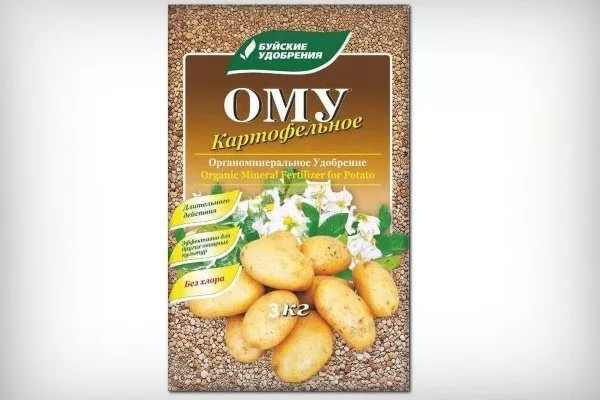
Buiskie fertilizers OMU "Potato"
This mineral fertilizer is one of the best for feeding potatoes. It contains 6% phosphorus, 6% magnesium, 10% nitrogen, and 16% potassium. Importantly, it does not contain chlorine, which is harmful to plants. It is sold in granular form and distributed in small quantities. Apply 10 grams of fertilizer per hole when planting, 20 grams before hilling, and 50 grams per square meter when preparing the soil.
The supplement has a shelf life of 5 years. This organomineral fertilizer improves plant metabolism and reduces the risk of various diseases. It also protects crops from negative environmental impacts. Each package contains 3 or 5 kilograms of the supplement. Its slow release saves money on refills.
The fertilizer has the following advantages:
- high efficiency;
- no chlorine in the composition;
- high content of useful elements;
- positive feedback from gardeners;
- convenient to use;
- slow consumption;
- acceleration of plant growth and development.
The average cost of fertilizer is 320-350 rubles, which is considered inexpensive given the good weight of the package.
Minerals
This group of fertilizers is distinguished by its good composition – the mineral additives include such useful minerals as nitrogen, potassium, phosphorus, copper, zinc and others.
Mineral fertilizers can contain a single mineral (simple) or several (complex). Their compact size makes them easy to transport. Mineral fertilizers are applied depending on the soil type, primarily in the spring during sowing.
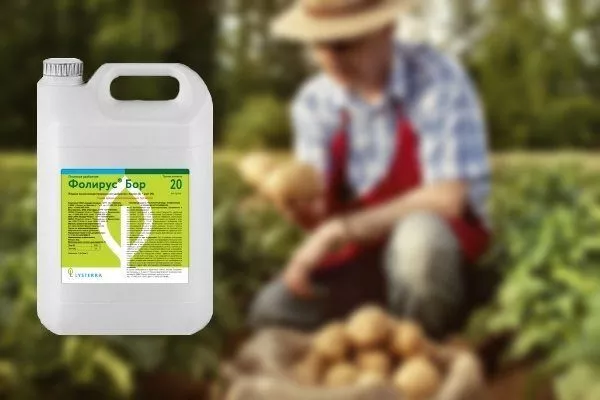
Folyrus Bor
This fertilizer is intended for foliar feeding of plants. It is a liquid substance applied to the soil when boron is deficient. It is considered one of the best fertilizers for potatoes, as it actively combats stunted growth, promotes accelerated fruit formation, and strengthens internodes. Research by the All-Russian Research Institute of Potato Crops (VNIIK) has proven that this fertilizer has a significant impact on potato yield, increasing it by 3 to 13%.
In a specialized store, a gardener can purchase Folirus Bor in a canister with a capacity of 1 to 20 liters.
A boron deficiency can have serious consequences, including bud death, slow flowering, reduced bushiness, and flower dropoff. This fertilizer solves all these problems. Experts recommend using it both for severe boron deficiency and in combination with other beneficial supplements.
The advantages of Folirus Bora include a high concentration of the element, efficiency, and an affordable price – about 350-400 rubles.
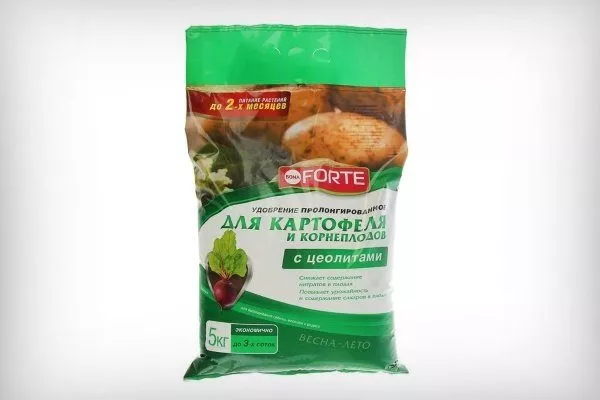
Bona Forte fertilizer for potatoes and root crops
This fertilizer is considered one of the best due to its particularly beneficial composition. It includes the following components:
- potassium;
- phosphorus;
- molybdenum;
- nitrogen;
- manganese;
- magnesium;
- titanium;
- boron;
- bioavailable silicon.
This additive promotes the active reduction of nitrates in fruits. The fertilizer is designed for use at all stages of sowing, both during soil preparation and during potato planting. For fertilizing potatoes before flowering, apply 1-2 times, spaced 1.5 to 2 weeks apart. Approximately 2-3 grams of the additive are used per plant during planting. On average, one package is enough to fertilize 300 square meters of land.
Bona Forte improves soil structure, helps reduce nitrate levels, increases germination and freshness of crops, protects plants from negative influences, and accelerates their growth.
Most of the components in this fertilizer are essential for the proper development of plants. It is available in 2.5- or 5-kilogram bags. The average price is 350 rubles.
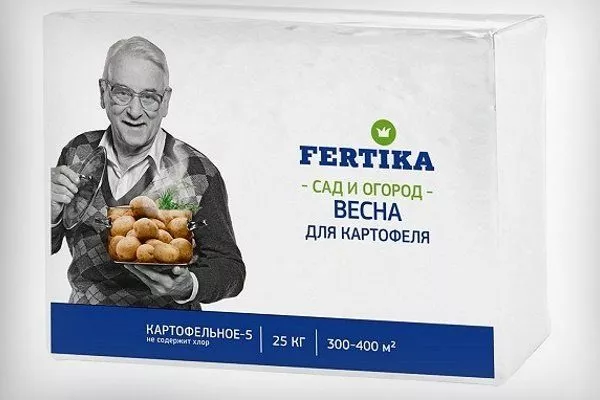
Fertika Potato-5
This is one of the most popular mineral potato fertilizers. It comes in granular form, containing a complex of beneficial elements, including magnesium, sulfur, and others. A key feature is the absence of chlorine. The fertilizer is intended for use in spring during planting and in summer during the growing season. Specialty stores offer 2.5- and 5-kilogram packages. The smaller package is sufficient for several seasons, depending on the planting area. Using Fertika significantly accelerates tuber growth and improves their quality.
There are several options for using fertilizer:
- When planting potatoes, distribute 15-20 g of fertilizer per plant in holes or dig into the soil during the growing season - 30-40 g of the substance is used per bush.
- In early spring, spread fertilizer over the area—70 grams of Fertika per square meter. This is necessary to properly prepare the soil and enrich it with beneficial elements.
The main advantages of the fertilizer are its low cost – about 350 rubles, high quality, efficiency, low consumption, and useful elements in its composition.
Complex fertilizers
Complex fertilizers contain two or three essential nutrients, and some are supplemented with micronutrients. This is both an advantage and a disadvantage, as while there's no need to purchase several different packages and mix the required amounts from each, the percentages of different elements may not meet the needs of the potato plant. It's common practice to apply nitrogen in the spring, while potassium and phosphorus are applied in the fall. For this reason, phosphorus-potassium fertilizers, presented in the table below, have been developed and are now sold:
| Name | Phosphorus content | Potassium content | Other elements |
| Agrofoska | 15% | 4% | magnesium 3%, calcium 25% |
| Potassium monophosphate | 52% | 34% | |
| Ecoplant | 6% | 35% | sulfur 1%, magnesium 9%, calcium 13% |
| Autumn | 5% | 18% | boron 0.2%, magnesium 2.5%, calcium 8% |
Besides the application season, another key feature of phosphorus-potassium fertilizers is their application depth. Potassium and phosphorus form strong bonds with soil nutrients, remain where they are applied, and don't dissipate into the air like nitrogen or evaporate with rainwater. Scattering fertilizers over the surface will have no effect. Complex fertilizers are applied directly to the root zone during tilling or placed at the bottom of the planting hole.
| Fertilizer type | Time of application | Planting depth |
|---|---|---|
| Organic | Autumn/Spring | 20-30 cm |
| Minerals | Spring | 10-15 cm |
The table below shows nitrogen fertilizers:
| Name | Nitrogen content | Phosphorus content | Potassium content |
| Nitroammophoska | 17% | 17% | 17% |
| Nitrophoska | 11% | 10% | 11% |
| Nitrophos | 23% | 17% | — |
| Diammophos | 18% | 46% | — |
| Ammophos | 9-12% | 42-52% | — |
Nitroammophoska is considered the best of the complex nitrogen-containing fertilizers due to its balanced composition. Others require some modifications, that is, the addition of one element. For example, Diammophos and Ammophos contain 3-4 times more phosphorus than nitrogen, although potatoes require equal proportions of these elements. These fertilizers contain no potassium at all.
Fertilizers designed specifically for potatoes are especially convenient. They contain both organic and mineral nutrients, as well as microelements. The best fertilizers include Fertika, Gumi-Omi, Sibirsky Bogatyr, and others. The only drawback is the high consumption rate, which affects the overall cost of the fertilizer—7-8 kilograms per 100 square meters.
Root feeding
Root fertilizers are applied after light loosening and before hilling up the bushes. This ensures they reach the roots much more quickly, especially if the plants are thoroughly watered after application. The following substances are considered more effective for root fertilizers:
- Bird droppings. This is a very aggressive fertilizer, but sometimes it is even used fresh, diluted with water at a ratio of 1:10. The fertilizer is applied into trenches between crop rows.
- Infusion of mullein. Dissolve 1 liter of fresh mullein in 10 liters of water and let it steep for several days. Water the rows between plants with this fertilizer.
- Urea. Apply 500 ml of a solution made from 10 liters of water with 20 g of urea dissolved in it to each bush. Water the bushes at the roots after lightly loosening the soil.
- Mineral fertilizers. These include various agrochemicals, such as an ammonium nitrate solution (20 g per 10 liters of water). Occasionally, a mixture of potassium, phosphorus, and nitrogen fertilizers in a 2:1:1 ratio (25 g per 10 liters of water) is used. 500-1000 ml of the solution is poured under each bush.
Which is better as a fertilizer for potatoes: urea or ammonium nitrate? Read on for more details. here.
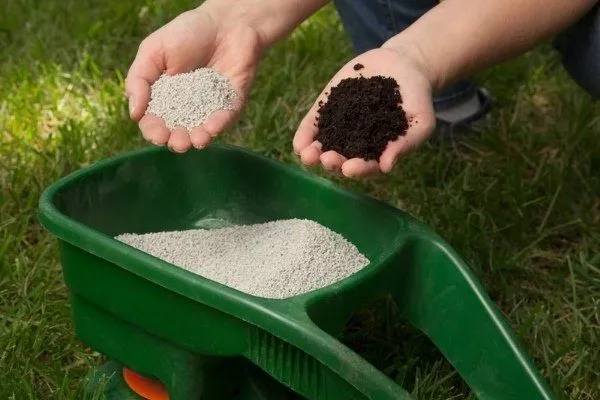
Experienced gardeners recommend using complex fertilizers that do not contain chlorine for early potatoes.
Foliar feeding of potatoes
Plants require fertilizing throughout the growing season. It's crucial to apply the first fertilizer after weeding the potatoes. This should be done in the evening to prevent leaf burn. Occasionally, apply fertilizer in the morning, before the sun has risen.
There are the following types of foliar feeding:
- Nettle infusion. Nettle stems and leaves contain many nutrients essential for potatoes: iron, potassium, nitrogen, and calcium. Preparing an infusion is simple: chop 1 kg of nettles and add 3 liters of water. Let the mixture sit for 24 hours, strain, and then add 30 g of laundry soap. Then, begin spraying.
- Phosphoric. Superphosphate is applied after flowering has finished, approximately a month before harvest. To do this, dilute 100 g of the substance in 10 liters of water—enough for 10 square meters.
- Urea. The solution is prepared as follows: 100 g of urea, 150 g of monopotassium phosphate, and 5 g of boric acid are dissolved in 5 liters of water. If desired, boron, zinc, copper, manganese, or cobalt can be added at a rate of 1 g per 10 liters. The first spraying is carried out two weeks after emergence. A second treatment is carried out after another 14 days. Subsequent applications are made every two weeks until the potatoes begin to bloom.
If you manage to properly feed the potatoes, you will ensure a high yield and fruits with excellent taste and marketable appearance.
Growth stimulants
Mineral fertilizers help nourish potatoes—they contain elements that act as building blocks for the future harvest. There are also growth stimulants that increase resistance to disease and adverse conditions and accelerate metabolic processes. These have the same effect on potatoes as vitamins do on humans. When treated with growth stimulants, yield increases by 10-30%. There are several excellent growth stimulants for potatoes.
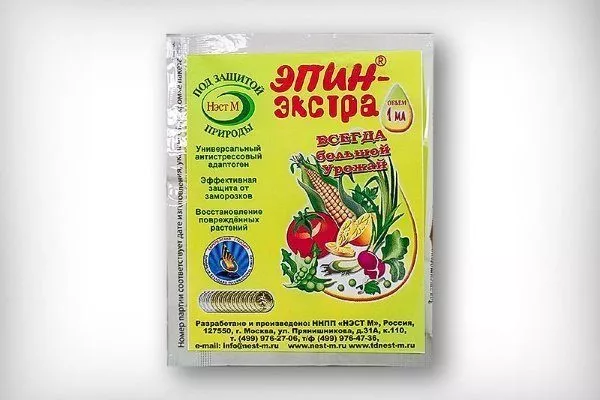
Epin
It has a pronounced anti-stress effect – it helps potatoes withstand sudden temperature fluctuations, drought, and prolonged cloudy weather; it also increases disease resistance. Increased yields result in faster tuber growth, increasing yields by 15-30%.
Epin is designed for treating seed tubers a few hours before planting. Use 1 ml of the stimulant per cup of water—enough to treat 50 kg of potatoes. The treatment is also carried out at the beginning of flowering: use 1 ml of Epin per 5 liters of water. If plants are suffering from frost, drought, or lack of sunlight, they are sprayed every 7-10 days until the weather or the plant's condition improves.
Gibbersib
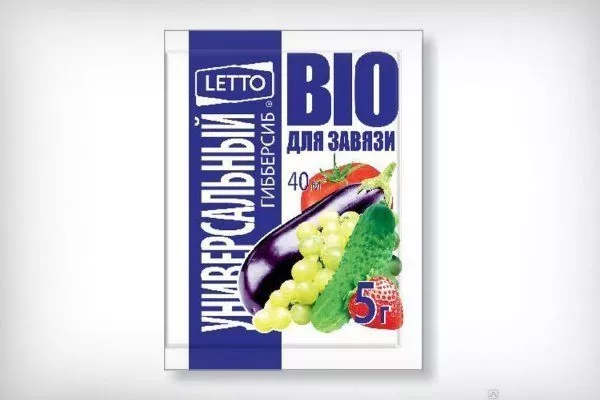
This product increases the crop's resistance to pathogenic microorganisms—bacteria, fungi, and viruses. It is an excellent preventative against common scab, late blight, leaf spot, and other potato diseases. It guarantees a 15-30% yield increase.
The manufacturer recommends spraying plants during bud formation, flowering, and after flowering. A drawback of the product is that it decomposes quickly in the sun, so potato treatment should be done in the evening. Apply 0.1 g per 2 liters of water.
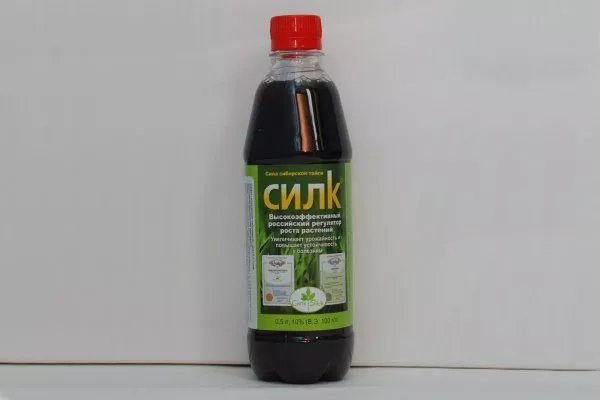
Silk
This is the best natural stimulant with a pleasant pine aroma. It increases crop yields by 25-30%. Its main active ingredient is pine needles.
Fir extract has a beneficial effect on potatoes:
- helps to survive in extreme situations;
- stimulates plant growth;
- increases resistance to diseases.
The composition also contains dietary supplements and natural triterpene acids. Therefore, Silk requires extreme caution when handling to avoid accidentally burning your skin. The product is available in 1.5 ml sachets. It is dissolved in 200 ml of hot water (around 60 degrees Celsius), then the seed tubers are soaked in the solution.
In summer, spraying is done with a slightly different solution: a packet of the preparation is dissolved in 1.5 liters of water. Spraying is done twice: during budding and during flowering.
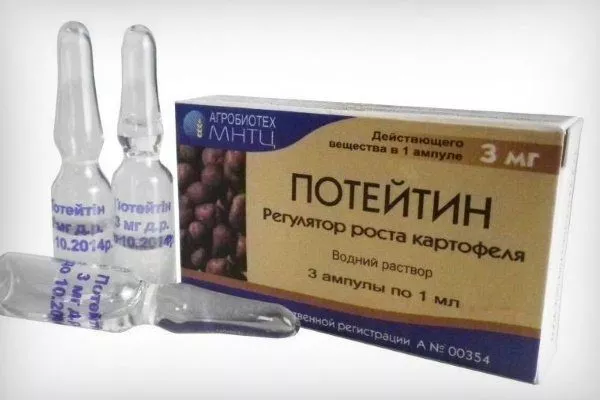
Poteytin
When tubers are treated with Poteytin, seedlings emerge 7 days earlier than untreated tubers. Stems grow stronger, and potatoes are more resistant to pests and various diseases. Poteytin increases yield by 16-24%.
It's recommended to spray tubers three times: before sprouting, planting, and storing. Use 1 ml of stimulant per 750 ml of water. During budding, prepare the same solution, but in different quantities: 1 ml of Poteytin per 10 liters of water.
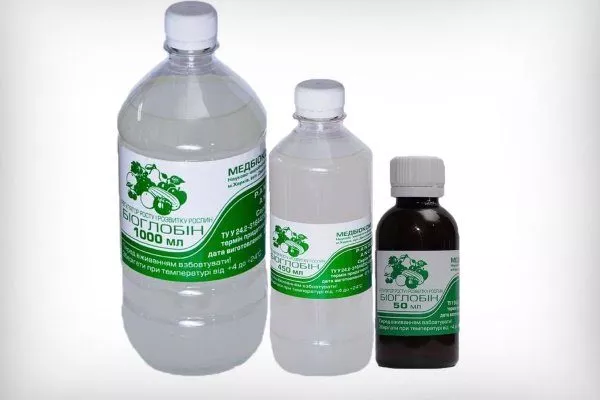
Bioglobin
An effective Ukrainian product rich in proteins that stimulate cell division. The supplement takes effect within 24 hours, during which time potato cells divide twice. The root system quadruples in size, and yields double. At the beginning of vernalization, a month before planting, the tubers should be soaked in the solution for half an hour—2.5 g of Bioglobin per 10 liters of water. This results in larger buds and rapid germination.
Next, spray the emerging seedlings with the same solution, and cover them with soil after 24 hours. Two more treatments will help consolidate the results: 21 days after the emergence of new seedlings and at the end of flowering. Bioglobin can be combined with fungicides, potassium permanganate, and foliar feeding.
Biological fertilizers for potatoes
When using biological fertilizers, mineral fertilizers are still required. The purpose of using biological fertilizers is to populate the soil and compost with active bacteria, which will assist existing bacteria in converting organic matter into humus. At the same time, these microorganisms engage in a direct battle for nutrients with pathogenic fungi and viruses. This improves the soil structure, enriches it with organic matter, which boosts potato immunity and increases yields severalfold.
Baikal EM 1
Baikal EM 1 is a popular product, favored by many gardeners and horticulturists. It's the best biological fertilizer for enriching potatoes with beneficial elements. To prepare the solution, dilute the working concentrate at a ratio of 1:1000, and make a mash from the mother concentrate. To do this, add 2 tablespoons of Baikal EM 1 mother concentrate to 4 liters of warm boiled water and 40-80 g of honey or molasses. Then, store the mixture in a warm place for 7 days.
Starting from the second day, open the lid daily to allow the carbon dioxide to evaporate. The solution is then ready for use: soak the seed tubers in it and spray it on the soil 14-20 days before planting. The solution is also used to treat potato plants and the soil beneath them: after emergence, before the first hilling, and during bud formation.
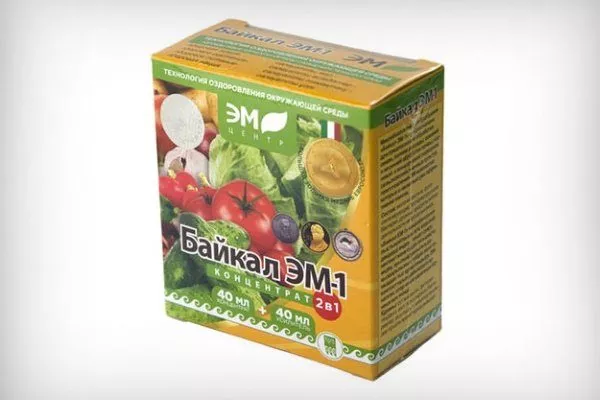
It is not recommended to purchase ready-made Baikal EM 1 concentrate that has been stored in the store for more than 4 months. Most likely, the live bacteria have already died. It is better to purchase a mother liquor for preparing fresh concentrate yourself.
The Shining 1 and The Shining 2
These products are similar in effect to the biological fertilizer Baikal EM 1. Vegetable growers claim that Siyanie is no less effective, but not as convenient to use. The advantage of this product is that counterfeits are rare, unlike Baikal, which is highly advertised and in demand.
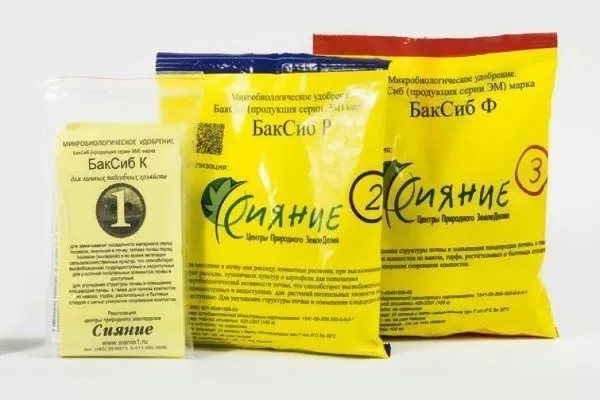
Increased yields can be achieved by treating the soil with a working solution in spring and fall. When planting, arrange the tubers in the holes, water with the Siyanie solution at a ratio of 20-60 g per 10 liters of water, and then cover with soil. From emergence until the end of flowering, fertilize weekly, alternating between the two products: Siyanie 1 and Siyanie 2. The solution is prepared at a ratio of 40 g of each product per 10 liters of water. These products are sold as concentrates and require dilution and fermentation.
To improve potato health, regular fertilization is essential. Gardeners often skip fertilizing, fearing the roots will absorb too many chemicals. But there are proven, superior potato fertilizers that can increase yields.